FLORHAM PARK, N.J. (AP) — Jelani Woods' football comeback will continue with the New York Jets.
The tight end, who hasn't played in a regular-season game since 2022 because of injuries, was one of three players claimed on waivers by the Jets on Wednesday.
The 26-year-old Woods was among Indianapolis' final cuts Tuesday after he had seven catches for 75 yards in the preseason. He was a third-round draft pick of the Colts in 2022 out of Virginia and had a promising rookie season during which he caught 25 passes for 312 yards and three touchdowns in 15 games, including two starts.
But Woods missed the following season with a hamstring injury and then was forced to sit out all of last season after suffering turf toe in training camp and requiring surgery. He bounced back this summer and was healthy but was caught in a numbers game with the Colts keeping four tight ends on their initial roster, including first-round pick Tyler Warren, Mo Alie-Cox, Will Mallory and Drew Ogletree.
With the Jets, the 6-foot-7, 253-pound Woods joins a tight ends room that includes second-round pick Mason Taylor, Jeremy Ruckert and Stone Smartt.
“A huge tight end that's going to help us as a blocker and as a receiver,” coach Aaron Glenn said of Woods.
The Jets also claimed two players off waivers from the Chiefs: linebacker Cam Jones and offensive tackle Esa Pole.
Jones played in every game the last two seasons for Kansas City, including two starts, after being signed as an undrafted free agent out of Indiana.
“A very productive player,” Glenn said. “Looking forward to him getting with this linebacker crew and really making noise on special teams for us.”
Pole, a 6-7, 319-pound O-lineman, was signed as an undrafted rookie this year out of Washington State, where he played left tackle.
“A developmental guy, but I think he's got a lot of tools,” Glenn said.
The Jets released wide receiver Tyler Johnson and then signed him to their practice squad. They also waived linebacker Zaire Barnes and offensive lineman Marquis Hayes to add Woods, Jones and Pole.
New York's pratice squad also includes quarterback Brady Cook; wide receivers Jamaal Pritchett and Quentin Skinner; defensive back Jordan Clark, son of former NFL safety Ryan Clark; safety Dean Clark; defensive linemen Eric Watts and Payton Page; linebacker Aaron “Boog” Smith; offensive linemen Kohl Levao and Leander Wiegand; and kicker Harrison Mevis — all of whom were waived by the Jets on Tuesday.
The competition for the starting center job is still going between Joe Tippmann and Josh Myers — and Glenn remains tight-lipped on whether either has the upper hand.
“It's still playing out,” Glenn said.
When asked what his plans are for the position, Glenn said wryly: “To play a center.”
Tippmann has started most of the last two seasons at center after being drafted in the second round out of Wisconsin in 2023. Myers was signed as a free agent in March after he played his first four seasons in Green Bay. He also has familiarity with quarterback Justin Fields; the two were teammates at Ohio State for two years.
AP NFL: https://apnews.com/hub/nfl
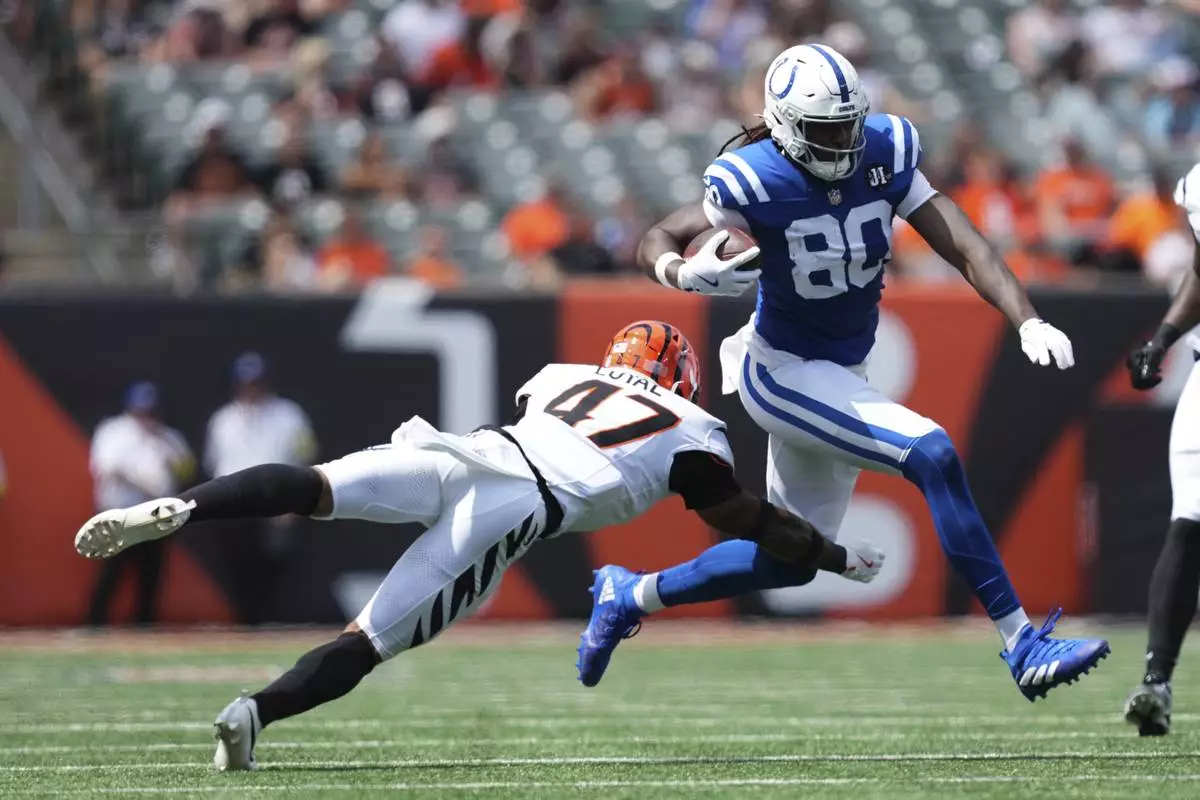
Indianapolis Colts tight end Jelani Woods (80) runs past Cincinnati Bengals safety Shaquan Loyal (47) during the second half of a preseason NFL football game, Saturday, Aug. 23, 2025, in Cincinnati. (AP Photo/Jeff Dean)

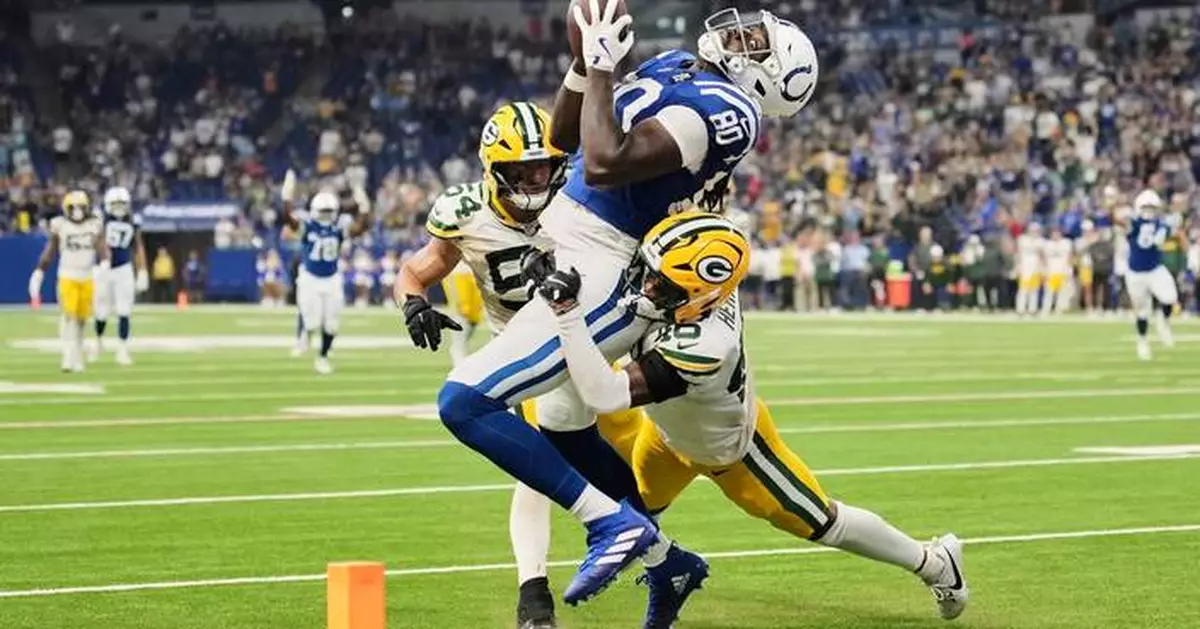
Indianapolis Colts tight end Jelani Woods (80) tries to make a catch while being hit by Green Bay Packers cornerback Tyron Herring (46) during the second half of a preseason NFL football game, Saturday, Aug. 16, 2025, in Indianapolis. (AP Photo/AJ Mast)
NEW YORK (AP) — Donald Trump was booed loudly by fans inside Madison Square Garden when he was shown on video screens during the national anthem prior to Game 3 of the NBA Finals on Monday night.
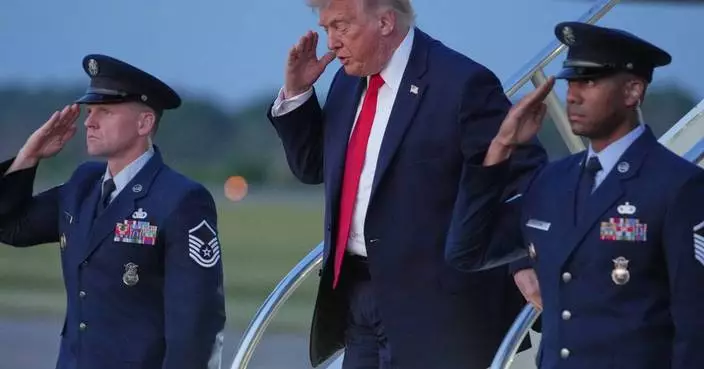
Trump was shown for several seconds giving a military salute. The boos ended when the U.S. flag followed him on the screens, and fans cheered when New York Knicks players were shown. Mentions of the San Antonio Spurs also elicited loud boos.
Trump is watching from Knicks owner James Dolan’s suite, along with granddaughter Kai, personal adviser Boris Epshteyn and Cabinet secretaries Lee Zeldin, Sean Duffy and Doug Burgum. He is the first sitting president to attend an NBA Finals game.
Trump’s Marine One helicopter flew from his home in New Jersey and landed near Wall Street before his motorcade made its way up through Manhattan and to the arena roughly an hour before tipoff. He encountered a handful of people making rude gestures, and outside the area, one group held signs saying “Trump must go.”
He settled into Dolan's suite shortly afterward.
During the afternoon before Trump's arrival, the New York Police Department and the U.S. Secret Service set up a large perimeter surrounding Madison Square Garden. Fans lined up to get inside the arena more than four hours before tipoff, in a scene more closely resembling New Year’s Eve in Times Square than the usual leadup to a basketball game.
They were required to provide a ticket or pass to get past various checkpoints, along with going through a Transportation Security Administration-style magnetometer. Secret Service personnel and police were positioned at every corner and in large numbers. Daily commuters, tourists visiting Manhattan and fans were all confounded at various times as they tried to maneuver the security.
After traveling from his new home in Florida for the game, Knicks fan Greg Weldon said the main inconvenience faced so far has been the lack of information.
“We’ve asked so many cops, secret service, guys with machine guns, what to do, where should we go,” he said. “Nobody knows.”
Knicks coach Mike Brown and Spurs counterpart Mitch Johnson downplayed any concept of being inconvenienced by the closures and enhanced security because of Trump.
“There’s a lot going on, and I’d much rather be a part of it than not,” Johnson said.
With security stepped up, a watch party outside was canceled, and ticket-holders were not allowed to bring bags inside the Garden. Fans had gathered near the arena to watch games during this playoff run, during which the Knicks have won 13 games in a row to reach the final for the first time since 1999 and move two victories from their first NBA title since 1973.
“We are looking forward to bringing back watch parties for Game 4,” Police Commissioner Jessica Tisch said at a news conference Monday. "But I think New Yorkers are used to presidents coming to town, and they understand that that generally means lockdowns of areas and that’s what you’re going to see tonight at the Garden.”
This is the latest major sporting event Trump has attended during his time as president, and the security measures have created major hassles for fans.
Thousands of fans missed the start of last year’s U.S. Open men’s singles final between Carlos Alcaraz and Jannik Sinner because of lengthy security lines. Even though the U.S. Tennis Association pushed back the start of the match by a half-hour, many fans still couldn’t get in because added measures meant that they had to go through screening not only when they arrived at the Billie Jean King National Tennis Center but again in front of the steps into Arthur Ashe Stadium, where Trump watched from a suite.
Federal law enforcement officials have been reexamining Trump’s security in light of three incidents in the past two years: a shooting at a 2024 rally in Butler, Pennsylvania; the discovery of a man armed with a rifle as Trump played golf in West Palm Beach, Florida, later that year; and the recent shooting at the White House Correspondents’ Association dinner.
Asked Sunday his thoughts on Trump attending, Knicks center Mitchell Robinson said: “Cool, I guess. We can still get out there and play (no matter) who’s here and who’s not.”
Mayor Zohran Mamdani and other dignitaries were also at the game.
It was already hard enough for Knicks fans to get inside Madison Square Garden because of astronomical ticket prices. The get-in price for a ticket is higher than the average cost of monthly rent in New York, surging over $5,000. The best seats are tens of thousands of dollars. Mamdani said he bought his ticket, which he said was standing-room-only, for about $1,000 directly from Madison Square Garden.
The difficulty of seeing the game in-person has prompted fans to crowd bars, streets and watch parties all over the city. The watch party near the Garden has become a major event all through the playoffs, but with Trump attending, that event was moved a few blocks away outside the security perimeter, at Bryant Park.
“We improvise,” said Knicks guard Jose Alvarado, who is a New York native. "We're New Yorkers. We’re going to find a way to watch a game, and that’s what we’re doing.”
AP Basketball Writer Brian Mahoney contributed to this report.
AP NBA: https://apnews.com/hub/NBA
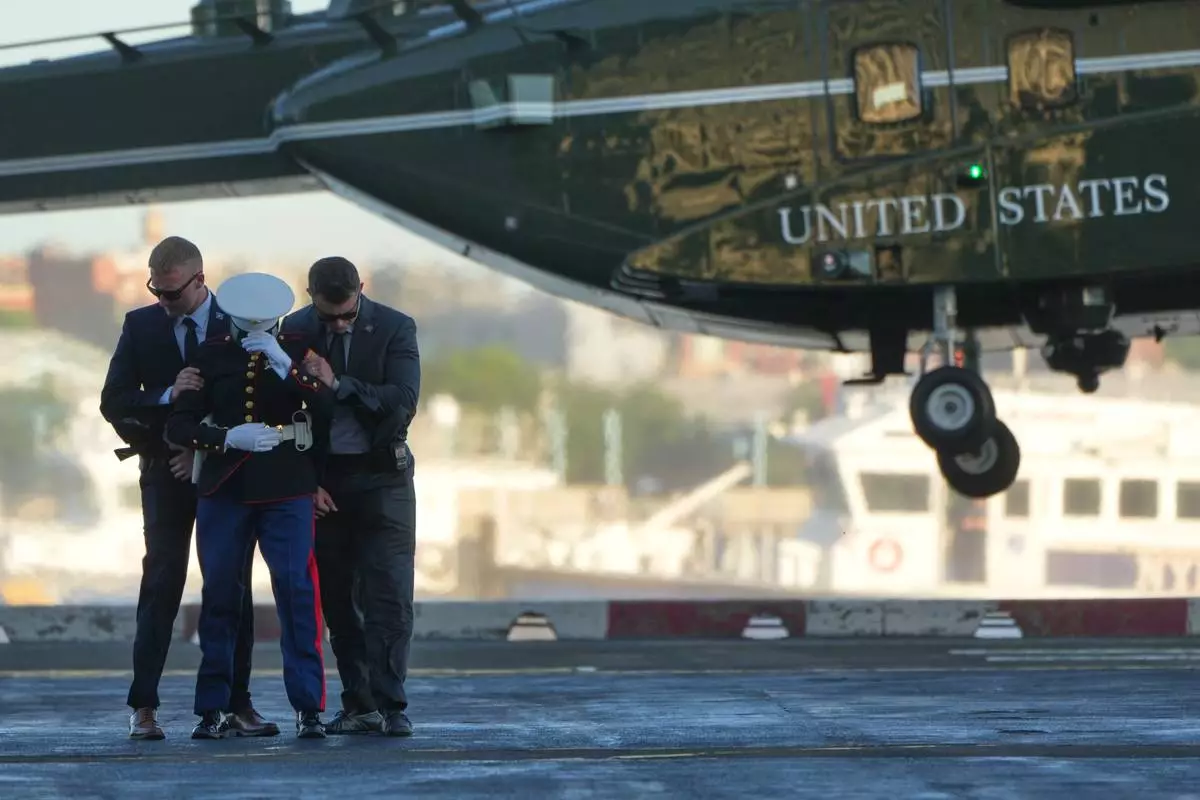
U.S. Secret Service agents and a U.S. Marine brace against the downdraft as a support helicopter lands before Marine One with President Donald Trump aboard, at the Downtown Manhattan Heliport at Pier 6 in New York, Monday, June 8, 2026. (AP Photo/Mark Schiefelbein)
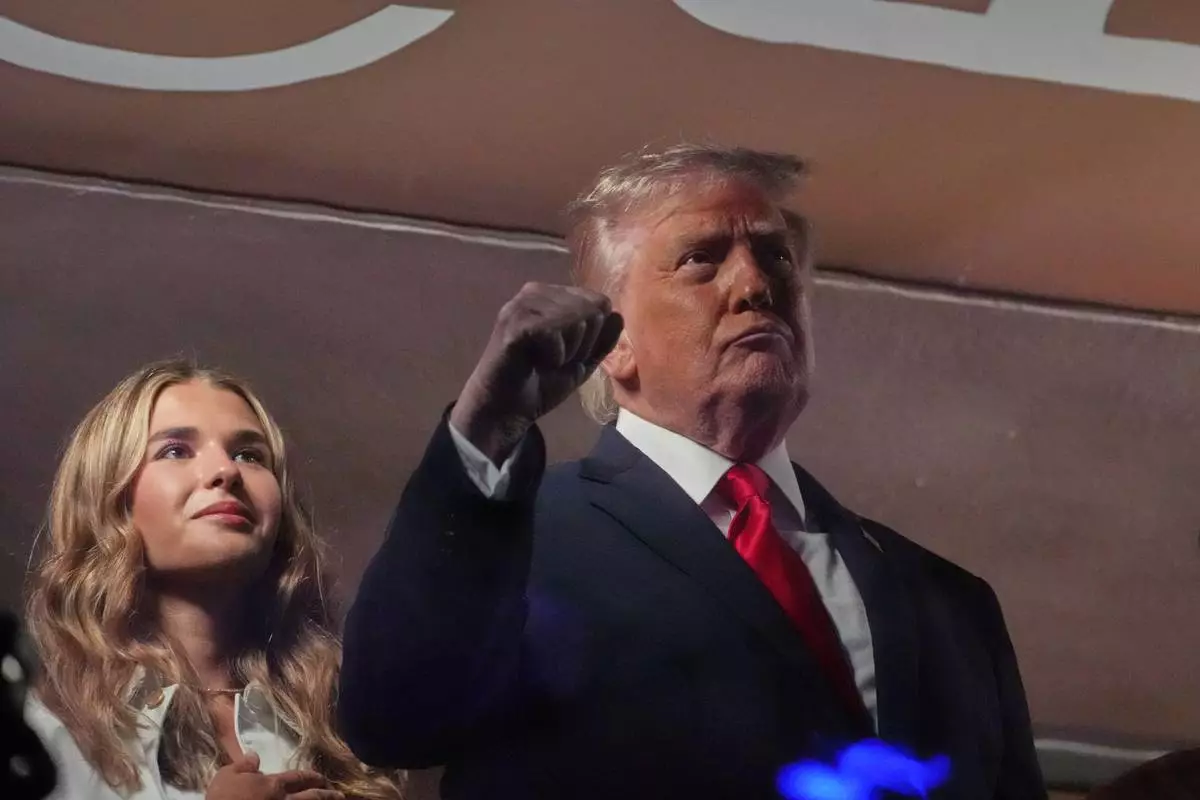
President Donald Trump gestures during the National Anthem as he attends an NBA Finals playoff basketball game between the New York Knicks and the San Antonio Spurs at Madison Square Garden in New York, Monday, June 8, 2026, with Kai Trump, left. (AP Photo/Mark Schiefelbein)
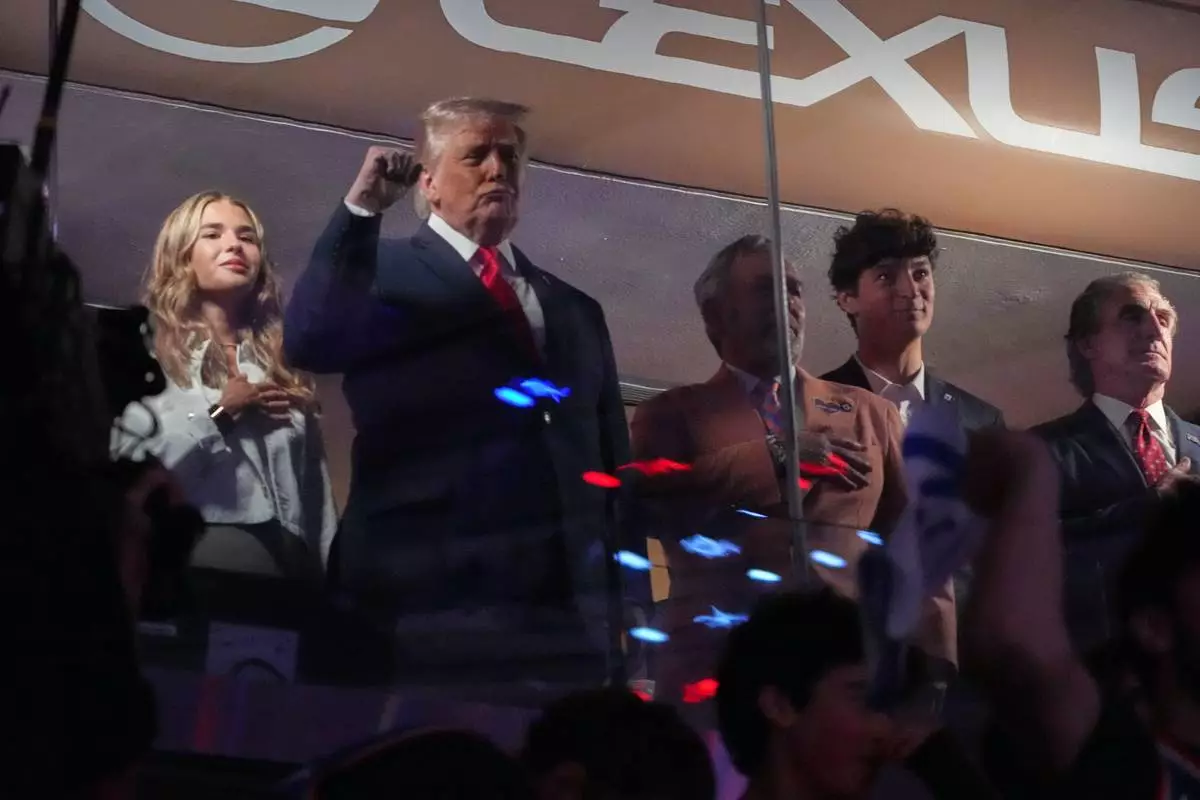
President Donald Trump gestures during the National Anthem as he attends an NBA Finals playoff basketball game between the New York Knicks and the San Antonio Spurs at Madison Square Garden in New York, Monday, June 8, 2026, with Kai Trump, left, Knicks owner James Dolan and Interior Secretary Doug Burgum, right. (AP Photo/Mark Schiefelbein)
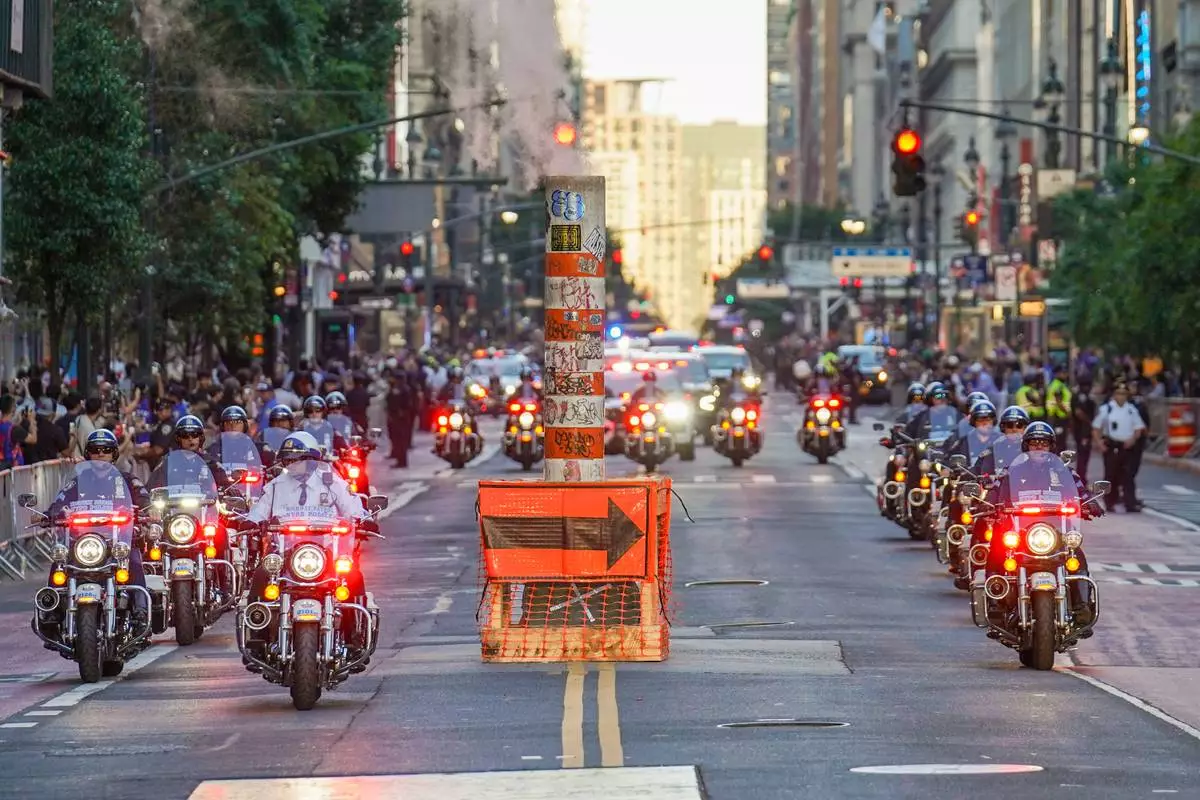
NYPD officers escort the motorcade of President Donald Trump outside of Madison Square Garden ahead of Game 3 of the NBA Finals basketball series, Monday, June 8, 2026, in New York. (AP Photo/Ryan Murphy)
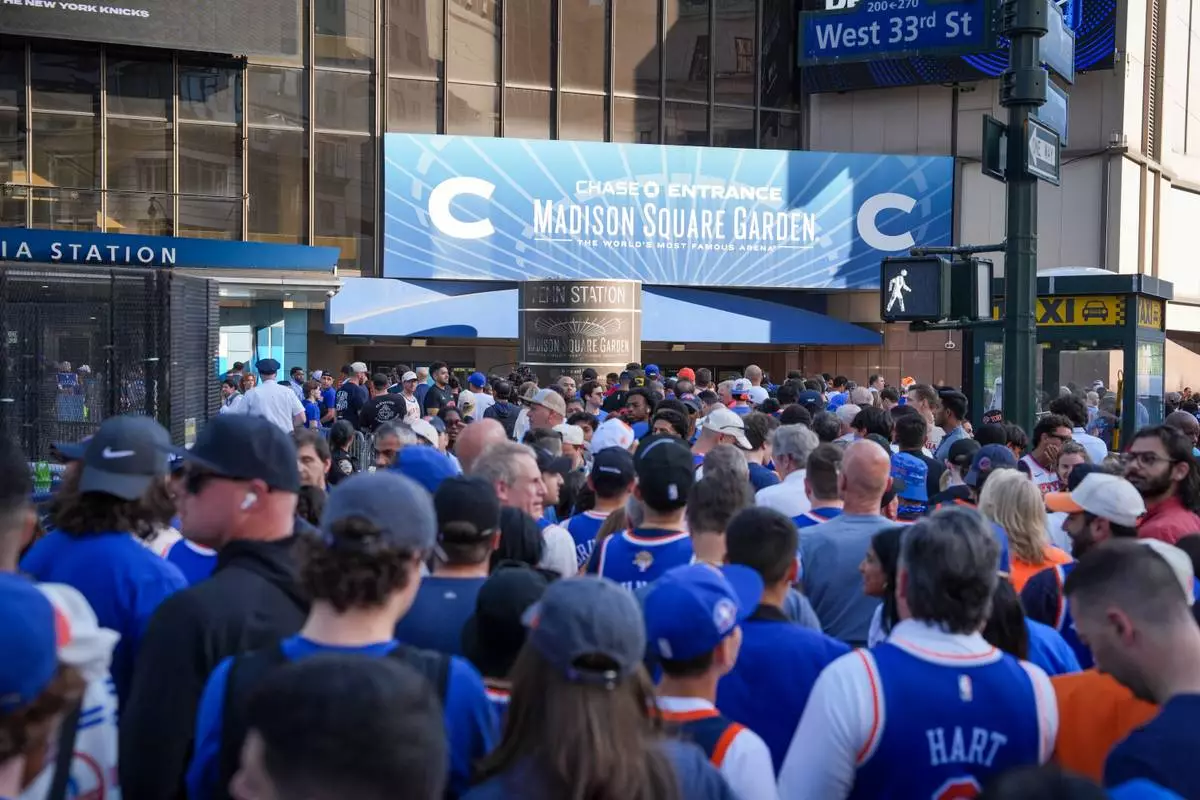
New York Knicks fans wait in line to enter Madison Square Garden ahead of Game 3 of the NBA Finals, Monday, June 8, 2026, in New York. (AP Photo/Ryan Murphy)
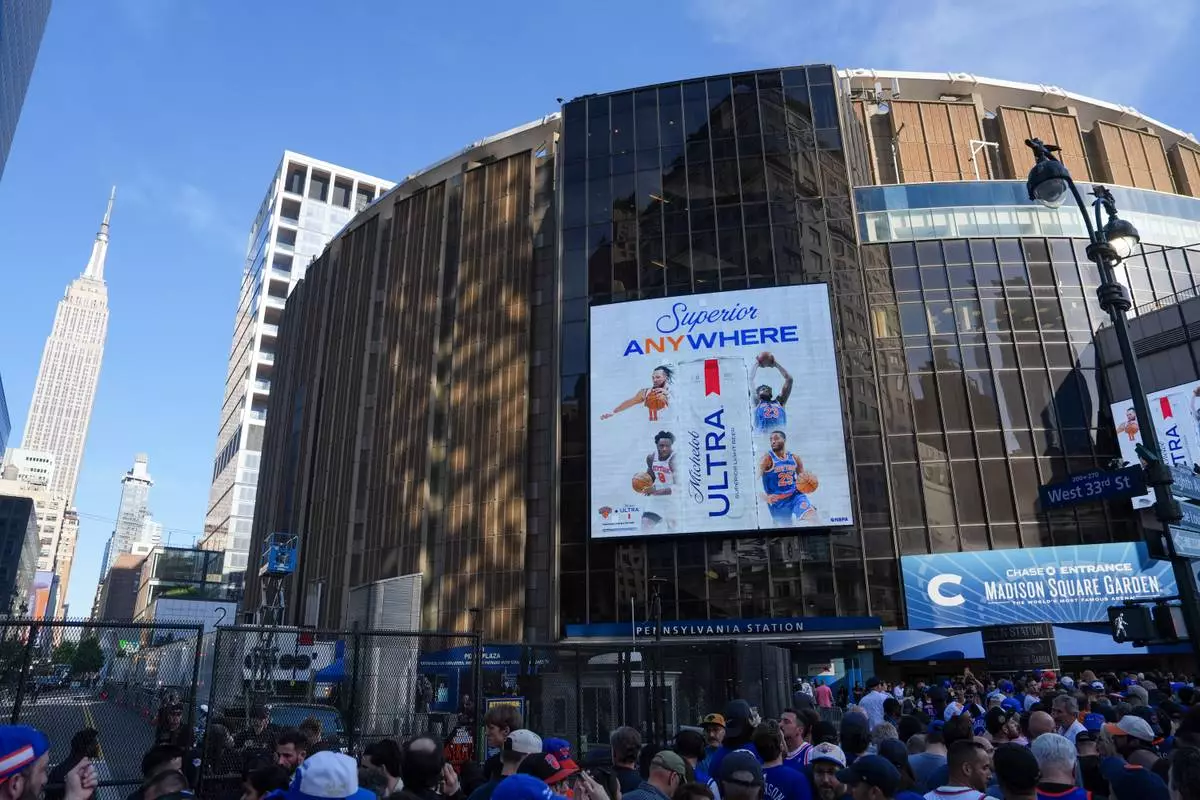
Madison Square Garden ahead of Game 3 of the NBA Finals, Monday, June 8, 2026, in New York. (AP Photo/Ryan Murphy)
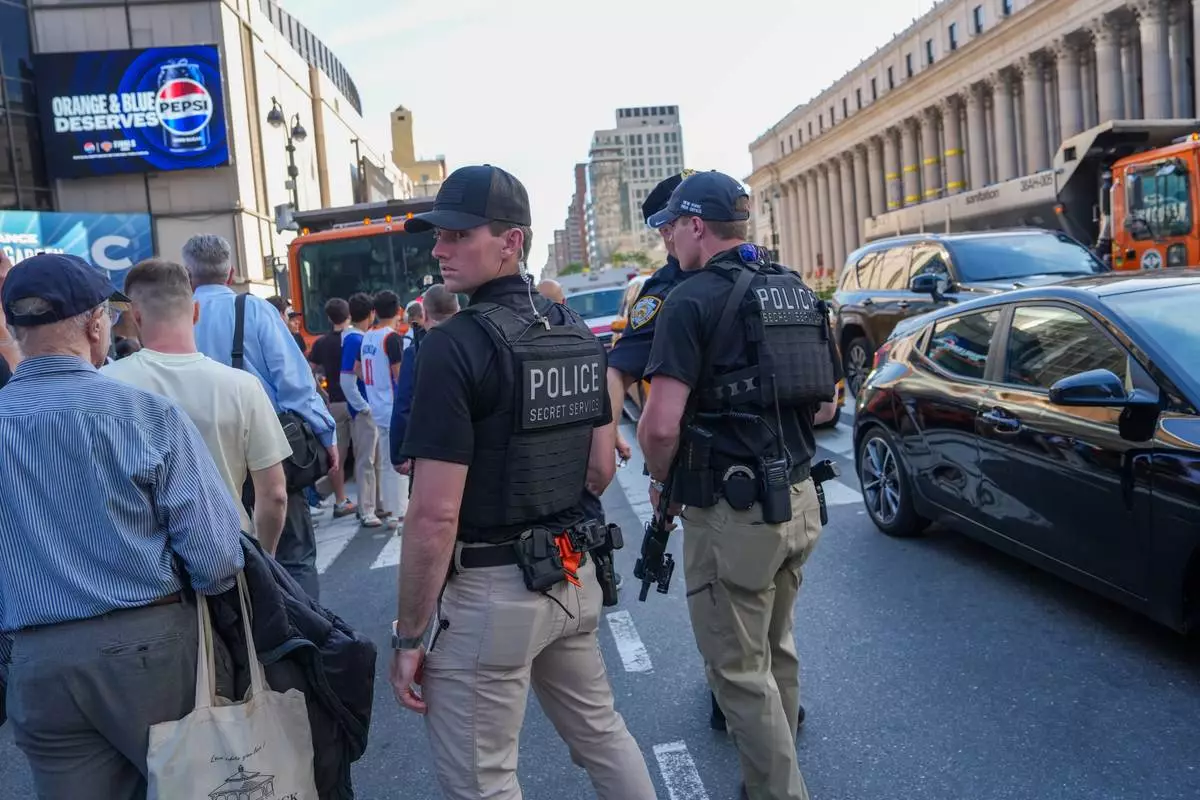
Secret Service agents stand guard in front of Madison Square Garden ahead of Game 3 of the NBA Finals, Monday, June 8, 2026, in New York. (AP Photo/Ryan Murphy)
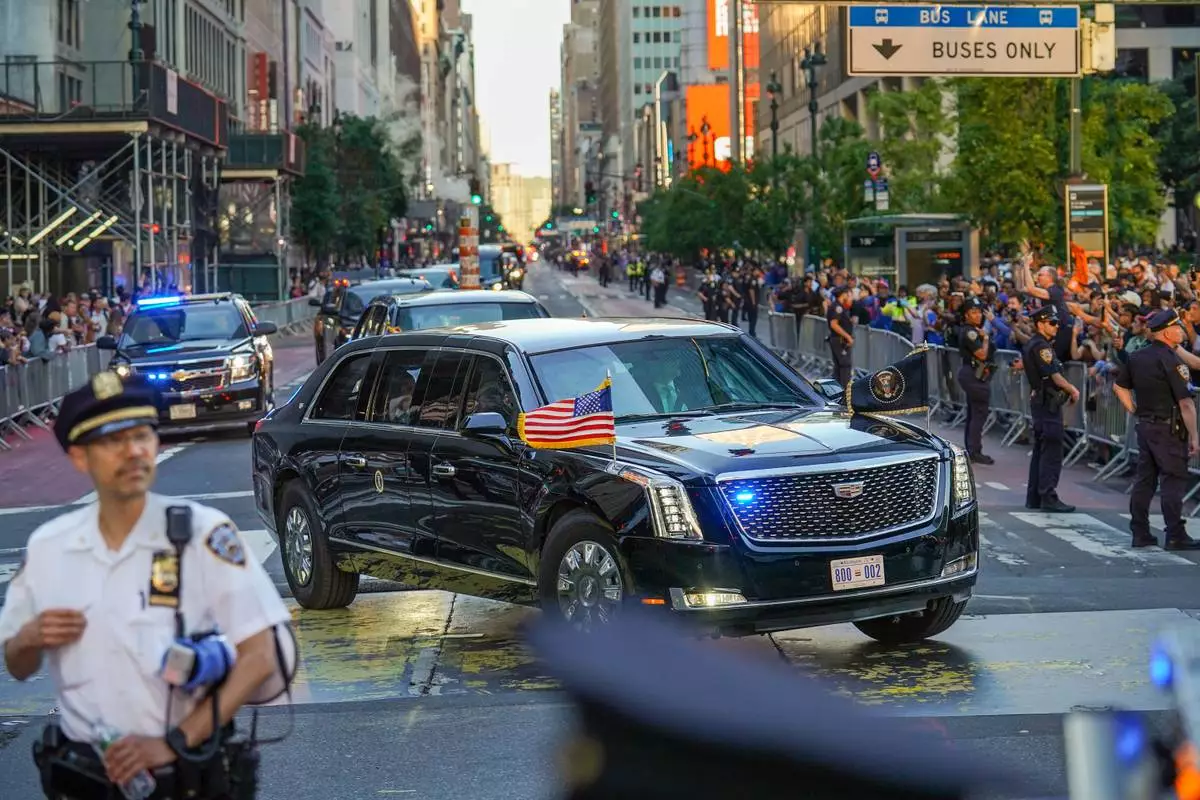
The motorcade of President Donald Trump arrives to Madison Square Garden ahead of Game 3 of the NBA Finals basketball series, Monday, June 8, 2026, in New York. (AP Photo/Ryan Murphy)
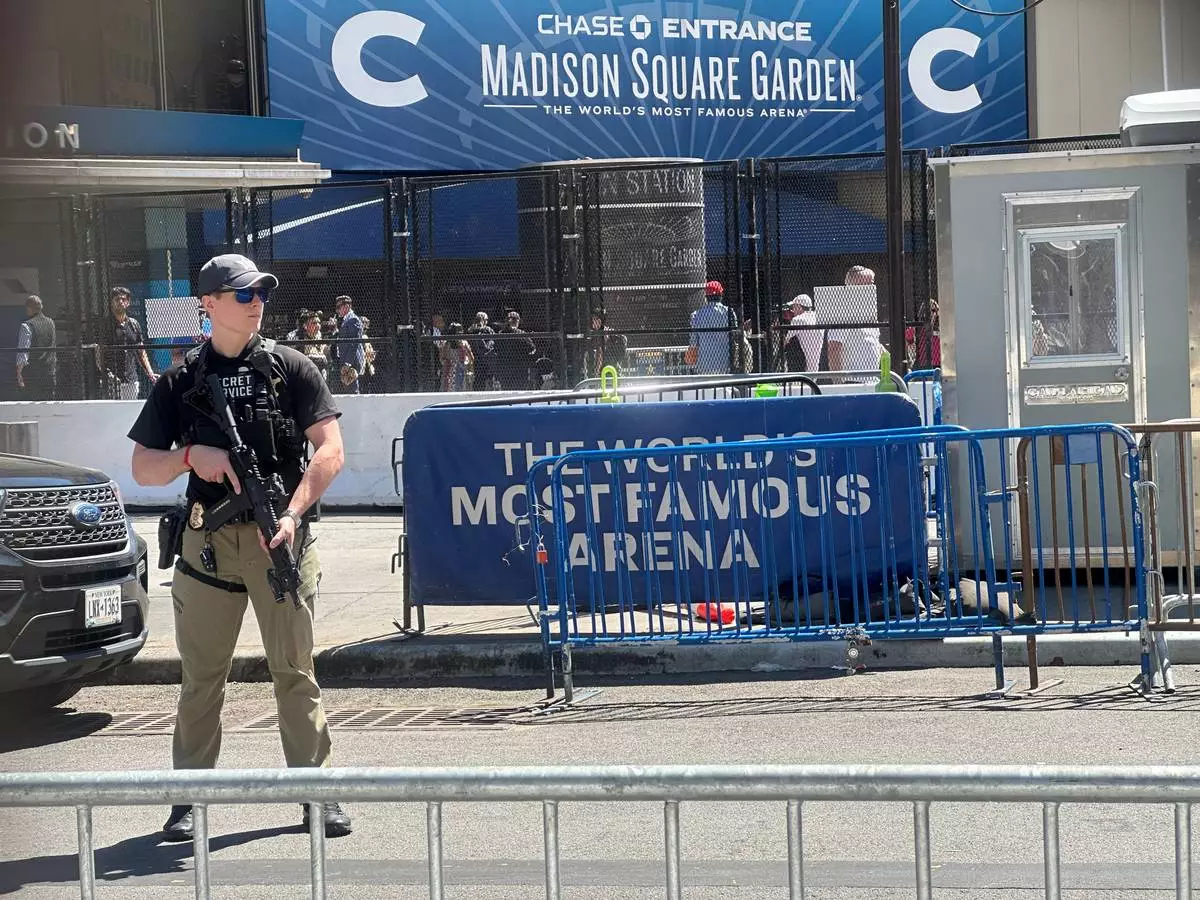
A Secret Service agent stands watch outside Madison Square Garden in New York, Monday, June 8, 2026, as President Donald Trump is set to attend Game 3 of the NBA Finals basketball series between the New York Knicks and the San Antonio Spurs. (AP Photo/Ted Shaffrey)
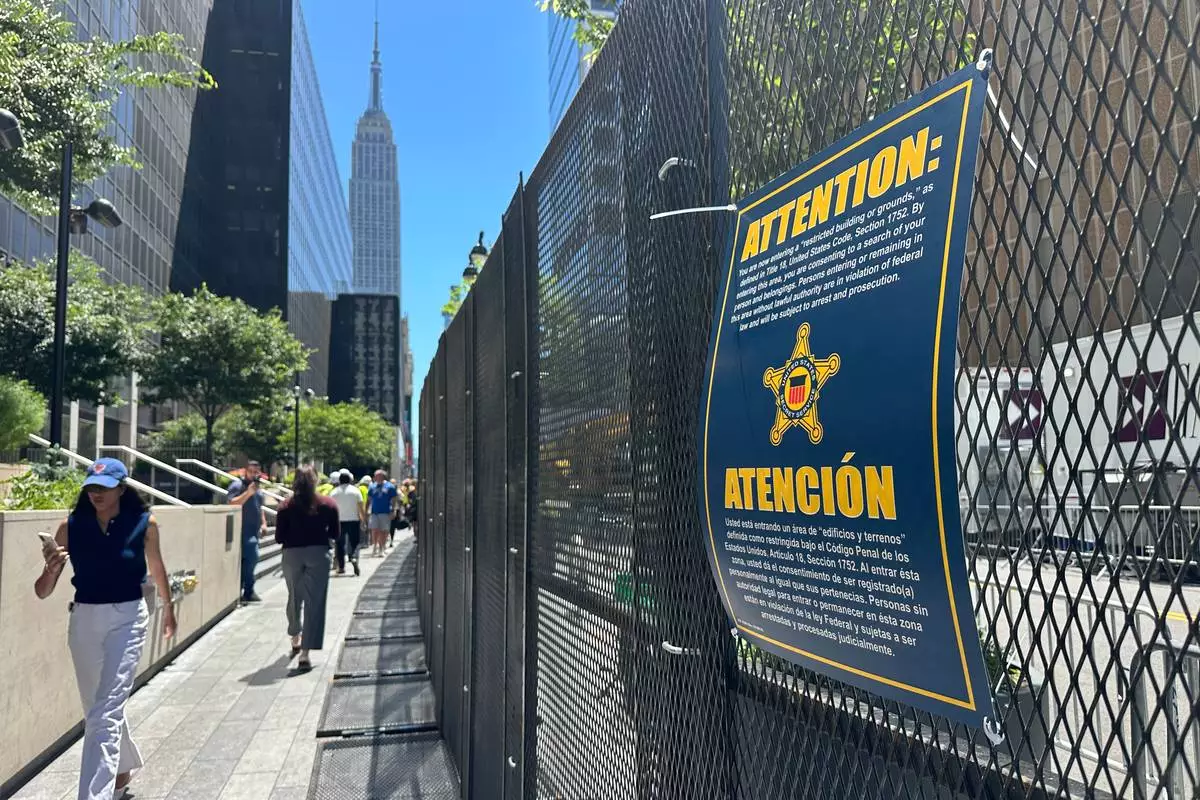
Security fencing is set up outside of Madison Square Garden in New York, Monday, June 8, 2026, as President Donald Trump is set to attend Game 3 of the NBA Finals basketball series between the New York Knicks and the San Antonio Spurs. (AP Photo/Ted Shaffrey)
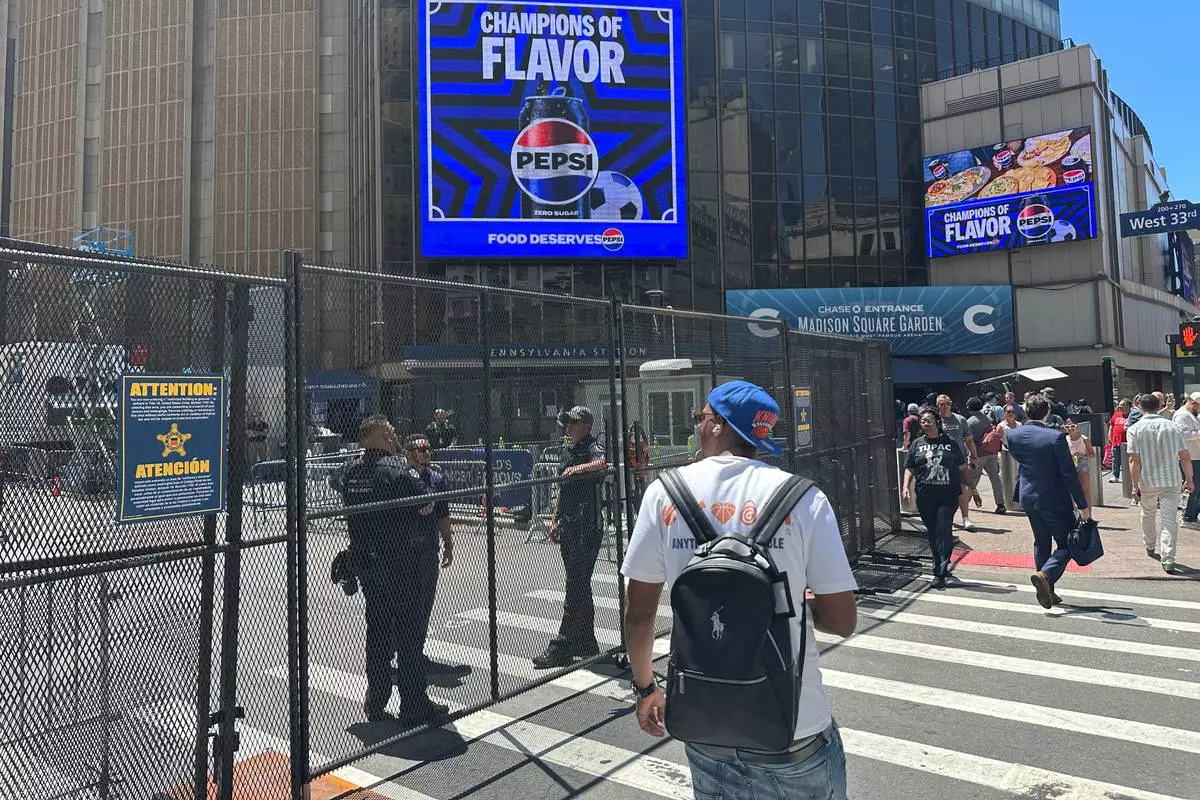
Security is set up outside of Madison Square Garden in New York, Monday, June 8, 2026, as President Donald Trump is set to attend Game 3 of the NBA Finals basketball series between the New York Knicks and the San Antonio Spurs. (AP Photo/Ted Shaffrey)
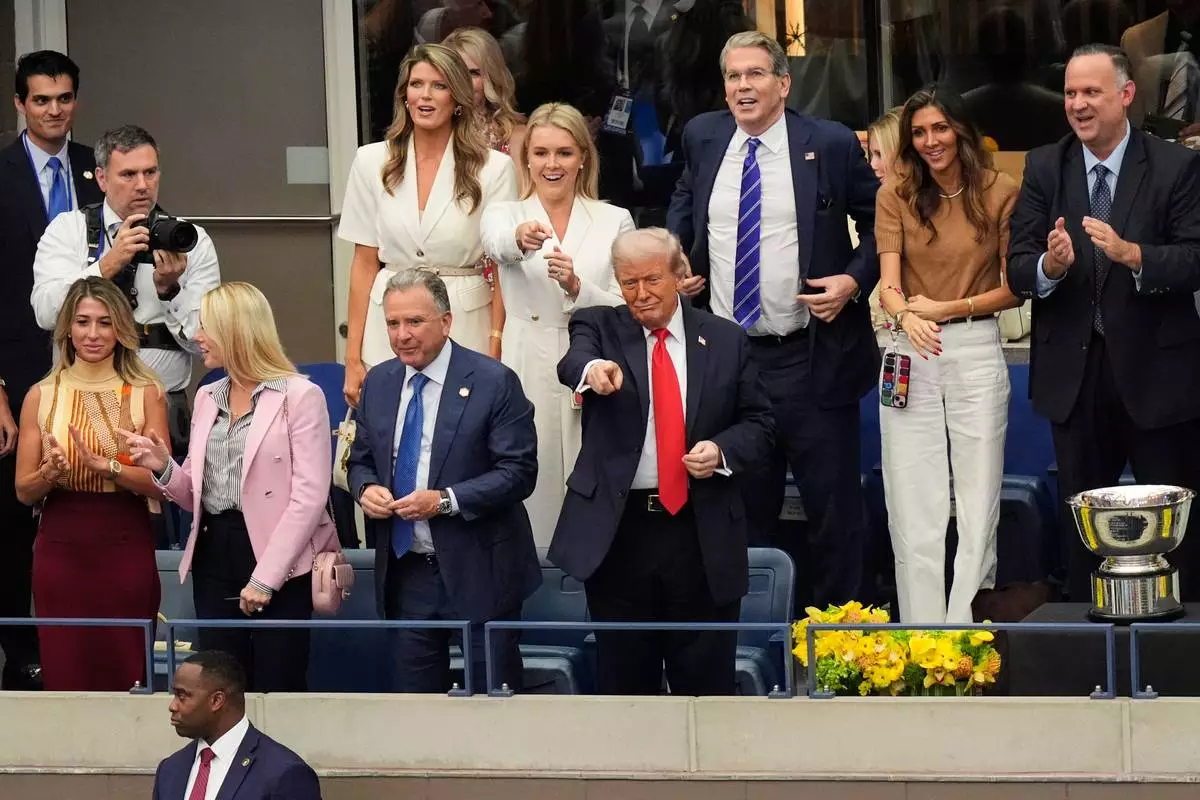
FILE - President Donald Trump, center, attends the men's singles final at the U.S. Open tennis tournament, Sept. 7, 2025, in New York. (AP Photo/Manuel Balce Ceneta, File)
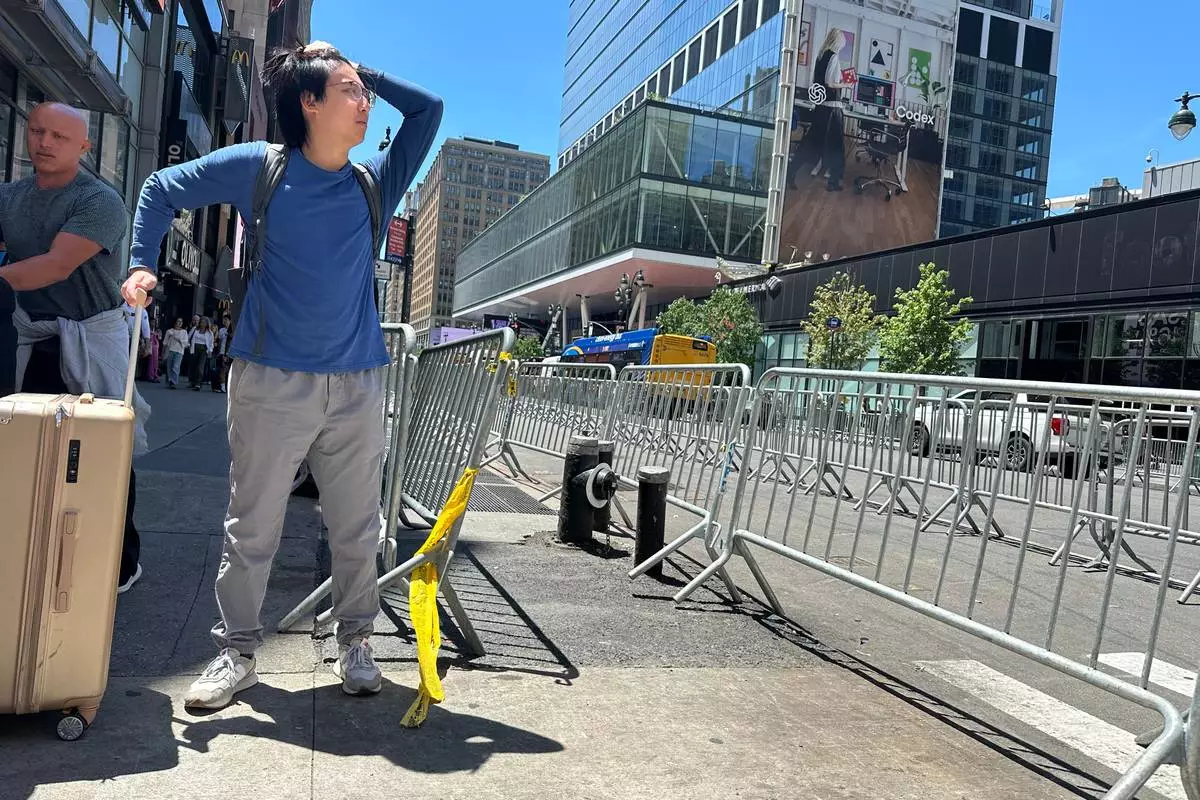
A traveler tries to navigate the area as stringent security measures are set up outside of Madison Square Garden in New York, Monday, June 8, 2026, as President Donald Trump is set to attend Game 3 of the NBA Finals basketball series between the New York Knicks and the San Antonio Spurs. (AP Photo/Ted Shaffrey)
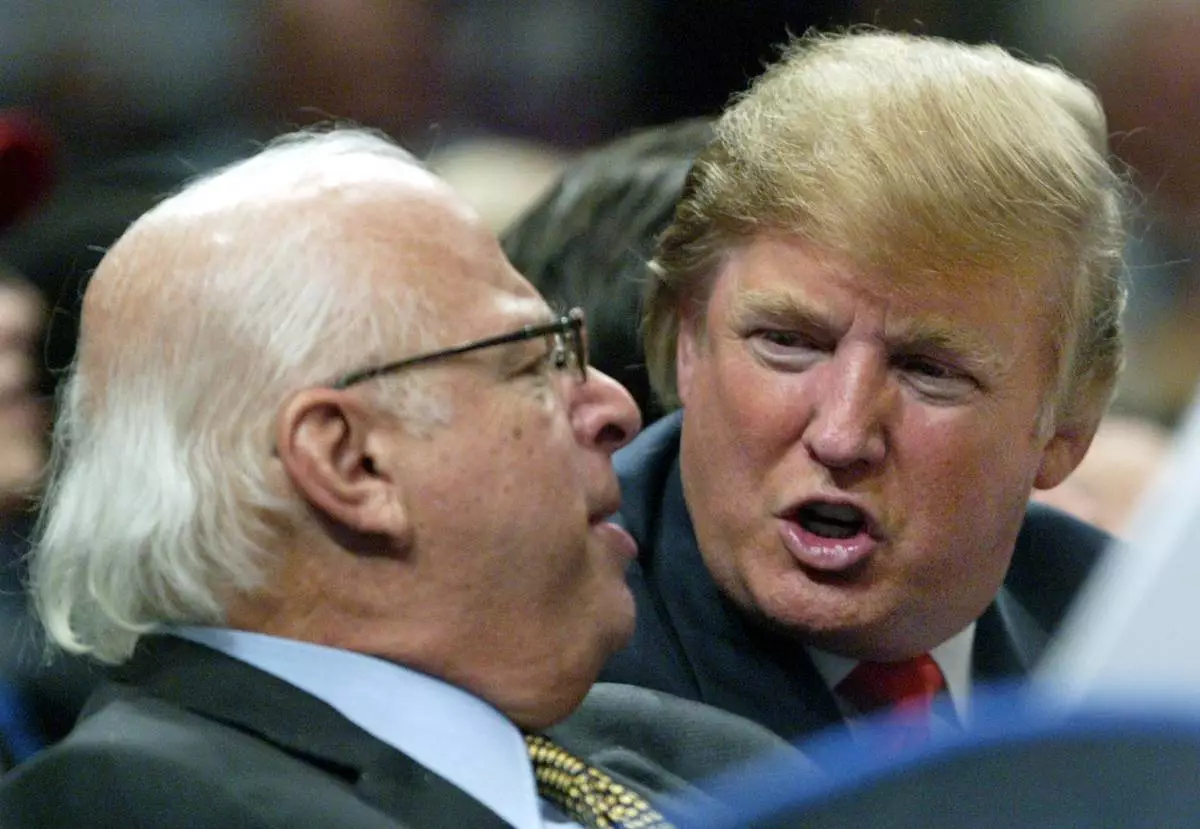
FILE - Donald Trump, right, talks to an unidentified man from the stands at Madison Square Garden during the New York Knicks game against the Dallas Mavericks on Jan. 11, 2006, in New York. (AP Photo/Kathy Willens, File)
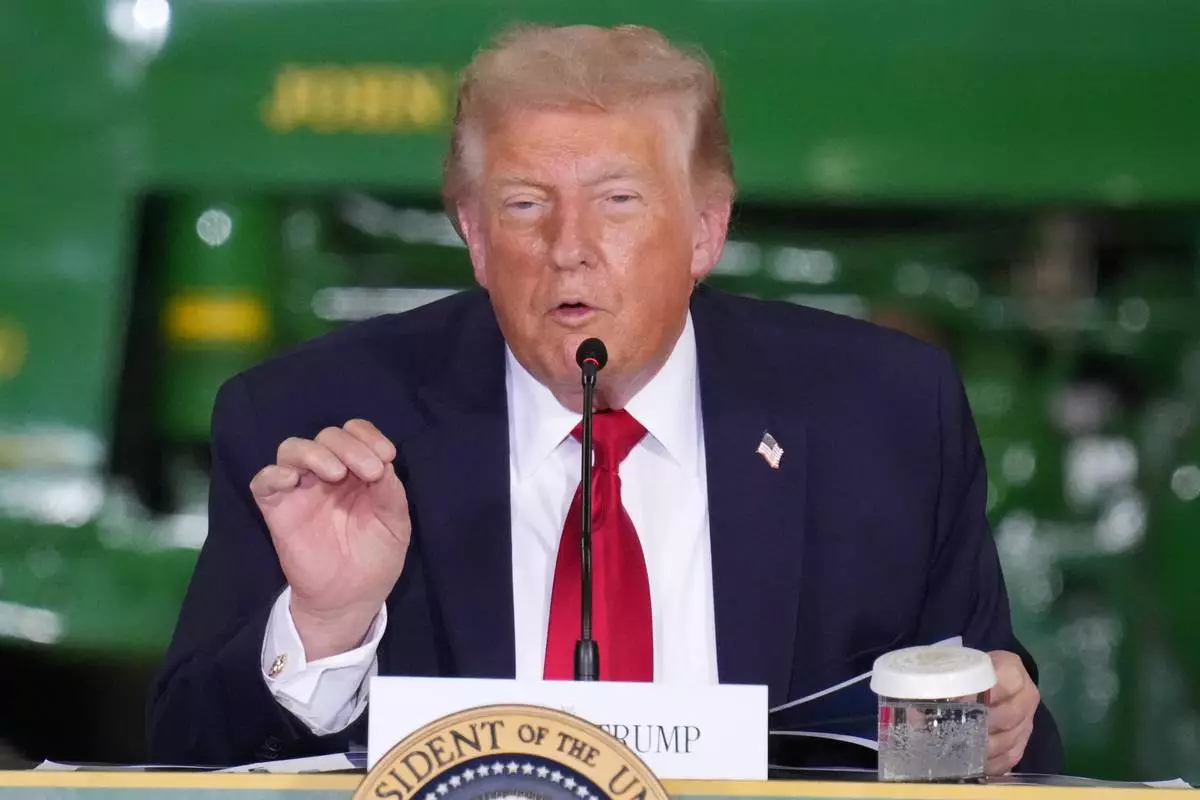
President Donald Trump speaks at Custer Farms in Chippewa Falls, Wis., Friday, June 5, 2026. (AP Photo/Glen Stubbe)