Beijing is unveiling a series of sculptures and landscape displays to commemorate the 80th anniversary of the victory in the Chinese People's War of Resistance Against Japanese Aggression and the World Anti-Fascist War, adding to the grand and solemn atmosphere in the city.
At Qianmen Street along Beijing's central axis, a new sculpture titled ‘United as One’ merges elements such as the red flag, a Chinese dragon, flames, and the Chinese character which means "the people”, vividly symbolizing the strength of national unity and collective progress of the Chinese nation.
"The shape of the sculpture mimics the glowing fire, constantly rising upward," said visitor Chen Kesheng.
Displays have also been installed along Chang'an Avenue, with the landmark rainbow archways at Jianguomen and Fuxingmen now bearing the "80th Anniversary" emblem. Fourteen white doves, symbolizing peace, freedom, and the 14 years of the Chinese People's War of Resistance, adorn the tops of the arches.
"We have hung red flags for the first time on the streetlights along the Dongdan and Xidan sections of Chang'an Avenue, creating a linear visual effect along the street, and accentuating the solemn atmosphere at Tian'anmen Square for the commemorative event. Together with the rainbow bridge light displays at night, the decorations highlight the nation's journey from striving for peace to rejuvenation," said Guo Yanbo, a staff member at the Beijing Municipal Commission of Urban Management.
In the coming days, Beijing will raise about 230,000 national and red flags across the city, along with floral displays, lighting installations, and other decorations ahead of the anniversary celebrations on Sep 3.
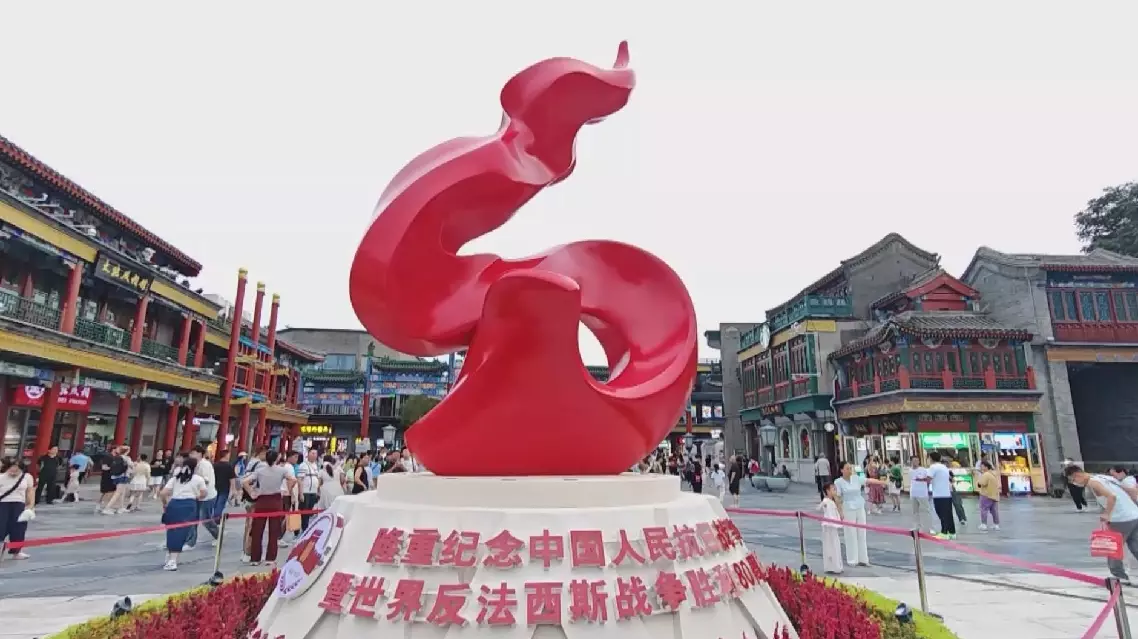
Beijing unveils sculptures, landscape displays for V-Day commemorations
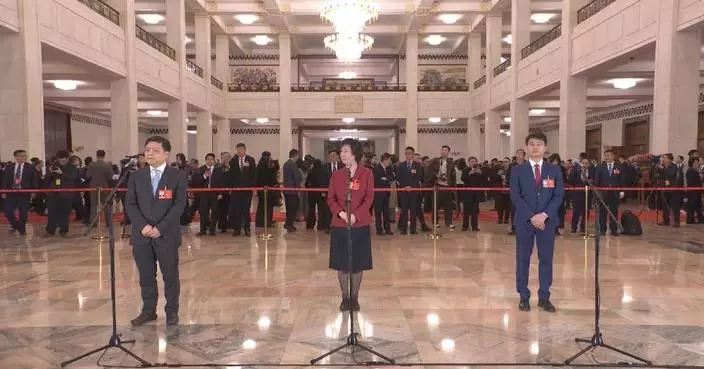
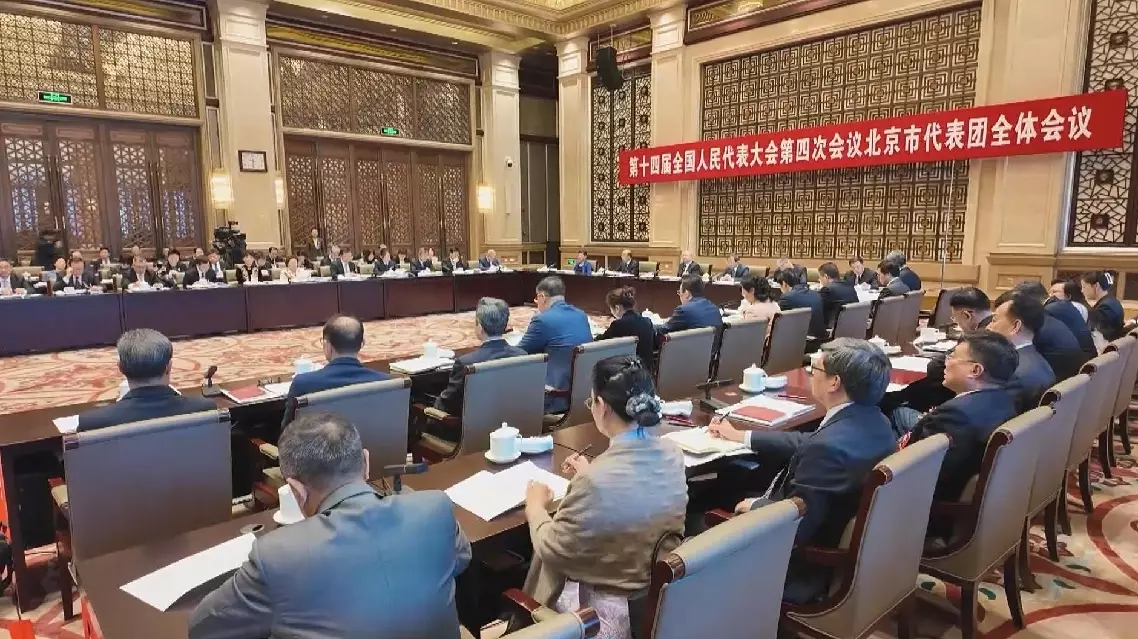
Rapid developments in advanced industries across China, including AI and robotics, were major topics of discussion at open press interviews on Friday with leading researchers and industry executives serving as deputies to the 14th National People's Congress (NPC), currently in its ongoing fourth session.
The NPC, China's top legislature, is holding its annual session from Thursday through March 12.
At a series of open press events, delegations from various parts of the country, including Beijing, south China's Guangxi Zhuang Autonomous Region and east China's Jiangxi Province, took questions on how their regions are shaping China's technological progress.
Deng Langni, a deputy to the 14th NPC and vice chairman of Guangxi University of Science and Technology, emphasized that as sources of innovation, universities need to take the initiative and provide strong support for the AI industry's development at the local level.
"The rapid pace of industrial transformation poses serious challenges to traditional disciplines and majors, pushing universities to 'break down walls' and bring classrooms onto industrial chains. Taking Guangxi University of Science and Technology as an example, it has quickly launched a number of AI-related micro-credentials across the campus, enabling students from different majors to gain 'AI thinking' and provide urgently-needed compound talents for industrial upgrading in Guangxi," said Deng.
A deputy from Beijing, Lei Jun, founder of consumer tech giant Xiaomi, offered an optimistic vision on the transformative impact that technological advances will have in manufacturing and industry.
"Sci-tech innovation can accelerate the development of new quality productive forces. Private enterprises have a key advantage in being close to markets and users, responding quickly, and rapidly applying new technologies to real-world scenarios. Humanoid robots have already been deployed in automobile factories, and I believe that, in the coming years, they will enter factories on a large scale," he said.
During the open event hosted by the Jiangxi NPC delegation, deputies said that the province has mapped out six key areas for future industries, including bold new areas such as embodied intelligence, brain-computer interfaces and humanoid robots.
"Many aviation, automotive and equipment manufacturing companies in Jiangxi are using intelligent robots, virtual reality and metaverse technologies to upgrade manufacturing. Workers can remotely operate equipment using immersive interfaces. Over the years, we have been dedicated to researching the key algorithms necessary for the efficient collaboration among embodied intelligent humanoid robots, digital humans and people," said NPC deputy Min Weidong, also the dean of the Metaverse Research Institute at Nanchang University.
Innovation experts from across China highlight accelerated tech deployment