A measure that would allow nearly any private citizen to sue out-of-state prescribers and others who send abortion pills into Texas has won first-round approval in the state House.
It would be the first law of its kind in the country and part of the ongoing effort by abortion opponents to fight the broad use of the pills, which are used in the majority of abortions in the U.S. — including in states where abortion is illegal.
The bill passed in the House on Thursday and could receive a final vote in the Republican-dominated state Senate next week. If that happens, it would be up to Republican Gov. Greg Abbott, to decide whether to sign it into law.
Here are things to know about the Texas legislation and other legal challenges to abortion pills.
Even before the U.S. Supreme Court in 2022 overturned Roe v. Wade and allowed state abortion bans, pills — most often a combination of mifepristone and misoprostol — were the most common way to obtain abortion access.
Now, with Texas and 11 other states enforcing bans on abortion at all stages of pregnancy, and four more that bar most of them after the first six weeks or so of gestation, the pills have become an even more essential way abortion is provided in the U.S.
“We believe that women need to be protected from the harms of chemical abortion drugs,” said Amy O’Donnell, a spokesperson for Texas Alliance for Life, which supports the bill. “They harm women and their intent is to harm unborn babies.”
Under the bill, providers could be ordered to pay $100,000. But only the pregnant woman, the man who impregnated her or other close relatives could collect the entire amount. Anyone else who sues could receive only $10,000, with the remaining $90,000 going to charity.
The measure echoes a 2021 Texas law that uses the prospect of lawsuits from private citizens to enforce a ban on abortion once fetal activity can be detected — at about six weeks’ gestation. The state also has a ban on abortions at all stages of pregnancy.
The pill bill also contains provisions intended to keep those with a history of family violence from collecting and barring disclosure of women’s personal or medical information in court documents.
Anna Rupani, executive director of Fund Texas Choice, a group that helps women access abortion, including by traveling to other states for it, said the law is problematic.
“It establishes a bounty hunting system to enforce Texas’ laws beyond the state laws,” she said.
While most Republican-controlled states have restricted or banned abortions in the last three years, most Democratic-controlled states have taken steps to protect access.
And at least eight states have laws that seek to protect prescribers who send abortion pills to women in states where abortion is banned.
There are already legal battles that could challenge those, both involving the same New York doctor.
Louisiana has brought criminal charges against Dr. Maggie Carpenter, accusing her of prescribing the pills to a pregnant minor. And a Texas judge has ordered her to pay a $100,000 penalty plus legal fees for violating that state’s ban on prescribing abortion medication by telemedicine. New York officials are refusing to extradite her to Louisiana or to enter the Texas civil judgement.
If the Texas law is adopted and use, it’s certain to trigger a new round of legal battles over whether laws from one state can be enforced in another.
“Its very different from what’s come before it,” said Greer Donley, a University of Pittsburgh law professor who studies the legal landscape of abortion.
Texas and Florida — the second and third most populous states in the country — asked a court last week to let them join a lawsuit filed last year by the Republican attorneys general of Idaho, Kansas and Missouri to make mifepristone harder to access.
Those states contend — as many abortion opponents do — that mifepristone is too risky to be prescribed via telehealth and that the U.S. Food and Drug Administration should roll back approvals and tighten access.
The U.S. Supreme Court last year unanimously rejected a case making similar arguments, saying the anti-abortion doctors behind it did lacked the legal standing to take up the case.
This week, more than 260 reproductive health researchers from across the nation submitted a letter to the U.S. Food and Drug Administration affirming the safety record of the abortion medication mifepristone. In the letter, the researchers urge the FDA not to impose new restrictions on the drug and to make decisions based on “gold-standard science.”
The FDA is also facing a lawsuit from a Hawaii doctor and heath care associations arguing that it restricts mifepristone too much
Associated Press Science Writer Laura Ungar contributed to this article.
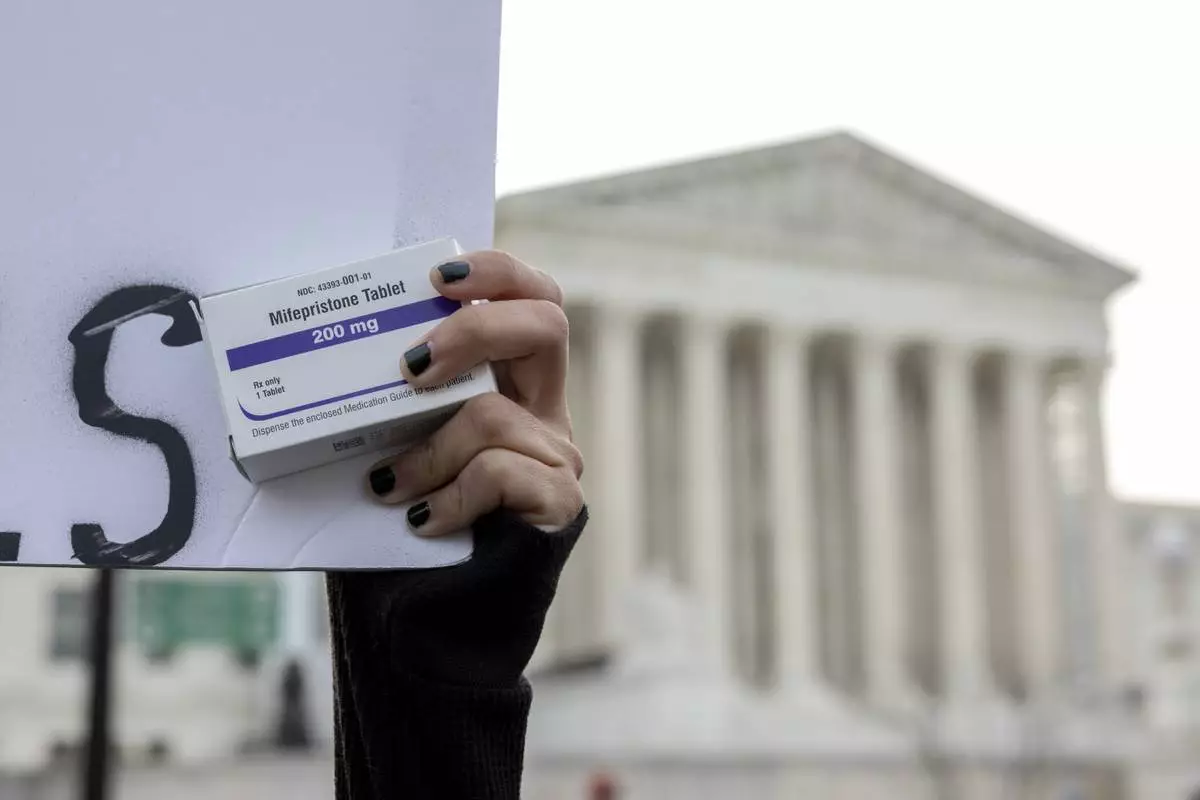
FILE - An abortion-rights activist holds a box of mifepristone pills as demonstrators from both anti-abortion and abortion-rights groups rally outside the Supreme Court in Washington, on March 26, 2024. (AP Photo/Amanda Andrade-Rhoades, File)
HAMIMA, Syria (AP) — A trickle of civilians left a contested area east of Aleppo on Thursday after a warning by the Syrian military to evacuate ahead of an anticipated government military offensive against Kurdish-led forces.
Government officials and some residents who managed to get out said the Kurdish-led Syrian Democratic Forces prevented people from leaving via the corridor designated by the military along the main road leading west from the town of Maskana through Deir Hafer to the town of Hamima.
The SDF denied the reports that they were blocking the evacuation.
In Hamima, ambulances and government officials were gathered beginning early in the morning waiting to receive the evacuees and take them to shelters, but few arrived.
Farhat Khorto, a member of the executive office of Aleppo Governorate who was waiting there, claimed that there were "nearly two hundred civilian cars and hundreds of people who wanted to leave” the Deir Hafer area but that they were prevented by the SDF. He said the SDF was warning residents they could face “sniping operations or booby-trapped explosives” along that route.
Some families said they got out of the evacuation zone by taking back roads or going part of the distance on foot.
“We tried to leave this morning, but the SDF prevented us. So we left on foot … we walked about seven to eight kilometers until we hit the main road, and there the civil defense took us and things were good then,” said Saleh al-Othman, who said he fled Deir Hafer with more than 50 relatives.
Yasser al-Hasno, also from Deir Hafer, said he and his family left via back roads because the main routes were closed and finally crossed a small river on foot to get out of the evacuation area.
Another Deir Hafer resident who crossed the river on foot, Ahmad al-Ali, said, “We only made it here by bribing people. They still have not allowed a single person to go through the main crossing."
Farhad Shami, a spokesman for the SDF, said the allegations that the group had prevented civilians from leaving were “baseless.” He suggested that government shelling was deterring residents from moving.
The SDF later issued a statement also denying that it had blocked civilians from fleeing. It said that “any displacement of civilians under threat of force by Damascus constitutes a war crime" and called on the international community to condemn it.
“Today, the people of Deir Hafer have demonstrated their unwavering commitment to their land and homes, and no party can deprive them of their right to remain there under military pressure,” it said.
The Syrian army’s announcement late Wednesday — which said civilians would be able to evacuate through the “humanitarian corridor” from 9 a.m. to 5 p.m. Thursday — appeared to signal plans for an offensive against the SDF in the area east of Aleppo. Already there have been limited exchanges of fire between the two sides.
Thursday evening, the military said it would extend the humanitarian corridor for another day.
The Syrian military called on the SDF and other armed groups to withdraw to the other side of the Euphrates River, to the east of the contested zone. The SDF controls large swaths of northeastern Syria east of the river.
The tensions in the Deir Hafer area come after several days of intense clashes last week in Aleppo city that ended with the evacuation of Kurdish fighters and government forces taking control of three contested neighborhoods.
The fighting broke out as negotiations have stalled between Damascus and the SDF over an agreement reached last March to integrate their forces and for the central government to take control of institutions including border crossings and oil fields in the northeast.
Some of the factions that make up the new Syrian army, which was formed after the fall of former President Bashar Assad in a rebel offensive in December 2024, were previously Turkey-backed insurgent groups that have a long history of clashing with Kurdish forces.
The SDF for years has been the main U.S. partner in Syria in fighting against the Islamic State group, but Turkey considers the SDF a terrorist organization because of its association with Kurdish separatist insurgents in Turkey.
Despite the long-running U.S. support for the SDF, the Trump administration has also developed close ties with the government of interim Syrian President Ahmad al-Sharaa and has so far avoided publicly taking sides in the clashes in Aleppo.
Ilham Ahmed, head of foreign relations for the SDF-affiliated Kurdish-led administration in northeast Syria, at a press conference Thursday said SDF officials were in contact with the United States and Turkey and had presented several initiatives for de-escalation. She said that claims by Damascus that the SDF had failed to implement the March agreement were false.
——
Associated Press journalist Hogir Al Abdo in Qamishli, Syria, contributed.
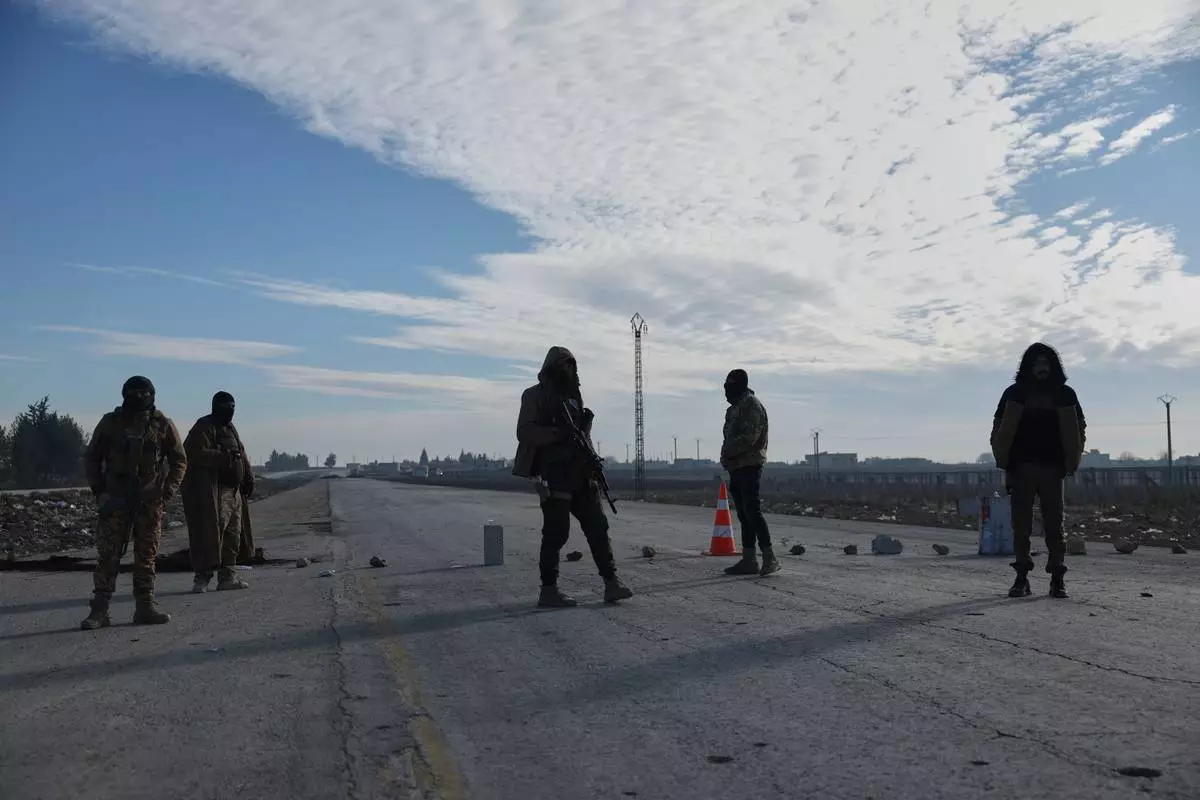
Members of the Syrian military police stand at a humanitarian crossing declared by the Syrian army in the village of Hamima, in the eastern Aleppo countryside, near the front line with the Kurdish-led Syrian Democratic Forces in Deir Hafer, Syria, Thursday, Jan. 15, 2026. (AP Photo/Ghaith Alsayed)
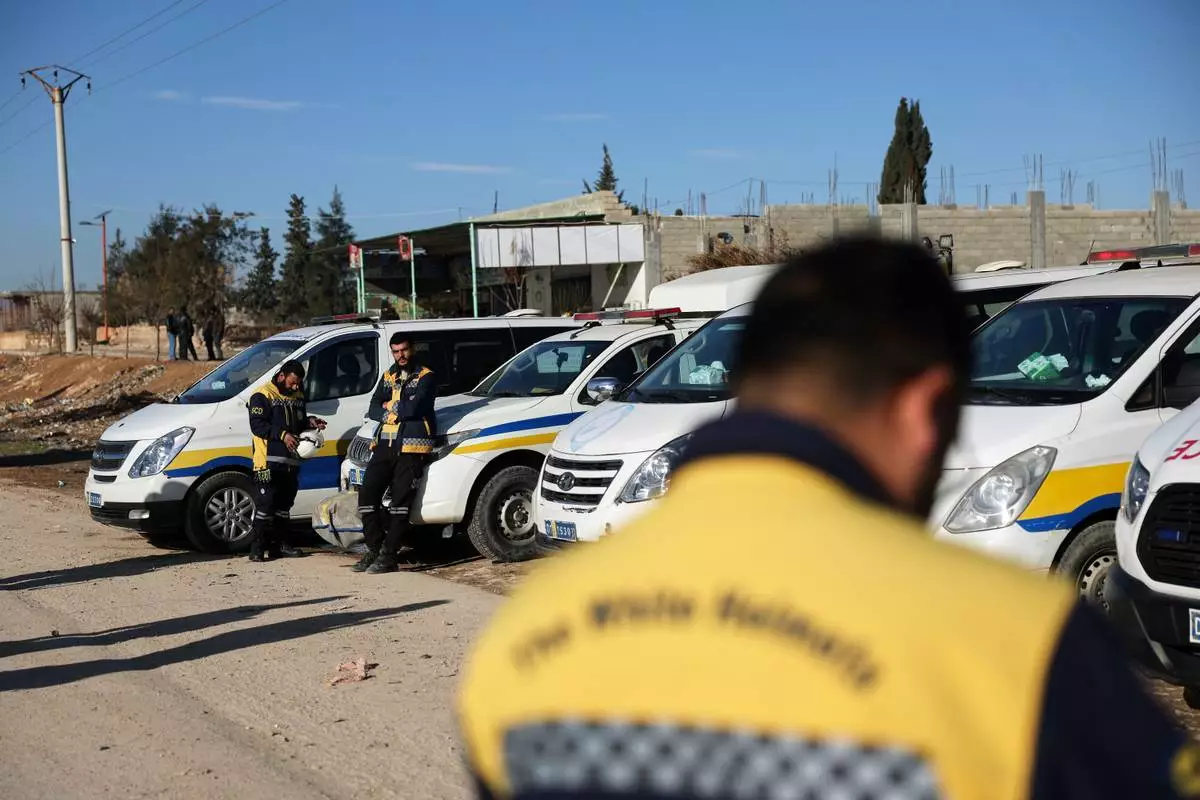
Members of the Syrian Civil Defense, stand next to their vehicles at a humanitarian crossing declared by the Syrian army in the village of Hamima, in the eastern Aleppo countryside, near the front line with the Kurdish-led Syrian Democratic Forces in Deir Hafer, Syria, Thursday, Jan. 15, 2026. (AP Photo/Ghaith Alsayed)
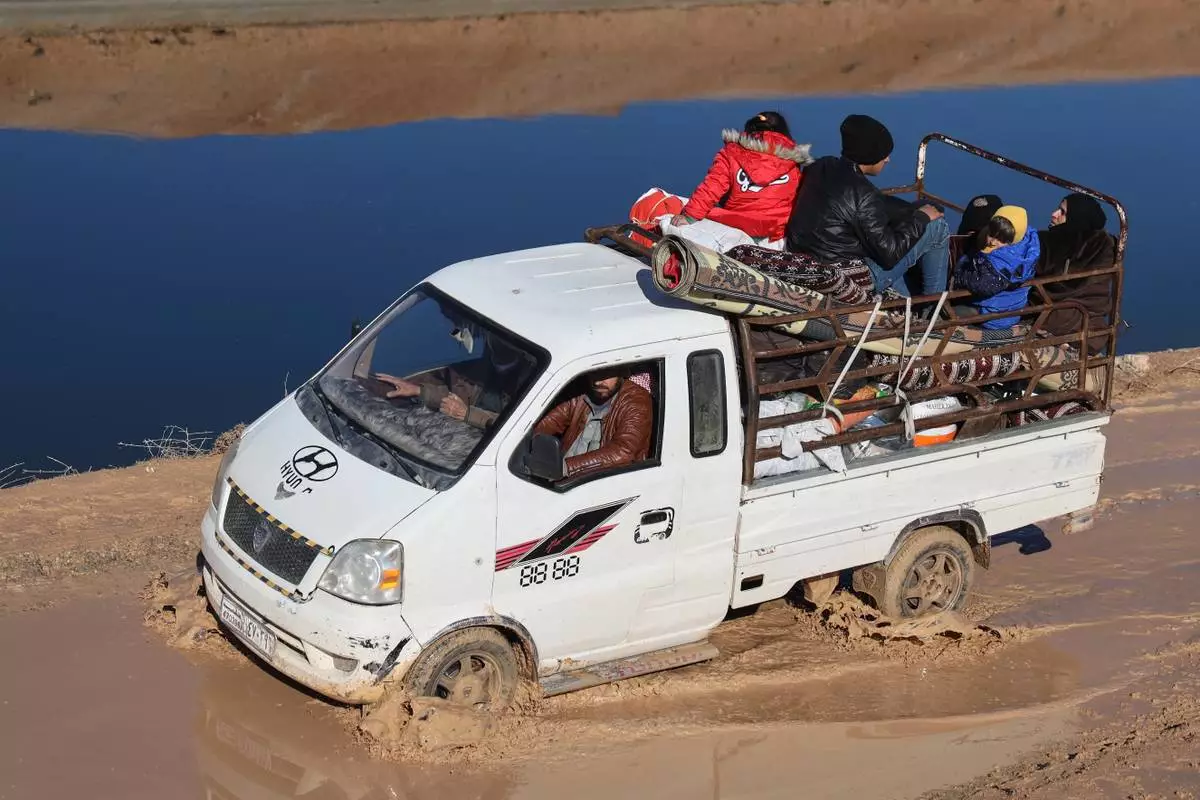
A displaced Syrian family rides in the back of a truck near a humanitarian crossing declared by the Syrian army next to a river in the village of Rasm Al-Abboud, in the eastern Aleppo countryside, near the front line with the Kurdish-led Syrian Democratic Forces in Deir Hafer, Syria, Thursday, Jan. 15, 2026. (AP Photo/Omar Albam)
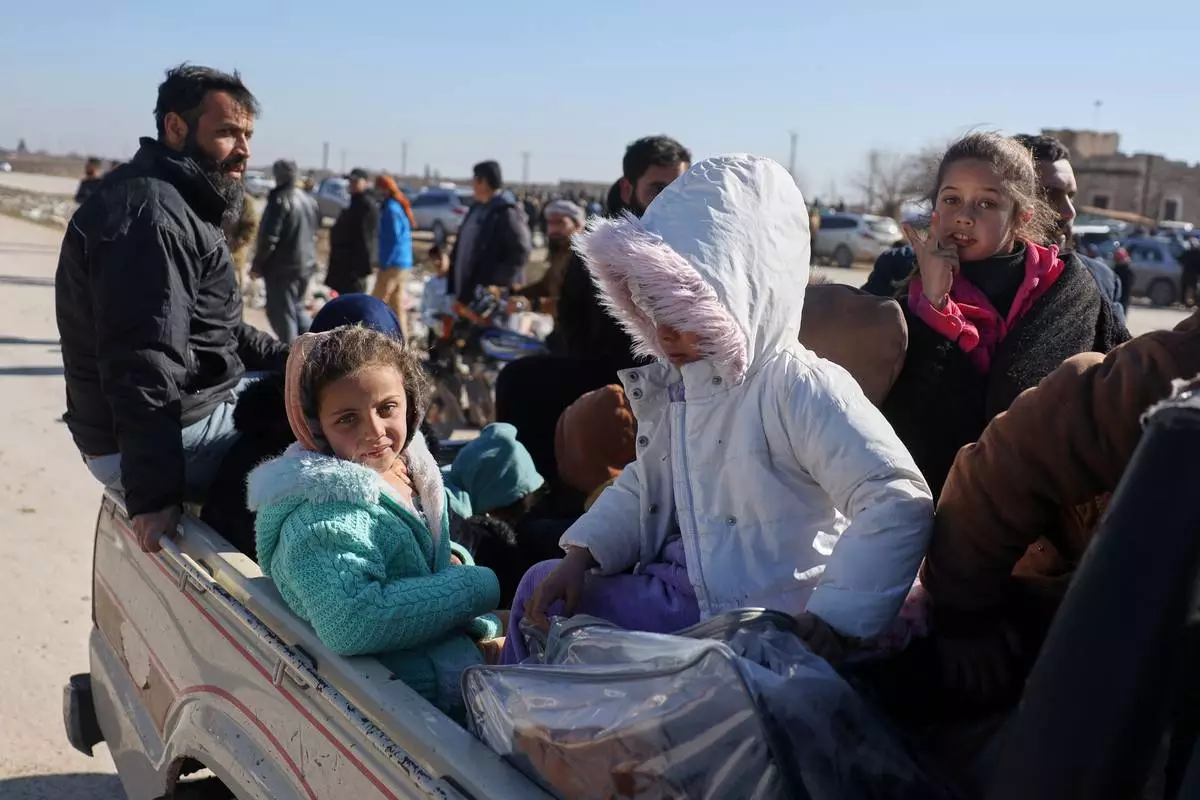
Displaced Syrian children and women ride in the back of a truck near a humanitarian crossing declared by the Syrian army in the village of Hamima, in the eastern Aleppo countryside, near the front line with the Kurdish-led Syrian Democratic Forces in Deir Hafer, Syria, Thursday, Jan. 15, 2026. (AP Photo/Omar Albam)
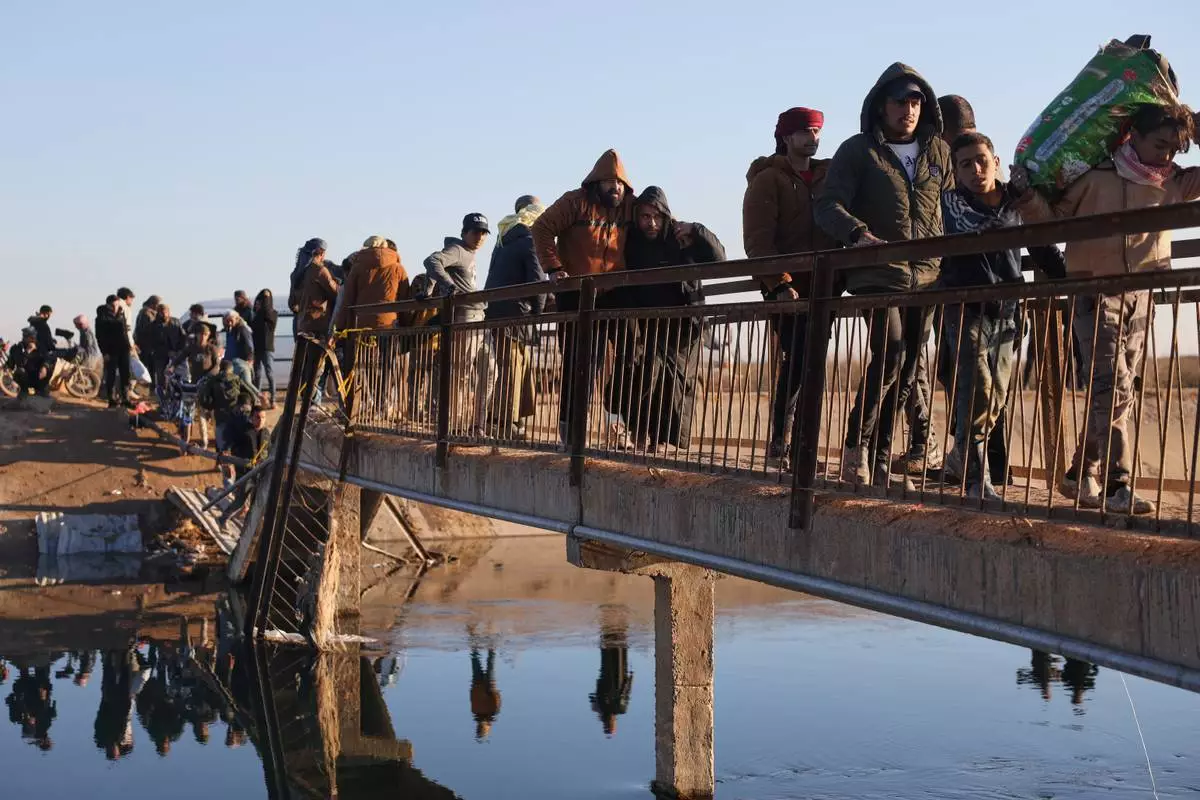
Displaced Syrians at a river crossing near the village of Jarirat al Imam, in the eastern Aleppo countryside, near the front line with the Kurdish-led Syrian Democratic Forces in Deir Hafer, Syria, Thursday, Jan. 15, 2026. (AP Photo/Omar Albam)