Beijing has launched artificial intelligence (AI) education across all primary and secondary schools this semester, marking a major step in China's national push to embed AI into every stage of learning.
China's State Council recently issued a guideline to advance the AI Plus Initiative, accelerating the integration of AI across diverse industries, with a strong emphasis on education.
Many schools in Beijing had already begun piloting AI-focused programs. At Beijing Guangqumen Middle School, students in the school’s first-ever "AI-specialized class" recently attended a preparatory lesson ahead of the autumn semester. "I want to learn some concepts about AI, such as programming and some theoretical knowledge," said student Dong Bolin.
"I think in the future, AI education might be more personalized teaching, almost like having a dedicated teaching assistant just for you," said Pei Shaolei, another student at the school.
Teachers at the school noted that students chosen for the specialized class were picked for their strong performances in mathematics and physics on entrance exams, along with a keen interest in AI.
"We will design some AI-themed courses, such as those related to the currently popular embodied intelligence and brain-computer interfaces, as well as autonomous driving, for the students to experience," said Pei Yi, a teacher at the school.
In addition to offering specialized class instruction, all primary and secondary schools in Beijing will offer at least eight class hours of AI instruction per academic year. These courses can either be delivered independently or integrated with other subjects, such as information technology, according to a work plan of the Beijing Municipal Education Commission.
"Under the guidance of the Beijing Municipal Education Commission, we have collaborated with the digital education center to develop 80 lessons, which are now available on the smart education platform for primary and secondary schools in Beijing. About 150,000 students from over 1,000 schools across 25 provinces and cities nationwide are currently using them," said Lu Xin, head of artificial intelligence course products of an educational technology company.
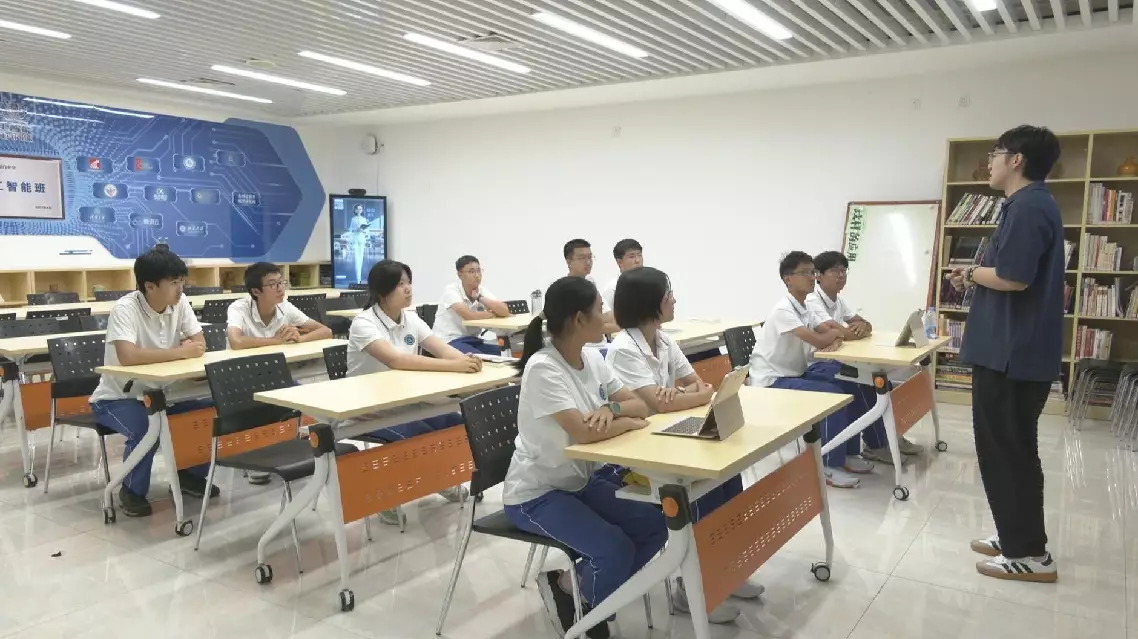
Beijing rolls out AI education across all primary, secondary schools
Chinese Foreign Minister Wang Yi, together with Sihasak Phuangketkeow, Thailand's deputy prime minister and foreign minister, held the third meeting of the Consultation Mechanism between the Ministers of Foreign Affairs of China and Thailand on Friday in Bangkok.
Wang, also a member of the Political Bureau of the Communist Party of China Central Committee, noted that this year marks the beginning of China's 15th Five-Year Plan and also the start of the new Thai government's governance.
Facing a volatile international situation, Wang said, China is willing to work with Thailand to give full play to the coordinating role of the foreign ministers' consultation mechanism guided by the strategic consensus reached by the two heads of state.
Both sides should join hands to advance their respective modernization processes, jointly practice genuine multilateralism, create a new golden 50 years for China-Thailand friendship, and make new contributions to promoting the solidarity and development of the Global South as well as regional peace and stability, he said.
Noting that China has always placed Thailand in an important position in its neighborhood diplomacy, Wang said China is ready to continue to be a reliable strategic partner of Thailand, support the new Thai government in leading its people to follow a development path that suits its national conditions, and promote the building of a more stable, prosperous and sustainable China-Thailand community with a shared future.
It is believed that Thailand will continue to resolutely support China's great cause of peaceful reunification, he added.
Wang also called on the two sides to maintain high-level exchanges, enhance political mutual trust, strengthen the alignment of development strategies and initiate the formulation of the new five-year action plan.
He said that both sides should intensify efforts to crack down on transnational crimes, completely eradicate gambling and fraud, strengthen multilateral collaboration and jointly implement the four major global initiatives.
China has always advocated resolving differences between countries through dialogue rather than force, Wang said, extending the hopes that Thailand and Cambodia will consolidate the ceasefire situation, resume bilateral contacts, resolve border disputes as soon as possible and maintain a peaceful and stable environment.
As a common friend of Thailand and Cambodia, China is willing to continue to build a platform for the two sides to rebuild mutual trust and improve relations, he said.
For his part, Sihasak said that Thailand will, as always, attach great importance to its relations with China, firmly pursue the one-China policy, and consolidate the political foundation of bilateral relations.
Thailand is willing to enhance high-level exchanges with China, deepen all-round cooperation in various fields such as connectivity, economy and trade, and combating online gambling and telecommunications fraud, and promote the continuous development of the Thailand-China community with a shared future.
He said that Thailand highly appreciates the four major global initiatives and is willing to strengthen multilateral coordination with China.
Sihasak expressed the appreciation for China's efforts in actively promoting peace talks and mediating the border dispute between Thailand and Cambodia, adding that he looks forward to China continuing to play a constructive role.
The two foreign ministers also exchanged views on the Lancang-Mekong Cooperation (LMC) and East Asia cooperation, and agreed to enhance coordination and cooperation to actively build an LMC 2.0, promoting the building of a Lancang-Mekong community with a shared future to a new level.
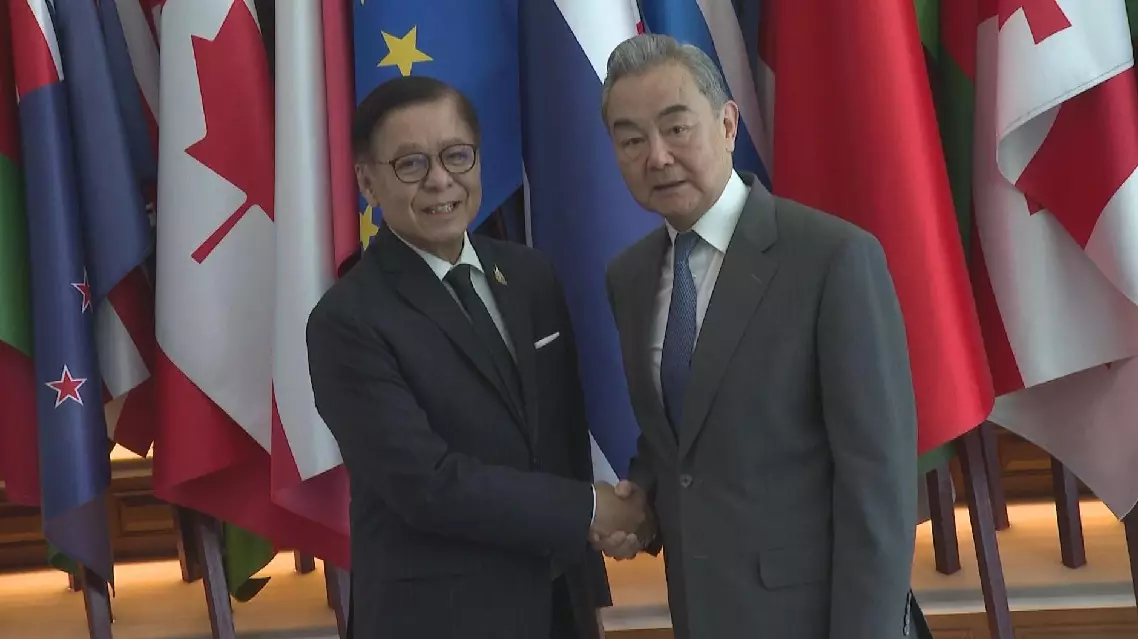
Chinese, Thai FMs hold 3rd consultation mechanism meeting