NEW YORK (AP) — Tennis great Björn Borg reveals in the last chapter of his upcoming memoir, “Heartbeats,” that he was diagnosed with an “extremely aggressive” prostate cancer, and he told The Associated Press that it is in remission after an operation in 2024.
“I have nothing right now. But every six months I have to go and check myself. The whole process, it’s not a fun thing,” Borg, 69, said in a recent video interview with the AP from his home in Stockholm. “But I’m OK. I’m fine. And I’m feeling very good.”
Borg won 11 Grand Slam singles titles — six at the French Open from 1974 to 1981, and five in a row at Wimbledon from 1976-80 — before walking away from tennis at age 26, although he made a brief return later. The stunningly early retirement is one of several subjects, including his drug use and his relationships with women and his parents and children, discussed in depth in the book, which is due to be released in Britain on Sept. 18 and in the U.S. on Sept. 23.
The famously private Borg said he wrote it with his wife, Patricia, over about 2 1/2 years.
“I went through some difficult times, but (it’s) a relief for me to do this book,” Borg said. “I feel so much better.”
He said he had been testing himself for prostate cancer “for many, many years,” because, he added, “The thing is that you don’t feel anything — you feel good, and then it’s just happened.”
There was a result his doctors found troubling in September 2023, so they wanted to do follow-ups, he said.
But that was right before Borg was due to fly to Canada to serve as the captain of Team Europe in the Laver Cup, and the doctors said he shouldn’t go.
“Of course I went to Vancouver. I didn’t listen,” he said.
After the event, he returned to Sweden, and went to the hospital at 7 a.m. the next day for further tests that confirmed the cancer diagnosis. Surgery was scheduled for February 2024, a wait time Borg described to the AP as “psychologically ... very difficult, because who knows what’s going to happen?”
Borg said that his most recent tests came back clean in August.
In the book, he writes: “Now I have a new opponent in cancer — one I can’t control. But I’m going to beat it. I’m not giving up. I fight like every day is a Wimbledon final. And those usually go pretty well, don’t they?”

FILE - In this July 5, 1980, file photo, Bjorn Borg reacts after defeating John McEnroe to win his fifth consecutive Wimbledon singles tennis championship in Loondon. (AP Photo/Adam Stoltman, File)

FILE - Tennis legend Bjorn Borg sits in the Royal Box to watch Aryna Sabalenka, of Belarus, and Amanda Anisimova ,of the United States,. to play in a women's singles semifinal match at the Wimbledon Tennis Championships in London, Thursday, July 10, 2025. (AP Photo/Kirsty Wigglesworth, File)
HAMIMA, Syria (AP) — A trickle of civilians left a contested area east of Aleppo on Thursday after a warning by the Syrian military to evacuate ahead of an anticipated government military offensive against Kurdish-led forces.
Government officials and some residents who managed to get out said the Kurdish-led Syrian Democratic Forces prevented people from leaving via the corridor designated by the military along the main road leading west from the town of Maskana through Deir Hafer to the town of Hamima.
The SDF denied the reports that they were blocking the evacuation.
In Hamima, ambulances and government officials were gathered beginning early in the morning waiting to receive the evacuees and take them to shelters, but few arrived.
Farhat Khorto, a member of the executive office of Aleppo Governorate who was waiting there, claimed that there were "nearly two hundred civilian cars and hundreds of people who wanted to leave” the Deir Hafer area but that they were prevented by the SDF. He said the SDF was warning residents they could face “sniping operations or booby-trapped explosives” along that route.
Some families said they got out of the evacuation zone by taking back roads or going part of the distance on foot.
“We tried to leave this morning, but the SDF prevented us. So we left on foot … we walked about seven to eight kilometers until we hit the main road, and there the civil defense took us and things were good then,” said Saleh al-Othman, who said he fled Deir Hafer with more than 50 relatives.
Yasser al-Hasno, also from Deir Hafer, said he and his family left via back roads because the main routes were closed and finally crossed a small river on foot to get out of the evacuation area.
Another Deir Hafer resident who crossed the river on foot, Ahmad al-Ali, said, “We only made it here by bribing people. They still have not allowed a single person to go through the main crossing."
Farhad Shami, a spokesman for the SDF, said the allegations that the group had prevented civilians from leaving were “baseless.” He suggested that government shelling was deterring residents from moving.
The SDF later issued a statement also denying that it had blocked civilians from fleeing. It said that “any displacement of civilians under threat of force by Damascus constitutes a war crime" and called on the international community to condemn it.
“Today, the people of Deir Hafer have demonstrated their unwavering commitment to their land and homes, and no party can deprive them of their right to remain there under military pressure,” it said.
The Syrian army’s announcement late Wednesday — which said civilians would be able to evacuate through the “humanitarian corridor” from 9 a.m. to 5 p.m. Thursday — appeared to signal plans for an offensive against the SDF in the area east of Aleppo. Already there have been limited exchanges of fire between the two sides.
Thursday evening, the military said it would extend the humanitarian corridor for another day.
The Syrian military called on the SDF and other armed groups to withdraw to the other side of the Euphrates River, to the east of the contested zone. The SDF controls large swaths of northeastern Syria east of the river.
The tensions in the Deir Hafer area come after several days of intense clashes last week in Aleppo city that ended with the evacuation of Kurdish fighters and government forces taking control of three contested neighborhoods.
The fighting broke out as negotiations have stalled between Damascus and the SDF over an agreement reached last March to integrate their forces and for the central government to take control of institutions including border crossings and oil fields in the northeast.
Some of the factions that make up the new Syrian army, which was formed after the fall of former President Bashar Assad in a rebel offensive in December 2024, were previously Turkey-backed insurgent groups that have a long history of clashing with Kurdish forces.
The SDF for years has been the main U.S. partner in Syria in fighting against the Islamic State group, but Turkey considers the SDF a terrorist organization because of its association with Kurdish separatist insurgents in Turkey.
Despite the long-running U.S. support for the SDF, the Trump administration has also developed close ties with the government of interim Syrian President Ahmad al-Sharaa and has so far avoided publicly taking sides in the clashes in Aleppo.
Ilham Ahmed, head of foreign relations for the SDF-affiliated Kurdish-led administration in northeast Syria, at a press conference Thursday said SDF officials were in contact with the United States and Turkey and had presented several initiatives for de-escalation. She said that claims by Damascus that the SDF had failed to implement the March agreement were false.
——
Associated Press journalist Hogir Al Abdo in Qamishli, Syria, contributed.
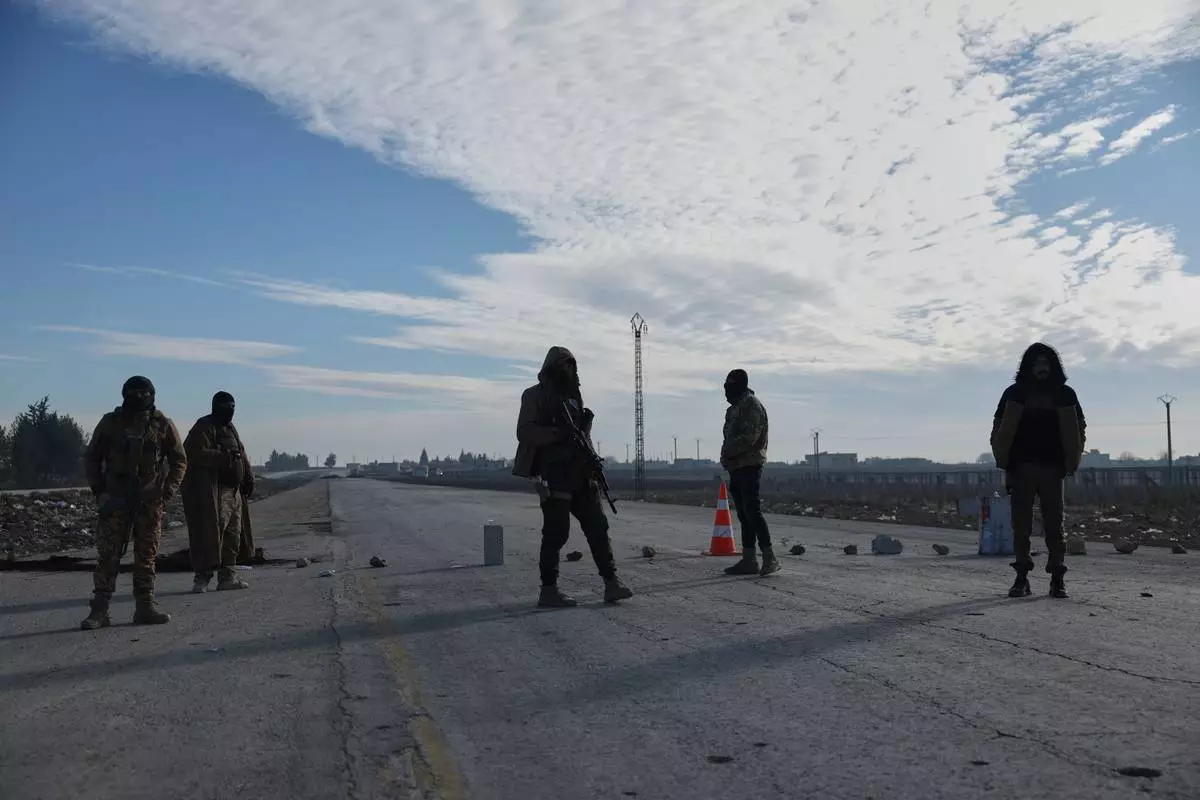
Members of the Syrian military police stand at a humanitarian crossing declared by the Syrian army in the village of Hamima, in the eastern Aleppo countryside, near the front line with the Kurdish-led Syrian Democratic Forces in Deir Hafer, Syria, Thursday, Jan. 15, 2026. (AP Photo/Ghaith Alsayed)
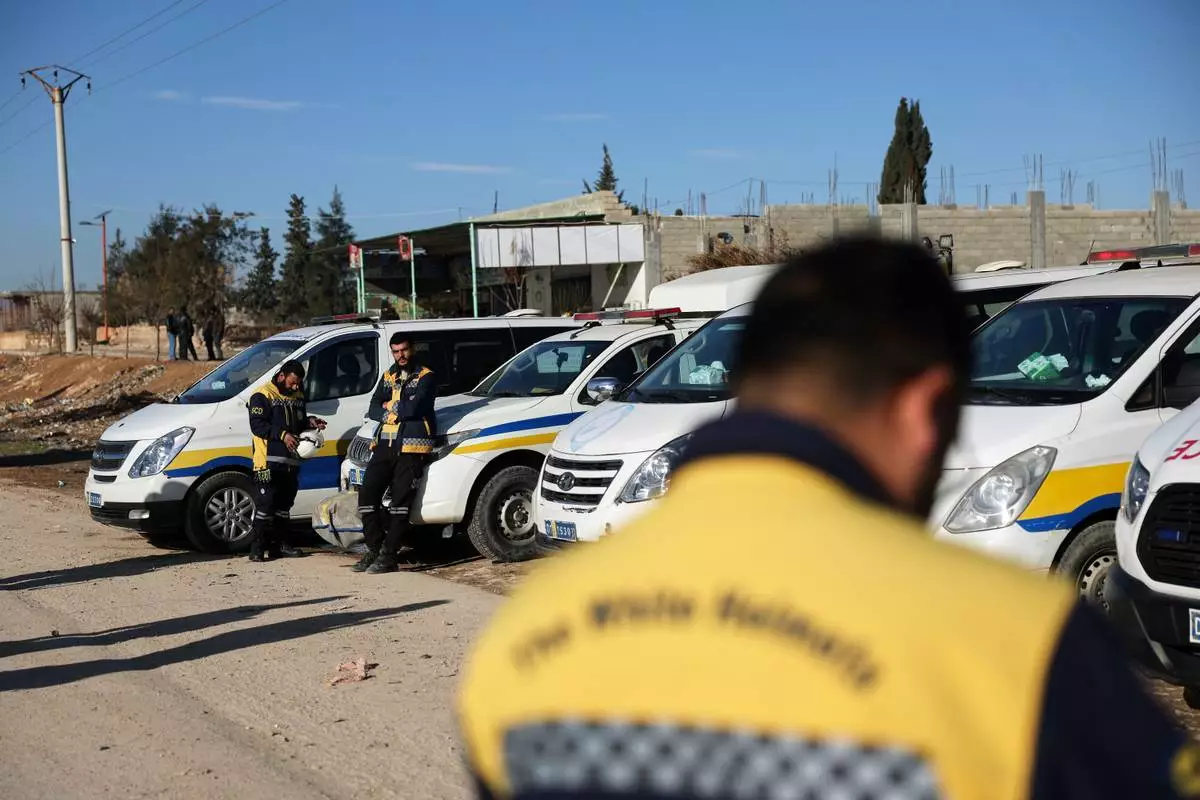
Members of the Syrian Civil Defense, stand next to their vehicles at a humanitarian crossing declared by the Syrian army in the village of Hamima, in the eastern Aleppo countryside, near the front line with the Kurdish-led Syrian Democratic Forces in Deir Hafer, Syria, Thursday, Jan. 15, 2026. (AP Photo/Ghaith Alsayed)
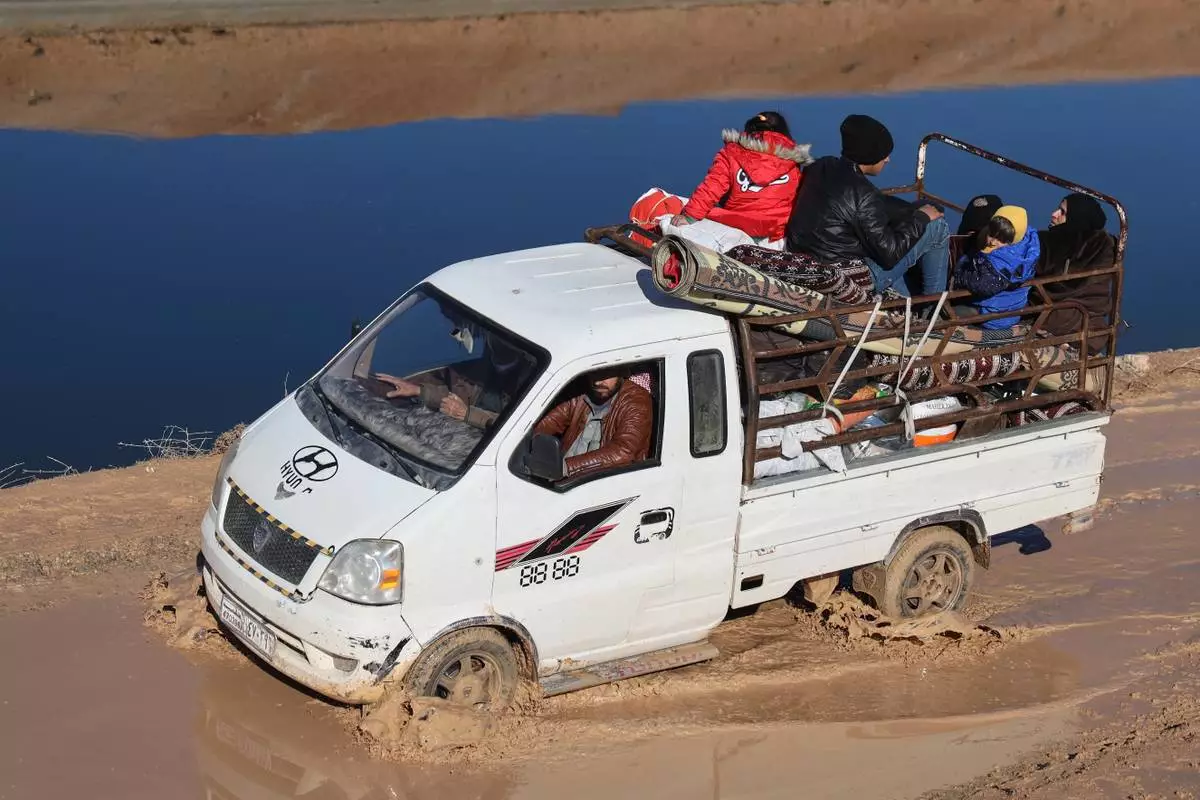
A displaced Syrian family rides in the back of a truck near a humanitarian crossing declared by the Syrian army next to a river in the village of Rasm Al-Abboud, in the eastern Aleppo countryside, near the front line with the Kurdish-led Syrian Democratic Forces in Deir Hafer, Syria, Thursday, Jan. 15, 2026. (AP Photo/Omar Albam)
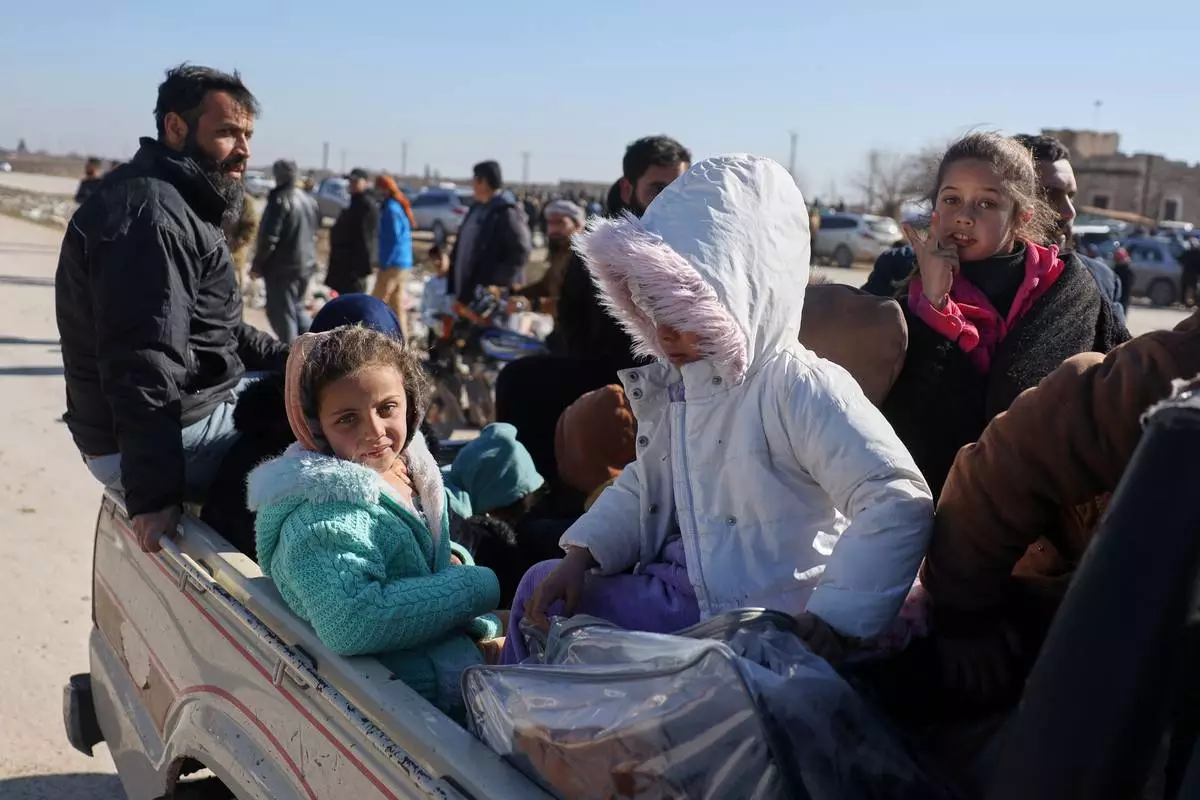
Displaced Syrian children and women ride in the back of a truck near a humanitarian crossing declared by the Syrian army in the village of Hamima, in the eastern Aleppo countryside, near the front line with the Kurdish-led Syrian Democratic Forces in Deir Hafer, Syria, Thursday, Jan. 15, 2026. (AP Photo/Omar Albam)
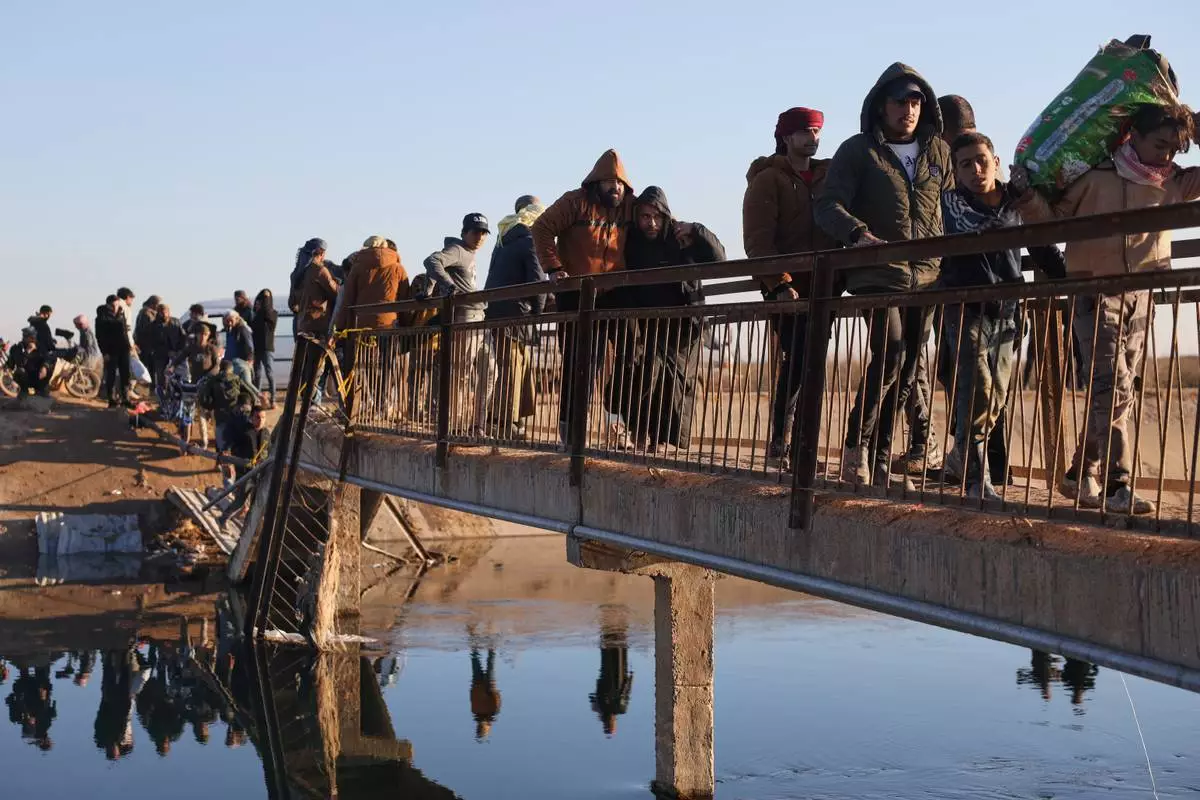
Displaced Syrians at a river crossing near the village of Jarirat al Imam, in the eastern Aleppo countryside, near the front line with the Kurdish-led Syrian Democratic Forces in Deir Hafer, Syria, Thursday, Jan. 15, 2026. (AP Photo/Omar Albam)