A federal judge in San Francisco ruled Tuesday that U.S. President Donald Trump exceeded his authority and violated constitutional limits by deploying National Guard troops to Los Angeles this summer without state consent.
The court found the move breached restrictions on federal intervention in local affairs. The Trump administration has appealed the decision, even as the president vows to send more troops to other U.S. cities.
Los Angeles was the first target in Trump’s immigration enforcement push, despite opposition from both city and state officials. Protests erupted in June, with demonstrators accusing the president of abusing power and questioning the need for federal forces in neighborhoods that had seen little unrest.
Weeks after the initial protests subsided, the administration withdrew the Marine force, but left about 300 National Guard troops on duty. An appeals court ruling on Thursday preserved the status quo while the administration’s appeal proceeds.
Critics say the deployment has wasted millions in taxpayer dollars—71 million U.S. dollars for food and basic necessities, 37 million dollars in payroll, and 4 million dollars in logistics.
"Every taxpayer in this country is paying for this, and I don’t think they are happy about that," Moses Castillo, a retired detective from the Los Angeles Police Department, said in an interview with China Global Television Network (CGTN).
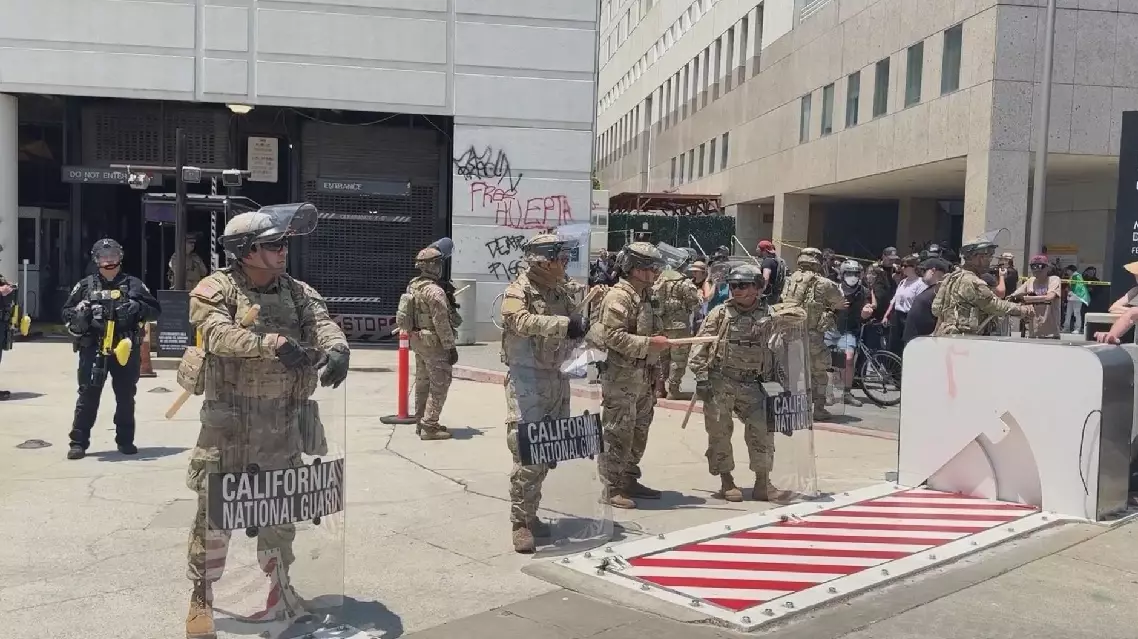
US judge rules Trump's National Guard deployment in Los Angeles illegal
Efforts are underway in Gaza City to salvage what remains of the territory's cultural heritage after nearly two years of war.
At the ruins of the Great Omari Mosque, Gaza's oldest and largest mosque, Palestinian workers have been clearing and sorting stones dating back more than 1,200 years using basic tools.
"The Great Omari Mosque represents the heart and soul of Gaza City, and Palestine as a whole. The value of these stones is not in their size, but in their deep and layered historical significance," said Husni Al-Mazloom, manager of the Great Omari Mosque restoration project.
Only fragments of the mosque's minarets and a few of its external walls remain standing.
"During the war, it was not only people, trees, and buildings that were targeted, but also thousands of years of human history. Most historical sites in Gaza City were struck and destroyed in an attempt to erase the historical identity of Gaza's people," said Palestinian historian Ayman Al-Balbisi.
Progress on the restoration project has been extremely slow, as Israel continues to restrict the entry of construction materials, even after nearly eight weeks of ceasefire.
On a positive note, however, the project provides locals with more income.
"Before working here, we were unemployed. When this opportunity became available for me and 20 other workers, it allowed us to provide for our families and cover basic needs. During the war, there was no work available for us at all," said worker Ali Al-Qaloushi.
Palestinians have accused Israel of deliberately targeting heritage sites. But Israel denied, saying its strikes followed international law and targeted Hamas tools near or beneath these locations.
The United Nations Educational, Scientific and Cultural Organization (UNESCO) has verified damage to 145 religious, cultural and historical sites in Gaza since October 2023, raising fears of irreversible loss in a territory whose history spans more than 5,000 years and carries the imprint of numerous civilizations.
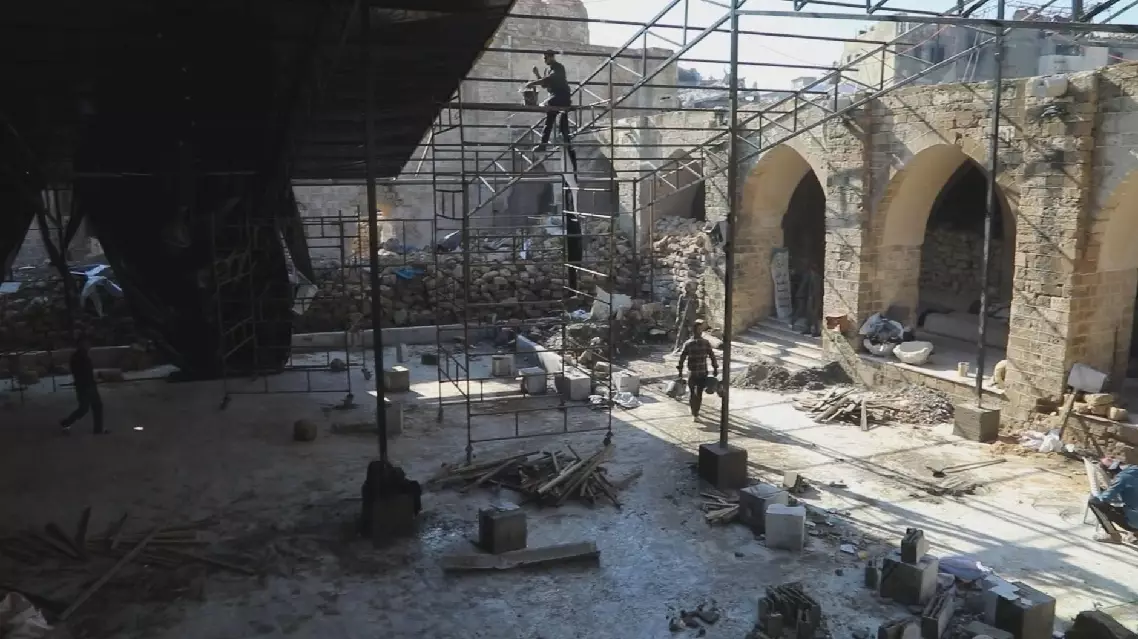
Gazans race to preserve cultural heritage after two years of war