NEW DELHI (AP) — When the floodwaters of the Yamuna River gushed into Bindu Pandey’s home in New Delhi, she knew her family had to leave instantly.
“We got scared. The children were crying. We had to take out our children from there,” 40-year-old Pandey said.
Click to Gallery
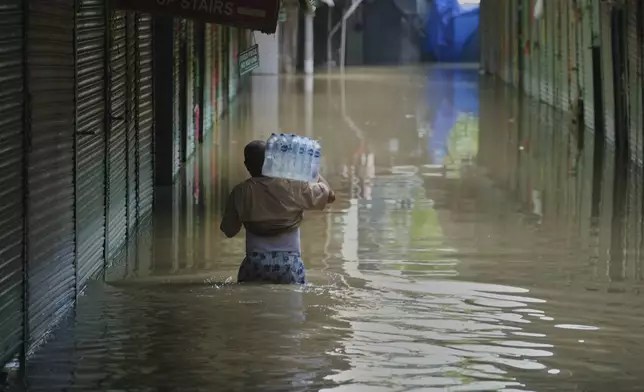
A person wades through flooded water carrying drinking water battles for the residents stuck in their house after the river Yamuna, swollen by incessant rain in the higher regions, overran its banks, in New Delhi, India, Friday, Sept. 5, 2025. (AP Photo/Manish Swarup)
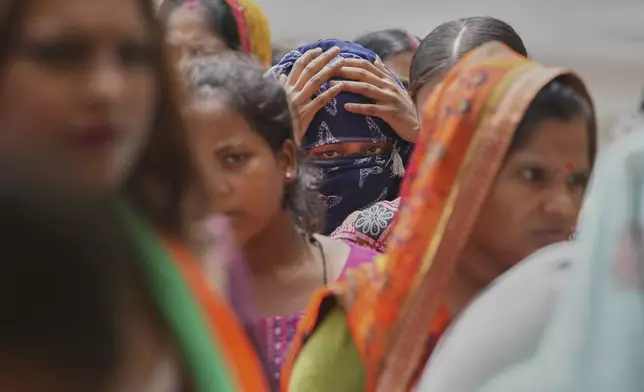
People stand in a queue for food in a temporary school shelter, which houses residents displaced from the banks of the Yamuna River by incessant rain in the higher regions in New Delhi, India, Friday, Sept. 5, 2025. (AP Photo/Manish Swarup)
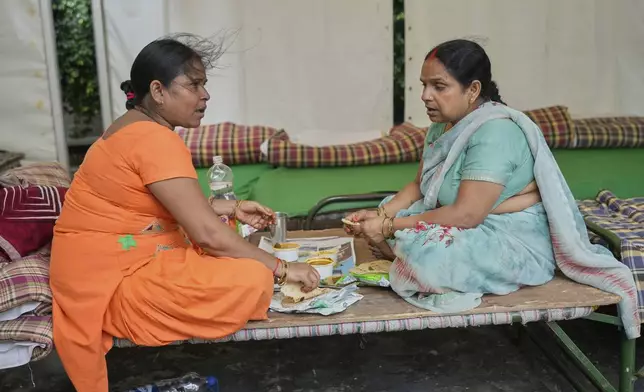
Bindu Pandey, left, eats lunch with her relative in a temporary school shelter, which houses residents displaced from the banks of the Yamuna River by incessant rain in the higher regions, in New Delhi, India, Friday, Sept. 5, 2025. (AP Photo/Manish Swarup)
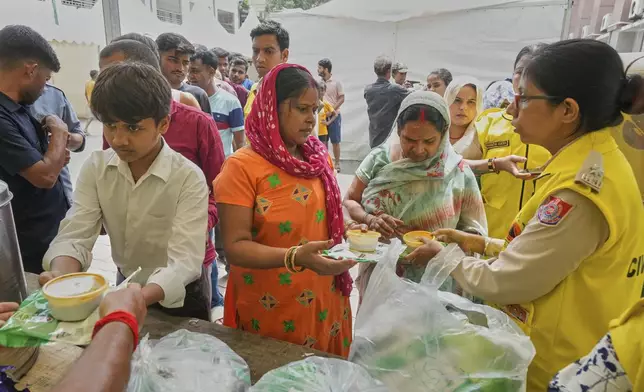
Bindu Pandey, center, takes food in a temporary school shelter, which houses residents displaced from the banks of the Yamuna River by incessant rain in the higher regions in New Delhi, India, Friday, Sept. 5, 2025. (AP Photo/Manish Swarup)
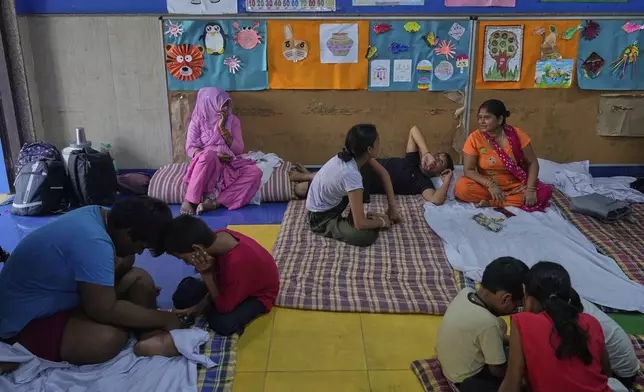
Bindu Pandey, right, talks to her relatives in a temporary school shelter, which houses residents displaced from the banks of the Yamuna River by incessant rain in the higher regions, in New Delhi, India, Friday, Sept. 5, 2025. (AP Photo/Manish Swarup)
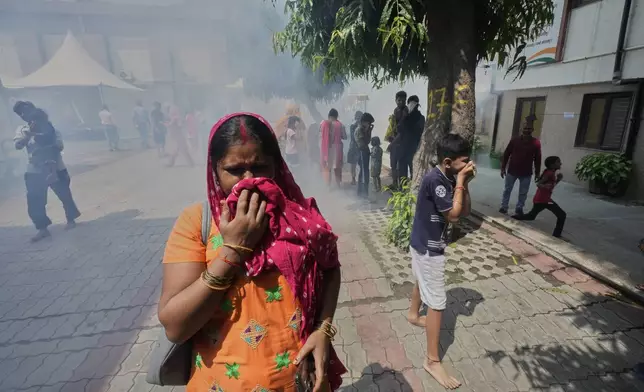
Bindu Pandey, center, cover her nose as officials fumigate in a temporary school shelter, which houses residents displaced from the banks of the Yamuna River by incessant rain in the higher regions in New Delhi, India, Friday, Sept. 5, 2025. (AP Photo/Manish Swarup)
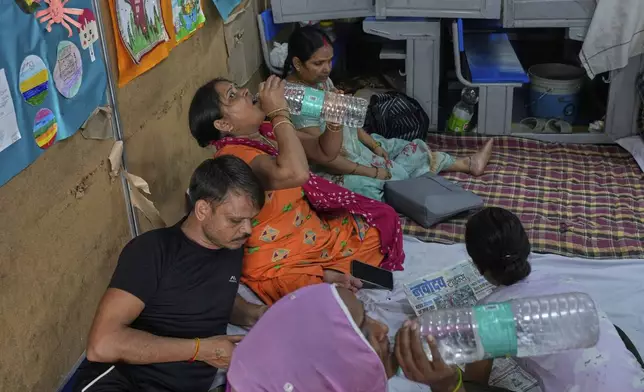
Bindu Pandey, center, drinks water after reaching in a temporary school shelter, which houses residents displaced from the banks of the Yamuna River by incessant rain in the higher regions in New Delhi, India, Friday, Sept. 5, 2025. (AP Photo/Manish Swarup)
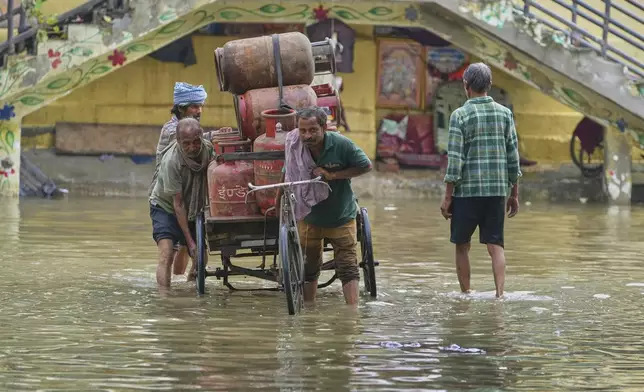
People help a rickshaw driver carrying gas cylinders to cross flooded water after the river Yamuna, swollen by incessant rain in the higher regions, overran its banks, in New Delhi, India, Friday, Sept. 5, 2025. (AP Photo/Manish Swarup)
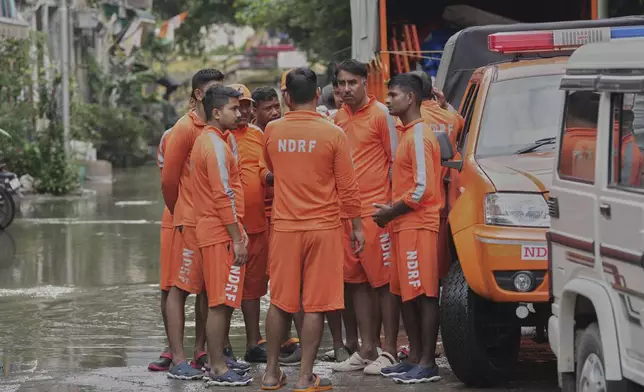
Soldiers from National Disaster Relief Force talk before starting the rescue operation after the river Yamuna, swollen by incessant rain in the higher regions, overran its banks, in New Delhi, India, Friday, Sept. 5, 2025. (AP Photo/Manish Swarup)
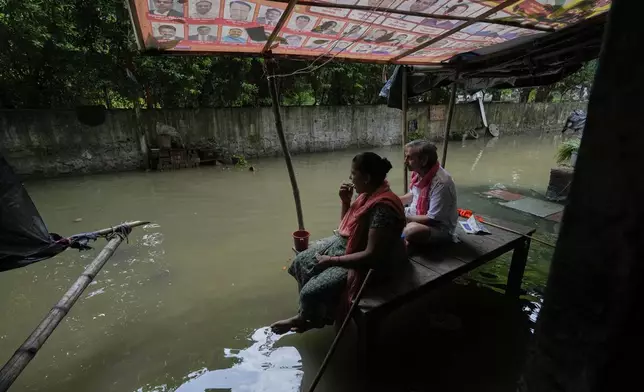
A couple drinks tea sitting in front of their inundated house after the river Yamuna, swollen by incessant rain in the higher regions, overran its banks, in New Delhi, India, Friday, Sept. 5, 2025. (AP Photo/Manish Swarup)
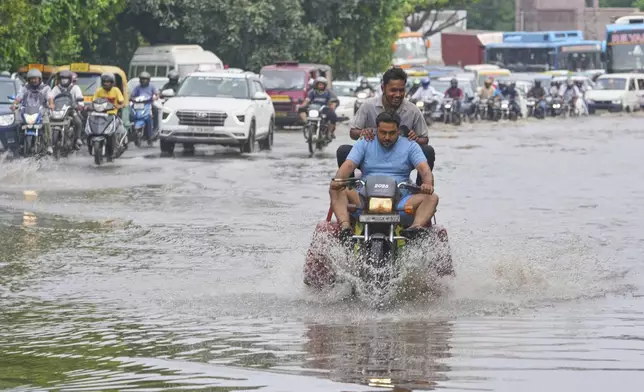
Commuters wade through the flooded water on a road after the river Yamuna, swollen by incessant rain in the higher regions, overran its banks, in New Delhi, India, Friday, Sept. 5, 2025. (AP Photo/Manish Swarup)
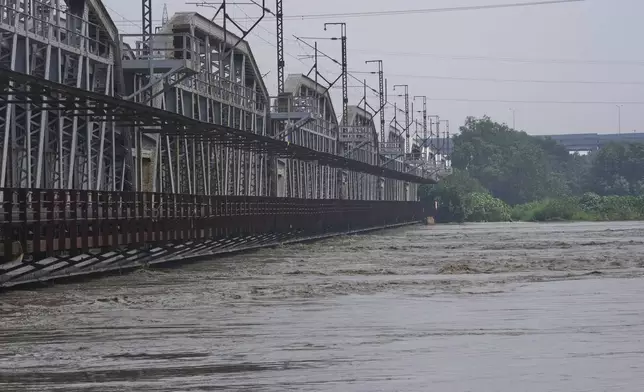
The swollen Yamuna river by incessant rain in the higher regions flows dangerously close to an old Iron bridge in New Delhi, India, Friday, Sept. 5, 2025. (AP Photo/Manish Swarup)
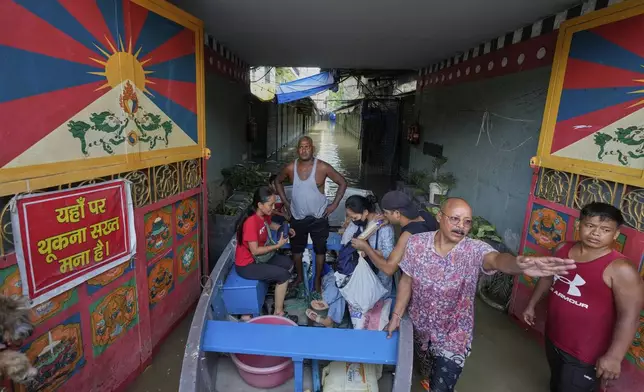
Residents of a Tibetan refugee colony use boat after the Yamuna river, swollen by incessant rain in the higher regions, overran its banks in New Delhi, India, Friday, Sept. 5, 2025. (AP Photo/Manish Swarup)
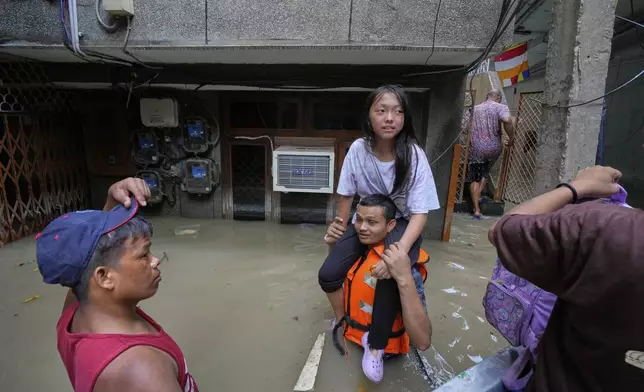
A volunteer lifts a young girl onto his shoulders, carrying her to a safer place after evacuating her and others by boat after the river Yamuna, swollen by incessant rain in the higher regions, overran its banks, in New Delhi, India, Friday, Sept. 5, 2025. (AP Photo/Manish Swarup)
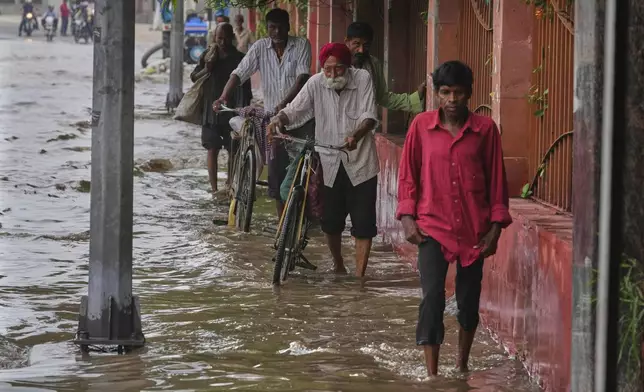
Commuters wade through the flooded water on a road after the river Yamuna, swollen by incessant rain in the higher regions, overran its banks, in New Delhi, India, Friday, Sept. 5, 2025. (AP Photo/Manish Swarup)
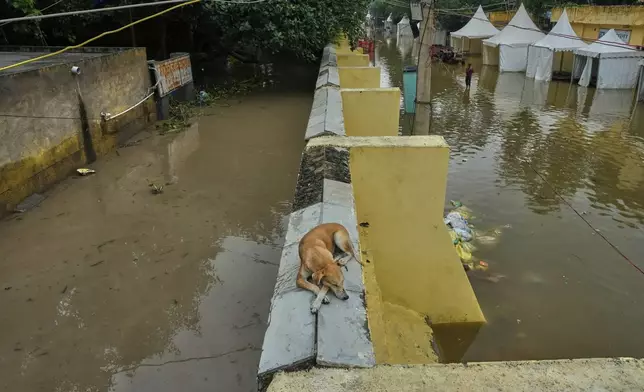
A stray dog sits on the top of a wall surrounded with flooded water after the river Yamuna, swollen by incessant rain in the higher regions, overran its banks, in New Delhi, India, Friday, Sept. 5, 2025. (AP Photo/Manish Swarup)
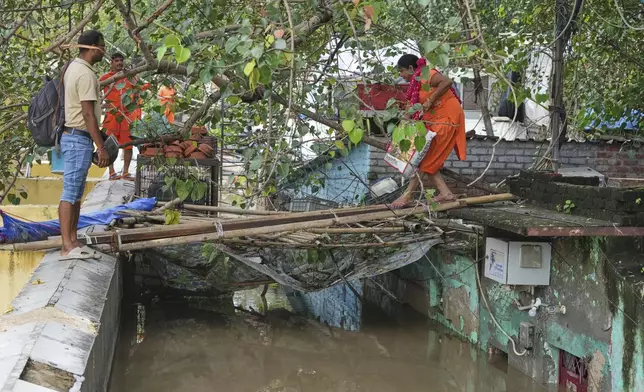
Bindu Pandey, 40, right, leaves her flooded house to a temporary shelter in New Delhi, India, Friday, Sept. 5, 2025. (AP Photo/Manish Swarup)
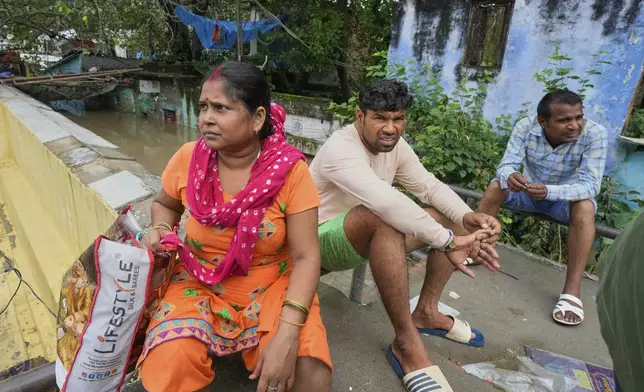
Bindu Pandey, 40, left, sits on the wall near the floodwaters of the swollen Yamuna River, leaving behind her inundated home on the banks to seek refuge in a temporary shelter, in New Delhi, India, Friday, Sept. 5, 2025. (AP Photo/Manish Swarup)
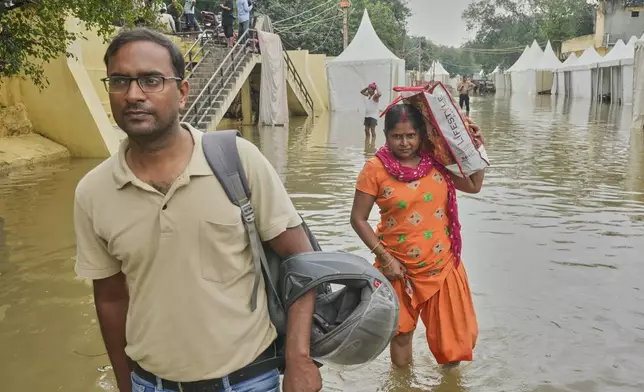
Bindu Pandey, 40, center, wades through the floodwaters of the swollen Yamuna River, leaving behind her inundated home on the banks to seek refuge in a temporary shelter, in New Delhi, India, Friday, Sept. 5, 2025. (AP Photo/Manish Swarup)
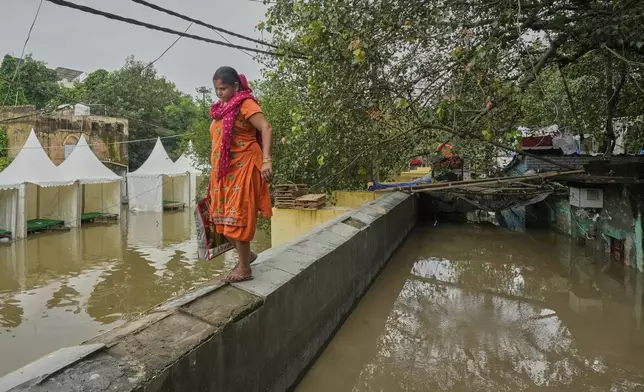
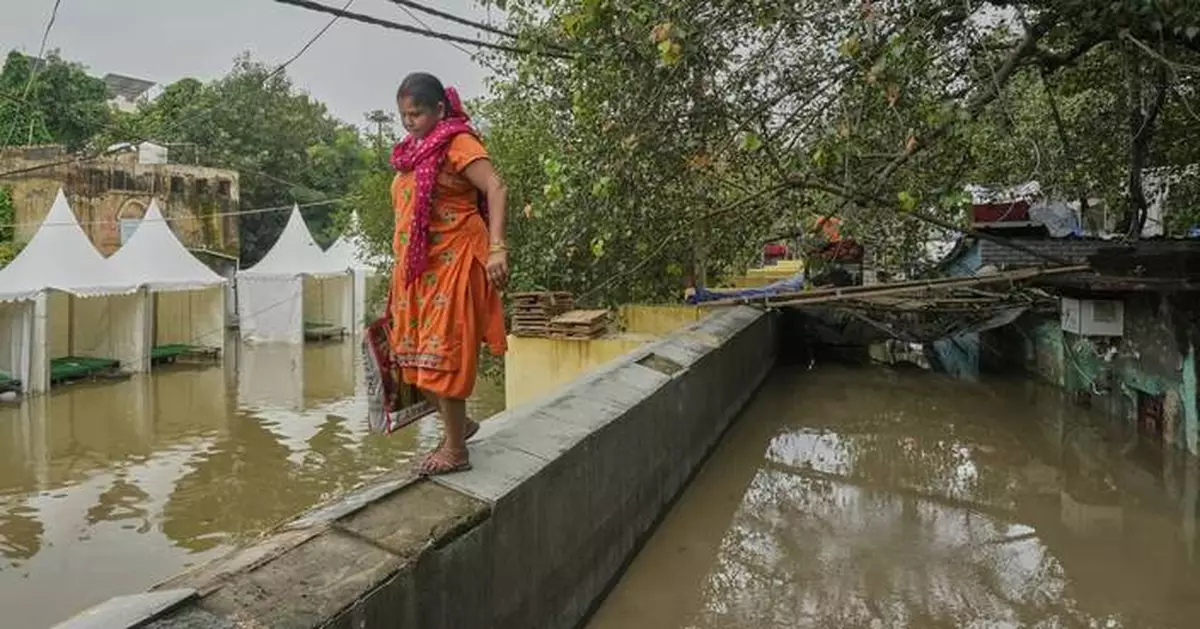
Bindu Pandey, 40, walks on the top of a wall surrounded by flooded waters of the swollen Yamuna River which inundated her residence on the banks of the river in New Delhi, India, Friday, Sept. 5, 2025. (AP Photo/Manish Swarup)
Forced to abandon their belongings, the family sought shelter in a relief tent arranged by the authorities near their flooded homes. On Friday, days of torrential rains left that shelter tent inundated as well and the family was shifted into a school some 7 kilometers (4.3 miles) away.
The Yamuna River originates in the Himalayas and runs through India’s capital city of New Delhi. Families like Pandey’s who live near its banks have been subjected to temporary displacements in the past after widespread flooding in monsoon season. But this season’s rains have been much heavier than recent years, making the river breach danger levels and putting hundreds of low-lying areas at risk.
Pandey said her family was also affected by flooding in 2023.
“Sometimes we feel we should relocate, but when the flooding ends we just want to live there,” Pandey said.
Pandey said there is not much she will be able to salvage from her flooded home when the waters recede. She is worried that the accumulated sludge and mud will take a lot of effort, money and energy to clear away.
She is also particularly concerned about her children’s study books, which she says must have been destroyed in the floods.
“We had placed them on racks. How will my children read from those books now?” she asked.
Every year, the monsoon brings 80% of South Asia’s annual rainfall in a season that starts in June and ends in mid-September. But in recent years, it has become erratic and more extreme, delivering death and destruction through floods and landslides.
In August, heavy rains, flash-floods and cloudbursts battered much of north India, killing hundreds of people and displacing over a million more. They also destroyed homes and thousands of acres of agricultural crops.
This is a photo gallery curated by AP photo editors.
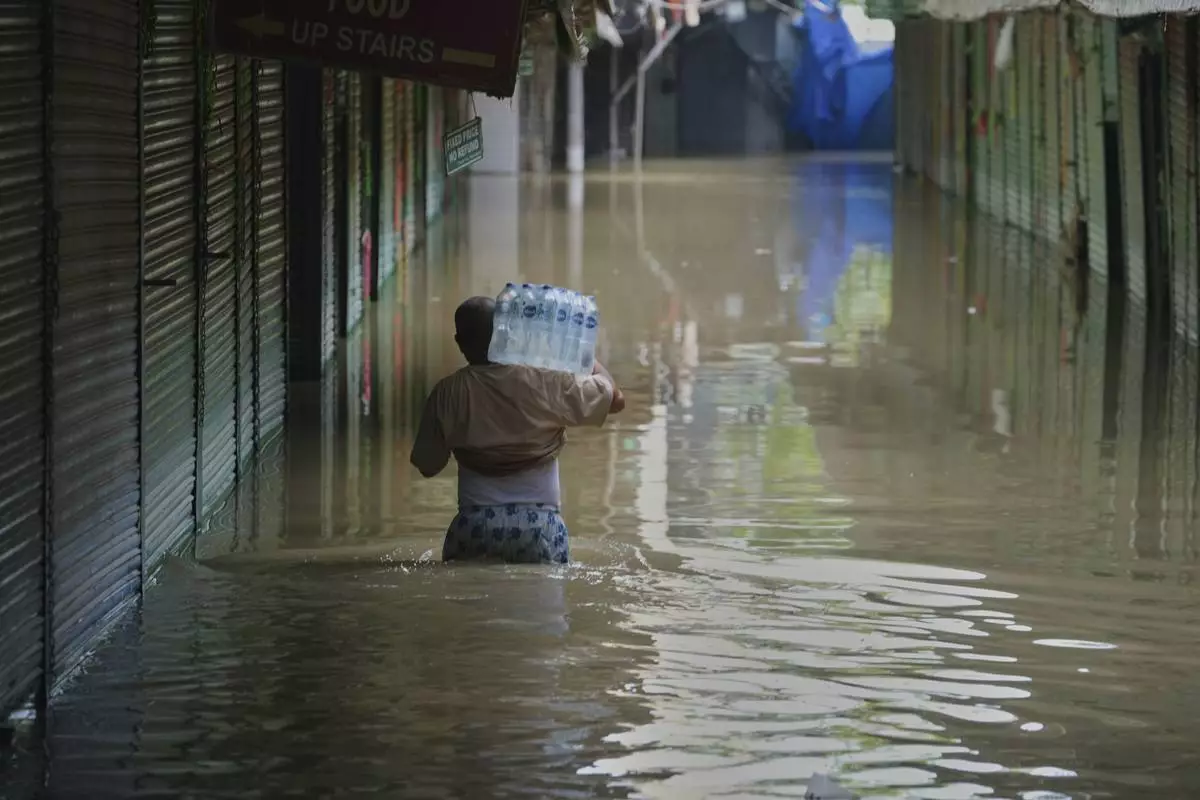
A person wades through flooded water carrying drinking water battles for the residents stuck in their house after the river Yamuna, swollen by incessant rain in the higher regions, overran its banks, in New Delhi, India, Friday, Sept. 5, 2025. (AP Photo/Manish Swarup)
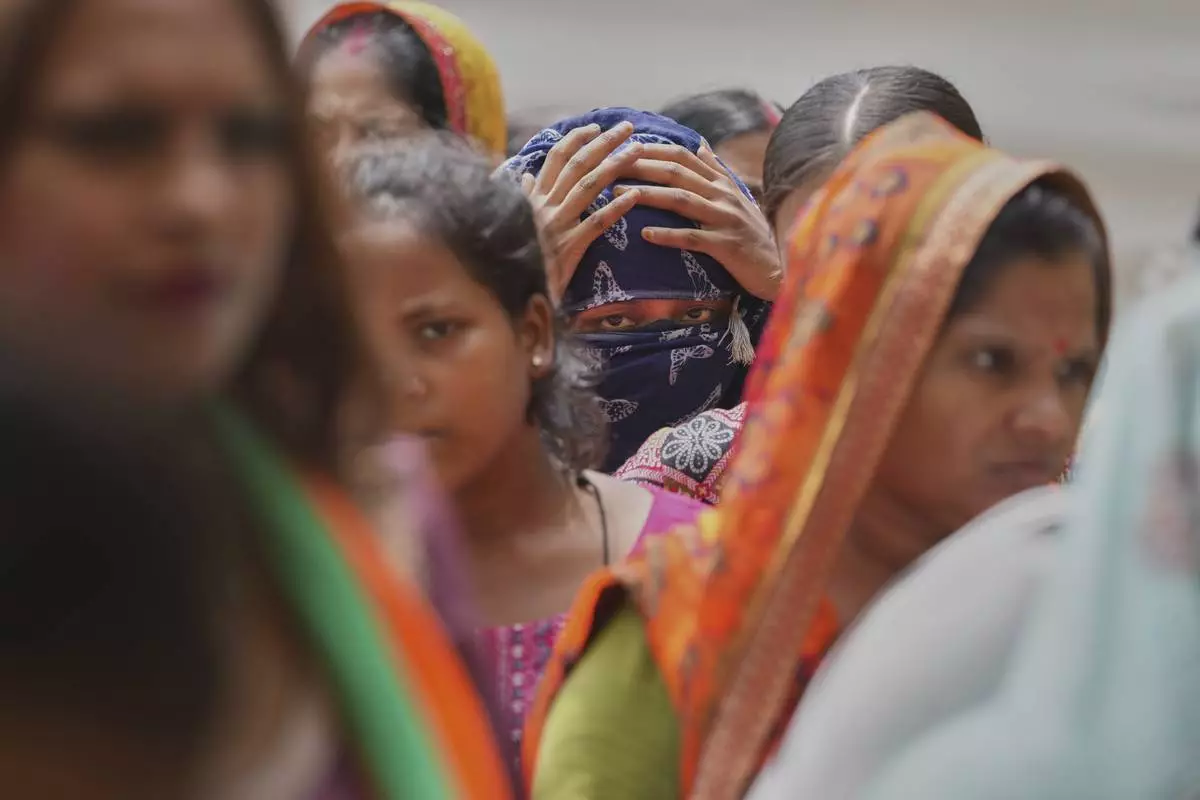
People stand in a queue for food in a temporary school shelter, which houses residents displaced from the banks of the Yamuna River by incessant rain in the higher regions in New Delhi, India, Friday, Sept. 5, 2025. (AP Photo/Manish Swarup)
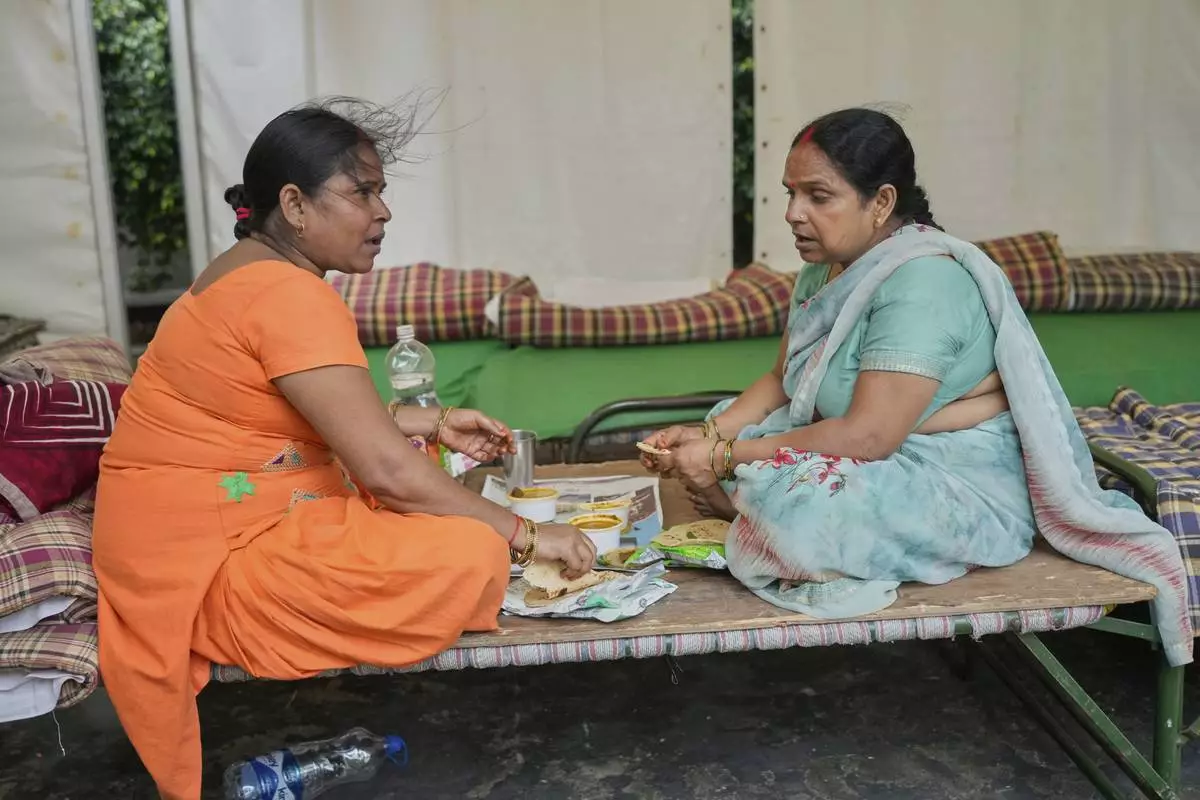
Bindu Pandey, left, eats lunch with her relative in a temporary school shelter, which houses residents displaced from the banks of the Yamuna River by incessant rain in the higher regions, in New Delhi, India, Friday, Sept. 5, 2025. (AP Photo/Manish Swarup)
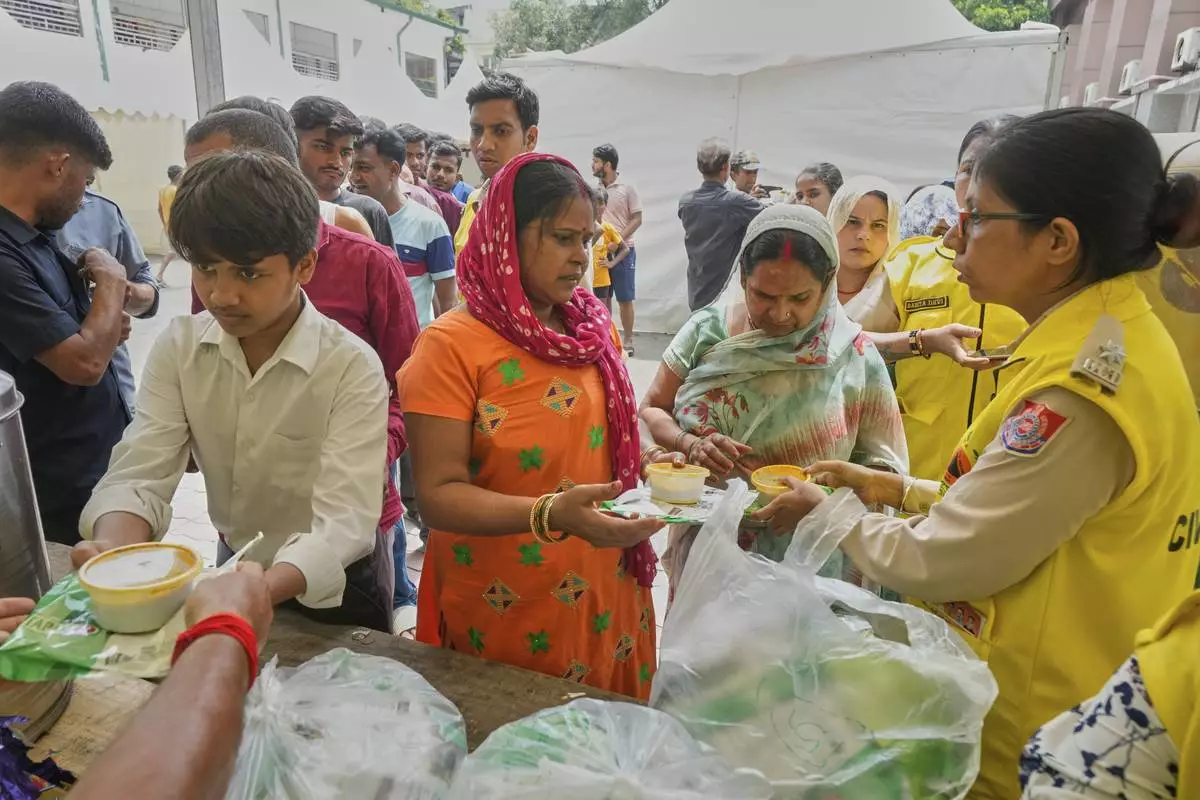
Bindu Pandey, center, takes food in a temporary school shelter, which houses residents displaced from the banks of the Yamuna River by incessant rain in the higher regions in New Delhi, India, Friday, Sept. 5, 2025. (AP Photo/Manish Swarup)
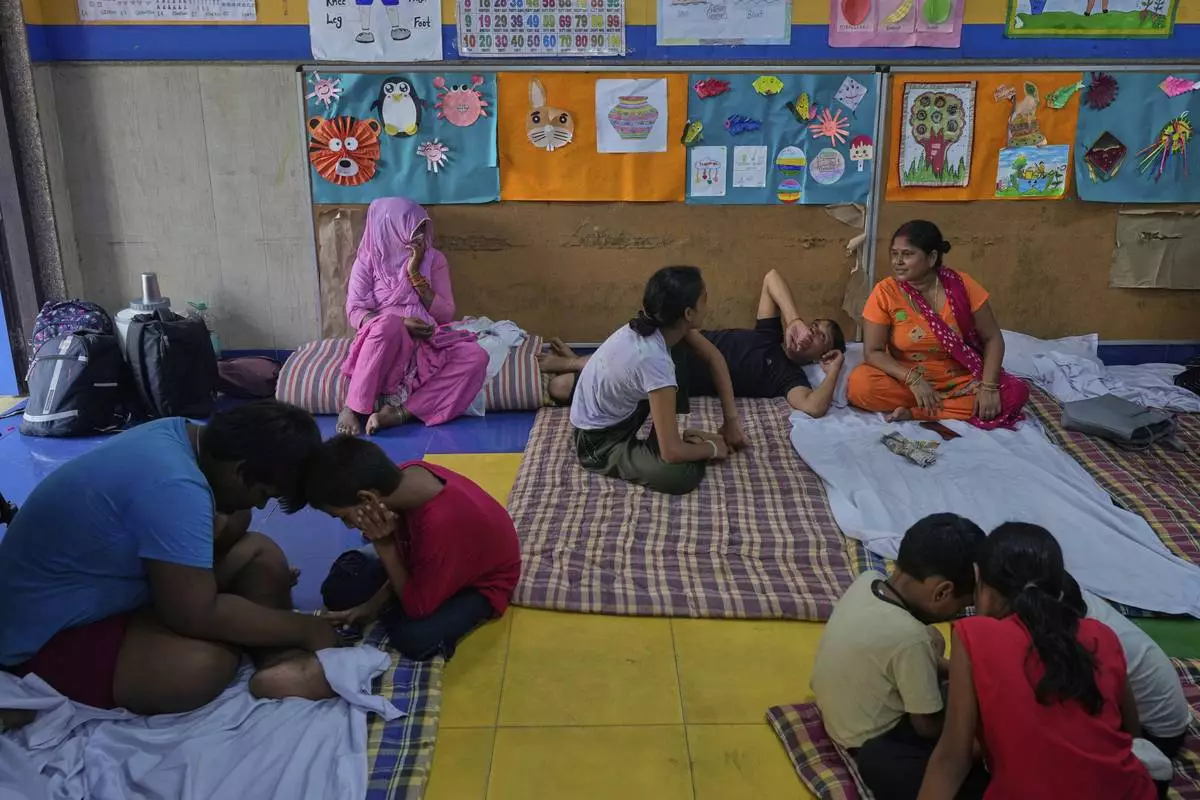
Bindu Pandey, right, talks to her relatives in a temporary school shelter, which houses residents displaced from the banks of the Yamuna River by incessant rain in the higher regions, in New Delhi, India, Friday, Sept. 5, 2025. (AP Photo/Manish Swarup)
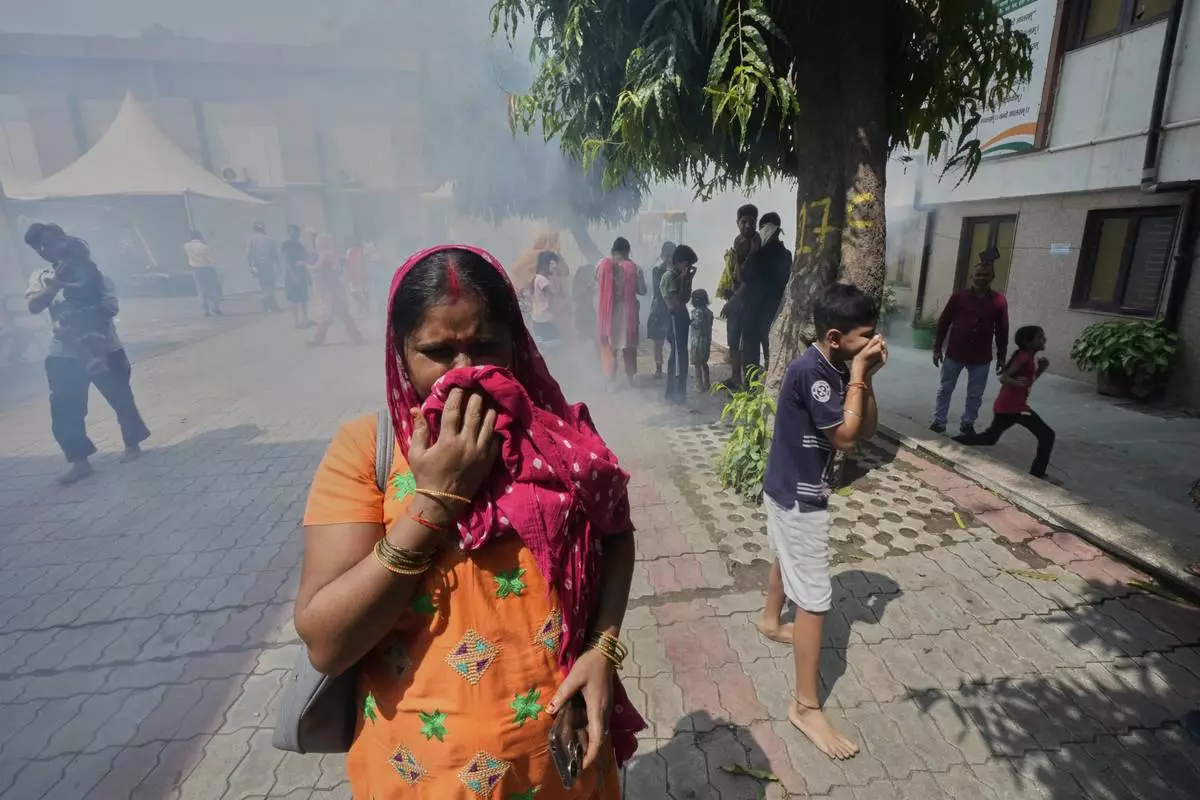
Bindu Pandey, center, cover her nose as officials fumigate in a temporary school shelter, which houses residents displaced from the banks of the Yamuna River by incessant rain in the higher regions in New Delhi, India, Friday, Sept. 5, 2025. (AP Photo/Manish Swarup)
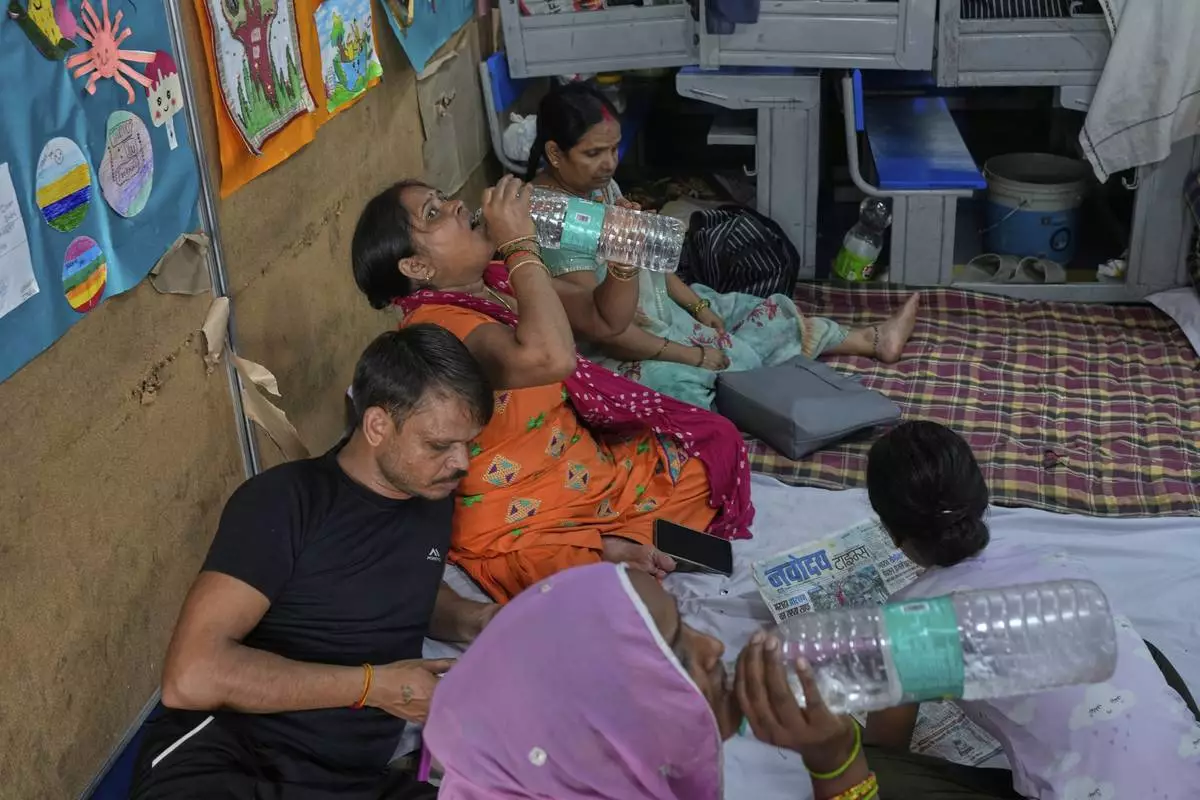
Bindu Pandey, center, drinks water after reaching in a temporary school shelter, which houses residents displaced from the banks of the Yamuna River by incessant rain in the higher regions in New Delhi, India, Friday, Sept. 5, 2025. (AP Photo/Manish Swarup)
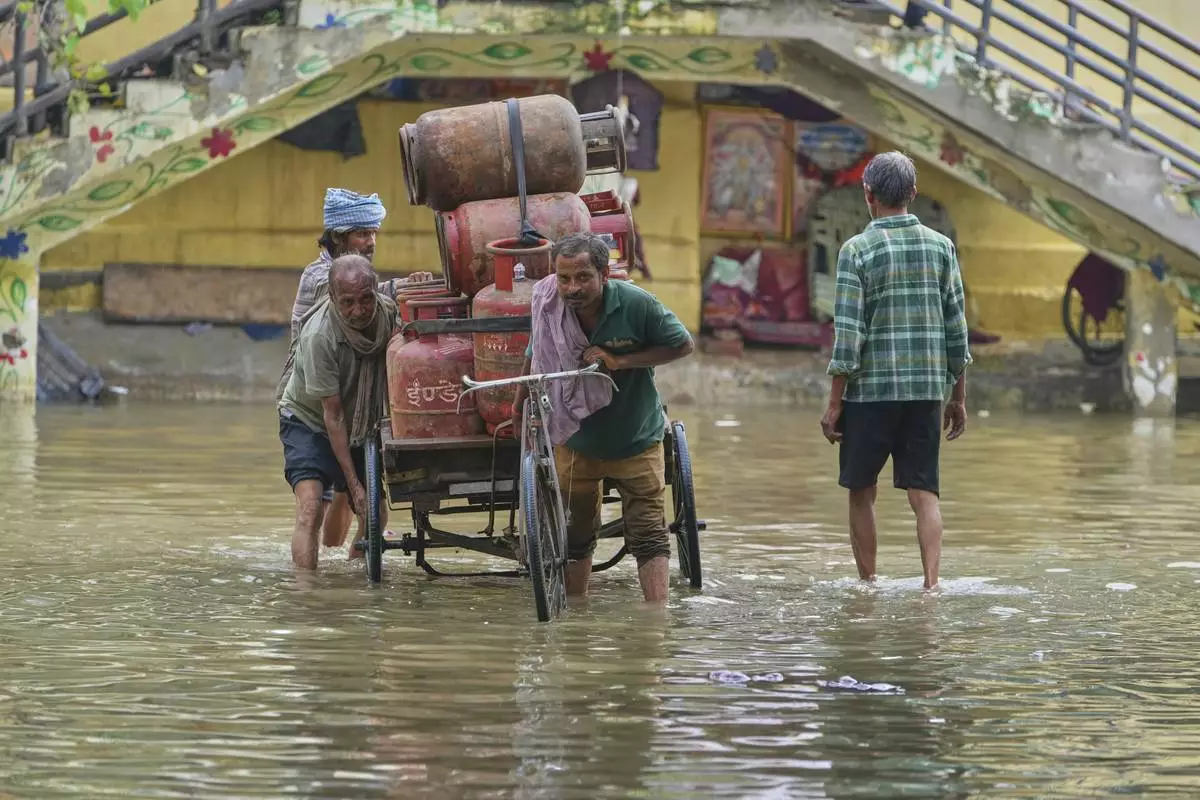
People help a rickshaw driver carrying gas cylinders to cross flooded water after the river Yamuna, swollen by incessant rain in the higher regions, overran its banks, in New Delhi, India, Friday, Sept. 5, 2025. (AP Photo/Manish Swarup)
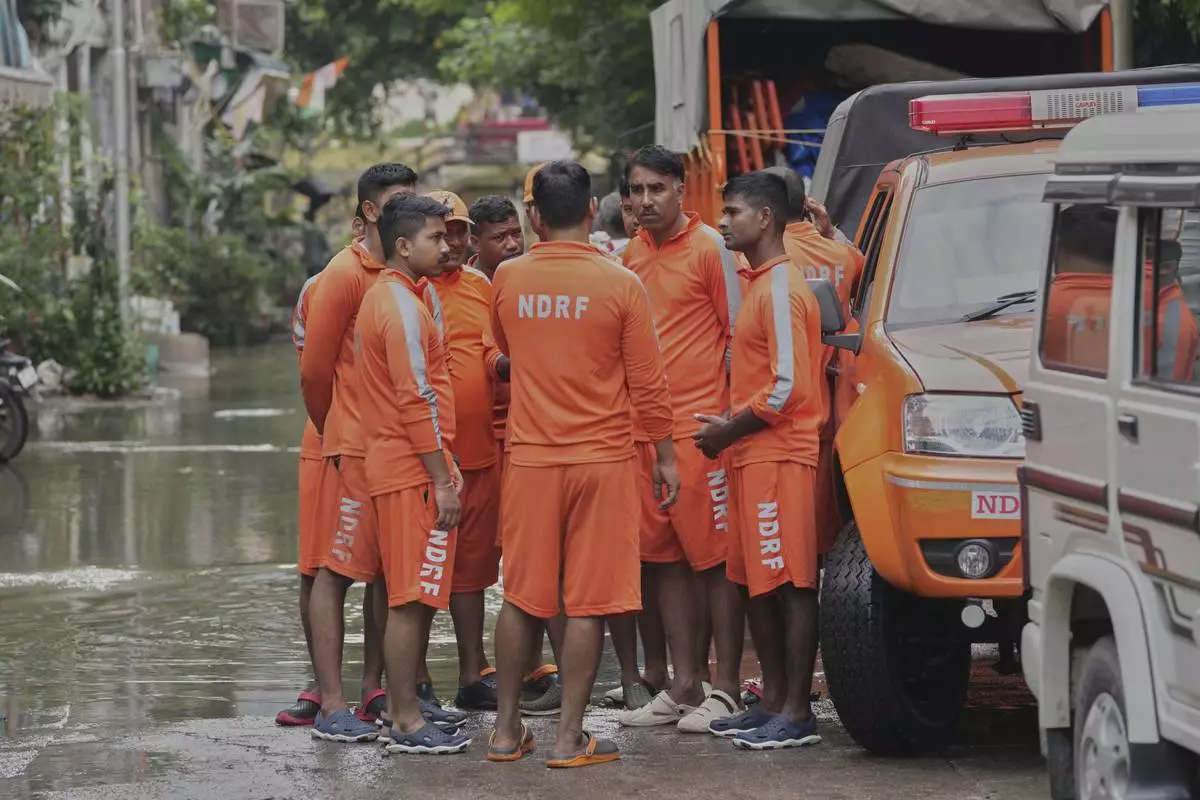
Soldiers from National Disaster Relief Force talk before starting the rescue operation after the river Yamuna, swollen by incessant rain in the higher regions, overran its banks, in New Delhi, India, Friday, Sept. 5, 2025. (AP Photo/Manish Swarup)
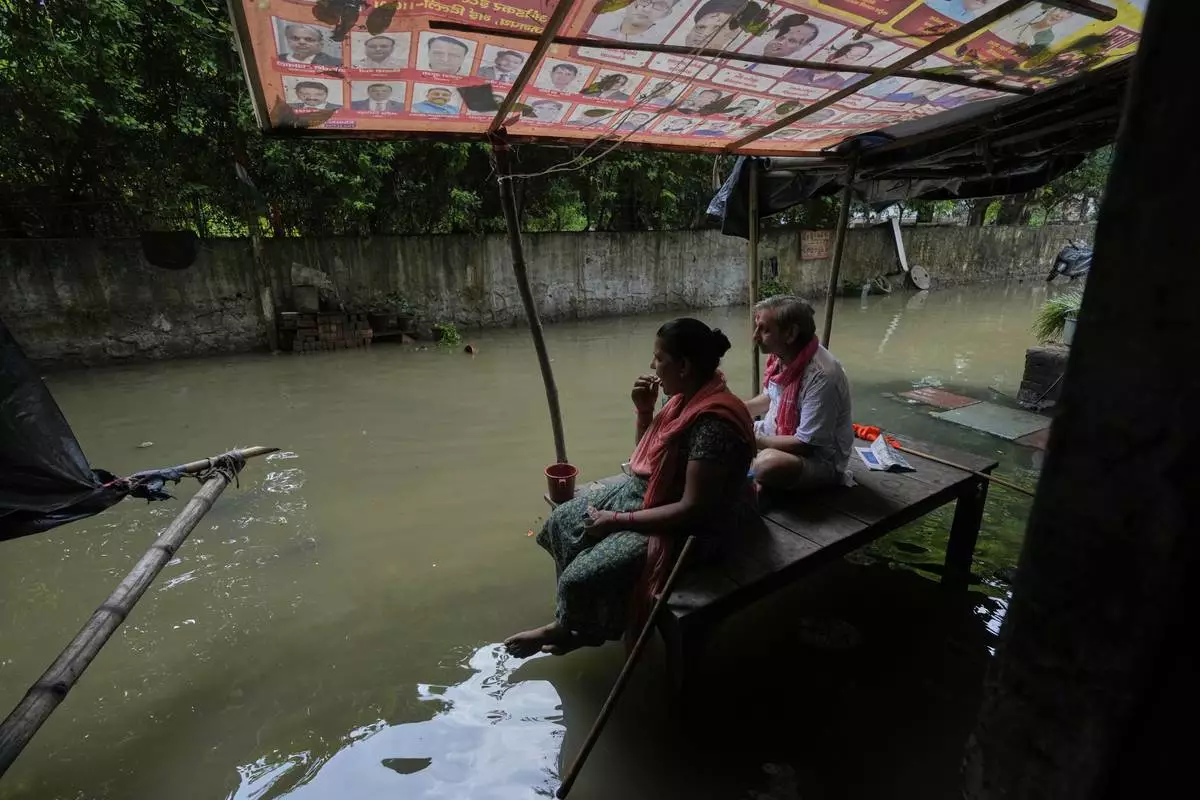
A couple drinks tea sitting in front of their inundated house after the river Yamuna, swollen by incessant rain in the higher regions, overran its banks, in New Delhi, India, Friday, Sept. 5, 2025. (AP Photo/Manish Swarup)
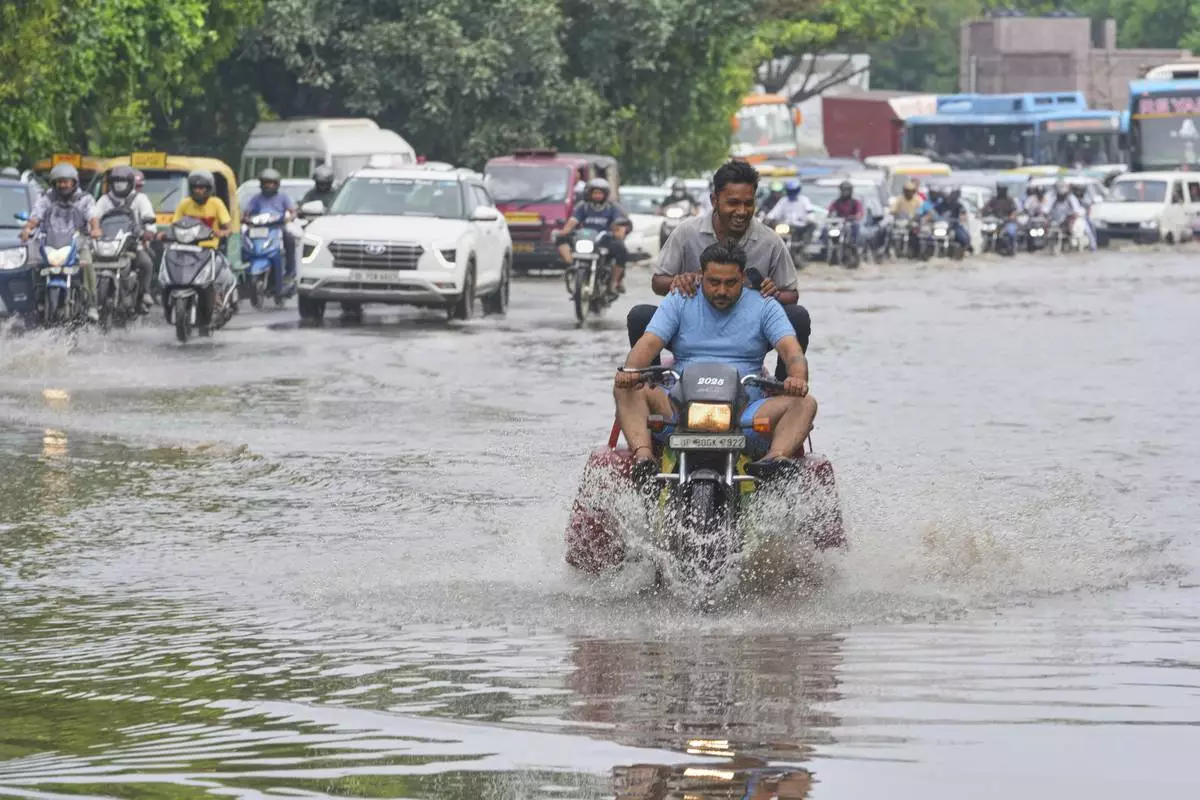
Commuters wade through the flooded water on a road after the river Yamuna, swollen by incessant rain in the higher regions, overran its banks, in New Delhi, India, Friday, Sept. 5, 2025. (AP Photo/Manish Swarup)
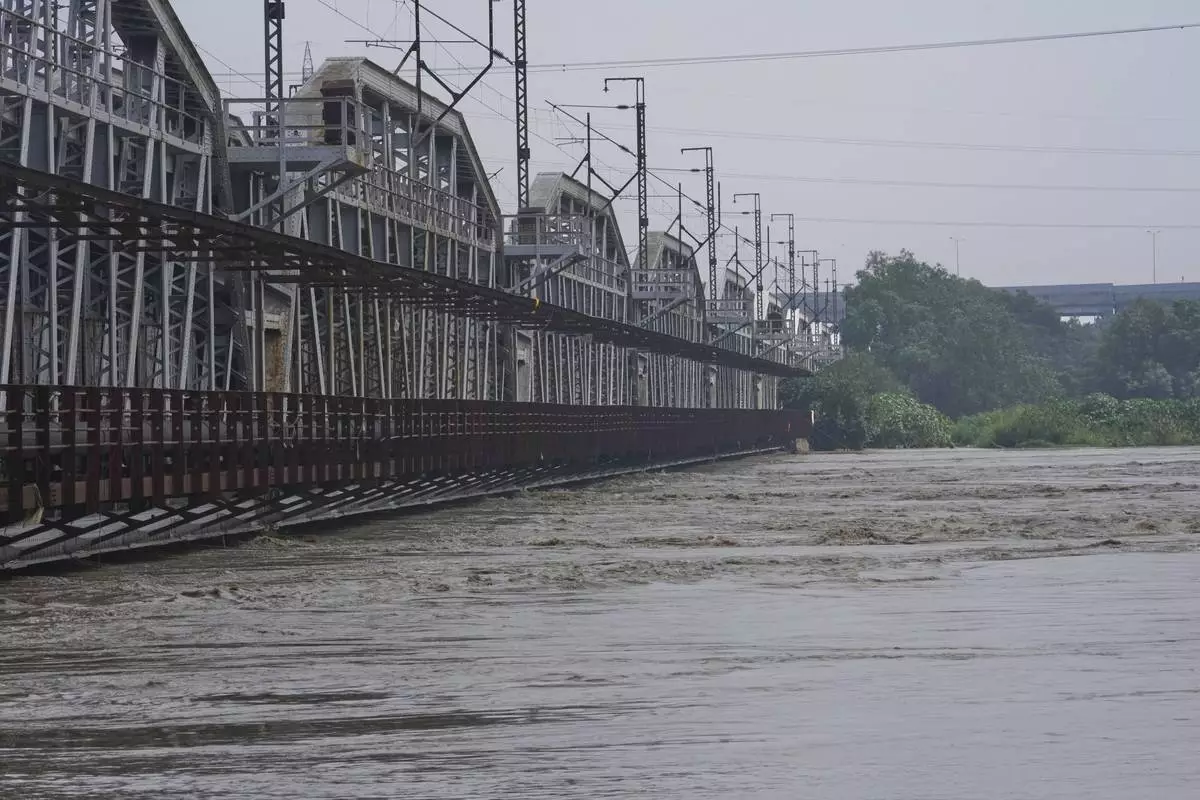
The swollen Yamuna river by incessant rain in the higher regions flows dangerously close to an old Iron bridge in New Delhi, India, Friday, Sept. 5, 2025. (AP Photo/Manish Swarup)
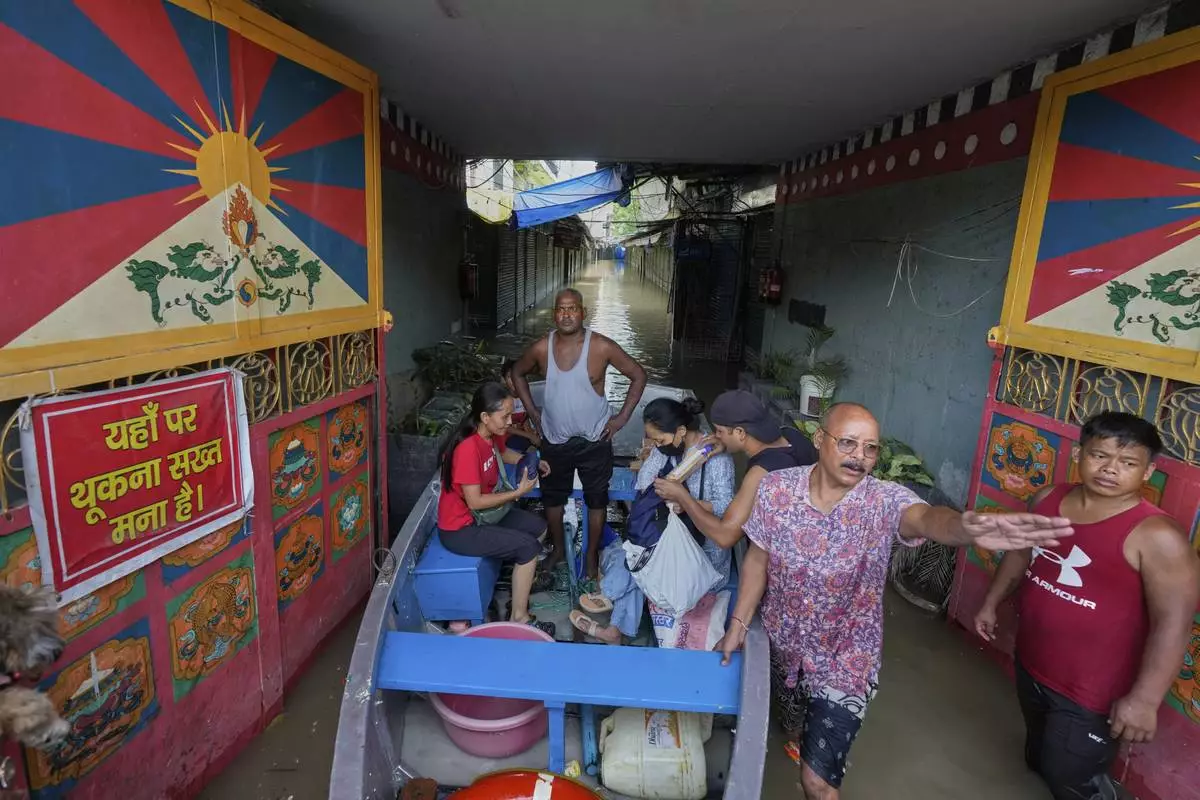
Residents of a Tibetan refugee colony use boat after the Yamuna river, swollen by incessant rain in the higher regions, overran its banks in New Delhi, India, Friday, Sept. 5, 2025. (AP Photo/Manish Swarup)
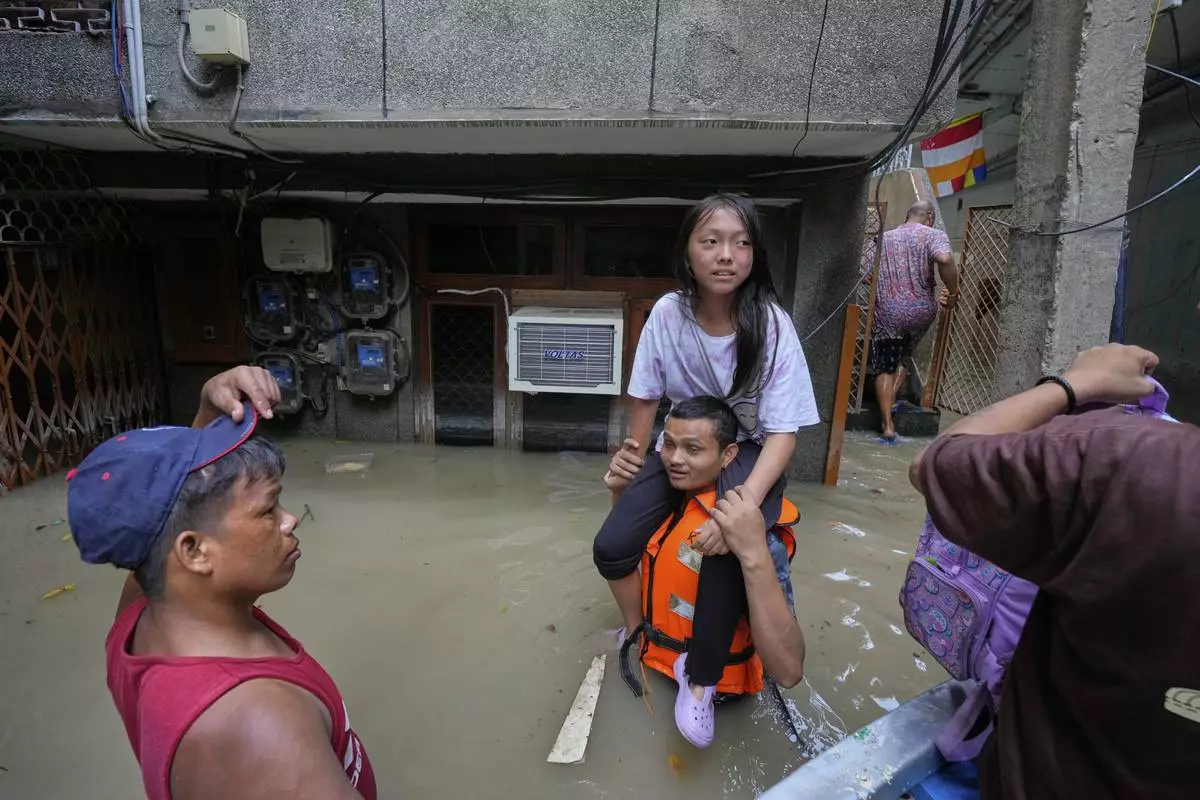
A volunteer lifts a young girl onto his shoulders, carrying her to a safer place after evacuating her and others by boat after the river Yamuna, swollen by incessant rain in the higher regions, overran its banks, in New Delhi, India, Friday, Sept. 5, 2025. (AP Photo/Manish Swarup)
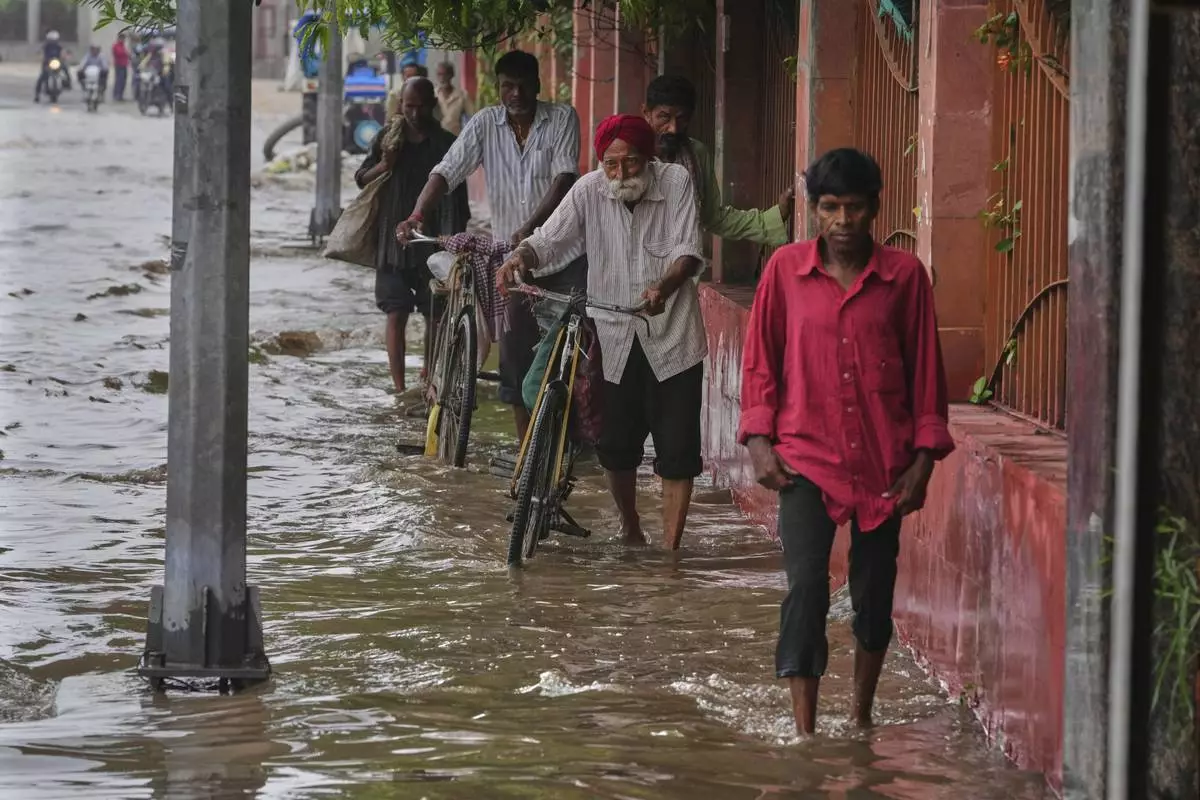
Commuters wade through the flooded water on a road after the river Yamuna, swollen by incessant rain in the higher regions, overran its banks, in New Delhi, India, Friday, Sept. 5, 2025. (AP Photo/Manish Swarup)
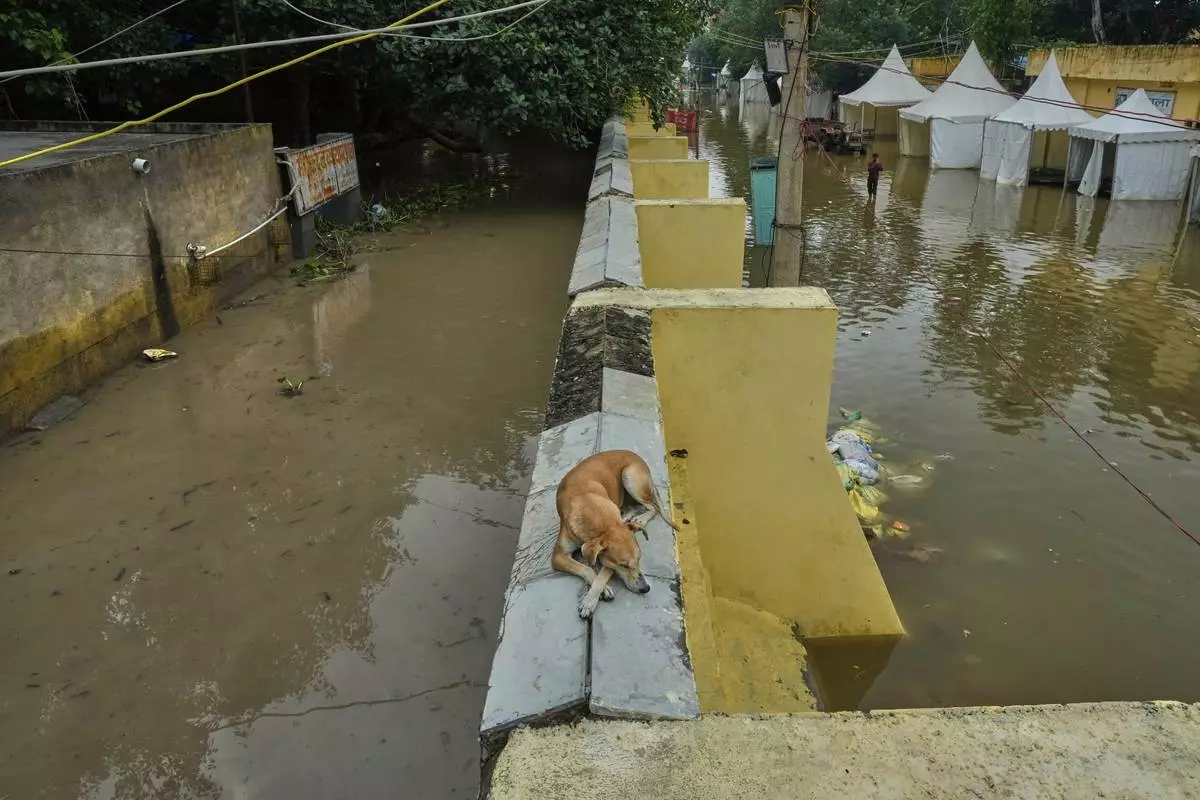
A stray dog sits on the top of a wall surrounded with flooded water after the river Yamuna, swollen by incessant rain in the higher regions, overran its banks, in New Delhi, India, Friday, Sept. 5, 2025. (AP Photo/Manish Swarup)
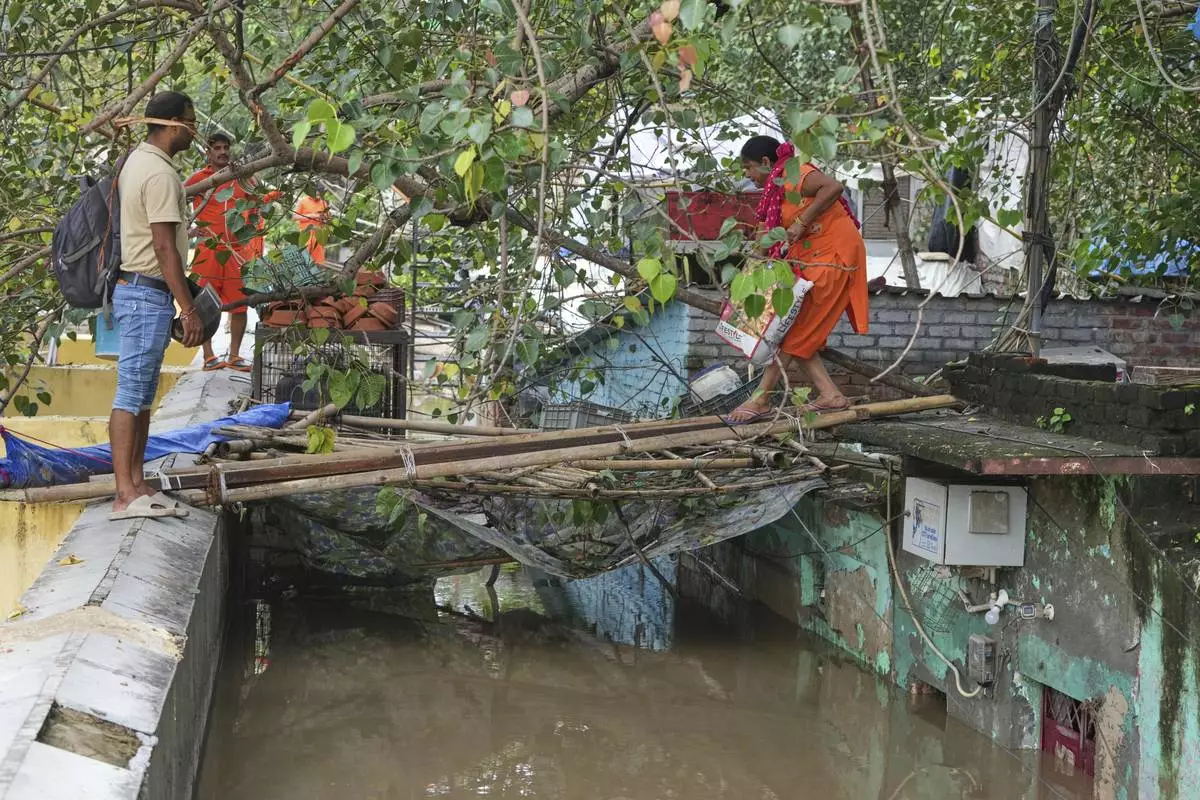
Bindu Pandey, 40, right, leaves her flooded house to a temporary shelter in New Delhi, India, Friday, Sept. 5, 2025. (AP Photo/Manish Swarup)
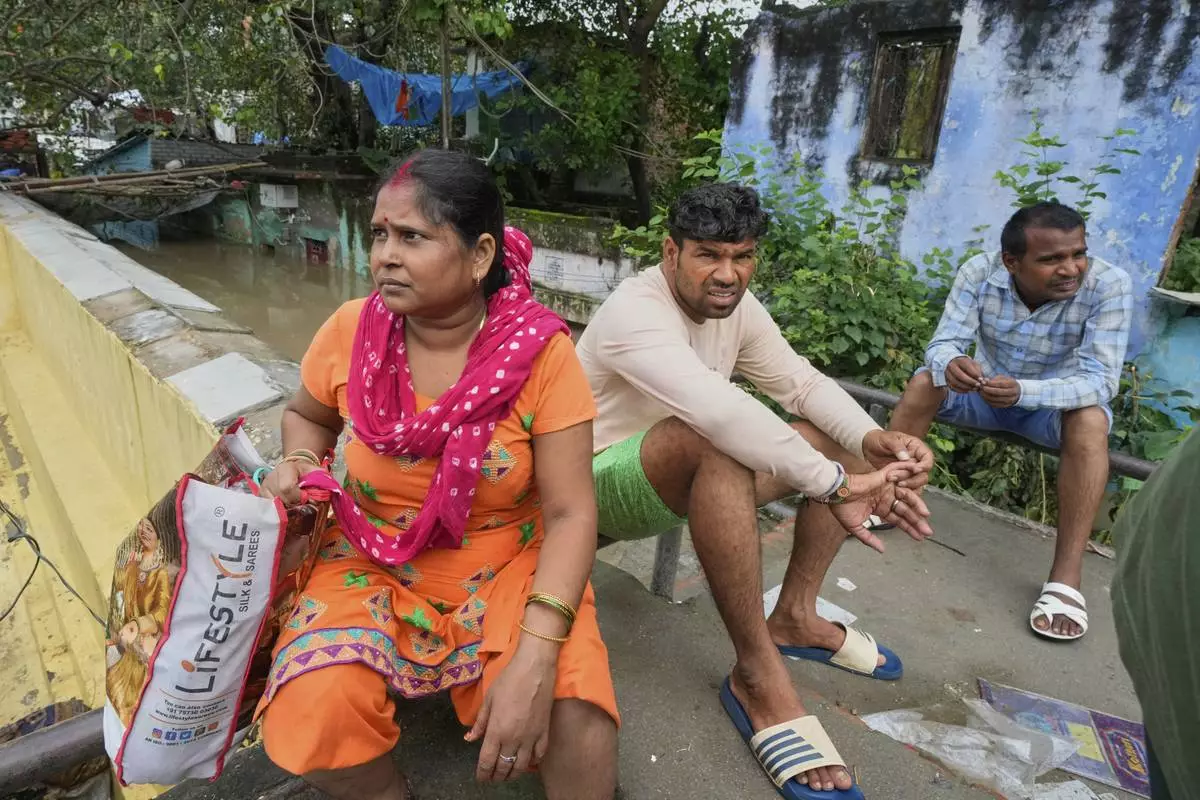
Bindu Pandey, 40, left, sits on the wall near the floodwaters of the swollen Yamuna River, leaving behind her inundated home on the banks to seek refuge in a temporary shelter, in New Delhi, India, Friday, Sept. 5, 2025. (AP Photo/Manish Swarup)
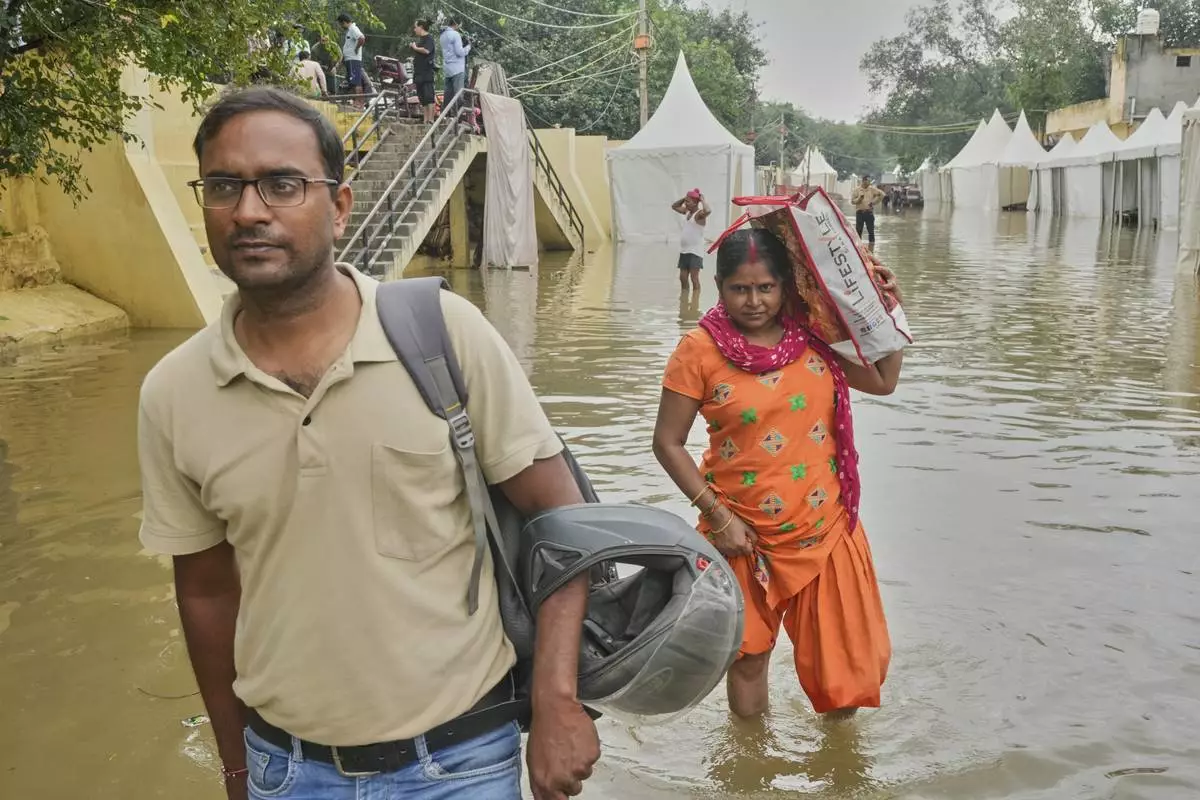
Bindu Pandey, 40, center, wades through the floodwaters of the swollen Yamuna River, leaving behind her inundated home on the banks to seek refuge in a temporary shelter, in New Delhi, India, Friday, Sept. 5, 2025. (AP Photo/Manish Swarup)
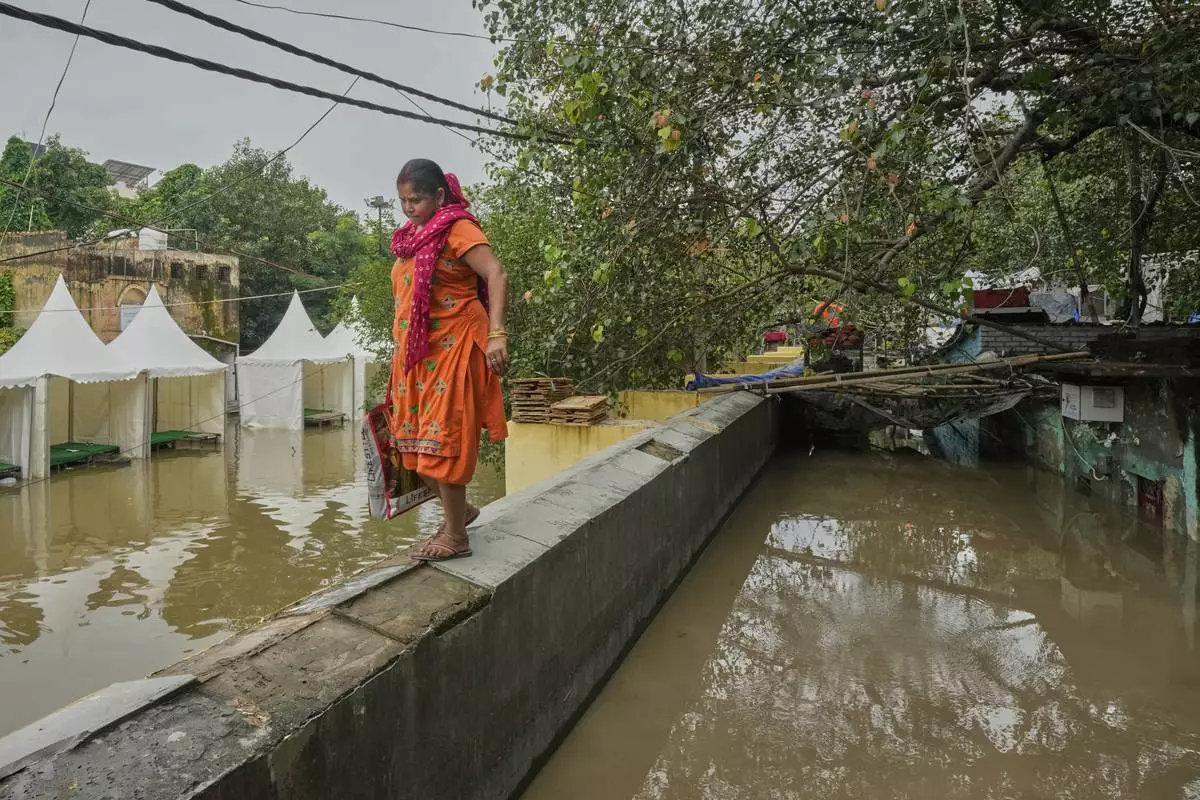
Bindu Pandey, 40, walks on the top of a wall surrounded by flooded waters of the swollen Yamuna River which inundated her residence on the banks of the river in New Delhi, India, Friday, Sept. 5, 2025. (AP Photo/Manish Swarup)