Skip to Content Facebook Feature Image

Thailand's political path is shadowed by former Prime Minister Thaksin Shinawatra's dramas

News

Thailand's political path is shadowed by former Prime Minister Thaksin Shinawatra's dramas
News

News

Thailand's political path is shadowed by former Prime Minister Thaksin Shinawatra's dramas

2025-09-09 15:41 Last Updated At:15:50

BANGKOK (AP) — Thaksin Shinawatra, the billionaire former prime minister of Thailand, remains one of the country’s most influential and controversial figures nearly two decades after being ousted in a 2006 military coup. His political journey, marked by unprecedented popularity, a dramatic fall from power, years in self-imposed exile and a high-profile return, continues to shape Thailand’s political landscape.

Thaksin's dramatic path took another turn Tuesday when the Supreme Court ruled that he must serve a one-year prison term for previous convictions on graft and abuse of power charges, after investigating whether officials had mishandled his return to Thailand in 2023 to begin serving the sentences.

More Images
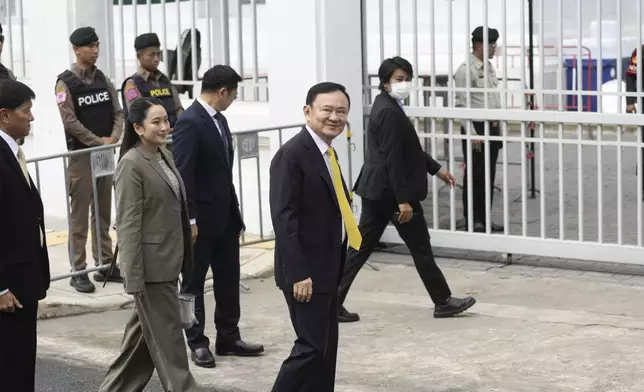
CORRECTS NAME OF THE DAUGHTER - Thailand’s former Prime Minister Thaksin Shinawatra, center, and his daughter and former Prime Minister Paetongtarn Shinawatra, center left, arrive at Supreme Court in Bangkok, Thailand, Tuesday, Sept. 9, 2025.(AP Photo/Wason Wanitchakorn)
CORRECTS NAME OF THE DAUGHTER - Thailand’s former Prime Minister Thaksin Shinawatra, center, and his daughter and former Prime Minister Paetongtarn Shinawatra, center left, arrive at Supreme Court in Bangkok, Thailand, Tuesday, Sept. 9, 2025.(AP Photo/Wason Wanitchakorn)

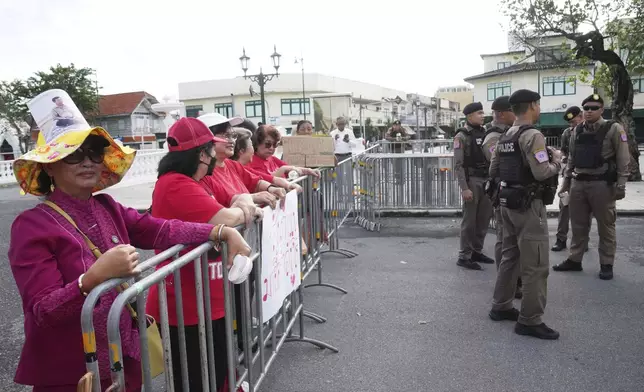
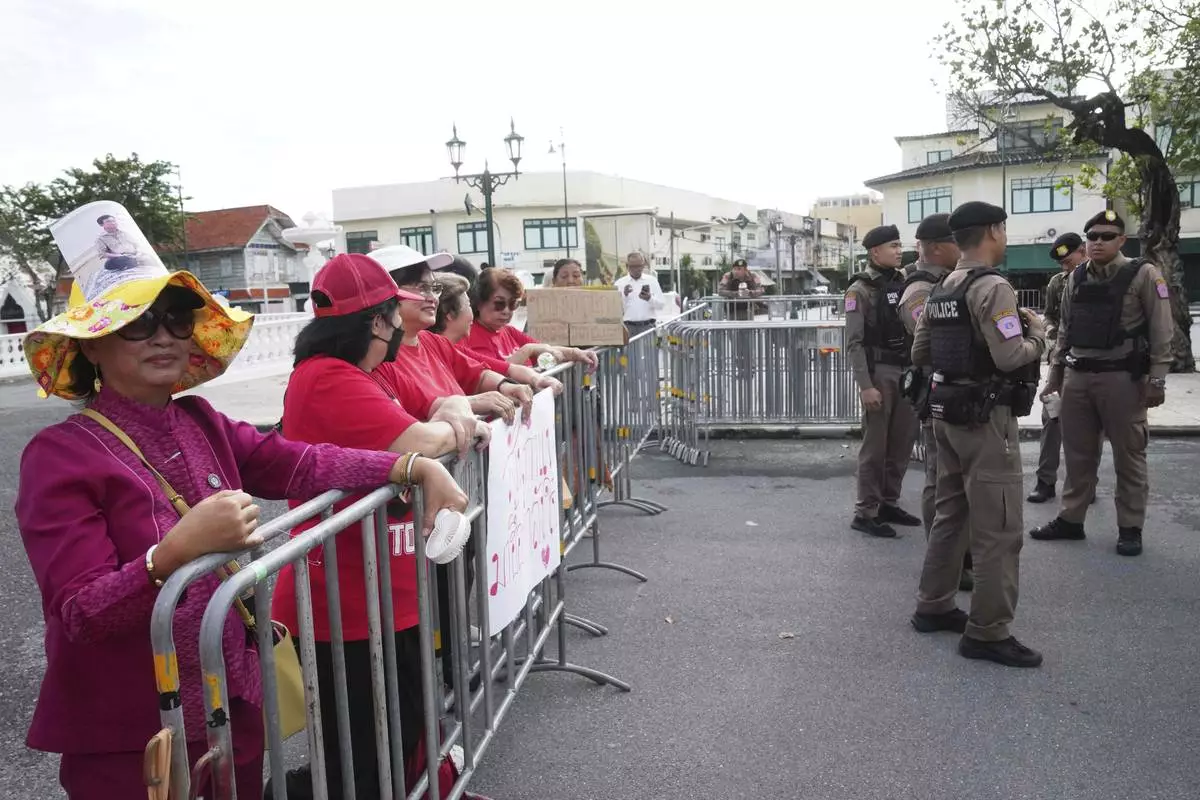
Supporters of Thailand's former Prime Minister Thaksin Shinawatra gather outside the Supreme Court in Bangkok, Thailand, Tuesday, Sept. 9, 2025, (AP Photo/Sakchai Lalit)
Supporters of Thailand's former Prime Minister Thaksin Shinawatra gather outside the Supreme Court in Bangkok, Thailand, Tuesday, Sept. 9, 2025, (AP Photo/Sakchai Lalit)

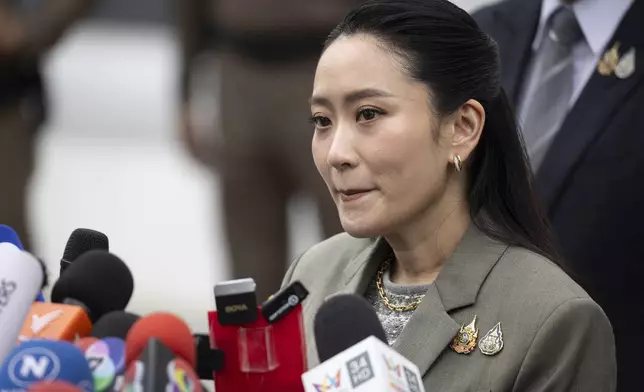
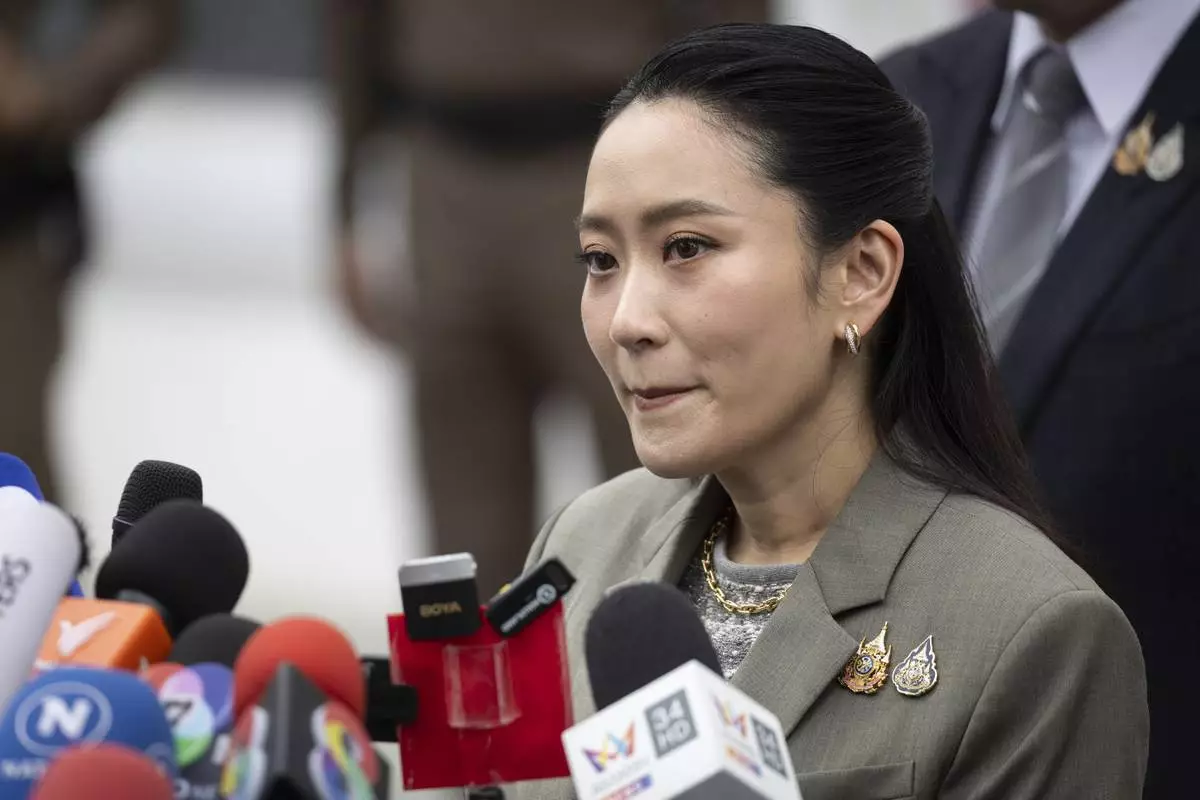
Former Prime Minister Paetongtarn Shinawatra, daughter of former Prime Minister Thaksin Shinawatra talks to reporters at the Supreme Court in Bangkok, Thailand, Tuesday, Sept. 9, 2025. (AP Photo/Wason Wanichakorn)
Former Prime Minister Paetongtarn Shinawatra, daughter of former Prime Minister Thaksin Shinawatra talks to reporters at the Supreme Court in Bangkok, Thailand, Tuesday, Sept. 9, 2025. (AP Photo/Wason Wanichakorn)

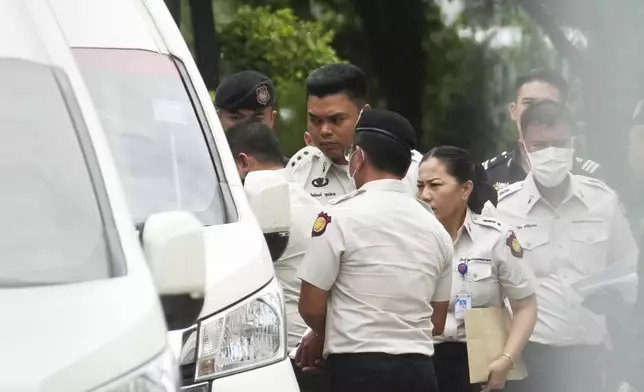
Thailand's former Prime Minister Thaksin Shinawatra, partly seen at left, leaves the Supreme Court for Bangkok Remand Prison in Bangkok, Thailand, Tuesday, Sept. 9, 2025, (AP Photo/Sakchai Lallit)
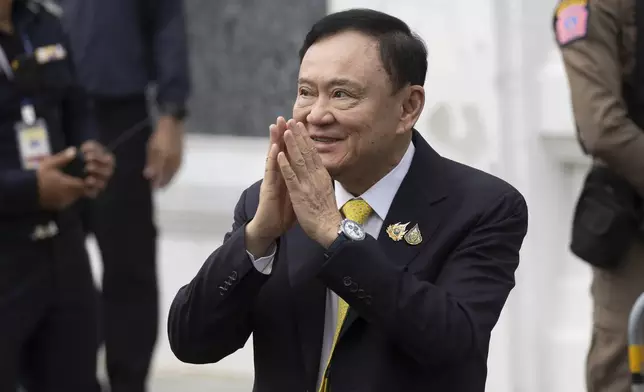
Thailand's former Prime Minister Thaksin Shinawatra, partly seen at left, leaves the Supreme Court for Bangkok Remand Prison in Bangkok, Thailand, Tuesday, Sept. 9, 2025, (AP Photo/Sakchai Lallit)

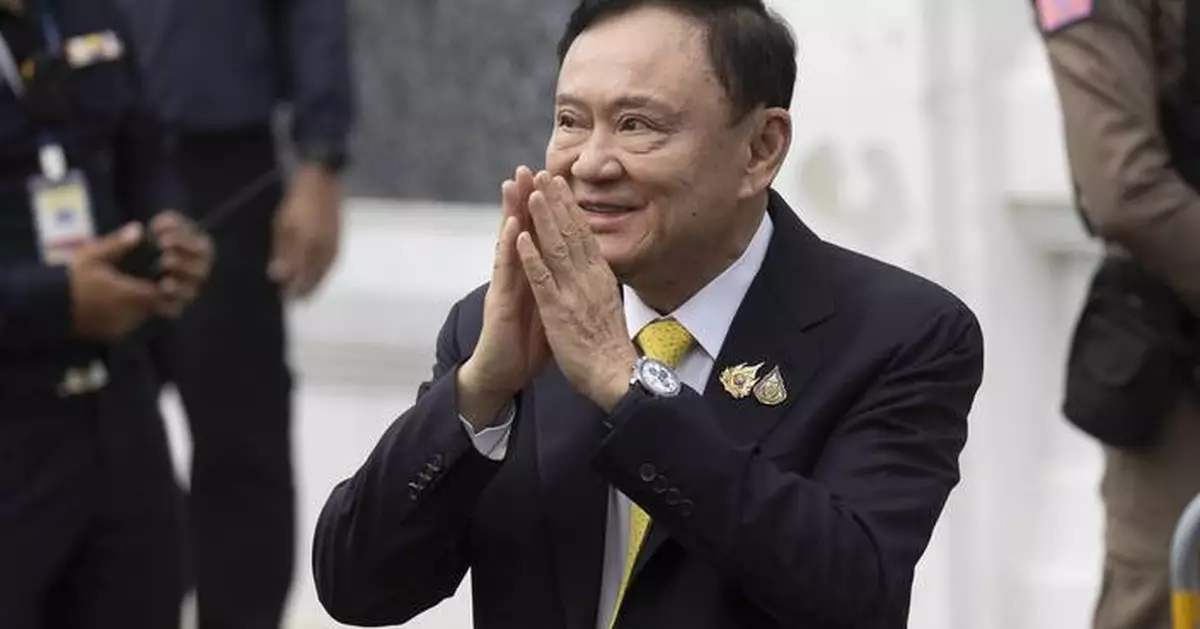
Former Thailand's Prime Minister Thaksin Shinawatra arrives at Supreme Court in Bangkok, Thailand, Tuesday, Sept. 9, 2025, (AP Photo/Wason Wanitchakorn)

Former Thailand's Prime Minister Thaksin Shinawatra arrives at Supreme Court in Bangkok, Thailand, Tuesday, Sept. 9, 2025, (AP Photo/Wason Wanitchakorn)

Last month, he defied expectations when a court that has historically leaned against him and his political machine acquitted him of royal defamation, an offense that could have sent him to prison for up to 15 years.

Despite powerful enemies in the Thai establishment and criminal convictions for corruption, he had avoided prison by going into exile after his ouster. His return had seemed to signal an accommodation with his opponents.

He was insistent on maintaining a high public profile and was seen as the real power directing the government that was formed as he returned, especially when his daughter, Paetongtarn Shinawatra, became prime minister last year. It appeared to keep his old enmities alive and embroiled him in legal challenges from those wishing to curb his influence.

The Shinawatra family is prominent in the northern city of Chiang Mai, where Thaksin was born to a mercantile family in 1949. After a career in public service as a police colonel, Thaksin became a business entrepreneur in the late 1970s. He built a telecommunications empire starting with Advanced Info Systems, an early mobile phone service provider and the primary source of his fortune.

He entered politics in 1994, holding Cabinet posts before establishing the Thai Rak Thai Party in 1998. Using his fortune to build a nationwide political machine, he promoted populist policies that resonated with lower-income citizens, especially in the countryside.

His platform promised to spread economic growth and bridge the wealth gap, with signature policies including universal healthcare and village development funds. This led to landslide victories for his party in 2001 and 2005, making him the first elected Thai prime minister to complete a four-year term and the country’s longest-serving democratically elected leader.

However, Thaksin’s massive popularity and electoral support rocked Thailand’s established political order. This earned him powerful enemies among conservative forces, including the army and the courts, which saw him as a threat to the monarchy, the bedrock of Thai identity, as well as to their own influence.

He also faced criticism for his imperious CEO-style governance, intolerance of criticism, especially from the media, and failure to distance his business interests from government policy. His administration was also blamed for setting off a persistent Muslim insurgency in Thailand's southern provinces and for what human rights advocates said were more than 2,000 extrajudicial killings during his war on drugs.

His second term was cut short by a military coup in 2006 while he was abroad. Opponents accused him of corruption, abuse of power, and disrespecting then-King Bhumibol Adulyadej, and hounded him with legal cases that he characterized as politically motivated.

Thaksin’s ouster triggered nearly two decades of deep political polarization, pitting his supporters against opponents, including better-off urban dwellers, ardent royalists and the military. He briefly returned in 2008 to face charges but skipped bail and fled abroad again, commencing a self-imposed exile lasting over a decade.

Despite his physical absence, Thaksin remained a beloved and influential figure among his followers, whom he encouraged remotely. Parties formed from the ashes of his Thai Rak Thai Party and, still under his influence, consistently won elections but just as consistently were driven from office by legal challenges in courts hostile to him and destabilizing street protests.

His supporters, the “Red Shirts,” engaged in militant street actions, countering “Yellow Shirt” royalists, with both sides responsible for street violence.

His sister, Yingluck Shinawatra, continued the family’s legacy, leading the Pheu Thai Party to victory in 2011 and becoming Thailand’s first female prime minister. Her government’s proposed amnesty for Thaksin triggered protests, leading to another military coup in 2014 — and driving Yingluck into exile as well.

While in exile, Thaksin, who had his Thai passport revoked, obtained another from Montenegro through investment and spent significant time in Dubai. He also purchased and sold the Manchester City Football Club and invested in mining in Africa.

Thaksin’s return became possible after the progressive Move Forward Party’s victory in 2023 rattled the establishment that had so abhorred him. This led to what many called a “self-serving deal” between Thaksin and his former conservative foes, a move that alienated many supporters even as it returned Pheu Thai to power while keeping Move Forward out of government.

His dramatic return to Bangkok in August 2023 occurred on the same day Pheu Thai formed a new coalition government, after royalist Senators refused to endorse Move Forward's mandate from the voters.

Upon his return, Thaksin was sentenced to an eight-year prison term for corruption but was immediately transferred to a fancy hospital suite due to ill health, a diagnosis regarded with skepticism by many. His sentence was reduced to a single year by King Maha Vajiralongkorn, and he was released on parole in February 2024 after six months.

Critics questioned his illness, viewing his abbreviated stay as a “special privilege.” Tuesday's Supreme Court ruling said his transfer to the hospital did not follow proper procedures and that his health condition could not justify his extended stay there.

Since his release from hospital, Thaksin has maintained a high public profile, traveling around the country and offering political observations. He is widely considered the de facto leader of Pheu Thai and the power behind its government.

However, his daughter Paetongtarn was ousted as prime minister last month after a court found her guilty of an ethics violation for a politically compromising phone call with Cambodian Senate President Hun Sen.

Pheu Thai exited its two years in power after Parliament last week confirmed a candidate from a rival party as the new prime minister. Many see this as a major blow to the political influence Thaksin has wielded for more than two decades.
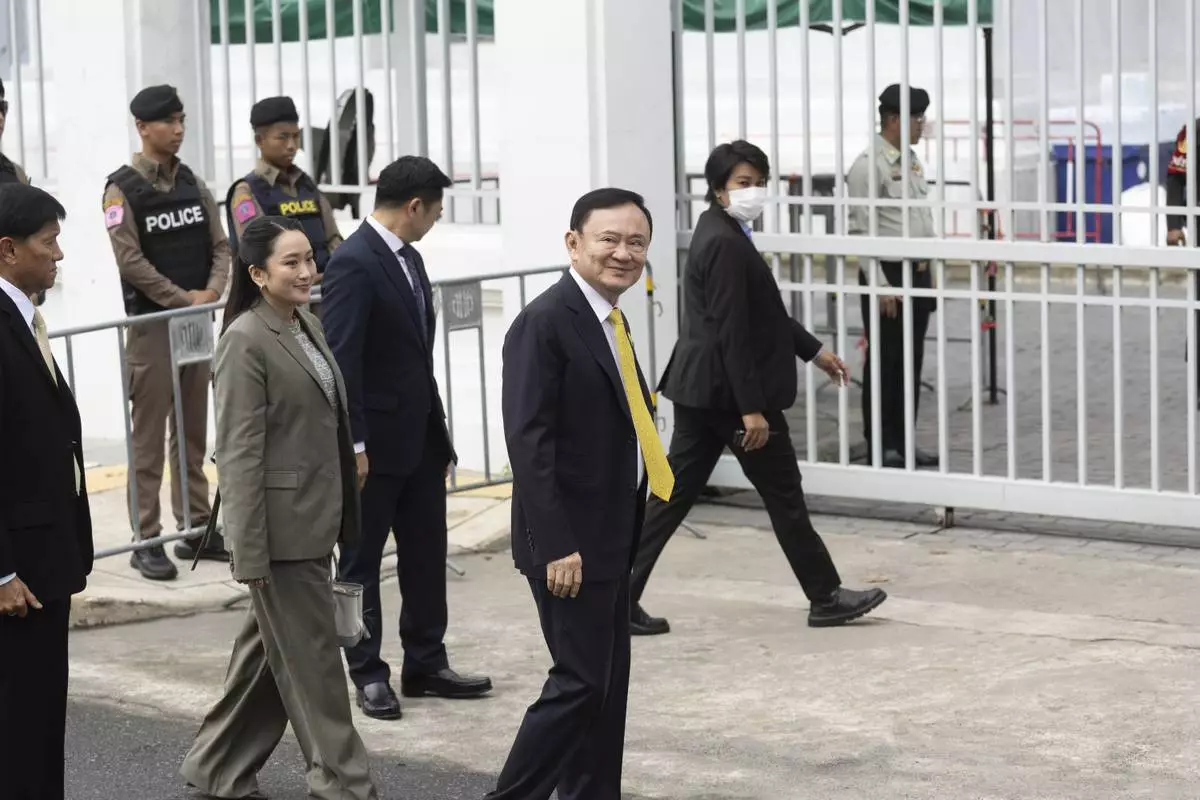
CORRECTS NAME OF THE DAUGHTER - Thailand’s former Prime Minister Thaksin Shinawatra, center, and his daughter and former Prime Minister Paetongtarn Shinawatra, center left, arrive at Supreme Court in Bangkok, Thailand, Tuesday, Sept. 9, 2025.(AP Photo/Wason Wanitchakorn)
CORRECTS NAME OF THE DAUGHTER - Thailand’s former Prime Minister Thaksin Shinawatra, center, and his daughter and former Prime Minister Paetongtarn Shinawatra, center left, arrive at Supreme Court in Bangkok, Thailand, Tuesday, Sept. 9, 2025.(AP Photo/Wason Wanitchakorn)

Supporters of Thailand's former Prime Minister Thaksin Shinawatra gather outside the Supreme Court in Bangkok, Thailand, Tuesday, Sept. 9, 2025, (AP Photo/Sakchai Lalit)
Supporters of Thailand's former Prime Minister Thaksin Shinawatra gather outside the Supreme Court in Bangkok, Thailand, Tuesday, Sept. 9, 2025, (AP Photo/Sakchai Lalit)

Former Prime Minister Paetongtarn Shinawatra, daughter of former Prime Minister Thaksin Shinawatra talks to reporters at the Supreme Court in Bangkok, Thailand, Tuesday, Sept. 9, 2025. (AP Photo/Wason Wanichakorn)
Former Prime Minister Paetongtarn Shinawatra, daughter of former Prime Minister Thaksin Shinawatra talks to reporters at the Supreme Court in Bangkok, Thailand, Tuesday, Sept. 9, 2025. (AP Photo/Wason Wanichakorn)

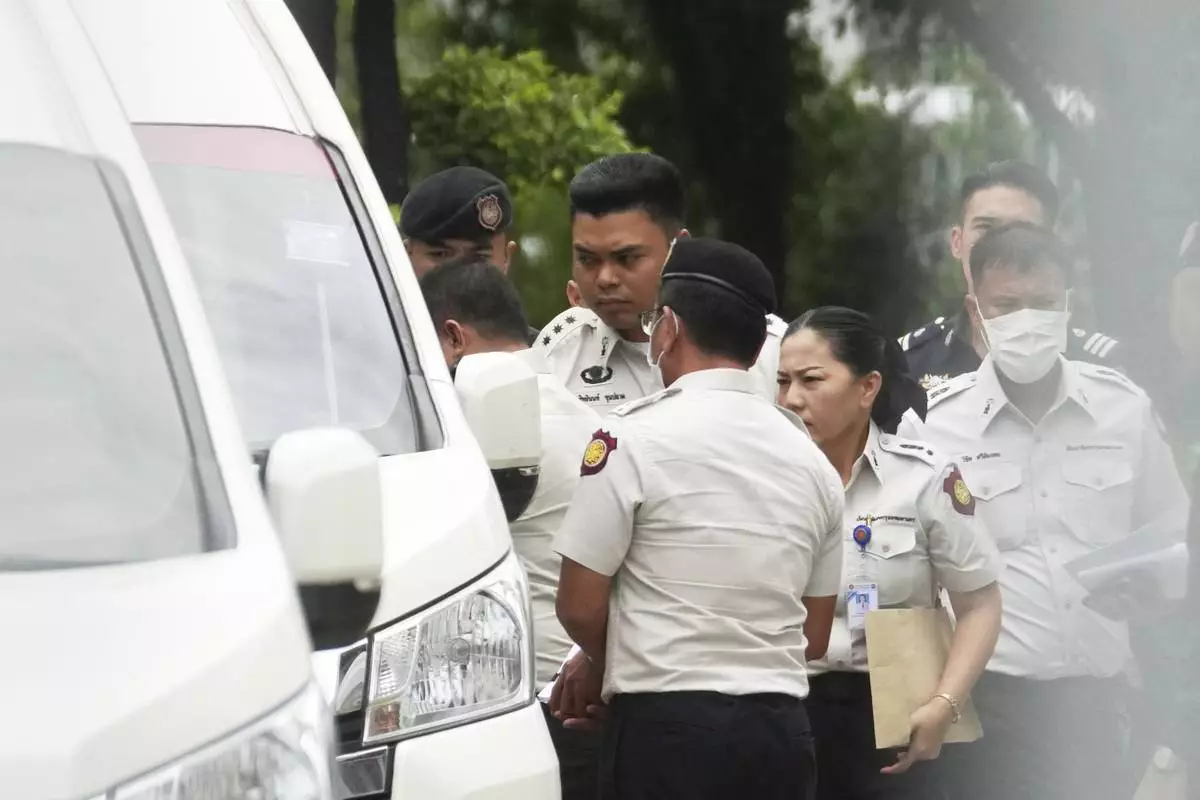
Thailand's former Prime Minister Thaksin Shinawatra, partly seen at left, leaves the Supreme Court for Bangkok Remand Prison in Bangkok, Thailand, Tuesday, Sept. 9, 2025, (AP Photo/Sakchai Lallit)
Thailand's former Prime Minister Thaksin Shinawatra, partly seen at left, leaves the Supreme Court for Bangkok Remand Prison in Bangkok, Thailand, Tuesday, Sept. 9, 2025, (AP Photo/Sakchai Lallit)

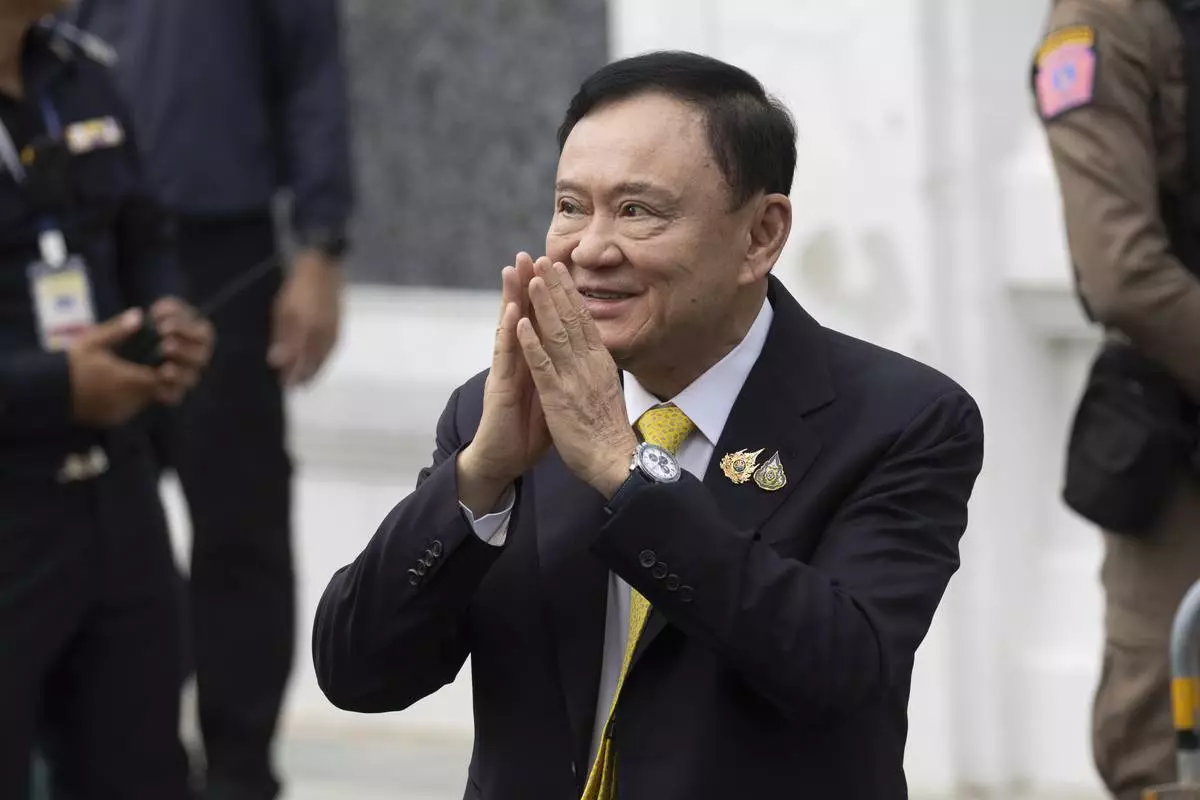
Former Thailand's Prime Minister Thaksin Shinawatra arrives at Supreme Court in Bangkok, Thailand, Tuesday, Sept. 9, 2025, (AP Photo/Wason Wanitchakorn)
Former Thailand's Prime Minister Thaksin Shinawatra arrives at Supreme Court in Bangkok, Thailand, Tuesday, Sept. 9, 2025, (AP Photo/Wason Wanitchakorn)

HAMIMA, Syria (AP) — A trickle of civilians left a contested area east of Aleppo on Thursday after a warning by the Syrian military to evacuate ahead of an anticipated government military offensive against Kurdish-led forces.

Government officials and some residents who managed to get out said the Kurdish-led Syrian Democratic Forces prevented people from leaving via the corridor designated by the military along the main road leading west from the town of Maskana through Deir Hafer to the town of Hamima.

The SDF denied the reports that they were blocking the evacuation.

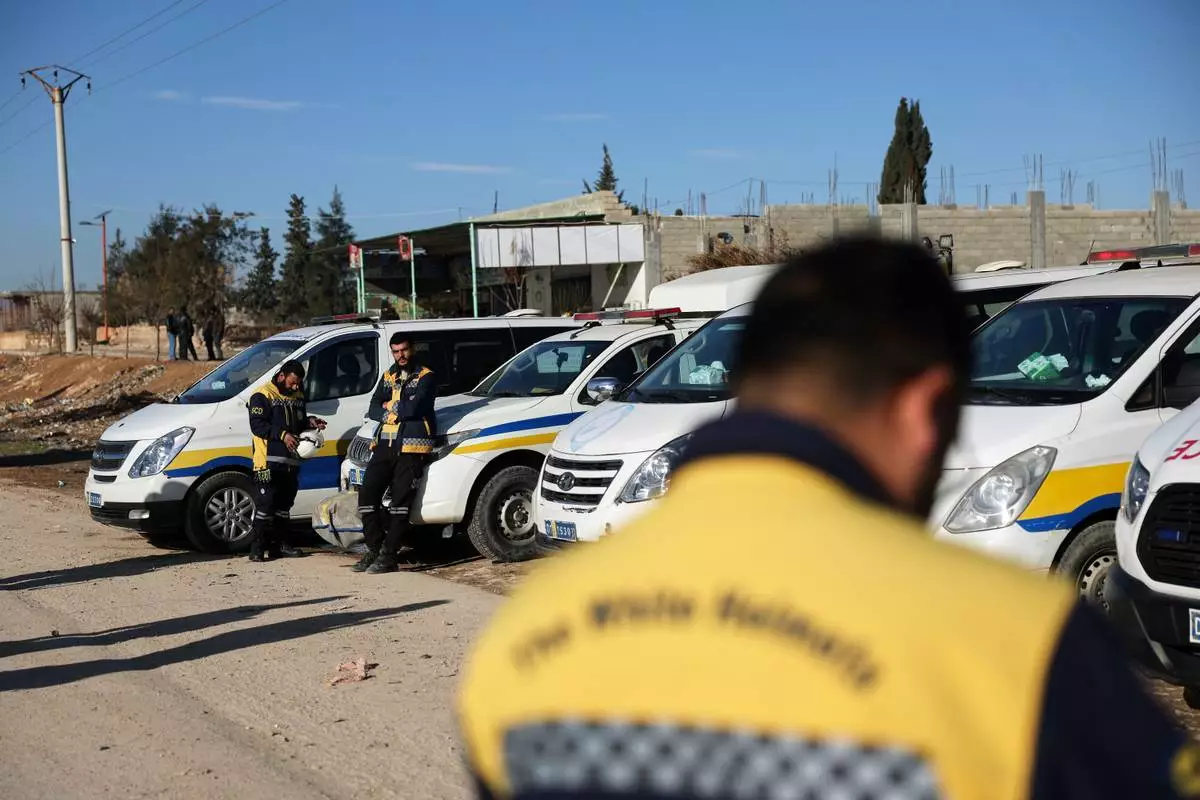
In Hamima, ambulances and government officials were gathered beginning early in the morning waiting to receive the evacuees and take them to shelters, but few arrived.

Farhat Khorto, a member of the executive office of Aleppo Governorate who was waiting there, claimed that there were "nearly two hundred civilian cars and hundreds of people who wanted to leave” the Deir Hafer area but that they were prevented by the SDF. He said the SDF was warning residents they could face “sniping operations or booby-trapped explosives” along that route.

Some families said they got out of the evacuation zone by taking back roads or going part of the distance on foot.

“We tried to leave this morning, but the SDF prevented us. So we left on foot … we walked about seven to eight kilometers until we hit the main road, and there the civil defense took us and things were good then,” said Saleh al-Othman, who said he fled Deir Hafer with more than 50 relatives.

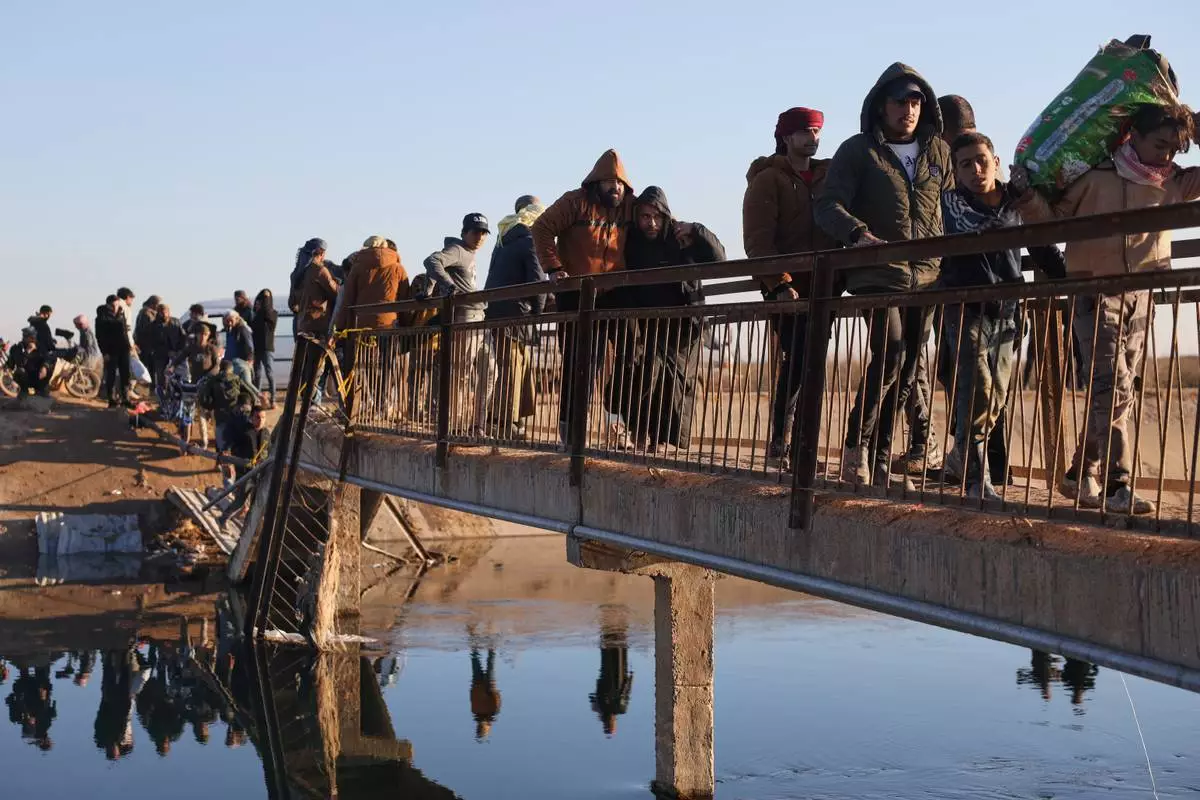
Yasser al-Hasno, also from Deir Hafer, said he and his family left via back roads because the main routes were closed and finally crossed a small river on foot to get out of the evacuation area.

Another Deir Hafer resident who crossed the river on foot, Ahmad al-Ali, said, “We only made it here by bribing people. They still have not allowed a single person to go through the main crossing."

Farhad Shami, a spokesman for the SDF, said the allegations that the group had prevented civilians from leaving were “baseless.” He suggested that government shelling was deterring residents from moving.

The SDF later issued a statement also denying that it had blocked civilians from fleeing. It said that “any displacement of civilians under threat of force by Damascus constitutes a war crime" and called on the international community to condemn it.

“Today, the people of Deir Hafer have demonstrated their unwavering commitment to their land and homes, and no party can deprive them of their right to remain there under military pressure,” it said.

The Syrian army’s announcement late Wednesday — which said civilians would be able to evacuate through the “humanitarian corridor” from 9 a.m. to 5 p.m. Thursday — appeared to signal plans for an offensive against the SDF in the area east of Aleppo. Already there have been limited exchanges of fire between the two sides.

Thursday evening, the military said it would extend the humanitarian corridor for another day.

The Syrian military called on the SDF and other armed groups to withdraw to the other side of the Euphrates River, to the east of the contested zone. The SDF controls large swaths of northeastern Syria east of the river.

The tensions in the Deir Hafer area come after several days of intense clashes last week in Aleppo city that ended with the evacuation of Kurdish fighters and government forces taking control of three contested neighborhoods.

The fighting broke out as negotiations have stalled between Damascus and the SDF over an agreement reached last March to integrate their forces and for the central government to take control of institutions including border crossings and oil fields in the northeast.

Some of the factions that make up the new Syrian army, which was formed after the fall of former President Bashar Assad in a rebel offensive in December 2024, were previously Turkey-backed insurgent groups that have a long history of clashing with Kurdish forces.

The SDF for years has been the main U.S. partner in Syria in fighting against the Islamic State group, but Turkey considers the SDF a terrorist organization because of its association with Kurdish separatist insurgents in Turkey.

Despite the long-running U.S. support for the SDF, the Trump administration has also developed close ties with the government of interim Syrian President Ahmad al-Sharaa and has so far avoided publicly taking sides in the clashes in Aleppo.

Ilham Ahmed, head of foreign relations for the SDF-affiliated Kurdish-led administration in northeast Syria, at a press conference Thursday said SDF officials were in contact with the United States and Turkey and had presented several initiatives for de-escalation. She said that claims by Damascus that the SDF had failed to implement the March agreement were false.

——

Associated Press journalist Hogir Al Abdo in Qamishli, Syria, contributed.

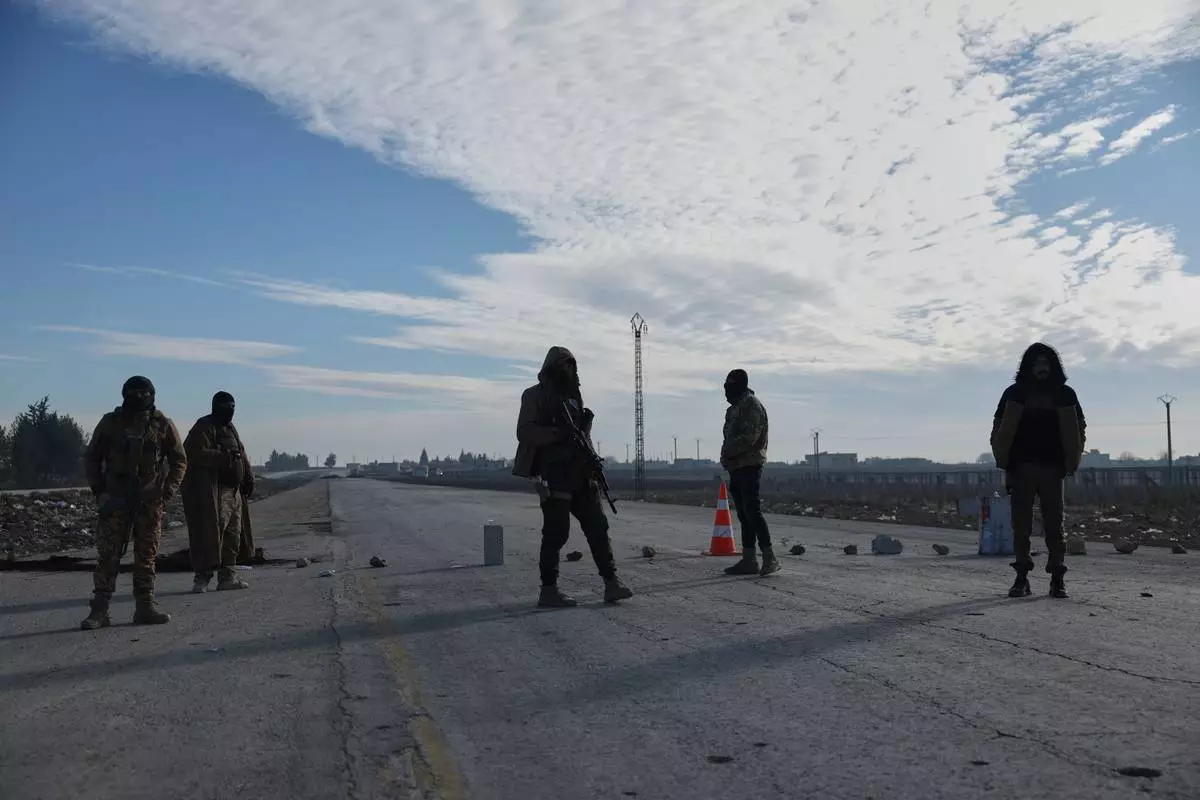
Members of the Syrian military police stand at a humanitarian crossing declared by the Syrian army in the village of Hamima, in the eastern Aleppo countryside, near the front line with the Kurdish-led Syrian Democratic Forces in Deir Hafer, Syria, Thursday, Jan. 15, 2026. (AP Photo/Ghaith Alsayed)

Members of the Syrian military police stand at a humanitarian crossing declared by the Syrian army in the village of Hamima, in the eastern Aleppo countryside, near the front line with the Kurdish-led Syrian Democratic Forces in Deir Hafer, Syria, Thursday, Jan. 15, 2026. (AP Photo/Ghaith Alsayed)

Members of the Syrian Civil Defense, stand next to their vehicles at a humanitarian crossing declared by the Syrian army in the village of Hamima, in the eastern Aleppo countryside, near the front line with the Kurdish-led Syrian Democratic Forces in Deir Hafer, Syria, Thursday, Jan. 15, 2026. (AP Photo/Ghaith Alsayed)

Members of the Syrian Civil Defense, stand next to their vehicles at a humanitarian crossing declared by the Syrian army in the village of Hamima, in the eastern Aleppo countryside, near the front line with the Kurdish-led Syrian Democratic Forces in Deir Hafer, Syria, Thursday, Jan. 15, 2026. (AP Photo/Ghaith Alsayed)

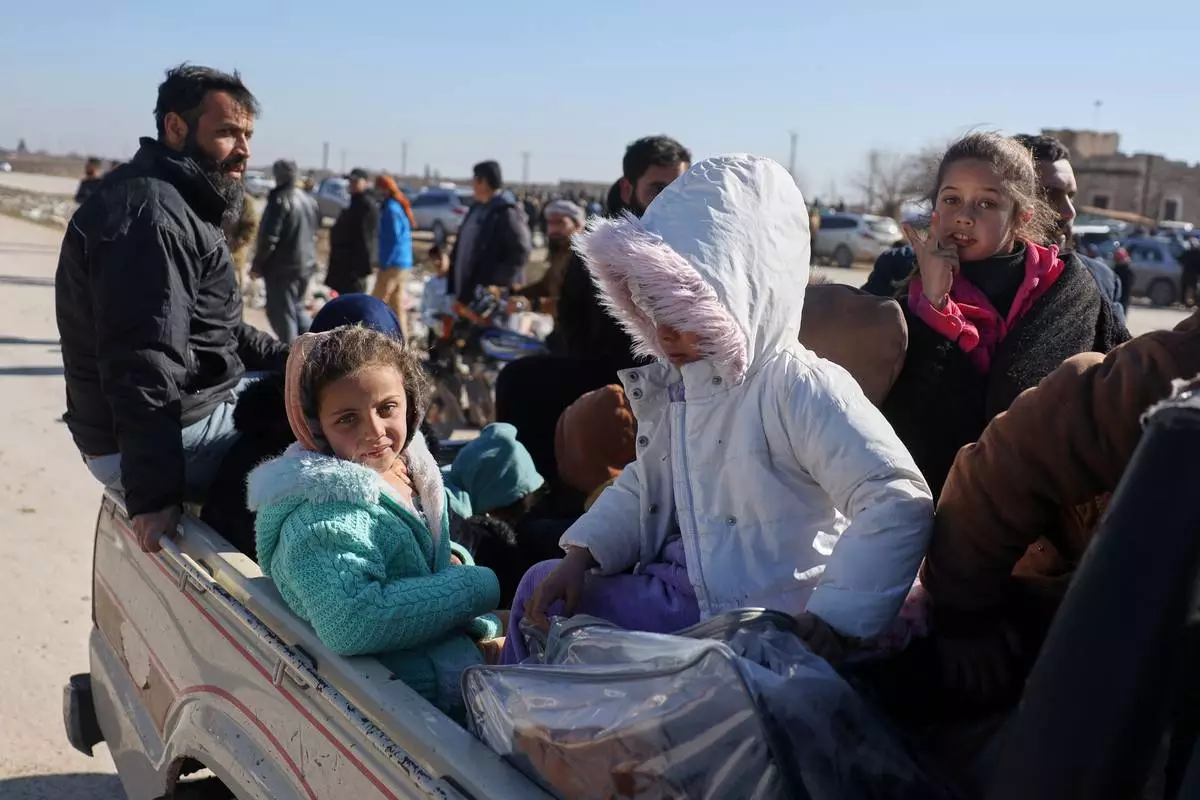
A displaced Syrian family rides in the back of a truck near a humanitarian crossing declared by the Syrian army next to a river in the village of Rasm Al-Abboud, in the eastern Aleppo countryside, near the front line with the Kurdish-led Syrian Democratic Forces in Deir Hafer, Syria, Thursday, Jan. 15, 2026. (AP Photo/Omar Albam)

A displaced Syrian family rides in the back of a truck near a humanitarian crossing declared by the Syrian army next to a river in the village of Rasm Al-Abboud, in the eastern Aleppo countryside, near the front line with the Kurdish-led Syrian Democratic Forces in Deir Hafer, Syria, Thursday, Jan. 15, 2026. (AP Photo/Omar Albam)

Displaced Syrian children and women ride in the back of a truck near a humanitarian crossing declared by the Syrian army in the village of Hamima, in the eastern Aleppo countryside, near the front line with the Kurdish-led Syrian Democratic Forces in Deir Hafer, Syria, Thursday, Jan. 15, 2026. (AP Photo/Omar Albam)

Displaced Syrian children and women ride in the back of a truck near a humanitarian crossing declared by the Syrian army in the village of Hamima, in the eastern Aleppo countryside, near the front line with the Kurdish-led Syrian Democratic Forces in Deir Hafer, Syria, Thursday, Jan. 15, 2026. (AP Photo/Omar Albam)

Displaced Syrians at a river crossing near the village of Jarirat al Imam, in the eastern Aleppo countryside, near the front line with the Kurdish-led Syrian Democratic Forces in Deir Hafer, Syria, Thursday, Jan. 15, 2026. (AP Photo/Omar Albam)

Displaced Syrians at a river crossing near the village of Jarirat al Imam, in the eastern Aleppo countryside, near the front line with the Kurdish-led Syrian Democratic Forces in Deir Hafer, Syria, Thursday, Jan. 15, 2026. (AP Photo/Omar Albam)

Recommended Articles