TALLINN, Estonia (AP) — A Belarusian court sentenced Tuesday a prominent independent journalist to four years in prison, days after more than 50 political prisoners were released as part of a U.S.-brokered deal. The opposition and rights activists denounced the ruling as part of a continuing crackdown on dissent.
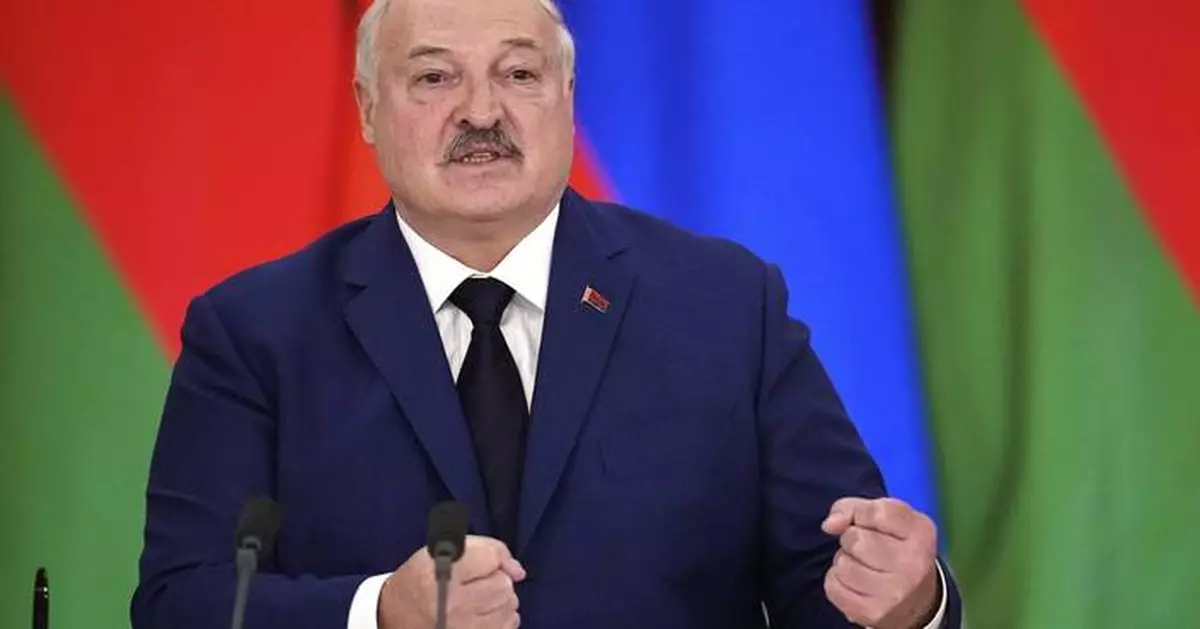
Ihar Ilyash was convicted on extremism charges for articles and commentaries critical of authoritarian President Alexander Lukashenko's government. Ilyash rejected the charges, saying in his final remarks at the trial that “freedom of speech isn't a crime.”
Andrei Bastunets, head of the Belarusian Association of Journalists, said the verdict signaled that the Belarusian authorities had no intention to soften their clampdown on independent media.
“Ilyash's sentencing shows ... Belarus remains the Black Hole of Europe and one of the most dangerous places for journalists,” Bastunets said, noting that at Ilyash is one of at least 27 journalists are currently behind bars in the country. “Repressions against independent journalists are like revolving doors.”
On Thursday, 52 political prisoners were released following a deal brokered by Washington, which lifted some sanctions on the country’s national carrier. The agreement reflected a rapprochement between the U.S. and Belarus, a close ally of Russia that has faced Western isolation for years.
U.S. President Donald Trump spoke to Lukashenko on the phone last month and even suggested that a face-to-face meeting could be in the works. That would be a major win for Lukashenko, who has ruled his nation of 9.5 million with an iron fist for more than three decades. Belarus has faced multiple rounds of Western sanctions for its relentless crackdown on dissent and allowing Moscow to use its territory to invade Ukraine in 2022.
Lukashenko, who has repeatedly released groups of political prisoners as he has sought to mend ties with the West, pardoned another 25 convicts on Tuesday, including some political prisoners.
In the latest sign of warming ties between Washington and Minsk, U.S. military officers attended a joint Russian-Belarusian military exercise in Belarus this week that was shunned by NATO allies in Europe. The drill followed last week's incursion of Russian drones into Poland, some of which came from Belarus, condemned by Western officials as a reckless provocation.
“The regime’s repressions are continuing despite Trump’s pleas, and the government throws new journalists in prison to fill the cells that have been freed,” Belarusian opposition leader Sviatlana Tsikhanouskaya, who was forced to leave the country after challenging Lukashenko in the 2020 presidential vote, told The Associated Press. ”All those journalists have been put in prison just for doing their job and they must be freed.”
Ilyash, who has been in custody since his arrest in October 2024, is married to Katsiaryna Bakhvalava, also a journalist, who has been serving an eight-year sentence on charges of high treason for covering massive protests triggered by the August 2020 presidential election, seen by the opposition and the West as fraudulent.
Lukashenko's government responded to the demonstrations with a sweeping crackdown in which over 65,000 people were arrested, thousands were beaten by police and hundreds of independent media outlets and nongovernmental organizations were closed and outlawed. Prominent opposition figures either fled the country or were imprisoned.
Belarus now has 1,168 political prisoners, according to the human rights group Viasna, including its founder, Nobel Peace Prize laureate Ales Bialiatski.
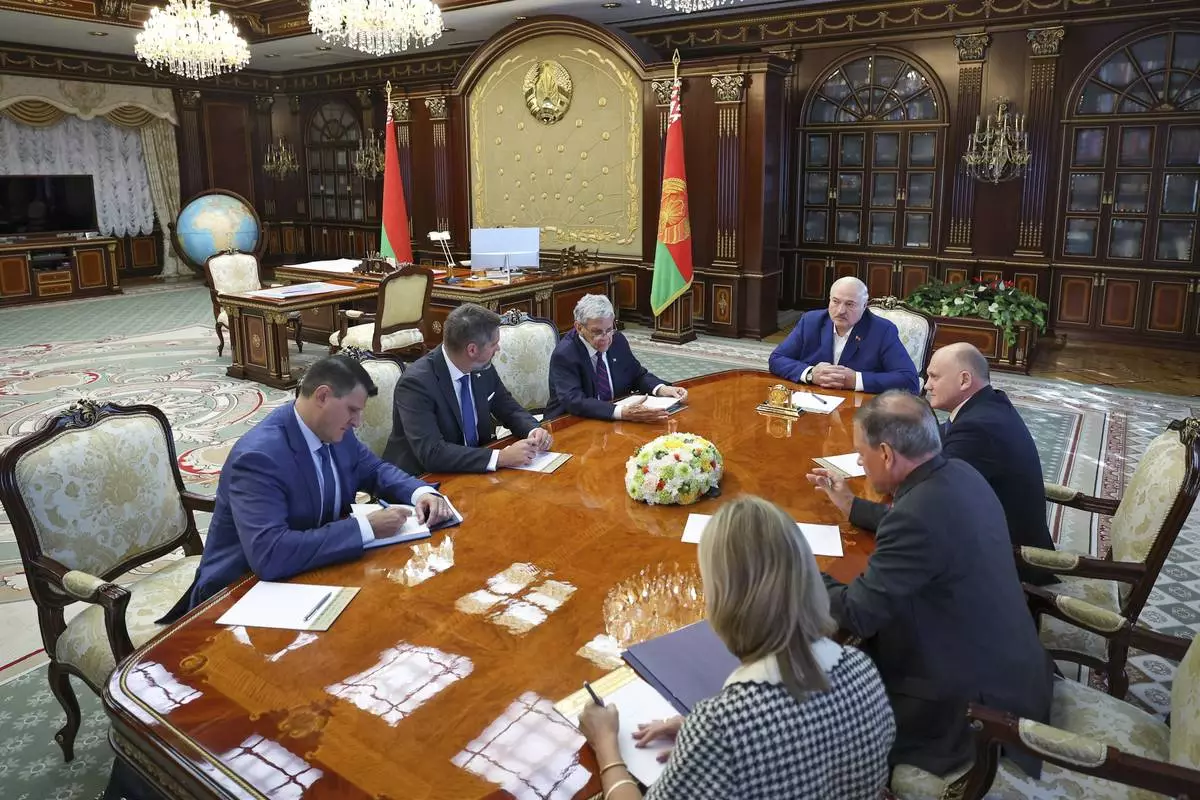
In this photo released by Belarusian presidential press service, Belarusian President Alexander Lukashenko, fourth right, speaks with U.S. Presidential envoy John Coale, third left, during their meeting in Minsk, Belarus, Thursday, Sept. 11, 2025. (Belarusian Presidential Press Service via AP)
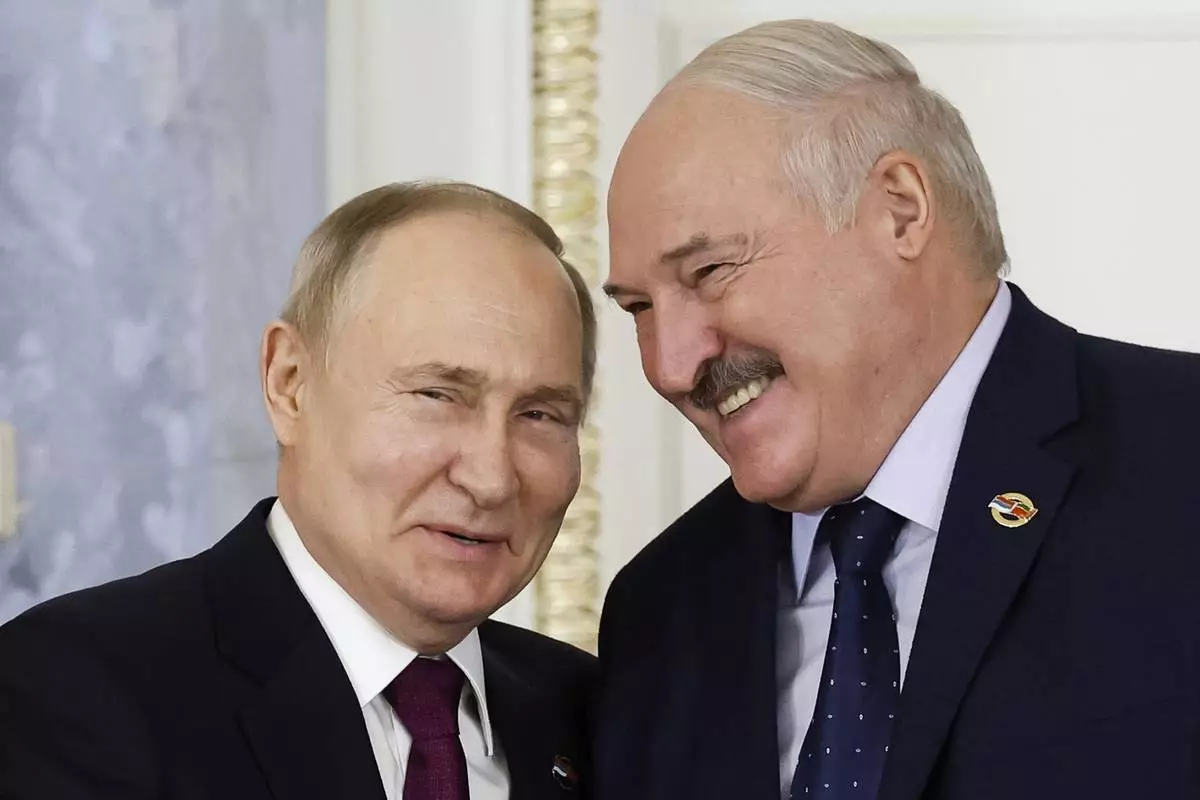
FILE - Russian President Vladimir Putin, left, and Belarusian President Alexander Lukashenko meet in St. Petersburg, Russia, Jan. 29, 2024. (Dmitry Astakhov, Sputnik, Government Pool Photo via AP, File)
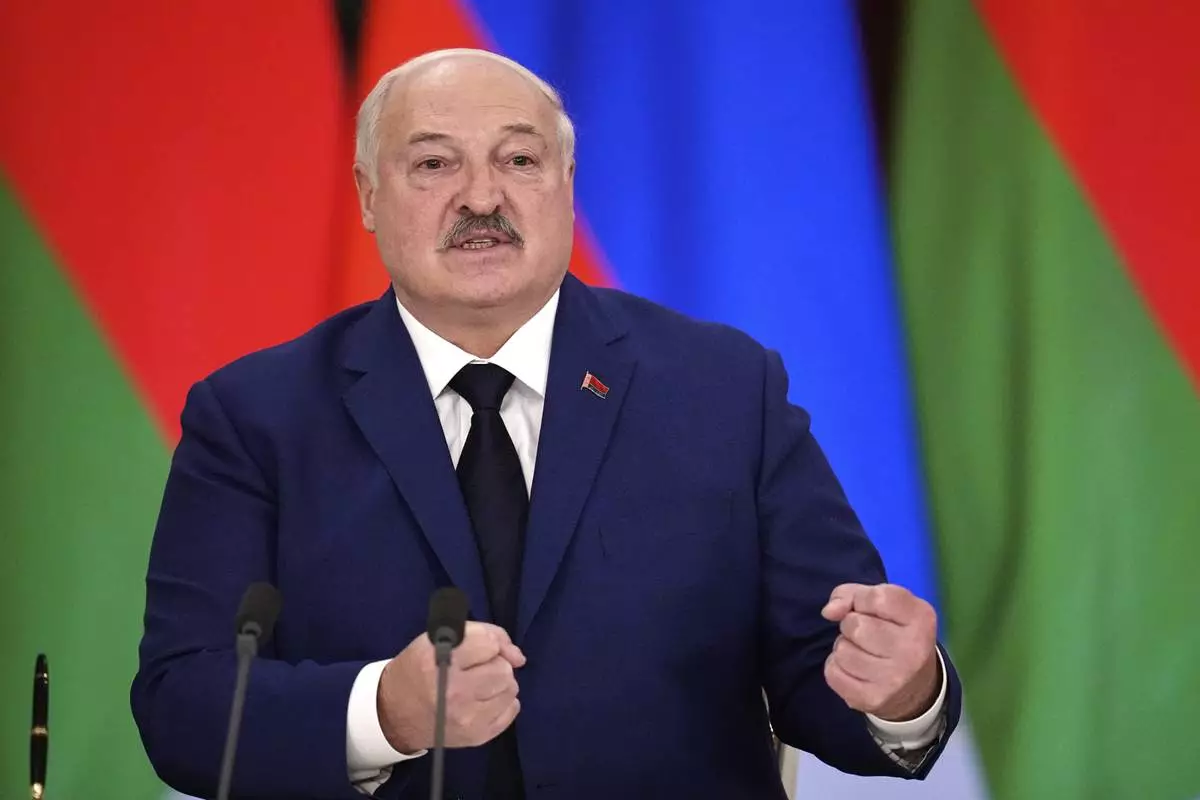
FILE - Belarusian President Alexander Lukashenko gestures during a joint news conference with Russian President Vladimir Putin following their talks at the Grand Kremlin Palace in Moscow, March 13, 2025. (AP Photo/Alexander Zemlianichenko, File)
HAMIMA, Syria (AP) — A trickle of civilians left a contested area east of Aleppo on Thursday after a warning by the Syrian military to evacuate ahead of an anticipated government military offensive against Kurdish-led forces.
Government officials and some residents who managed to get out said the Kurdish-led Syrian Democratic Forces prevented people from leaving via the corridor designated by the military along the main road leading west from the town of Maskana through Deir Hafer to the town of Hamima.
The SDF denied the reports that they were blocking the evacuation.
In Hamima, ambulances and government officials were gathered beginning early in the morning waiting to receive the evacuees and take them to shelters, but few arrived.
Farhat Khorto, a member of the executive office of Aleppo Governorate who was waiting there, claimed that there were "nearly two hundred civilian cars and hundreds of people who wanted to leave” the Deir Hafer area but that they were prevented by the SDF. He said the SDF was warning residents they could face “sniping operations or booby-trapped explosives” along that route.
Some families said they got out of the evacuation zone by taking back roads or going part of the distance on foot.
“We tried to leave this morning, but the SDF prevented us. So we left on foot … we walked about seven to eight kilometers until we hit the main road, and there the civil defense took us and things were good then,” said Saleh al-Othman, who said he fled Deir Hafer with more than 50 relatives.
Yasser al-Hasno, also from Deir Hafer, said he and his family left via back roads because the main routes were closed and finally crossed a small river on foot to get out of the evacuation area.
Another Deir Hafer resident who crossed the river on foot, Ahmad al-Ali, said, “We only made it here by bribing people. They still have not allowed a single person to go through the main crossing."
Farhad Shami, a spokesman for the SDF, said the allegations that the group had prevented civilians from leaving were “baseless.” He suggested that government shelling was deterring residents from moving.
The SDF later issued a statement also denying that it had blocked civilians from fleeing. It said that “any displacement of civilians under threat of force by Damascus constitutes a war crime" and called on the international community to condemn it.
“Today, the people of Deir Hafer have demonstrated their unwavering commitment to their land and homes, and no party can deprive them of their right to remain there under military pressure,” it said.
The Syrian army’s announcement late Wednesday — which said civilians would be able to evacuate through the “humanitarian corridor” from 9 a.m. to 5 p.m. Thursday — appeared to signal plans for an offensive against the SDF in the area east of Aleppo. Already there have been limited exchanges of fire between the two sides.
Thursday evening, the military said it would extend the humanitarian corridor for another day.
The Syrian military called on the SDF and other armed groups to withdraw to the other side of the Euphrates River, to the east of the contested zone. The SDF controls large swaths of northeastern Syria east of the river.
The tensions in the Deir Hafer area come after several days of intense clashes last week in Aleppo city that ended with the evacuation of Kurdish fighters and government forces taking control of three contested neighborhoods.
The fighting broke out as negotiations have stalled between Damascus and the SDF over an agreement reached last March to integrate their forces and for the central government to take control of institutions including border crossings and oil fields in the northeast.
Some of the factions that make up the new Syrian army, which was formed after the fall of former President Bashar Assad in a rebel offensive in December 2024, were previously Turkey-backed insurgent groups that have a long history of clashing with Kurdish forces.
The SDF for years has been the main U.S. partner in Syria in fighting against the Islamic State group, but Turkey considers the SDF a terrorist organization because of its association with Kurdish separatist insurgents in Turkey.
Despite the long-running U.S. support for the SDF, the Trump administration has also developed close ties with the government of interim Syrian President Ahmad al-Sharaa and has so far avoided publicly taking sides in the clashes in Aleppo.
Ilham Ahmed, head of foreign relations for the SDF-affiliated Kurdish-led administration in northeast Syria, at a press conference Thursday said SDF officials were in contact with the United States and Turkey and had presented several initiatives for de-escalation. She said that claims by Damascus that the SDF had failed to implement the March agreement were false.
——
Associated Press journalist Hogir Al Abdo in Qamishli, Syria, contributed.
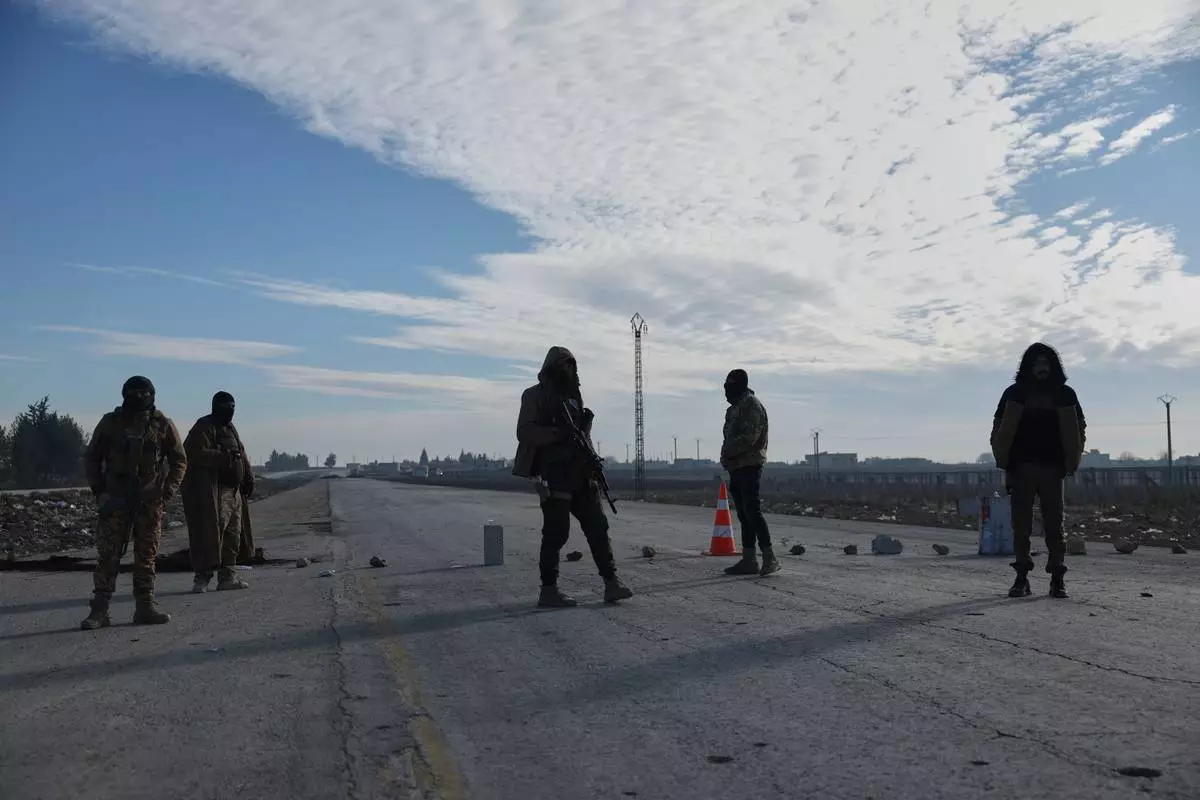
Members of the Syrian military police stand at a humanitarian crossing declared by the Syrian army in the village of Hamima, in the eastern Aleppo countryside, near the front line with the Kurdish-led Syrian Democratic Forces in Deir Hafer, Syria, Thursday, Jan. 15, 2026. (AP Photo/Ghaith Alsayed)
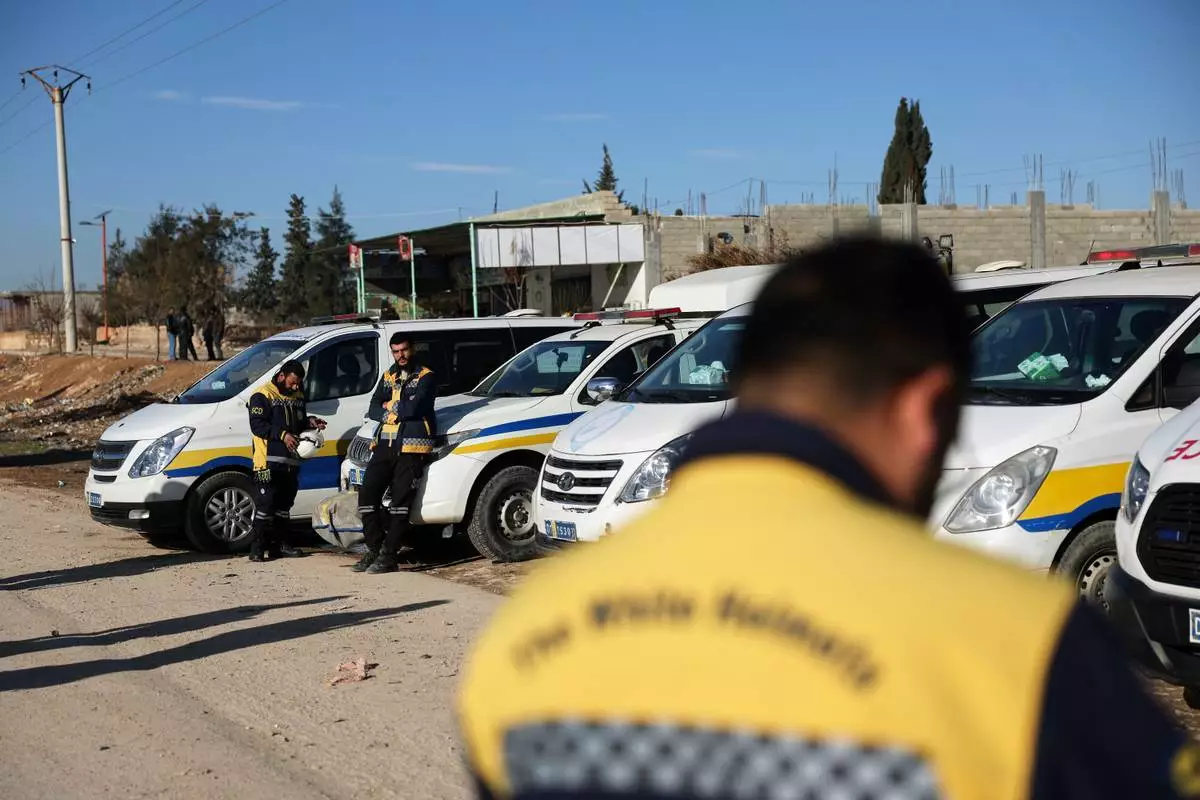
Members of the Syrian Civil Defense, stand next to their vehicles at a humanitarian crossing declared by the Syrian army in the village of Hamima, in the eastern Aleppo countryside, near the front line with the Kurdish-led Syrian Democratic Forces in Deir Hafer, Syria, Thursday, Jan. 15, 2026. (AP Photo/Ghaith Alsayed)
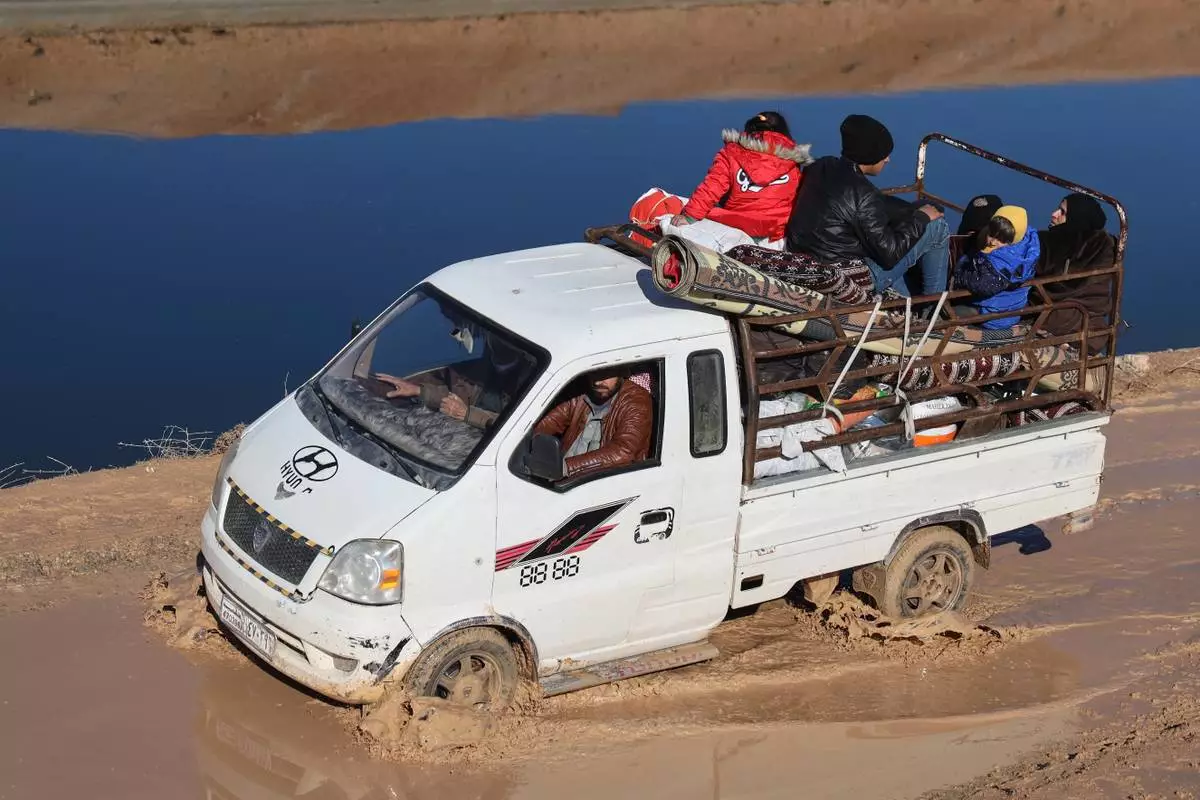
A displaced Syrian family rides in the back of a truck near a humanitarian crossing declared by the Syrian army next to a river in the village of Rasm Al-Abboud, in the eastern Aleppo countryside, near the front line with the Kurdish-led Syrian Democratic Forces in Deir Hafer, Syria, Thursday, Jan. 15, 2026. (AP Photo/Omar Albam)
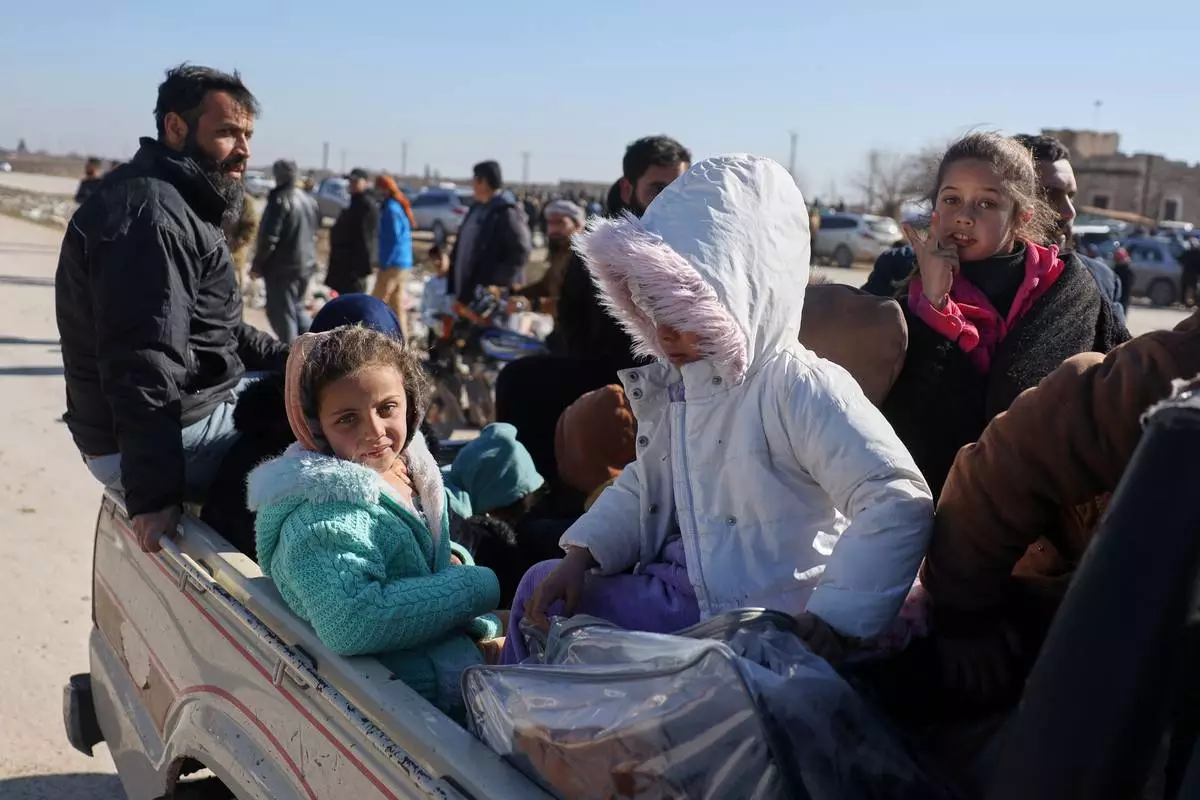
Displaced Syrian children and women ride in the back of a truck near a humanitarian crossing declared by the Syrian army in the village of Hamima, in the eastern Aleppo countryside, near the front line with the Kurdish-led Syrian Democratic Forces in Deir Hafer, Syria, Thursday, Jan. 15, 2026. (AP Photo/Omar Albam)
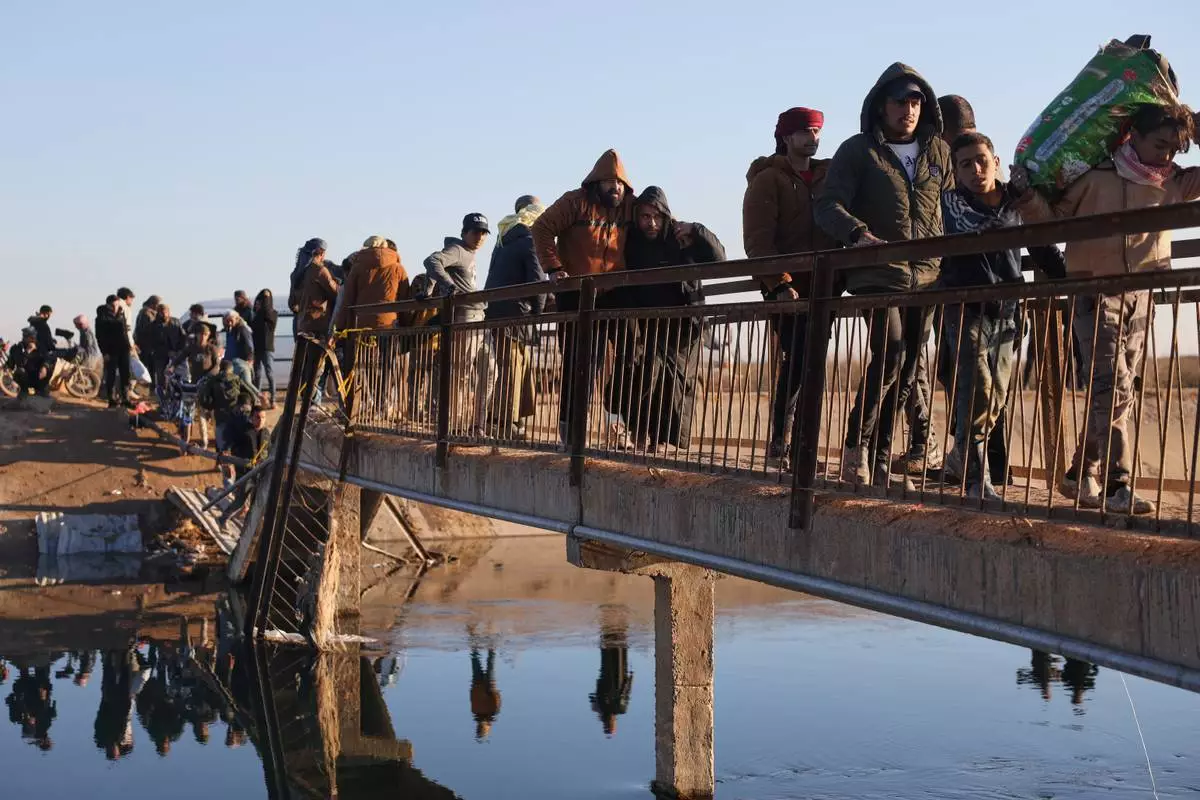
Displaced Syrians at a river crossing near the village of Jarirat al Imam, in the eastern Aleppo countryside, near the front line with the Kurdish-led Syrian Democratic Forces in Deir Hafer, Syria, Thursday, Jan. 15, 2026. (AP Photo/Omar Albam)