HONG KONG (AP) — Hong Kong's leader announced plans Wednesday to speed up development of an economic powerhouse near its border with mainland China and nurture industries ranging from artificial intelligence to higher education as the city seeks new economic growth engines to maintain its international competitiveness.
Chief Executive John Lee is under pressure to distinguish Hong Kong from regional rivals and mainland Chinese metropolises after a yearslong crackdown on democracy activism and Beijing's tightening grip tainted the city's image as a free-wheeling financial center.
“We are now undergoing an economic transition. It is irreversible progress. Transformation is an inevitable process for a stronger economy," he said.
In his annual policy address, Lee said he will lead a committee on developing the Northern Metropolis, an ongoing project that envisions building a new IT hub and a university town near the Chinese tech hub of Shenzhen. It aims to provide 650,000 jobs and house 2.5 million people. The development proposal was first floated in 2021 by his predecessor Carrie Lam.
The government would devise a range of financing schemes and introduce legislation to empower the government to simplify procedures for issues such as setting up industrial park companies and speeding up building plan approvals, Lee said.
The city’s gross domestic product is estimated to have grown 3.1% in the second quarter of 2025, supported by strong exports and improved domestic demand. For the first half of this year, Hong Kong ranked first globally in funds raised through initial public offerings as a wave of Chinese companies sought to list in Hong Kong under U.S.-China tensions.
But vacant shops remain in various areas. Retail sales between January and July this year saw a drop. Restaurants have closed. The slump stemmed from tourists spending less and many residents opting to spend weekends on mainland China for cheaper and more diverse offerings. The city’s latest unemployment rate was 3.7%.
A highlight of Lee's policies was bolstering emerging industries in a city where traditional strengths lie in the financial and legal service sectors.
Developing the artificial intelligence and data science industry was a focus. The government plans to put up for tender a 10-hectare (24.7-acre) site this year for building a data facility cluster and launching an AI research and development institute next year.
Other sectors Lee wants to develop included pharmaceutical and medical products and new energies.
Hong Kong also is vying to become a popular higher education hub. It has been stepping up efforts in recent months, especially after the administration of U.S. President Donald Trump pressed colleges to limit the number of international students and increased student visa scrutiny.
Lee's administration would further boost enrollment ceilings for international students of government-funded universities beginning in the next academic year and earmark new sites for construction of student hostels, he said.
Separately, the University Grants Committee would earmark 40 million Hong Kong dollars (about $5 million) to support eight publicly funded universities in enhancing their publicity and recruitment of teachers and students outside Hong Kong.
Lee, a former security chief, fulfilled Beijing’s long-standing imperative to enact a homegrown national security law last year. Officials said the law and a China-imposed security law were necessary for the city's stability following massive anti-government protests in 2019.
To step up patriotic education, he said the city would work with Shenzhen to promote a “new red educational route” to help Hong Kongers and tourists better understand the city's history in World War II. Earlier this month, Beijing held a military parade to mark the 80th anniversary of the end of World War II.
In an effort to integrate with national development, Hong Kong officials will set up a task force to drive mainland companies to use the city in their overseas expansion. Hong Kong Monetary Authority will encourage banks, especially those from mainland China, to set up regional headquarters in the city for tapping markets such as Southeast Asia and the Middle East, Lee said.
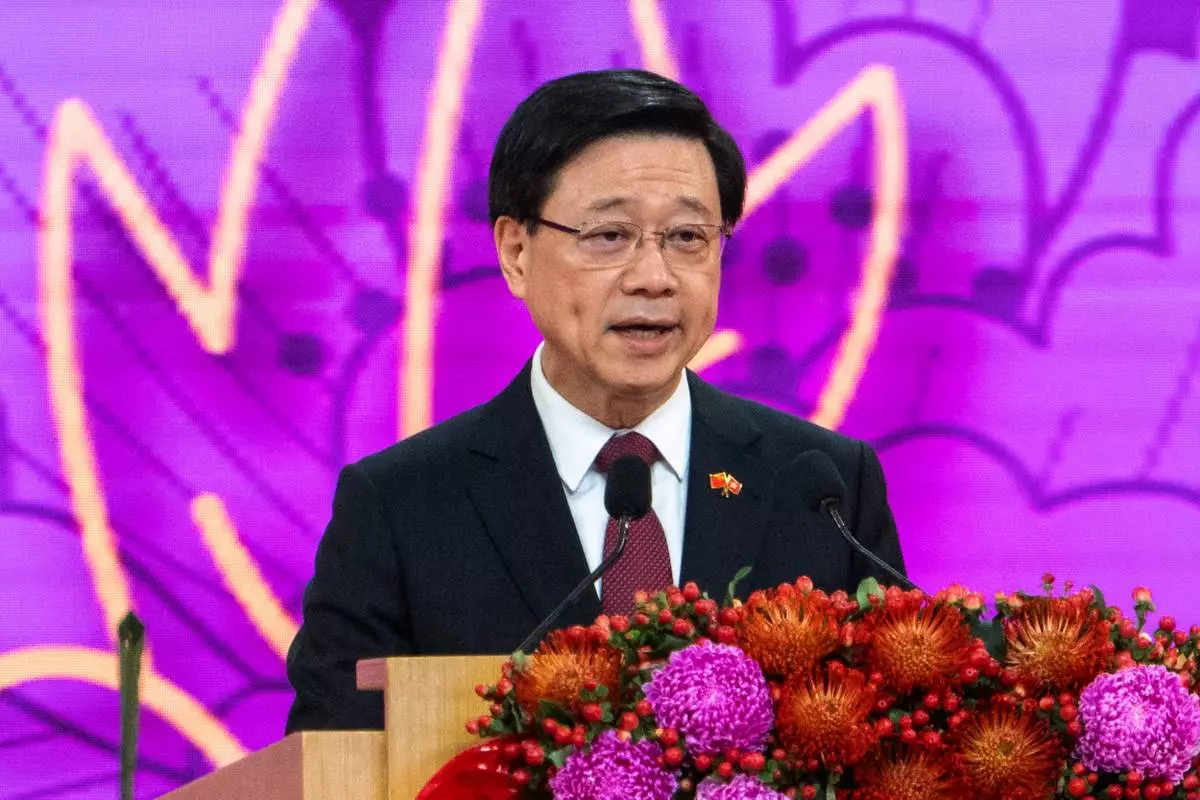
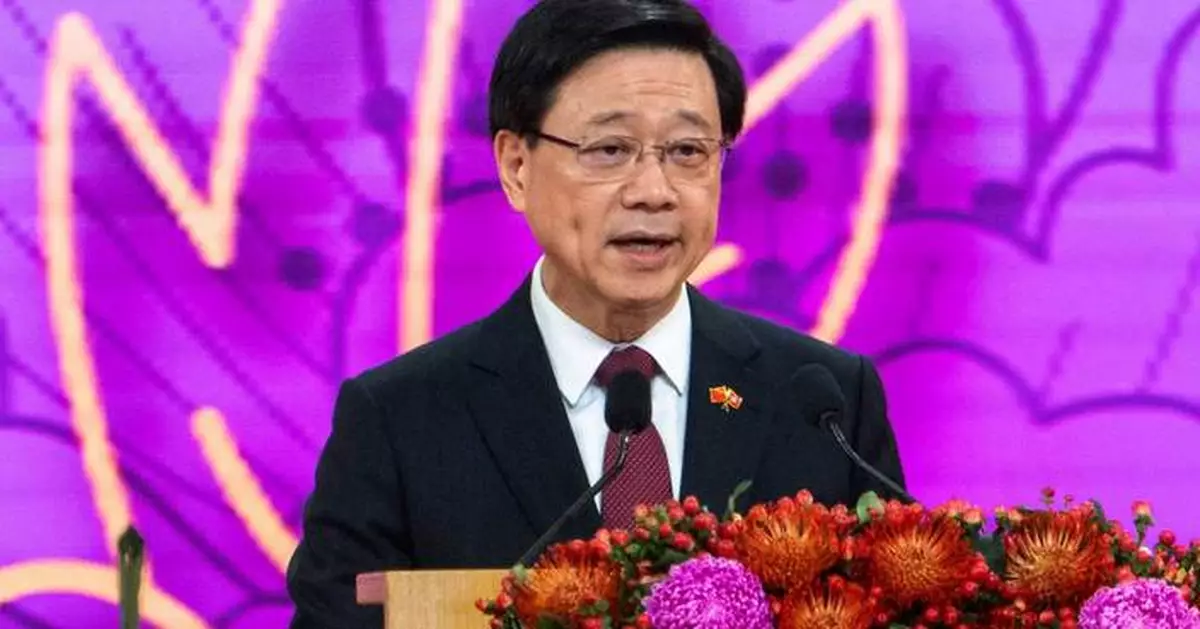
FILE - Hong Kong Chief Executive John Lee speaks at a reception following a flag raising ceremony for the celebration of 74th National Day of the People's Republic of China at the Golden Bauhinia Square in Hong Kong on Oct. 1, 2023. (AP Photo/Chan Long Hei, File)
HAMIMA, Syria (AP) — A trickle of civilians left a contested area east of Aleppo on Thursday after a warning by the Syrian military to evacuate ahead of an anticipated government military offensive against Kurdish-led forces.
Government officials and some residents who managed to get out said the Kurdish-led Syrian Democratic Forces prevented people from leaving via the corridor designated by the military along the main road leading west from the town of Maskana through Deir Hafer to the town of Hamima.
The SDF denied the reports that they were blocking the evacuation.
In Hamima, ambulances and government officials were gathered beginning early in the morning waiting to receive the evacuees and take them to shelters, but few arrived.
Farhat Khorto, a member of the executive office of Aleppo Governorate who was waiting there, claimed that there were "nearly two hundred civilian cars and hundreds of people who wanted to leave” the Deir Hafer area but that they were prevented by the SDF. He said the SDF was warning residents they could face “sniping operations or booby-trapped explosives” along that route.
Some families said they got out of the evacuation zone by taking back roads or going part of the distance on foot.
“We tried to leave this morning, but the SDF prevented us. So we left on foot … we walked about seven to eight kilometers until we hit the main road, and there the civil defense took us and things were good then,” said Saleh al-Othman, who said he fled Deir Hafer with more than 50 relatives.
Yasser al-Hasno, also from Deir Hafer, said he and his family left via back roads because the main routes were closed and finally crossed a small river on foot to get out of the evacuation area.
Another Deir Hafer resident who crossed the river on foot, Ahmad al-Ali, said, “We only made it here by bribing people. They still have not allowed a single person to go through the main crossing."
Farhad Shami, a spokesman for the SDF, said the allegations that the group had prevented civilians from leaving were “baseless.” He suggested that government shelling was deterring residents from moving.
The SDF later issued a statement also denying that it had blocked civilians from fleeing. It said that “any displacement of civilians under threat of force by Damascus constitutes a war crime" and called on the international community to condemn it.
“Today, the people of Deir Hafer have demonstrated their unwavering commitment to their land and homes, and no party can deprive them of their right to remain there under military pressure,” it said.
The Syrian army’s announcement late Wednesday — which said civilians would be able to evacuate through the “humanitarian corridor” from 9 a.m. to 5 p.m. Thursday — appeared to signal plans for an offensive against the SDF in the area east of Aleppo. Already there have been limited exchanges of fire between the two sides.
Thursday evening, the military said it would extend the humanitarian corridor for another day.
The Syrian military called on the SDF and other armed groups to withdraw to the other side of the Euphrates River, to the east of the contested zone. The SDF controls large swaths of northeastern Syria east of the river.
The tensions in the Deir Hafer area come after several days of intense clashes last week in Aleppo city that ended with the evacuation of Kurdish fighters and government forces taking control of three contested neighborhoods.
The fighting broke out as negotiations have stalled between Damascus and the SDF over an agreement reached last March to integrate their forces and for the central government to take control of institutions including border crossings and oil fields in the northeast.
Some of the factions that make up the new Syrian army, which was formed after the fall of former President Bashar Assad in a rebel offensive in December 2024, were previously Turkey-backed insurgent groups that have a long history of clashing with Kurdish forces.
The SDF for years has been the main U.S. partner in Syria in fighting against the Islamic State group, but Turkey considers the SDF a terrorist organization because of its association with Kurdish separatist insurgents in Turkey.
Despite the long-running U.S. support for the SDF, the Trump administration has also developed close ties with the government of interim Syrian President Ahmad al-Sharaa and has so far avoided publicly taking sides in the clashes in Aleppo.
Ilham Ahmed, head of foreign relations for the SDF-affiliated Kurdish-led administration in northeast Syria, at a press conference Thursday said SDF officials were in contact with the United States and Turkey and had presented several initiatives for de-escalation. She said that claims by Damascus that the SDF had failed to implement the March agreement were false.
——
Associated Press journalist Hogir Al Abdo in Qamishli, Syria, contributed.
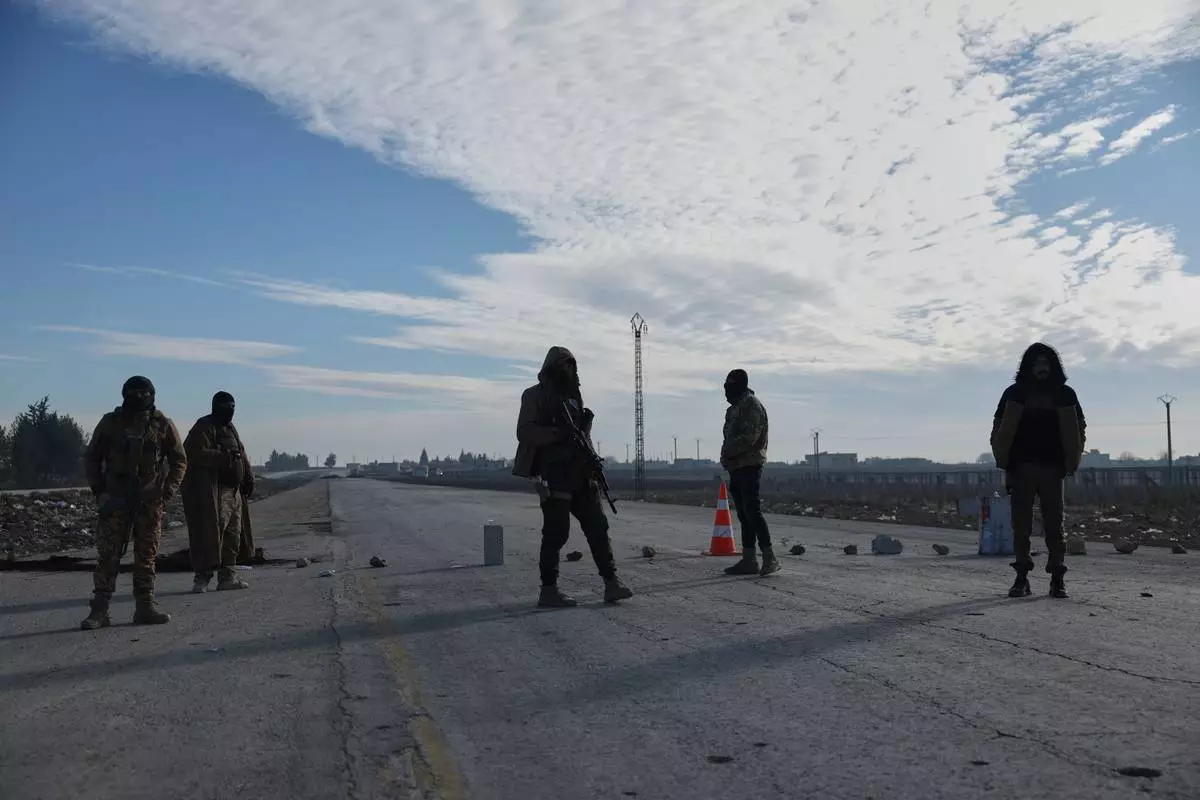
Members of the Syrian military police stand at a humanitarian crossing declared by the Syrian army in the village of Hamima, in the eastern Aleppo countryside, near the front line with the Kurdish-led Syrian Democratic Forces in Deir Hafer, Syria, Thursday, Jan. 15, 2026. (AP Photo/Ghaith Alsayed)
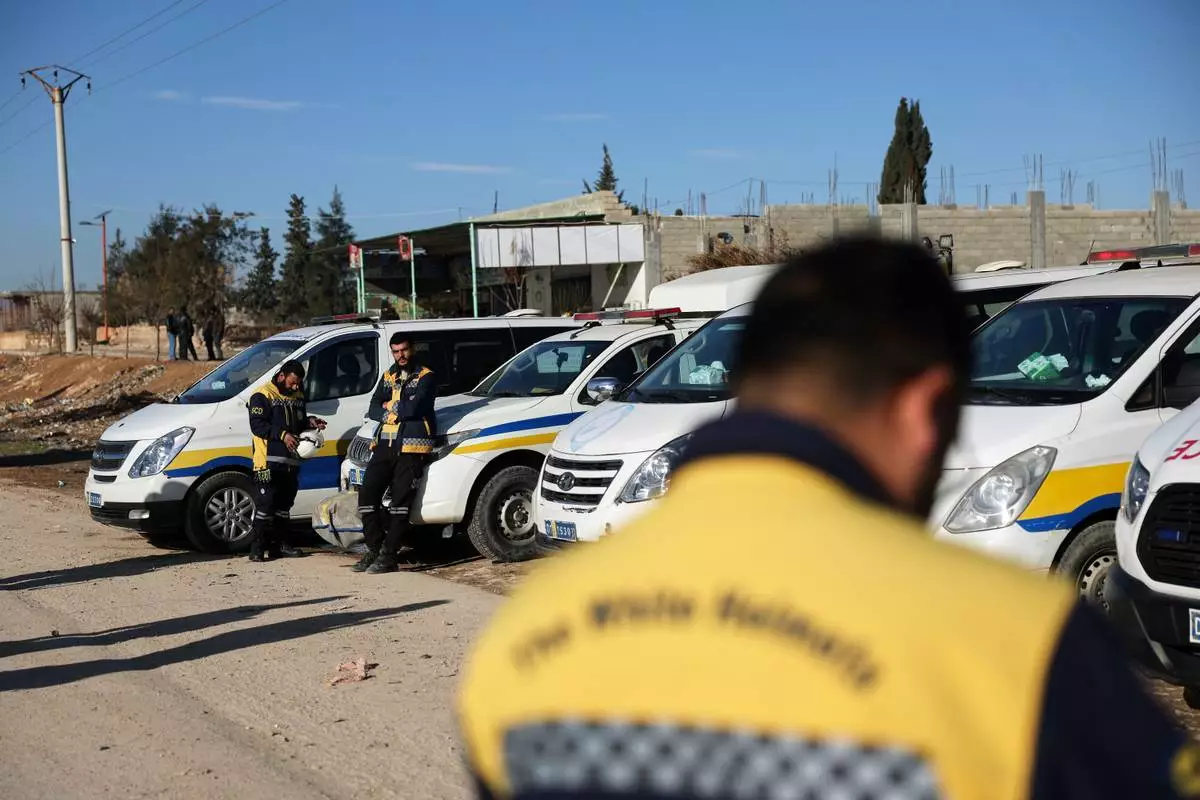
Members of the Syrian Civil Defense, stand next to their vehicles at a humanitarian crossing declared by the Syrian army in the village of Hamima, in the eastern Aleppo countryside, near the front line with the Kurdish-led Syrian Democratic Forces in Deir Hafer, Syria, Thursday, Jan. 15, 2026. (AP Photo/Ghaith Alsayed)

A displaced Syrian family rides in the back of a truck near a humanitarian crossing declared by the Syrian army next to a river in the village of Rasm Al-Abboud, in the eastern Aleppo countryside, near the front line with the Kurdish-led Syrian Democratic Forces in Deir Hafer, Syria, Thursday, Jan. 15, 2026. (AP Photo/Omar Albam)
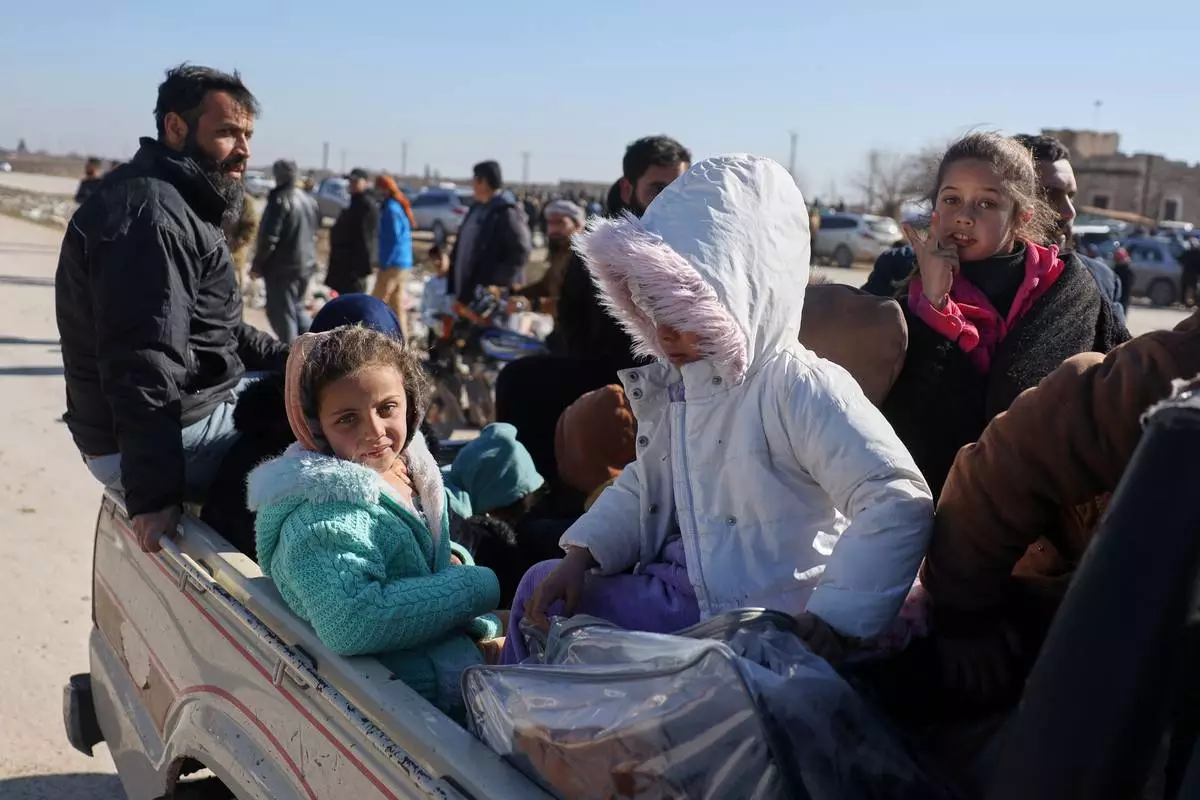
Displaced Syrian children and women ride in the back of a truck near a humanitarian crossing declared by the Syrian army in the village of Hamima, in the eastern Aleppo countryside, near the front line with the Kurdish-led Syrian Democratic Forces in Deir Hafer, Syria, Thursday, Jan. 15, 2026. (AP Photo/Omar Albam)
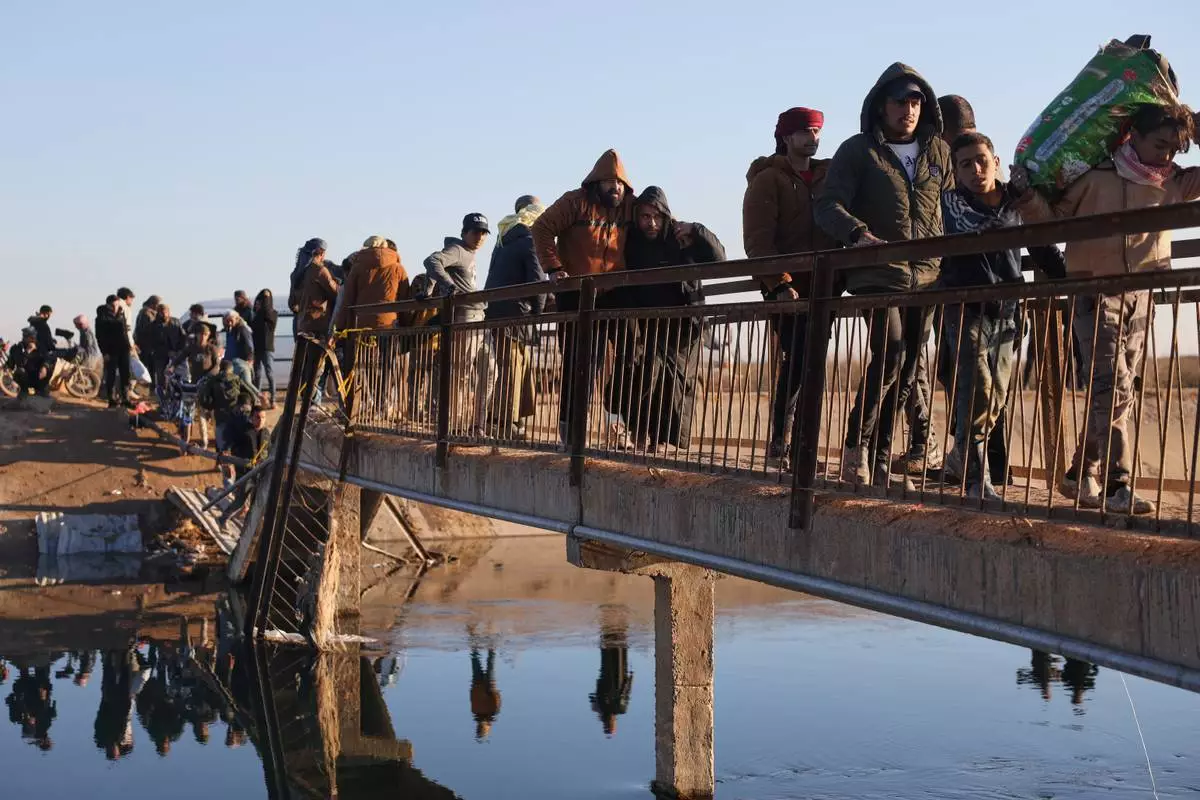
Displaced Syrians at a river crossing near the village of Jarirat al Imam, in the eastern Aleppo countryside, near the front line with the Kurdish-led Syrian Democratic Forces in Deir Hafer, Syria, Thursday, Jan. 15, 2026. (AP Photo/Omar Albam)