China extended visa-free entry to ordinary passport holders from Russia on Monday, allowing them to enter China until Sept 14 2026 without a visa for business, tourism, family visits, exchanges, and transit stays of up to 30 days.
Russia subsequently reciprocated by offering similar visa-free travel to Chinese nationals.
Within just two days of the policy taking effect, Hunchun Port, in northeast China's Jilin Province, has already welcomed many tour groups from Russia.
To accommodate the increased passenger flow, the port has opened designated channels for visa-free travelers to reduce waiting times. Russian-speaking police officers have also been stationed on-site to provide assistance, including translation, policy consultation, and help with filling out entry forms.
"When you come here, basically, you take a bus from Russia, arrive at the border, sign, fill out one document -- just one -- and then you can proceed to do everything you come here to do in China," said Sergei, a Russian tourist.
Popular scenic spots in Hunchun City -- the first entry point for Russian travelers into Jilin Province -- have seen a rise in inquiries and reservations. The proportion of Russian customers has also increased in supermarkets, specialty stores, and clothing stores, according to local retailers and tour operators.
"Since the visa-free policy was implemented, reservations by Russian tourists have increased by about 20 percent compared to the same period last year. We've received small family groups as well as tourists traveling with agencies," said Zhang Fengju, a staff member at the amusement park Hunchun Vostok Happy Island.
Since the policy took effect, other border cities in northeast China's Heilongjiang Province including Heihe and Suifenhe have also been welcoming large numbers of Russian tourists.
The bustling morning market in Heihe has become a popular spot for Russian visitors. Many stalls display signs in both Chinese and Russian, and some vendors also learned to communicate with customers in Russian.
"Russians come to buy my burgers and greet me. They say 'hello' and 'good morning' -- I've even learned to say them in Russian. Although my pronunciation isn't as smooth as theirs, they understand me. Many pay in cash, but some also use WeChat Pay and Alipay," said food vendor Wang Shuqing.
Beyond shopping, another "essential" item on many Russian visitors' itineraries in Heihe is dental treatment. A dental clinic in Heihe now receives at least 100 Russian patients every month. Known for its high-quality services and cost-effectiveness, it has become the preferred choice for dental care among many Russians.
"I'm from Krasnoyarsk City in Siberia, Russia. This is my second time in China -- I liked it so much that I brought my wife along this time. I had my teeth treated here; I got dentures. Look, they're very nice," said Alexander, a Russian tourist.
"The dental treatment was done by highly skilled girls. These professionals' expertise has earned them a great reputation. It was excellent -- the doctors were quick, everything was treated efficiently, and the results are beautiful and affordable," said Angela, another Russian visitor.
China's visa-free transit policy now covers 55 countries and accompanying measures, including "instant tax refunds upon purchase" for departing tourists, have been continuously improved, leading to above-expectation growth in inbound tourism.
Industry experts say the trial visa-free policy for Russian tourists will diversify the types of inbound travelers to China and promote exchanges and cooperation between China and Russia.
"After China implemented the visa-free policy for Russia, Russian reciprocated with a similar gesture by also granting visa-free entry to Chinese tourists. I believe this mutual visa-free policy will greatly enhance tourism exchanges between the two countries and set an example for visa facilitation between China and other nations," said Dai Bin, president of the China Tourism Academy.
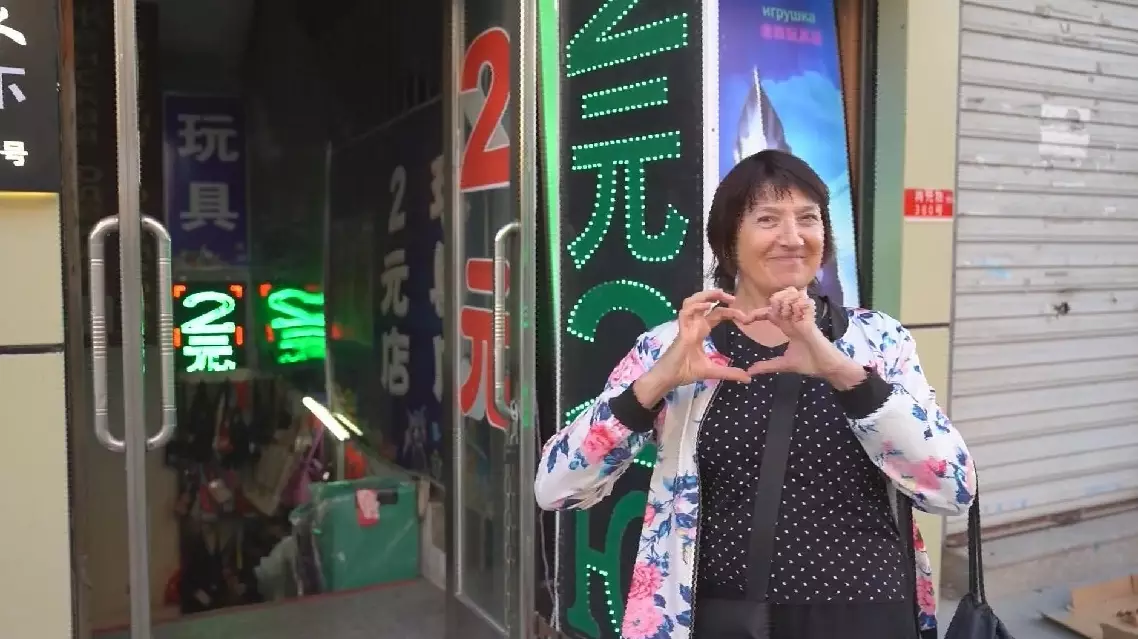
China’s visa-free policy extended to Russian citizens, drives increase in visits