Skip to Content Facebook Feature Image

Farage's UK Reforms Spark Panic: Hong Kong BNO Holders Face Escalating Anxiety and 'Third Migration'

Blog

Farage's UK Reforms Spark Panic: Hong Kong BNO Holders Face Escalating Anxiety and 'Third Migration'
Blog

Blog

Farage's UK Reforms Spark Panic: Hong Kong BNO Holders Face Escalating Anxiety and 'Third Migration'

2025-09-25 20:31 Last Updated At:20:31

The Reform UK Party’s sudden proposal to scrap "permanent residency" has sent shockwaves through the BNO Hong Kong community. They were just a few years away from securing this status, which promised welfare benefits and freedom of movement. Now, what they thought was the light at the end of the tunnel suddenly looks like a tunnel with no end—a truly miserable prospect.

A commentator with “yellow” background tried to downplay the situation, suggesting Nigel Farage is just grandstanding and that the Reform UK Party's chances of taking power are slim. But even he had to concede that some Hong Kong people in the UK are deeply anxious, with some even mulling a "third migration." Looking back at a survey from a few months ago, it's clear anxiety among these migrants was already common, with some even hitting the "severe" red line. This latest "Farage scare" is only going to pour fuel on the fire.
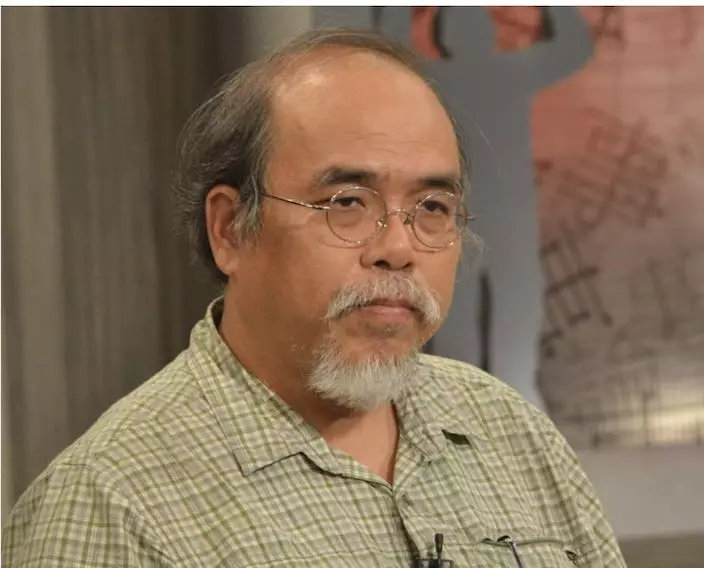
Fugitive Chung Kim-wah: Panicked Hong Kong BNO holders in the UK are now considering a 'third migration'.

Fugitive Chung Kim-wah: Panicked Hong Kong BNO holders in the UK are now considering a 'third migration'.

A Fugitive's Take

Chung Kim-wah, a fugitive wanted in Hong Kong and now living in the UK, weighed in on the Reform UK Party's "immigration policy" yesterday. He claimed Farage is simply posturing to grab headlines and rally support, and he doesn't see the party taking power anytime soon, telling Hong Kong people in the UK not to worry too much. While his words were clearly meant to soothe the community's nerves and prevent panic, he couldn't deny the reality on the ground. He admitted that among his own friends in the UK, some are deeply worried and feel lost about what the future holds.

He revealed that shortly after Farage's press conference, he received three messages from people expressing grave concerns. One person, who had been in the UK for less than a year, had previously moved to Taiwan with his family. They had tried for investment immigration but, after several years, were still denied permanent residency in Taiwan, prompting a second migration to the UK on a BNO visa. This individual confessed that the Reform UK Party's proposal has them genuinely worried this time. They asked Chung Kim-wah if they should start making new plans, even floating the idea of a third migration.

Nowhere Left To Go?

This particular migrant in the UK also lamented feeling like they have "nowhere left to go" and feared being treated as a second-class citizen no matter where they end up. In his article, Chung admitted that it was only after this call that he realized just how on edge Hong Kong migrants in the UK have become.

Despite Chung Kim-wah's repeated attempts to tell people not to overthink it, the panic among these Hong Kong people is completely understandable, and the Reform UK Party's chances of gaining power shouldn't be underestimated. Even Chung himself noted in his article that during recent local council elections in parts of England, the Reform UK Party saw a significant increase in its seats, gaining control of 11 councils. Some of his Hong Kong friends are now so convinced the party could take power soon that they're considering a move from England to Scotland.

The Panic is Real

To say he is just now realizing how on edge Hong Kong people in the UK have become is to be far behind the curve. Months ago, when the Conservative Party released its "immigration white paper" suggesting a 10-year residency requirement for permanent residency, a collective "panic attack" had already swept through the community. A petition demanding a parliamentary debate was launched and quickly amassed over 100,000 signatures, laying bare their state of alarm.

I looked at a survey from last July that interviewed over 600 Hong Kong people who had moved to the UK. It revealed their average "anxiety score" was 13.4, higher than the normal level of 12, indicating a widespread state of "anxiety and unease." Some individuals even scored as high as 18.3, dangerously close to the red line for "severe anxiety."
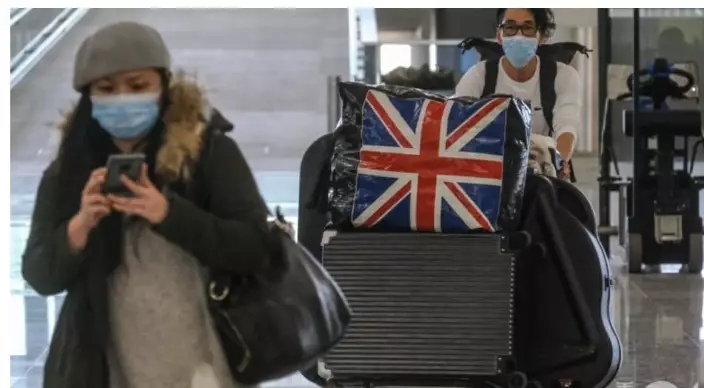
Anxiety Red Line: Surveys show Farage's proposals are pushing Hong Kong migrants' unease to 'severe' levels.

Anxiety Red Line: Surveys show Farage's proposals are pushing Hong Kong migrants' unease to 'severe' levels.

An Escalating Crisis

On top of that, the UK government recently commissioned the research agency Verian to interview a group of Hong Kong people aged 35 to 44. The findings showed that some are worried about the "5+1" pathway being extended to "10+1" and other potential shifts in government policy.

These surveys make it crystal clear: many Hong Kong people in the UK were already struggling with unease. After the scare from the "10+1" proposal and now this new shock from Farage, their anxiety is bound to skyrocket. A friend living in the UK told me that the psychological counseling services at local community centers are completely overwhelmed and bustling with people—a telling sign of the times.

My friends and I believe that Hong Kong people who are so deeply worried about their future should seriously consider another option: returning to Hong Kong to begin a new chapter in their lives.


What Say You?

** The blog article is the sole responsibility of the author and does not represent the position of our company. **

Today, December 7, marks the second election since the Legislative Council finally got back on track. Today, I can’t shake the memory of how a "deformed democracy" ravaged this chamber for years. It was a malignancy—a tumor growing from within—that trapped us in endless chaos and nearly destroyed Hong Kong. This nightmare remains burned into my mind.
 
Let’s look at the receipts from those insane years. Three absurd realities prove how a tidal wave of radicalism washed away a functioning Council. First, post-"Occupy Central," a crop of "political stars" rode a wave of extremism to besiege LegCo, degrading election quality for years. Second, during the "Black Violence" era, District Councils devolved into a "destroyers' paradise" of unprecedented disorder. Third, to appease radical voters, Pan-democrats hijacked the House Committee election for six months, paralyzing governance. The Council became an endangered structure on the verge of collapse, dragging government operations down with it. Without the Central Government stepping in to restore order, Hong Kong was finished. To stop history from repeating, everyone needs to vote on December 7.
  
The truth is, this "deformed democracy" was rotting the soil of Hong Kong politics long before "Occupy Central." The British government deliberately planted "election landmines," allowing politicians using unorthodox methods to rise. They realized the game: be radical, be outrageous, be uncouth, and you get votes. Figures like Wong Yuk-man, Albert Chan, and "Long Hair" Leung Kwok-hung seized power this way. Once that door opened, the Council’s normal operations were destroyed, turning the chamber into a mud-wrestling pit.
  
That was just the prelude. The subversion peaked with the 6th Legislative Council election following the 2014 "Occupy Central" movement. Driven by a passion for "rebellion," masses of young people blindly voted for fresh faces who built their brands on radicalism, ignoring their complete lack of ability or track record. The result? First-time winners included "Localist" figures dripping with "Hong Kong Independence" sentiment like Baggio Leung and Yau Wai-ching, alongside "Occupy" student leader Nathan Law.

Oath-Taking Circus: Post-"Occupy" radicals Baggio Leung and Yau Wai-ching stormed the chamber advocating independence, turning solemn oaths into a disgraceful farce.

Oath-Taking Circus: Post-"Occupy" radicals Baggio Leung and Yau Wai-ching stormed the chamber advocating independence, turning solemn oaths into a disgraceful farce.

The "Open House" of Radical Chaos
Worse still, opportunists within the Pan-democrat camp saw this worked and jumped into the fray. The prime examples were the notoriously "uncouth and aggressive" Ted Hui and the self-proclaimed radical environmentalist Eddie Chu.
  
When Baggio Leung, Yau Wai-ching, and Nathan Law stormed the Council, political insiders told me the candidacy door had been flung too wide. It became an "unguarded open house"—easy to enter, hard to clear out—guaranteeing chaos. Fortunately, their greed for victory blinded them to the risks. They played games with their inaugural oaths, effectively playing themselves into a corner and getting disqualified (DQ).
  
Even after they were ousted, the "miracle" of their election accelerated the degradation of our politics. Fanatical voters continued to back incompetent politicians just to vent rebellious angst. Even younger members of the traditional Pan-democrats started acting out to cater to this new taste. Ted Hui is the textbook example: violently snatching a female civil servant's phone and throwing foul-smelling filth in the Chamber. It became a competition of who could be the most radical, obstructing bills and making livelihood administration nearly impossible.
 
By 2019, when the anti-extradition bill unrest broke out, the Council became a disaster zone. Then came the second absurdity. During the November District Council elections, held amidst turmoil, radical candidates swarmed to grab seats. At the same time, "black-clad people" physically attacked Establishment opponents with beatings, arson, and intimidation. They won the majority, reducing the District Councils to a "destroyers' paradise." Long-serving community councilors were wiped out, marking an unprecedented and unbearable degradation of our institutions.

Filth in the Chamber: "Uncouth" politician Ted Hui proved his disruptive intent by literally throwing foul-smelling rot during a Council meeting.

Filth in the Chamber: "Uncouth" politician Ted Hui proved his disruptive intent by literally throwing foul-smelling rot during a Council meeting.

Paralyzing the System From Within
Inside LegCo, Pan-democrats brought the street riots into the Chamber, competing to perform "radical shows." The most absurd spectacle was Civic Party member Dennis Kwok holding the House Committee Chairman election hostage. He "played games" for over half a year. Sixteen meetings passed without electing a chairman, blocking massive amounts of government bills. Forced by the situation, even moderate Pan-democrats joined the madness, turning the Chamber into a real-life version of "One Flew Over the Cuckoo's Nest."
  
Recently, some claim the reformed Legislative Council has lost its monitoring function. This is 100% a fallacy. The Council back then was thoroughly wrecked; normal operations were paralyzed. What monitoring was there? Government administration was dragged down, pushing us to the brink of "mutual destruction" (laam caau).
  
Thankfully, the Central Government stepped in at the critical moment to pull the Council back on the right track. If "deformed democracy" had continued, Hong Kong would have derailed and fallen off a cliff, destroyed in a single day.
 
To prevent this painful history from repeating, everyone must vote enthusiastically on December 7. Support the Legislative Council moving forward on the correct track.

Lai Ting-yiu

Recommended Articles