Cuban President Miguel Diaz-Canel, in an interview with China Media Group (CMG) aired Friday, said that Cuba-China ties are rooted in shared values and people-to-people trust, calling the enduring friendship between the two countries a model of mutual respect and historical solidarity.
The Cuban leader had attended commemorative events marking the 80th anniversary of the victory in the Chinese People's War of Resistance Against Japanese Aggression and the World Anti-Fascist War at the Tian'anmen Square in the heart of Beijing.
During their September 4 meeting, Xi noted that the building of China-Cuba community with a shared future has made solid progress in recent years which has become a hallmark of the iron-clad friendship between the two Communist Parties and countries.
In the interview, Diaz-Canel reflected deeply on the foundations of Cuba-China friendship.
"In my view, Cuba-China bilateral relations rest on two key pillars. First, they are rooted in the deep bonds between our two parties, which are founded on the unwavering commitment of both Communist Parties to strengthen and expand cooperation. This shared political will nurtures our relationship and gives it lasting significance and genuine emotional depth at key moments. The establishment of diplomatic relations between Cuba and China was made possible by strong popular support in Cuba. It was one of the most democratic expressions in our nation's social development, an entirely democratic, historic event driven by the people and widely embraced by the public. Our relationship is built on mutual respect and profound recognition," said Diaz-Canel.
He further recalled a touching moment of historical solidarity between the two nations.
"There's a well-known story that still moves many in Cuba. In 1961, we launched a campaign to become the first Latin American country to eradicate illiteracy, and we succeeded, becoming the first nation to achieve this goal. Because many of the learners worked in the fields during the day, literacy volunteers joined them, eating, sleeping, and working side by side in farmers' huts, teaching at night. Who provided the light needed to teach at night? China did, with kerosene lamps. And who gave us the essential pencils and teaching materials? China again. These Chinese kerosene lamps and pencils became powerful symbols of Cuba-China friendship," said the Cuban president.
Diaz-Canel said he views the bilateral relationship between Cuba and China as one akin to that of close friends and brothers, marked by sincerity, open and candid dialog.
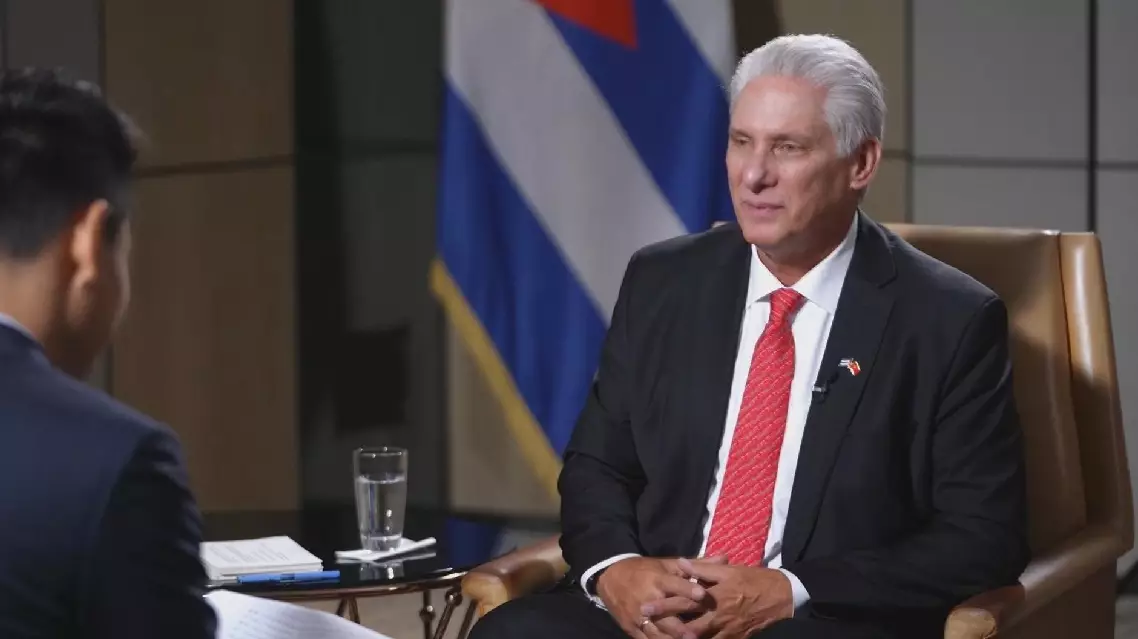
China's support deepens bilateral solidarity: Cuban president