WASHINGTON (AP) — Nearly 80 years after Mao Zedong called the United States a “paper tiger” to boost morale at home, U.S. President Donald Trump and Russian President Vladimir Putin are exchanging barbs who is the paper tiger of today.
In a Sept. 23 post on Truth Social, Trump mocked Russia's military powers and called the country “a paper tiger,” prompting the Kremlin to push back. Trump backed off, but on Tuesday he brought back the dismissive rhetoric when addressing a roomful of generals and admirals. “You’re four years fighting a war that should have taken a week," Trump said of Russia's war with Ukraine. "Are you a paper tiger?”
On Thursday, Putin retorted, “We are fighting against the entire bloc of NATO, and we keep moving, keep advancing and feel confident, and we are a paper tiger; what NATO itself is?”
He added: “A paper tiger? Go and deal with this paper tiger then.”
Those familiar with modern Chinese history have found it amusing, odd and not without irony that an American president should be using a classic Chinese propaganda slogan — words that came from the heart of a communist government that is the polar opposite of what the Trump administration frames as the best way to run a country.
“As a Chinese historian I had to laugh at the irony when President Trump appropriated one of Chairman Mao’s favorite expressions in calling Russia a ‘paper tiger,’” said John Delury, a senior fellow at Asia Society.
“Mao famously said this about the United States, at a time when the U.S. had a growing nuclear arsenal and China was not yet a nuclear power. ... How times have changed. Now the leaders of the United States and Russia are calling one another ‘paper tigers’ as Chinese leader Xi Jinping sits back looking like the adult in the room.”
The phrase — “zhilaohu” in China's dominant dialect — is well-rooted in the culture of the Chinese Communist Party. Perry Link, a well-known American scholar on modern Chinese language and culture, recalled that Lao She, a famous Chinese writer, referred to U.S. troops as the “paper tiger” during the Korean War years.
“There’s a Cold War echo across this whole story,” said Rana Mitter, a British historian specializing in modern Chinese history.
Accounts by Chinese state media and essays by party theorists say the phrase entered into the party vocabulary when Mao, the founding revolutionary, told the American journalist Anna Louise Strong in a 1946 interview that the atom bomb by the United States was a “paper tiger,” which the “U.S. reactionaries use to scare people.”
Mao then used the Chinese phrase “zhilaohu,” which means paper tiger literally. But his interpreter translated it into “scarecrow,” according to state media reports, before an American doctor who was present suggested “paper tiger," which Mao approved. The phrase largely refers to something that is seemingly powerful but actually fragile.
Delury said at the time that Moscow, which took the nuclear threat seriously, was aghast that Mao “casually” dismissed the threat and was annoyed that “Mao would brazenly use 'paper tiger’ rhetoric at a time when if nuclear war broke out, China would rely on Russian involvement.”
That didn't happen. Mao seized power in 1949, and the phrase “zhilaohu” became a propaganda staple in communist China, closely associated with western imperialists, particularly the United States. Mao famously said that “all reactionaries are paper tigers.” In canonizing the leader's wisdom, party theorists have called the slogan Mao's “strategic thought" and “a sharp thought weapon."
The rhetoric subsided when U.S.-China ties warmed in the 1970s, but it resurfaced in recent years as bilateral relations chilled.
In April, in the heat of a tariff war between the two countries, a Chinese foreign ministry spokesperson posted on X a Mao quotation from 1964: “The U.S. intimidates certain countries, stopping them from doing business with us. But America is just a paper tiger. Don't believe its bluff. One poke, and it'll burst."
Before Trump borrowed Beijing's propaganda slogan to mock Russia, the phrase had already seeped into the public discourse in the United States. In a February editorial, Eugene Robinson, a Washington Post columnist, criticized Trump's foreign policy and compared it to bullying. “Trump’s foreign policy is that of a paper tiger, not a real one,” wrote the columnist, now retired.
And in May, Laurence Tribe, a Harvard University professor, called Trump “a paper tiger” when assuring Harvard's international students not to be scared by the president's hostile policy towards foreign students.
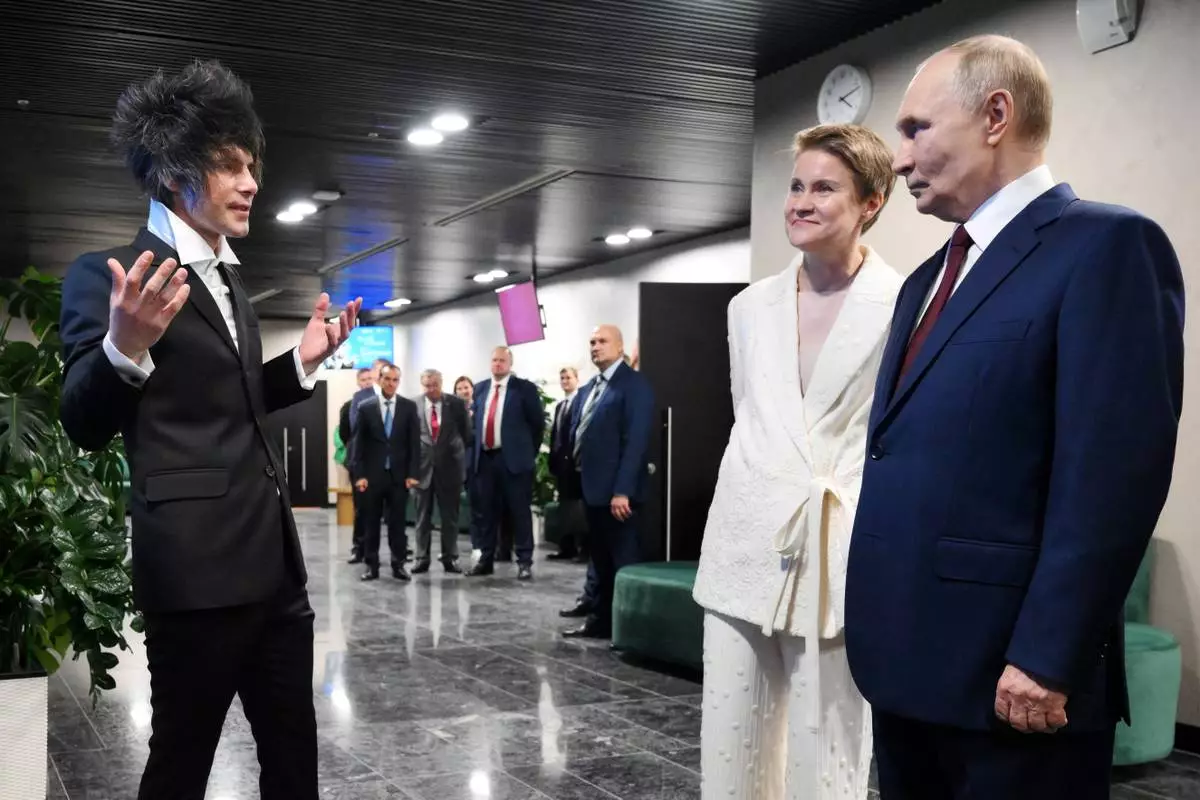
Russian President Vladimir Putin, right, accompanied by Board Chairwoman of the Sirius Federal Territory and Head of the Talent and Success Foundation Elena Shmeleva, listens to Chief Architect Andrei Litvinov, left, during a visit to the newly opened Sirius Concert Centre of the Sirius Federal Territory, Krasnodar Region, Russia, Friday, Oct. 3, 2025. (Grigory Sysoyev, Sputnik, Kremlin Pool Photo via AP)
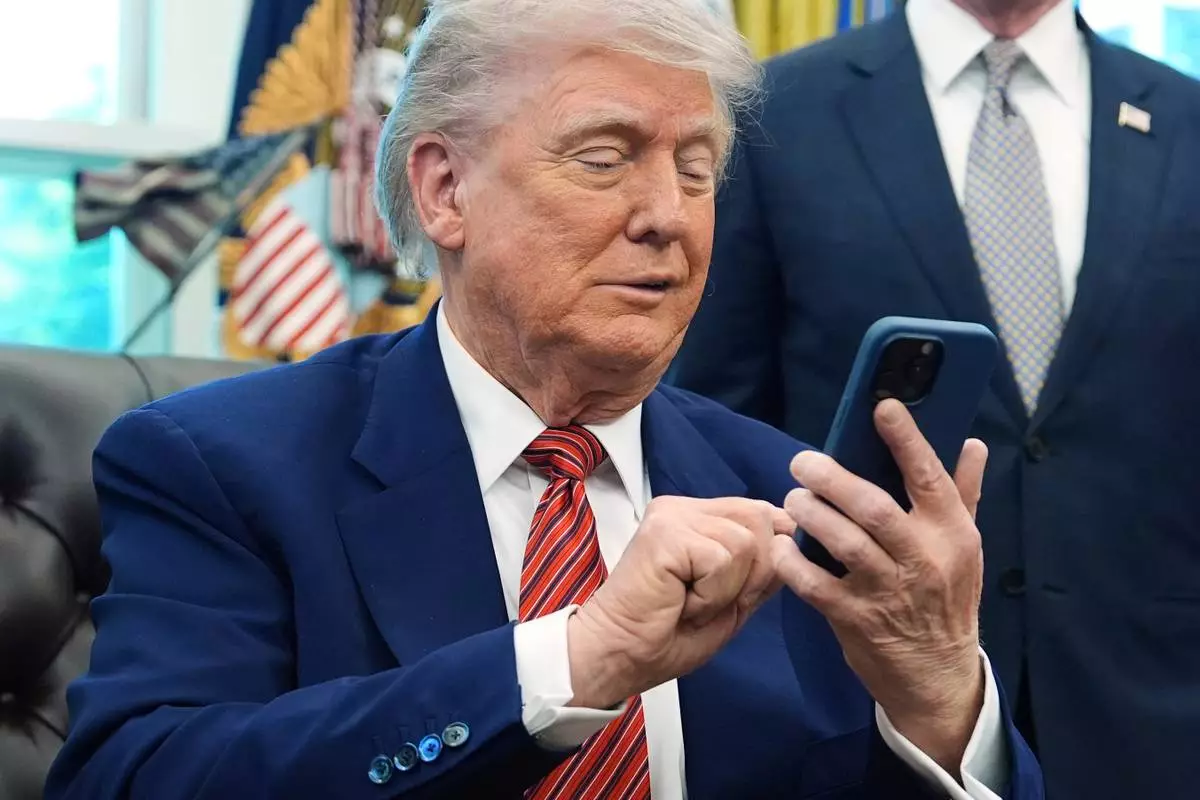
FILE - President Donald Trump silences his mobile phone in the Oval Office of the White House, May 23, 2025, in Washington. (AP Photo/Evan Vucci, File)
HAMIMA, Syria (AP) — A trickle of civilians left a contested area east of Aleppo on Thursday after a warning by the Syrian military to evacuate ahead of an anticipated government military offensive against Kurdish-led forces.
Government officials and some residents who managed to get out said the Kurdish-led Syrian Democratic Forces prevented people from leaving via the corridor designated by the military along the main road leading west from the town of Maskana through Deir Hafer to the town of Hamima.
The SDF denied the reports that they were blocking the evacuation.
In Hamima, ambulances and government officials were gathered beginning early in the morning waiting to receive the evacuees and take them to shelters, but few arrived.
Farhat Khorto, a member of the executive office of Aleppo Governorate who was waiting there, claimed that there were "nearly two hundred civilian cars and hundreds of people who wanted to leave” the Deir Hafer area but that they were prevented by the SDF. He said the SDF was warning residents they could face “sniping operations or booby-trapped explosives” along that route.
Some families said they got out of the evacuation zone by taking back roads or going part of the distance on foot.
“We tried to leave this morning, but the SDF prevented us. So we left on foot … we walked about seven to eight kilometers until we hit the main road, and there the civil defense took us and things were good then,” said Saleh al-Othman, who said he fled Deir Hafer with more than 50 relatives.
Yasser al-Hasno, also from Deir Hafer, said he and his family left via back roads because the main routes were closed and finally crossed a small river on foot to get out of the evacuation area.
Another Deir Hafer resident who crossed the river on foot, Ahmad al-Ali, said, “We only made it here by bribing people. They still have not allowed a single person to go through the main crossing."
Farhad Shami, a spokesman for the SDF, said the allegations that the group had prevented civilians from leaving were “baseless.” He suggested that government shelling was deterring residents from moving.
The SDF later issued a statement also denying that it had blocked civilians from fleeing. It said that “any displacement of civilians under threat of force by Damascus constitutes a war crime" and called on the international community to condemn it.
“Today, the people of Deir Hafer have demonstrated their unwavering commitment to their land and homes, and no party can deprive them of their right to remain there under military pressure,” it said.
The Syrian army’s announcement late Wednesday — which said civilians would be able to evacuate through the “humanitarian corridor” from 9 a.m. to 5 p.m. Thursday — appeared to signal plans for an offensive against the SDF in the area east of Aleppo. Already there have been limited exchanges of fire between the two sides.
Thursday evening, the military said it would extend the humanitarian corridor for another day.
The Syrian military called on the SDF and other armed groups to withdraw to the other side of the Euphrates River, to the east of the contested zone. The SDF controls large swaths of northeastern Syria east of the river.
The tensions in the Deir Hafer area come after several days of intense clashes last week in Aleppo city that ended with the evacuation of Kurdish fighters and government forces taking control of three contested neighborhoods.
The fighting broke out as negotiations have stalled between Damascus and the SDF over an agreement reached last March to integrate their forces and for the central government to take control of institutions including border crossings and oil fields in the northeast.
Some of the factions that make up the new Syrian army, which was formed after the fall of former President Bashar Assad in a rebel offensive in December 2024, were previously Turkey-backed insurgent groups that have a long history of clashing with Kurdish forces.
The SDF for years has been the main U.S. partner in Syria in fighting against the Islamic State group, but Turkey considers the SDF a terrorist organization because of its association with Kurdish separatist insurgents in Turkey.
Despite the long-running U.S. support for the SDF, the Trump administration has also developed close ties with the government of interim Syrian President Ahmad al-Sharaa and has so far avoided publicly taking sides in the clashes in Aleppo.
Ilham Ahmed, head of foreign relations for the SDF-affiliated Kurdish-led administration in northeast Syria, at a press conference Thursday said SDF officials were in contact with the United States and Turkey and had presented several initiatives for de-escalation. She said that claims by Damascus that the SDF had failed to implement the March agreement were false.
——
Associated Press journalist Hogir Al Abdo in Qamishli, Syria, contributed.
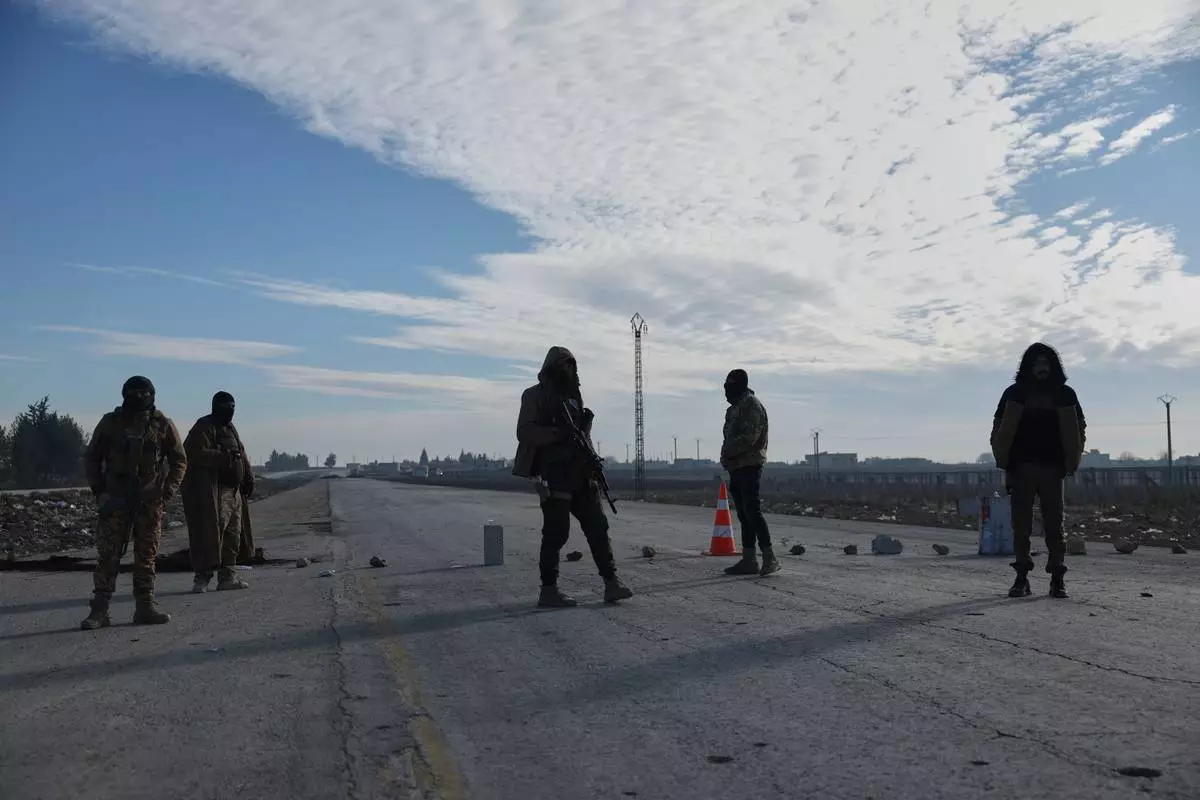
Members of the Syrian military police stand at a humanitarian crossing declared by the Syrian army in the village of Hamima, in the eastern Aleppo countryside, near the front line with the Kurdish-led Syrian Democratic Forces in Deir Hafer, Syria, Thursday, Jan. 15, 2026. (AP Photo/Ghaith Alsayed)
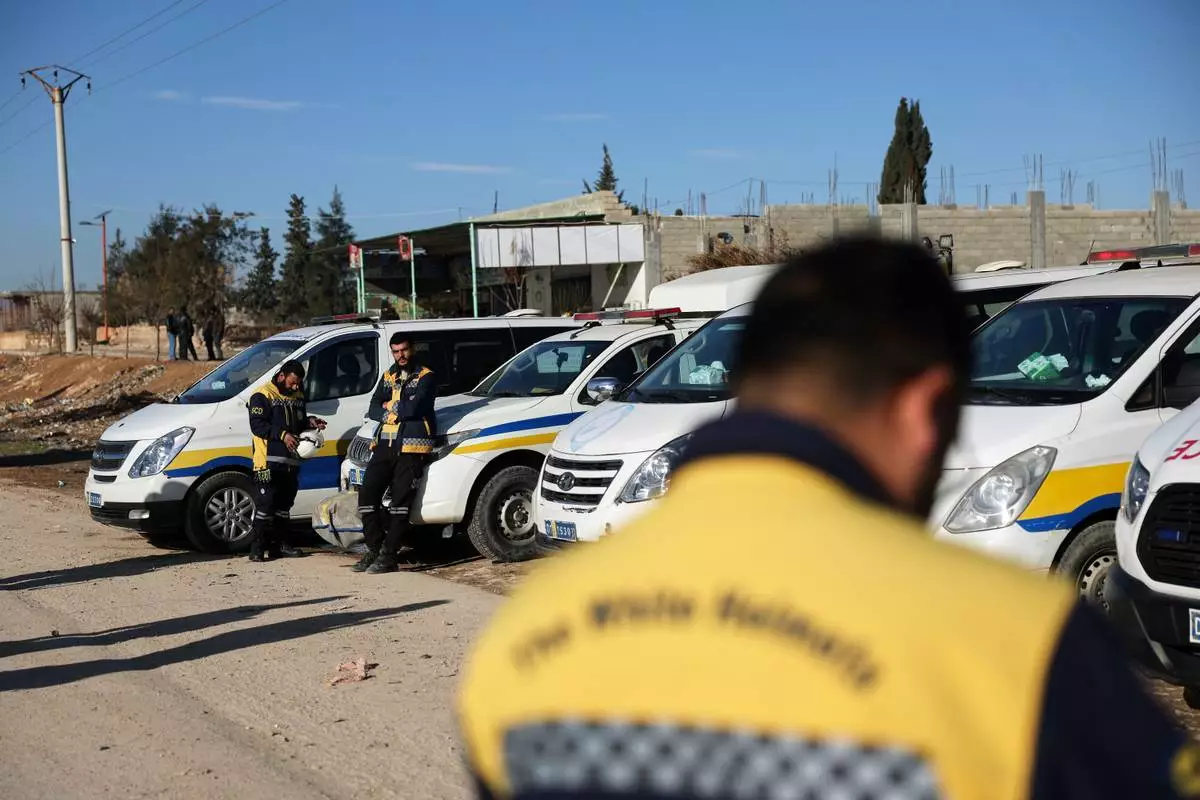
Members of the Syrian Civil Defense, stand next to their vehicles at a humanitarian crossing declared by the Syrian army in the village of Hamima, in the eastern Aleppo countryside, near the front line with the Kurdish-led Syrian Democratic Forces in Deir Hafer, Syria, Thursday, Jan. 15, 2026. (AP Photo/Ghaith Alsayed)
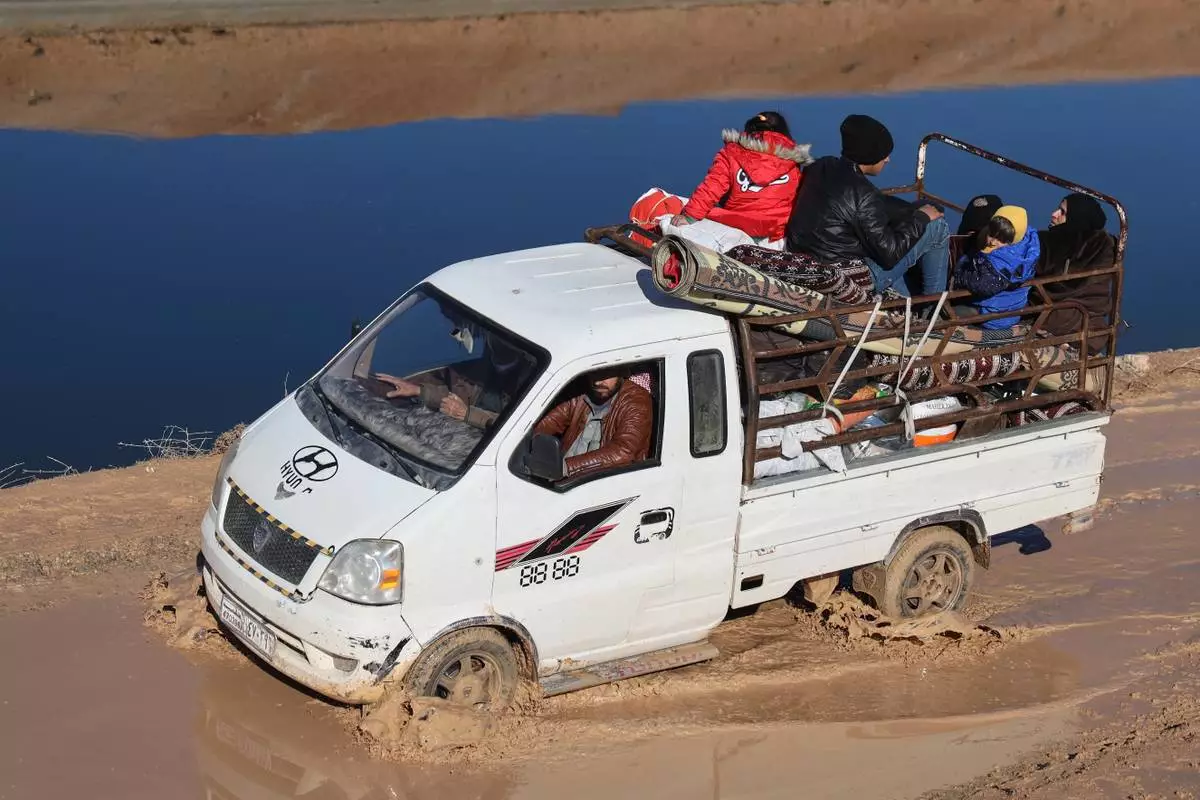
A displaced Syrian family rides in the back of a truck near a humanitarian crossing declared by the Syrian army next to a river in the village of Rasm Al-Abboud, in the eastern Aleppo countryside, near the front line with the Kurdish-led Syrian Democratic Forces in Deir Hafer, Syria, Thursday, Jan. 15, 2026. (AP Photo/Omar Albam)
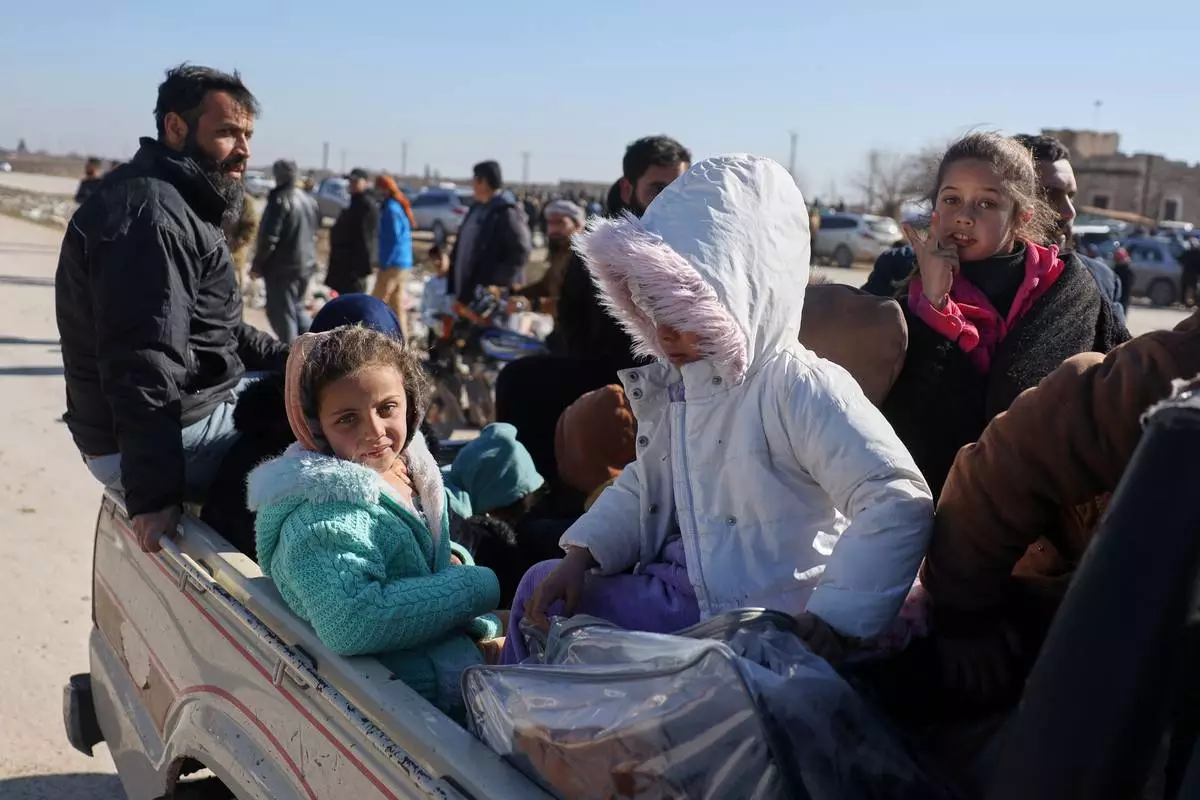
Displaced Syrian children and women ride in the back of a truck near a humanitarian crossing declared by the Syrian army in the village of Hamima, in the eastern Aleppo countryside, near the front line with the Kurdish-led Syrian Democratic Forces in Deir Hafer, Syria, Thursday, Jan. 15, 2026. (AP Photo/Omar Albam)
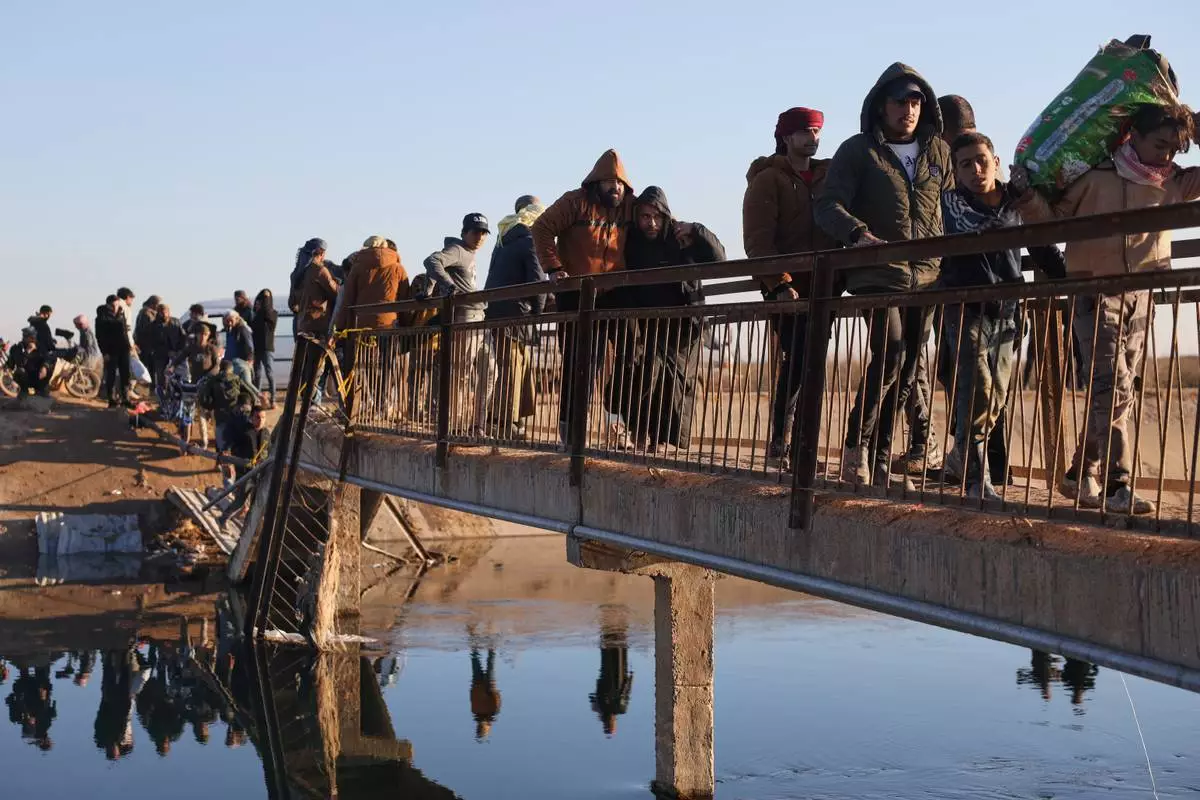
Displaced Syrians at a river crossing near the village of Jarirat al Imam, in the eastern Aleppo countryside, near the front line with the Kurdish-led Syrian Democratic Forces in Deir Hafer, Syria, Thursday, Jan. 15, 2026. (AP Photo/Omar Albam)