A federal judge ruled Friday that the Trump administration cannot put conditions on grants that fund efforts to combat domestic violence, including barring groups from promoting diversity, equity and inclusion or providing abortion resources.
U.S. District Court Judge Melissa DuBose in Providence, Rhode Island, granted a motion by 17 statewide anti-domestic and sexual violence coalitions for a preliminary injunction, which blocks the Trump administration from enforcing its conditions while the lawsuit plays out.
“Without preliminary relief, the Plaintiffs will face irreparable harm that will disrupt vital services to victims of homelessness and domestic and sexual violence,” DuBose wrote in her ruling. “On the contrary, if preliminary relief is granted, the Defendants will merely need to revert back to considering grant applications and awarding funds as they normally would.”
DuBose, however, went further in the scope of her ruling. She ruled that the decision preventing these grant conditions went beyond plaintiffs and will apply to anyone applying for money doled out by the U.S. Department of Housing and Urban Development and the U.S. Department of Health and Human Services.
“Organizations serving survivors of domestic violence and sexual assault, LGBTQ+ youth, and people experiencing homelessness should not be forced to abandon their work, erase the identities of those they serve, or compromise their values just to keep their doors open,” Skye Perryman, president and CEO of Democracy Forward, which was one of the groups representing plaintiffs, said in a statement. “This unlawful and harmful policy puts extreme schemes ahead of people’s dignity and safety by restricting essential federal support.”
Emily Martin, chief program officer at the National Women’s Law Center, one of five organizations representing the coalitions, also welcomed the ruling.
“When this administration claims to be targeting ‘illegal DEI’ and ‘gender ideology,’ what it is really trying to do is strip life-saving services from survivors of sexual violence and domestic violence, LGBTQ+ youth, and people without homes,” Martin said. “Today’s order makes clear that these federal grants exist to serve people in need, not to advance a regressive political agenda.”
Neither HUD nor HHS responded to a request for comment.
In their July lawsuit, the groups said the Trump administration was putting them in a difficult position.
If they don’t apply for federal money allocated under the Violence Against Women Act of 1994, they might not be able to provide rape crisis centers, battered women’s shelters and other programs to support victims of domestic violence and sexual assault. But if the groups do apply, they said they would be forced to “fundamentally change their programming, abandon outreach methods and programs designed to best serve their communities, and risk exposing themselves to ruinous liability.”
The groups suing, including organizations combating domestic violence from California to Rhode Island, argue the conditions violate the First Amendment. They also argue that the conditions violate the Administrative Procedure Act by exceeding defendants’ authority by “in some cases outright conflicting with governing law or failing to follow required procedure."
The government argues that the matter has to do with payments to these groups and, as such, should be handled by the Court of Federal Claims.
Even if the jurisdiction argument fails, the government argues federal agencies may impose conditions on funding that “further certain policies and priorities consistent with the authority provided by grant program statutes.”
“Both agencies have long required compliance with federal antidiscrimination law as a condition of receiving a federal grant,” the government wrote in court documents.
Another Rhode Island judge granted a preliminary injunction in August involving some of the same groups in a lawsuit against the Justice Department.
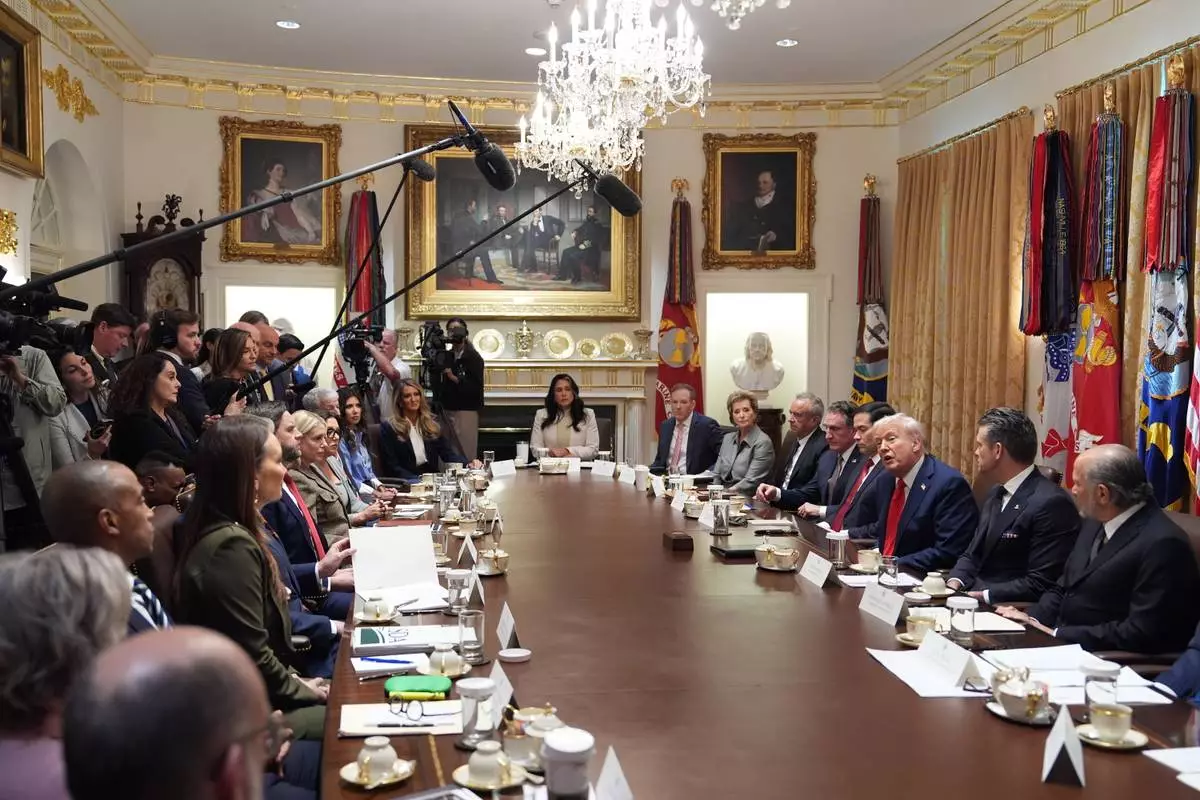
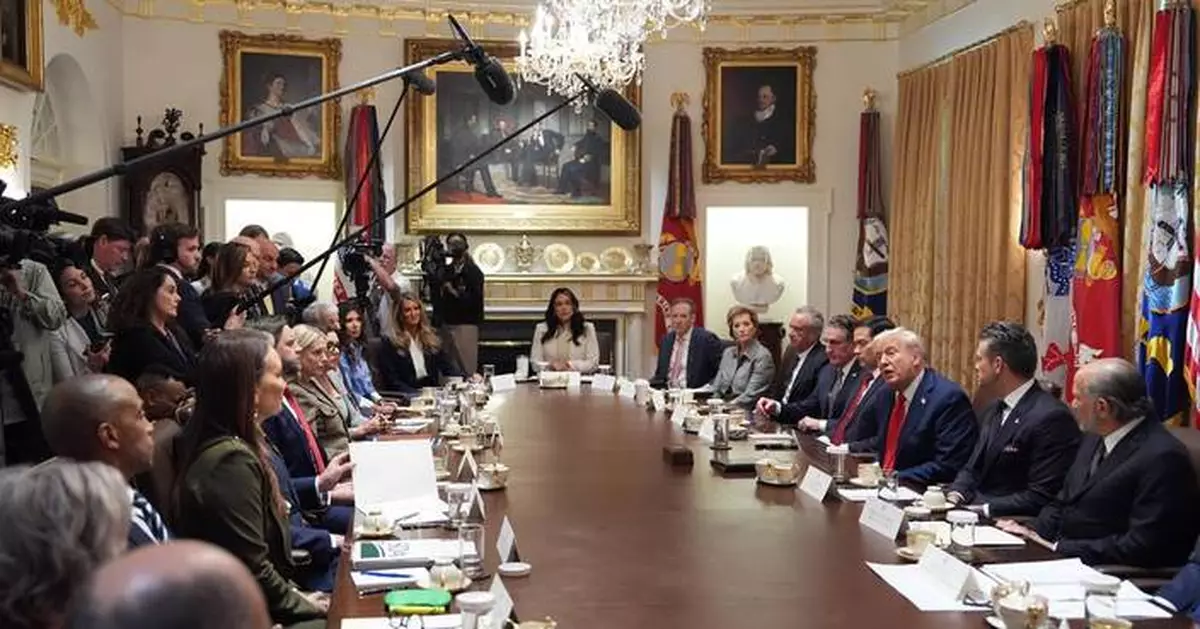
President Donald Trump speaks during a cabinet meeting at the White House, Thursday, Oct. 9, 2025, in Washington. (AP Photo/Evan Vucci)