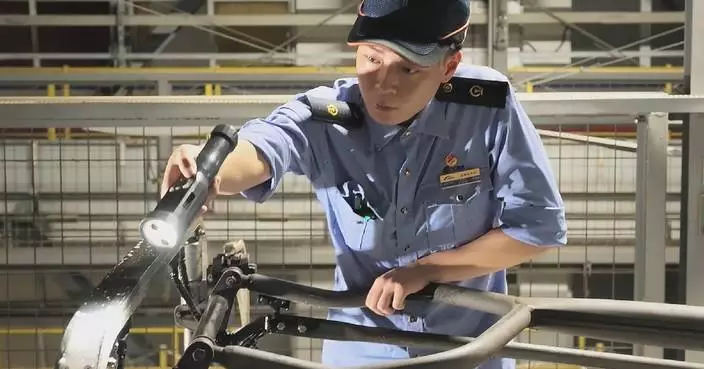
After more than a year of peacekeeping mission in South Sudan, a Chinese policewoman has been awarded two United Nations (UN) medals for her outstanding service amid conflict, supporting peace, stability, and the education of women and children.
Zhao Huan, a member of the 10th Chinese peacekeeping police unit to the United Nations Mission in South Sudan, was dispatched to the capital city of Juba in May last year, an intense transmission season for mosquito-borne diseases due to the rainy and hot weather.
Zhao was arranged to live in an old container of less than 10 square meters with a fellow officer. The container had gaps in the roof and walls, and rainwater had made the room extremely damp, filling the air with a musty smell.
"The unfamiliar climate disrupted my biological clock and weakened my immunity. My skin had serious allergic reactions, with rashes all over my face and body," Zhao said.
With constant armed conflicts and frequent riots, South Sudan is considered one of the most dangerous places in the world by the UN.
On July 8, 2024, a riot broke out at the UN internally displaced persons (IDP) Camp 3, causing 27 casualties.
While rushing to the camp by car, Zhao and her partner were waylaid by several armed militants. In the face of danger, Zhao remained calm and communicated with them, eventually defusing a crisis.
"I said, please put down your guns. I am a police officer from China. We are friends. Please put down your guns. At that moment, I truly felt that the motherland is our strongest support," Zhao said.
Facing life threats all day long, Zhao didn't spare herself from the responsibility of protecting the rights and interests of women and children in South Sudan. During the mission, she visited communities and IDP camps for 126 times to talk with locals and learn about their difficulties.
"During publicity activities in schools, I told the girls that only if they attach importance to education, can they change their destinies with knowledge. At seminars in local colleges, I expressed hope that the elites could give play to the power of women in promoting the protection of women's rights and interests in the country," Zhao said.
Born in Heze City of east China's Shandong Province, Zhao has been a devoted police officer for 14 years since her graduation from the Shandong Police College in 2011.
After completing her mission in August this year, Zhao was awarded the United Nations Peace Medal and a medal for excellent performance. Only two percent of peacekeepers in the area have won both awards.
"When children in South Sudan saluted me after seeing the five-star red flag, I knew I had demonstrated the image of a major country on the global stage as a Chinese policewoman. I think this is the value of life that I pursue. I'm ready for the second mission at any time," Zhao said.
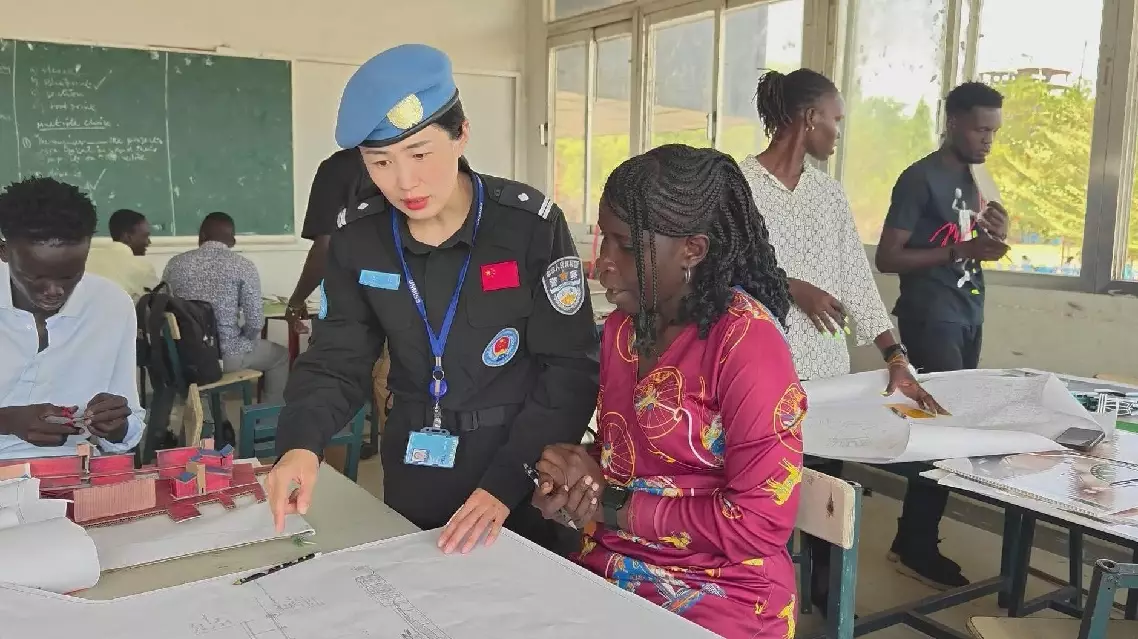
Chinese female peacekeeper awarded UN medals after yearlong mission in South Sudan