RALEIGH, N.C. (AP) — More than 2.5 million North Carolina residents are getting over $6.5 billion in medical debt eliminated through a state government effort that offered hospitals extra Medicaid funds from Washington if they gave low- and middle-income patients the financial relief and implemented policies to discourage future liabilities.
Democratic Gov. Josh Stein, the state health department secretary and other officials announced Monday results so far from what then-Gov. Roy Cooper unveiled 15 months ago as a first-of-its-kind initiative.
While helping almost one-quarter of North Carolina residents, Stein said the effort has exceeded expectations in giving individuals and families a second chance to succeed financially after medical crises. Officials previously estimated it could help about 2 million people get rid of $4 billion in debt. The debt that had been held by hospitals, and are usually difficult to recover, will be pulled from credit reports, the governor said.
“This is life-changing news for so many families,” Stein said, adding that recipients on average will have $2,600 erased. “No one chooses to have a heart attack or get diagnosed with a chronic condition — you just have to deal with it. Today’s announcement will free people from the financial stress so that they can focus on getting healthy.” Another news conference speaker described patients who avoided services or threatened to halt treatments to prevent more debt from accumulating on themselves or their family.
Hospitals that agreed to participate have already alerted many patients to tell them their debt is essentially canceled, state health officials said Monday. And Undue Medical Debt, a national group working on the effort and taking over some hospital liabilities, plans to send 255,000 notices this week to other recipients.
The effort germinated from what's called the Healthcare Access and Stabilization Program, which state legislators approved in 2023 at the same time as expanded Medicaid coverage to working adults who couldn’t otherwise qualify for conventional Medicaid. Hospitals pay assessments to draw down billions of dollars in federal money.
The state Department of Health and Human Services last year proposed that certain hospitals could receive higher program reimbursement levels to treat Medicaid enrollees if they agreed to medical debt initiatives. The federal Centers for Medicare and Medicaid Services signed off on the plan details, and by August 2024 each of the roughly 100 acute-care, rural or university-connected hospitals that qualified decided to participate.
Under rules previously announced, the hospitals had to eliminate medical debt going back to early 2014 for patients who are Medicaid enrollees. They also would later have to eliminate other debt for non-enrollees based on income levels. And the hospitals were directed to discourage debt by doing things like automatically enrolling people in charity care programs or curbing certain debt collection practices. The $6.5 billion figure includes debt relieved directly through the initiative and through hospital policy changes to implement it, Stein's office said.
Other state and local governments have tapped into federal American Rescue Plan funds to help purchase and cancel residents’ debt. Arizona Gov. Katie Hobbs announced in July that $429 million in medical debt had been erased for more than 352,000 state residents.
“North Carolina’s approach is completely unique," said Jose Penabad, the Undue Medical Debt vice chair. Several states are following North Carolina’s use of Medicaid incentives closely, he added.
North Carolina debt eradication exceeded initial estimates in part because patients outside the population being targeted also had their debt eliminated, Stein said. Hospitals, for example, sometimes have eliminated debt for patients incurred at associated physician practices, said Jonathan Kappler, a state deputy health secretary. More debt will be eliminated in the future, he added.
State health secretary Dr. Dev Sangvai, told reporters the law approved by Congress in July that made cuts and policy changes to Medicaid won’t immediately affect the debt elimination initiative.
Some hospitals were initially hesitant about the debt relief initiative because new requirements were being placed upon the reimbursements, Cooper said last year. The North Carolina Healthcare Association, which lobbies for nonprofit and for-profit hospitals, said Monday in a statement that it’s concerned “recent and proposed government policies could add financial pressures” that prevent hospitals from expanding programs to help low-income patients.
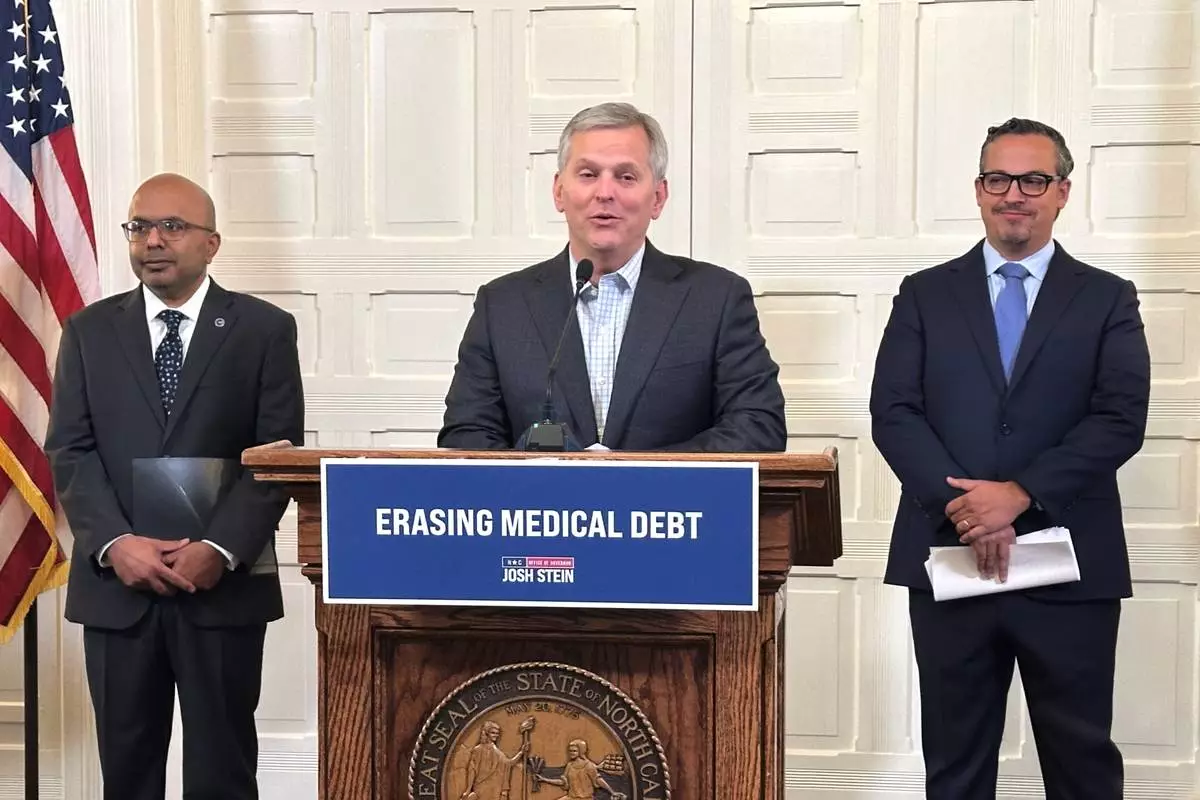
North Carolina Gov. Josh Stein, center, flanked by Health and Human Services Secretary Dr. Dev Sangvai, left, and Undue Medical Debt Vice Chair Jose Penabad, speaks about the elimination of medical debt through an initiative involving hospitals and Medicaid at the Executive Mansion in Raleigh, N.C., Monday, Oct. 13, 2025. (AP Photo/Gary D. Robertson)
HAMIMA, Syria (AP) — A trickle of civilians left a contested area east of Aleppo on Thursday after a warning by the Syrian military to evacuate ahead of an anticipated government military offensive against Kurdish-led forces.
Government officials and some residents who managed to get out said the Kurdish-led Syrian Democratic Forces prevented people from leaving via the corridor designated by the military along the main road leading west from the town of Maskana through Deir Hafer to the town of Hamima.
The SDF denied the reports that they were blocking the evacuation.
In Hamima, ambulances and government officials were gathered beginning early in the morning waiting to receive the evacuees and take them to shelters, but few arrived.
Farhat Khorto, a member of the executive office of Aleppo Governorate who was waiting there, claimed that there were "nearly two hundred civilian cars and hundreds of people who wanted to leave” the Deir Hafer area but that they were prevented by the SDF. He said the SDF was warning residents they could face “sniping operations or booby-trapped explosives” along that route.
Some families said they got out of the evacuation zone by taking back roads or going part of the distance on foot.
“We tried to leave this morning, but the SDF prevented us. So we left on foot … we walked about seven to eight kilometers until we hit the main road, and there the civil defense took us and things were good then,” said Saleh al-Othman, who said he fled Deir Hafer with more than 50 relatives.
Yasser al-Hasno, also from Deir Hafer, said he and his family left via back roads because the main routes were closed and finally crossed a small river on foot to get out of the evacuation area.
Another Deir Hafer resident who crossed the river on foot, Ahmad al-Ali, said, “We only made it here by bribing people. They still have not allowed a single person to go through the main crossing."
Farhad Shami, a spokesman for the SDF, said the allegations that the group had prevented civilians from leaving were “baseless.” He suggested that government shelling was deterring residents from moving.
The SDF later issued a statement also denying that it had blocked civilians from fleeing. It said that “any displacement of civilians under threat of force by Damascus constitutes a war crime" and called on the international community to condemn it.
“Today, the people of Deir Hafer have demonstrated their unwavering commitment to their land and homes, and no party can deprive them of their right to remain there under military pressure,” it said.
The Syrian army’s announcement late Wednesday — which said civilians would be able to evacuate through the “humanitarian corridor” from 9 a.m. to 5 p.m. Thursday — appeared to signal plans for an offensive against the SDF in the area east of Aleppo. Already there have been limited exchanges of fire between the two sides.
Thursday evening, the military said it would extend the humanitarian corridor for another day.
The Syrian military called on the SDF and other armed groups to withdraw to the other side of the Euphrates River, to the east of the contested zone. The SDF controls large swaths of northeastern Syria east of the river.
The tensions in the Deir Hafer area come after several days of intense clashes last week in Aleppo city that ended with the evacuation of Kurdish fighters and government forces taking control of three contested neighborhoods.
The fighting broke out as negotiations have stalled between Damascus and the SDF over an agreement reached last March to integrate their forces and for the central government to take control of institutions including border crossings and oil fields in the northeast.
Some of the factions that make up the new Syrian army, which was formed after the fall of former President Bashar Assad in a rebel offensive in December 2024, were previously Turkey-backed insurgent groups that have a long history of clashing with Kurdish forces.
The SDF for years has been the main U.S. partner in Syria in fighting against the Islamic State group, but Turkey considers the SDF a terrorist organization because of its association with Kurdish separatist insurgents in Turkey.
Despite the long-running U.S. support for the SDF, the Trump administration has also developed close ties with the government of interim Syrian President Ahmad al-Sharaa and has so far avoided publicly taking sides in the clashes in Aleppo.
Ilham Ahmed, head of foreign relations for the SDF-affiliated Kurdish-led administration in northeast Syria, at a press conference Thursday said SDF officials were in contact with the United States and Turkey and had presented several initiatives for de-escalation. She said that claims by Damascus that the SDF had failed to implement the March agreement were false.
——
Associated Press journalist Hogir Al Abdo in Qamishli, Syria, contributed.
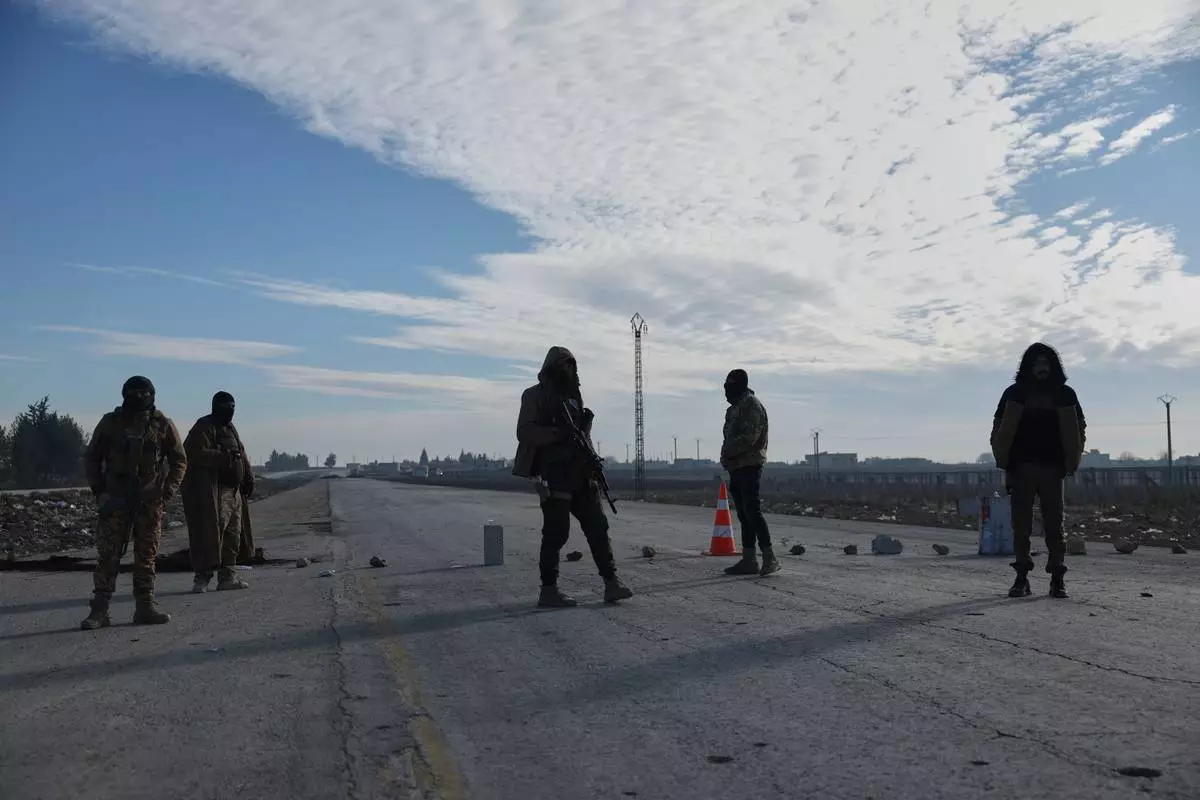
Members of the Syrian military police stand at a humanitarian crossing declared by the Syrian army in the village of Hamima, in the eastern Aleppo countryside, near the front line with the Kurdish-led Syrian Democratic Forces in Deir Hafer, Syria, Thursday, Jan. 15, 2026. (AP Photo/Ghaith Alsayed)
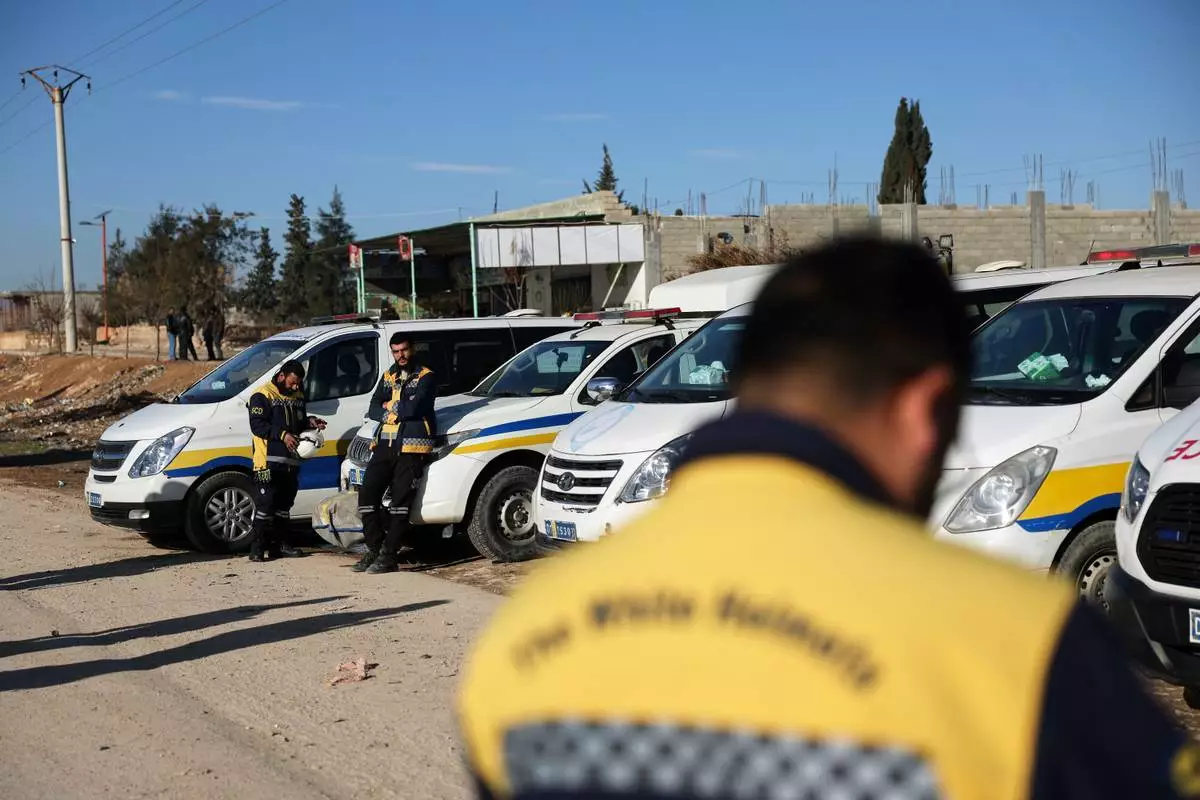
Members of the Syrian Civil Defense, stand next to their vehicles at a humanitarian crossing declared by the Syrian army in the village of Hamima, in the eastern Aleppo countryside, near the front line with the Kurdish-led Syrian Democratic Forces in Deir Hafer, Syria, Thursday, Jan. 15, 2026. (AP Photo/Ghaith Alsayed)

A displaced Syrian family rides in the back of a truck near a humanitarian crossing declared by the Syrian army next to a river in the village of Rasm Al-Abboud, in the eastern Aleppo countryside, near the front line with the Kurdish-led Syrian Democratic Forces in Deir Hafer, Syria, Thursday, Jan. 15, 2026. (AP Photo/Omar Albam)
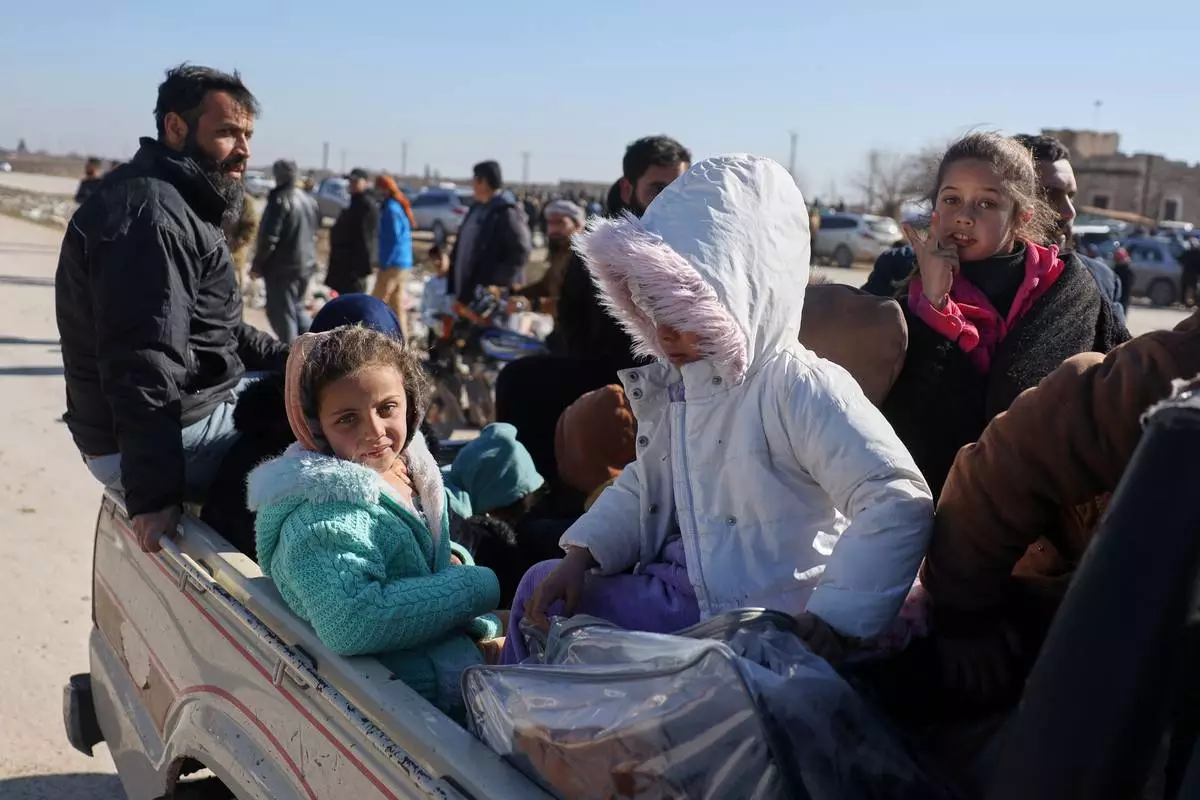
Displaced Syrian children and women ride in the back of a truck near a humanitarian crossing declared by the Syrian army in the village of Hamima, in the eastern Aleppo countryside, near the front line with the Kurdish-led Syrian Democratic Forces in Deir Hafer, Syria, Thursday, Jan. 15, 2026. (AP Photo/Omar Albam)
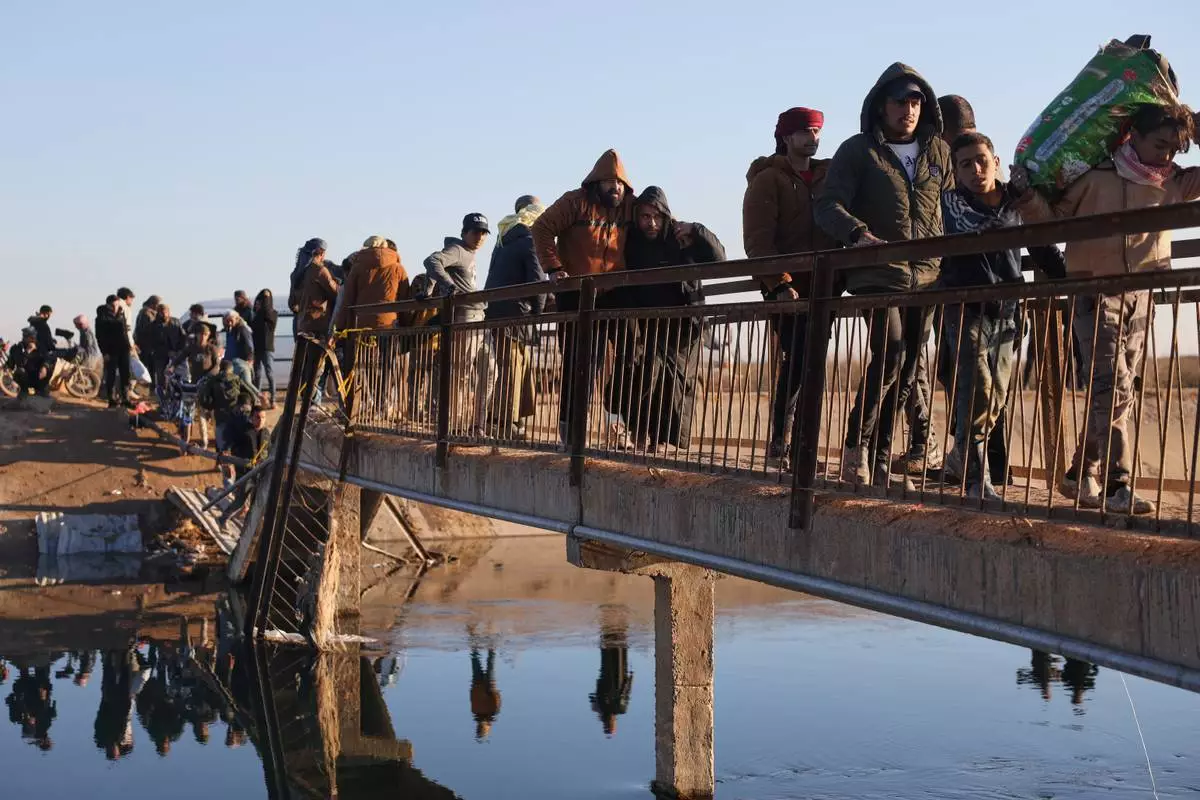
Displaced Syrians at a river crossing near the village of Jarirat al Imam, in the eastern Aleppo countryside, near the front line with the Kurdish-led Syrian Democratic Forces in Deir Hafer, Syria, Thursday, Jan. 15, 2026. (AP Photo/Omar Albam)