Skip to Content Facebook Feature Image

Shanghai auto terminal sees over 1 million cars exported abroad in three quarters

China

China

China

Shanghai auto terminal sees over 1 million cars exported abroad in three quarters

2025-10-15 16:10 Last Updated At:19:27

Auto exports from the Haitong International Automotive Terminal at the Waigaoqiao Port in Shanghai have surpassed 1 million units in the first three quarters of this year, China Central Television (CCTV) reported Wednesday.

Each day, around two to three international shipping vessels will depart from the terminal. On Wednesday itself, two "ro-ro" (roll-on/roll-off) vessels would send 4,083 vehicles outside China, including 450 ones made in southwest China's Chongqing bound for Mexico.

As for the ro-ro vessel, it is designed with ramps for vehicle transport to allow cars to be driven directly into the multi-deck cargo ship.

The increasing use of such ro-ro vessels highlights a major strategic shift in China's export logistics, which is moving from "borrowing ships to go overseas" to "building ships to go overseas." This transition has enabled Chinese automotive brands to have greater control over their global supply chains, utilizing domestically built carriers to transport domestically produced cars.

The Haitong International Automobile Terminal covers 1.1 million square meters and can park up to 350,000 vehicles, with a designed annual throughput up to 1 million vehicles.

In 2024, the terminal has seen auto exports reaching 1.298 million units, surpassing 1 million models for three consecutive years. So far, the terminal saw 1 million units of exported cars in just three quarters, marking its fourth consecutive year in breaking 1 million units in auto export.
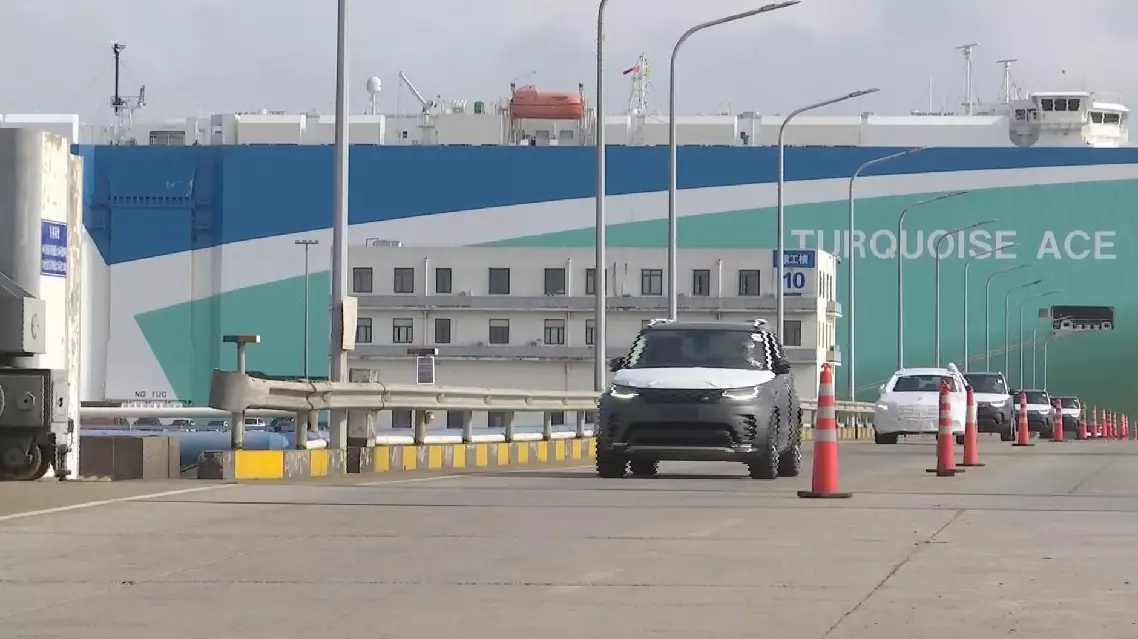
Shanghai auto terminal sees over 1 million cars exported abroad in three quarters
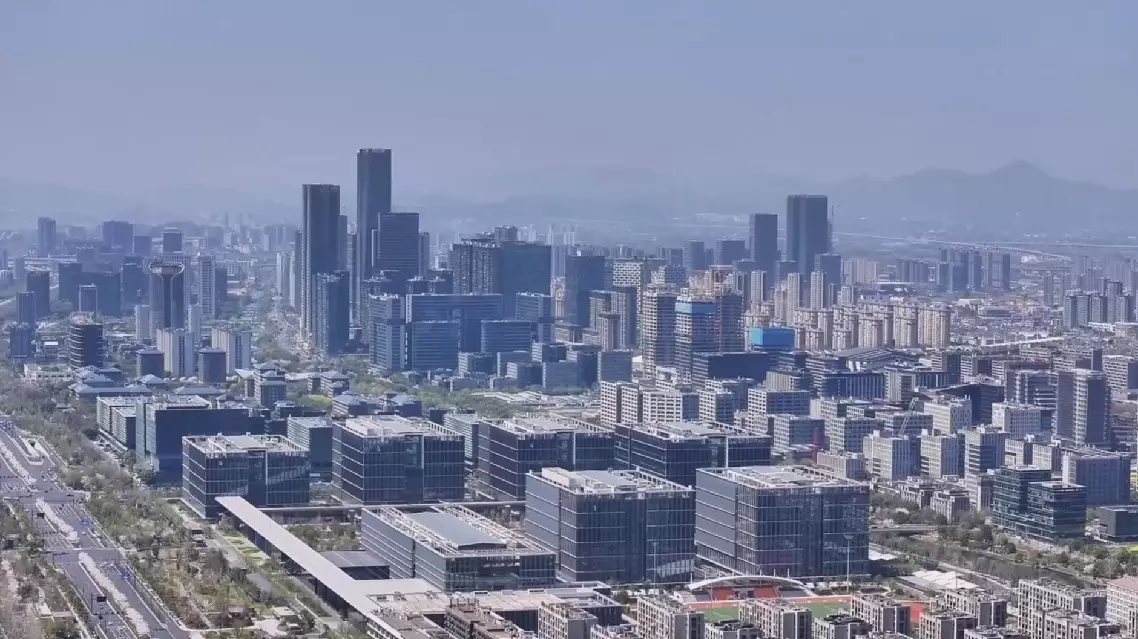

Shanghai auto terminal sees over 1 million cars exported abroad in three quarters
Chinese Premier Li Qiang on Thursday presided over a State Council executive meeting that studied work on building a unified national market and reviewed and approved a plan for the development of a modern emergency response system during the 15th Five-Year Plan period (2026-2030).

Noting that building a unified national market is essential to advancing high-quality development, the meeting called for deepening institutional frameworks in areas such as property rights protection, market access, fair competition, social credit and market exit mechanisms.

The meeting also urged efforts to advance high-standard connectivity of market infrastructure to facilitate smooth economic circulation and effectively reduce logistics costs across society.

Emergency management is critical to protecting people's lives and property, the meeting said. It called for accelerating the development of a modern emergency response system, deepening reform and innovation in emergency management, and improving coordinated response mechanisms.

Efforts should be made to strengthen risk prevention at the source, enhance monitoring, forecasting and early warning, and accelerate a shift in governance toward proactive prevention, according to the meeting.

A draft revision of the Law on the People's Bank of China was also discussed and approved in principle at the meeting, which decided to submit the draft to the Standing Committee of the National People's Congress for deliberation.

Chinese premier chairs State Council executive meeting

Chinese premier chairs State Council executive meeting

Recommended Articles