Chinese films have raked in more than 133 million U.S. dollars at the overseas box office so far in 2025, marking a record-breaking year for the country's cinematic exports, according to the National Film Administration.
Fifteen of the top 20 highest-grossing Chinese films have been released outside the mainland this year, the administration said.
During the Spring Festival film season, major holiday-season titles, such as "Ne Zha 2," "Detective Chinatown 1900," "Creation of the Gods II: Demon Force," and "Legends of the Condor Heroes: The Gallants," were simultaneously released in multiple countries and regions.
Among those blockbusters, the animation "Ne Zha 2" has been screened in over 770 theaters across North America since Feb 14, setting new records for Chinese-language films in the region over the past two decades in both presales and screenings. The film has since grossed more than 68 million U.S. dollars overseas and ranks among the top five films globally by total box office revenue.
Meanwhile, the epic fantasy film "Creation of the Gods II: Demon Force" has been distributed in over 160 countries and regions, sparking a wave of interest in fantasy cinema in emerging markets such as South Africa and Egypt.
This summer, the historic dramas "Dead to Rights" and "Dongji Rescue" reached audiences in Australia, New Zealand, the United States, Canada, and the United Kingdom.
Another historical drama "731", or "Evil Unbound," depicting the atrocities of Japan's notorious Unit 731 during World War II, has been screened in Australia, New Zealand and North America since its release in September. More than 130 theaters have screened the film in North America alone.
"Inspired by 'Ne Zha 2,' more production companies actively pursued overseas distribution. There is a growing number of Chinese films released abroad, and their reach is expanding. For instance, films such as 'Legends of the Condor Heroes: The Gallants' have been screened in countries like Bulgaria and Iraq -- markets that previously saw little Chinese film presence," said Peng Kan, a lecturer at the School of Arts and Communication in Beijing Normal University.

China's overseas box office tops 133 mln U.S. dollars so far this year
China will push for the rollout of next-generation communication networks ahead of market demand in the coming five years, a senior official with the Ministry of Industry and Information Technology (MIIT) said on Wednesday at the annual International Postal and Telecommunications Expo (PT Expo).
The push mirrors the development plan recently issued by the ministry for the information and communications industry during the 15th Five-Year Plan period (2026-2030).
According to the plan, a new-generation communications network with comprehensive coverage and leading performance is expected to be fully established by 2030, the 5G user penetration rate will reach 95 percent, gigabit-capable broadband will connect to 320 million households, and intelligent computing power will reach 9,800 EFLOPS -- a unit of computing performance, with each unit representing one quintillion floating-point operations per second.
"We will systemically promote the development of an application-driven and appropriately future-oriented next-generation communications network, push broadband networks toward dual 10-gigabit evolution, and advance the construction of low-Earth orbit satellite internet systems. We will also holistically optimize a communications network that links ground and sea, expand and improve computing facilities, and strengthen computing-network integration and the interconnection of computing power, so as to better support the national integrated computing network," said Yu Xiaohui, vice minister of the Ministry of Industry and Information Technology.
The move came as breakthroughs in digital intelligence technologies -- represented by artificial intelligence -- brought opportunities for the development of information and communication.
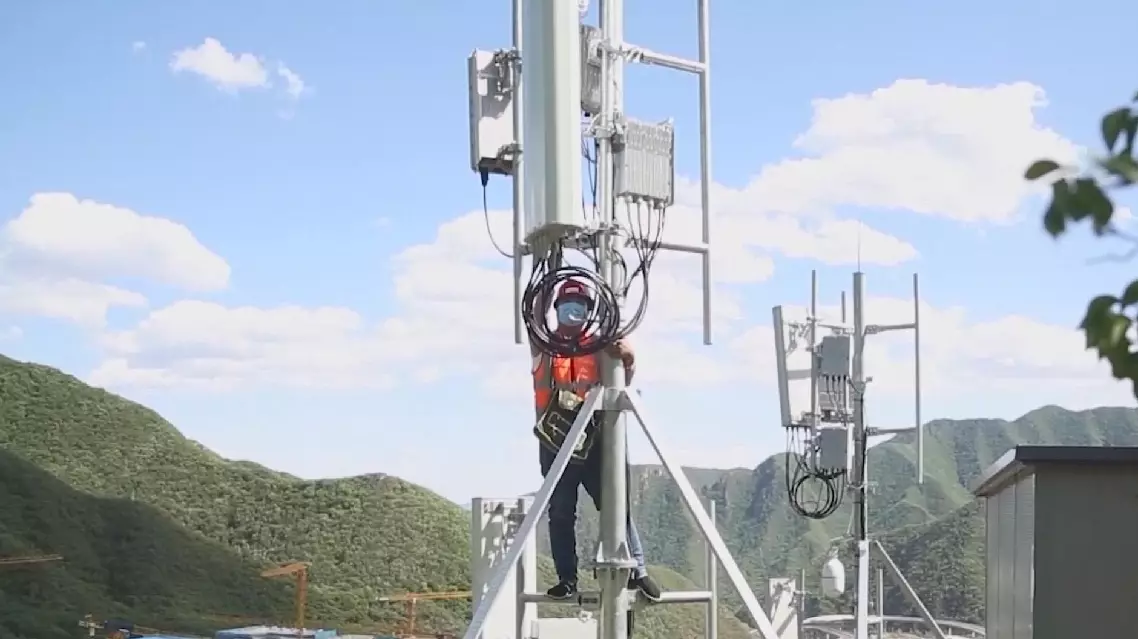
As of the end of July, China had deployed over 5.15 million 5G base stations, with early-stage deployment of 10-gigabit optical networks already underway and intelligent computing power standing at 2,185 EFLOPs, according to official data.
China will also deepen the integration of terrestrial and satellite networks, including commercial applications for smartphone direct-to-satellite services and the Internet of Things (IoT), ramp up research and development for 6G base stations, and advance the development of standards in key information and communication sectors, such as computing power networks and quantum communication, according to the development plan.
The PT Expo this year is being held from Tuesday to Thursday in Beijing.
China to push ahead-of-demand rollout of next-generation communications networks