BEDFORD, Mass.--(BUSINESS WIRE)--Oct 21, 2025--
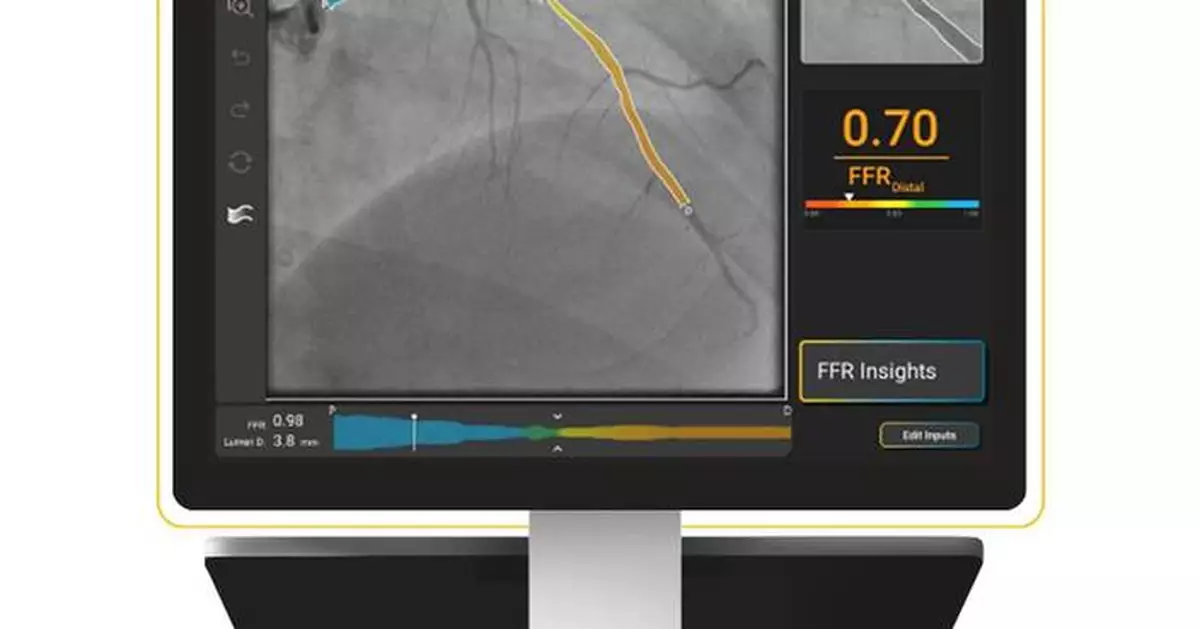
SpectraWAVE, Inc., a medical imaging company focused on improving the treatment and outcomes for patients with coronary artery disease (CAD), today announced U.S. Food and Drug Administration (FDA) 510(k) clearance for its wire-free, drug-free, single angiogram derived physiology product, X1 TM -FFR. X1-FFR provides physicians physiology results from a single angiogram acquired via a direct real-time angiography feed, eliminating the need for network-based DICOM file management and transfer delays. X1 features AI-enabled workflows, including automated vessel segmentation and frame suggestion, designed to simplify and speed up FFR results. X1 will be available as a software add-on to the HyperVue Imaging System, establishing the first platform that combines FDA cleared angiogram-derived physiology with intravascular imaging.
This press release features multimedia. View the full release here: https://www.businesswire.com/news/home/20251021632330/en/
"Physiology is essential for PCI outcomes, and replacing invasive pressure wires with non-invasive angiogram-derived physiology is better and safer for our patients," said Michael C. Kim, MD, Director of the Cardiac Cath Labs at Lenox Hill Hospital and Director of Interventional Cardiology in the Western Region of Northwell Health in NYC. "We've seen the advancement of angio-derived FFR over the past few years in clinical practice, but workflow and user variability have been a challenge with current technologies requiring multiple angiograms. SpectraWAVE’s X1-FFR technology represents the next stage in angio-derived physiology requiring only one view per vessel to derive an accurate FFR value. Our experience in clinical study cases has achieved many results in less than one minute. We are big believers in this technology, and we predict widespread usage not only within our large health system but nationally and internationally with the goal of identifying appropriate lesions for revascularization."
“HyperVue is already valued as a comprehensive, easy-to-use intravascular imaging product in the market. HyperVue with X1 becomes a one-of-a-kind central hub for the cath-lab offering both angiogram-derived physiology and imaging within the same platform,” said Eman Namati, PhD, Chief Executive Officer of SpectraWAVE. “By focusing on one vessel at a time, X1 can achieve accurate results from a single angiogram, while layering in state-of-the-art AI augmentation unlocks a number of key workflow benefits for customers, resulting in rapid and simple procedures. The clinical experience to date has been fantastic, and we’re excited to begin providing this to our customers and their patients. This marks our fifth FDA clearance in just over two years, reflecting our continued commitment to technological advancement to support patient outcomes in the cath lab.”
Approximately 2.5 million diagnostic angiograms and 1 million percutaneous coronary interventions (PCI) are performed annually in United States cardiac catheterization labs. Physiology, traditionally performed using pressure wires with and without adenosine, has become valuable to support treatment decision making during diagnostic angiograms, while intravascular imaging is used for the optimization of the treatment itself during PCI. HyperVue with X1-FFR is the first combination of FDA cleared products to provide a wire-free, drug-free angiogram derived physiology solution with an intravascular imaging product on the same platform to serve patients in the cath lab.
SpectraWAVE will provide hands-on demonstrations of HyperVue with X1-FFR at TCT 2025 at Booth 2027 in San Francisco. In addition, SpectraWAVE will host an Academic Satellite Program with case demonstrations of X1 Monday, October 27 th, 3:45-4:45 PM local time at the Moscone Convention Center.
About SpectraWAVE, Inc.
SpectraWAVE, located in Bedford, Mass., is a privately held medical device company founded in 2017 to provide unrivaled optical and computational insights to improve the treatment and outcomes for patients with coronary artery disease (CAD). CAD, the buildup of plaque in the wall of the arteries that supply blood to the heart, affects 20 million adults in the United States aged 20 and older, resulting in 2.5 million diagnostic angiograms and 1 million percutaneous coronary interventions (PCI) annually in cardiac cath labs. SpectraWAVE’s products, HyperVue TM with X1 TM -FFR bring intravascular imaging and wire-free physiology together on one platform for efficient, precise PCI planning. X1-FFR provides rapid physiology results from a single angiogram while HyperVue delivers comprehensive DeepOCT+NIRS imaging with simple, automated workflows to guide decision making.
The HyperVue Imaging System is intended for the imaging of coronary arteries and is indicated in patients who are candidates for transluminal interventional procedures. The NIRS capability of the system is intended for the identification of patients and plaques at increased risk of major adverse cardiac events.
The X1-FFR Software features segmentation, measurement and reporting tools to facilitate quantification of stenosis and pressure drop in coronary vessels.
For more information and complete indications for use, please visit www.spectrawave.com.
HyperVue, Starlight, DeepOCT, and X1 are commercial trademarks cleared for sale in the U.S.A.
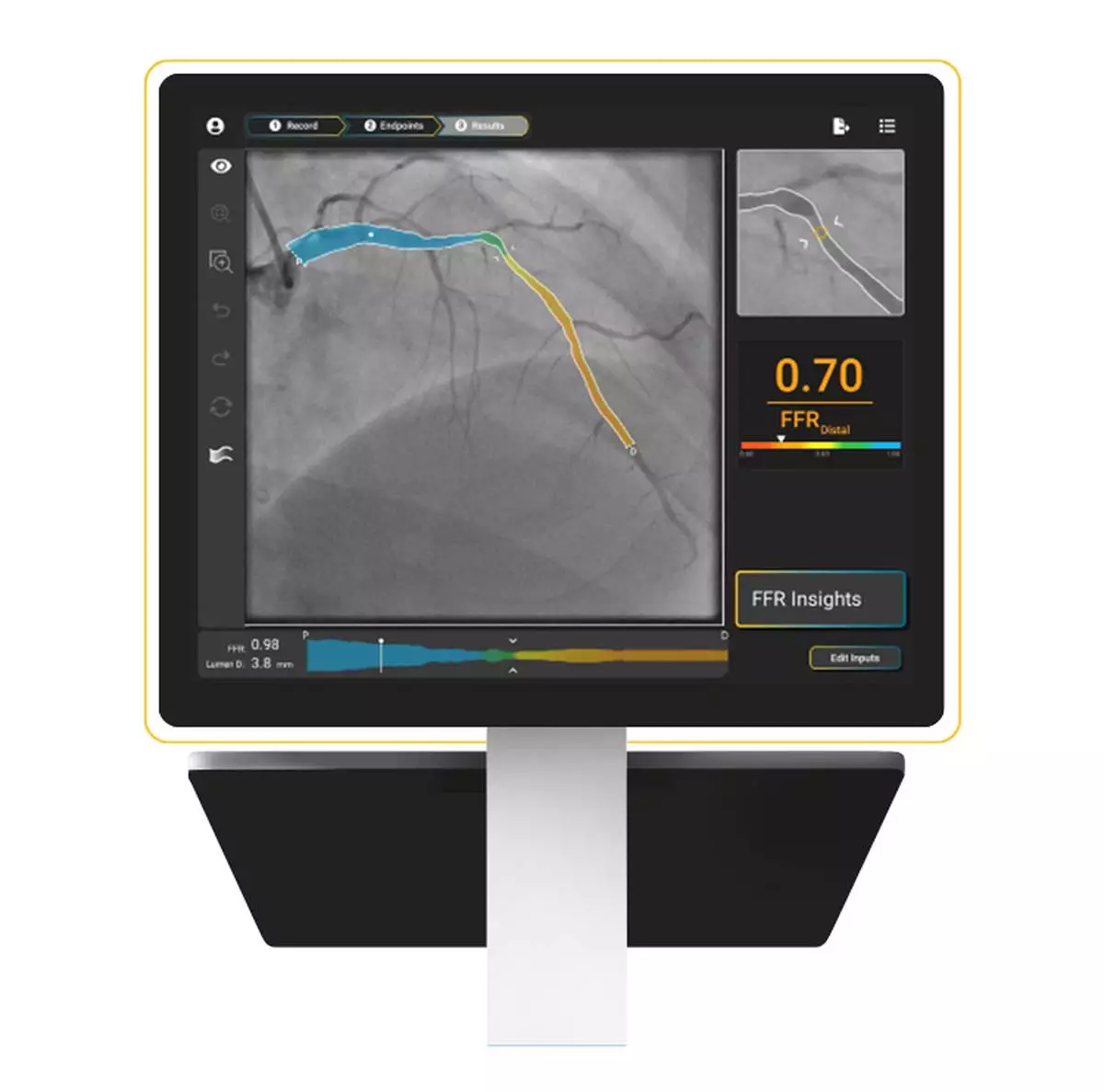
SpectraWAVE Receives 510(k) Clearance for X1-FFR, an AI-enabled, Wire-Free, Drug-Free, Single Angiogram Physiology Solution -- The X1™ software, available as an add-on application to the HyperVue™ Imaging System, enables the first and only platform in the US combining angiogram-derived physiology and intravascular imaging on a single system --
BEIJING (AP) — In China, the names of things are often either ornately poetic or jarringly direct. A new, wildly popular app among young Chinese people is definitively the latter.
It's called, simply, “Are You Dead?"
In a vast country whose young people are increasingly on the move, the new, one-button app — which has taken the country by digital storm this month — is essentially exactly what it says it is. People who live alone in far-off cities and may be at risk — or just perceived as such by friends or relatives — can push an outsized green circle on their phone screens and send proof of life over the network to a friend or loved one. The cost: 8 yuan (about $1.10).
It's simple and straightforward — essentially a 21st-century Chinese digital version of those American pendants with an alert button on them for senior citizens that gave birth to the famed TV commercial: “I've fallen, and I can't get up!”
Developed by three young people in their 20s, “Are You Dead?” became the most downloaded paid app on the Apple App Store in China last week, according to local media reports. It is also becoming a top download in places as diverse as Singapore and the Netherlands, Britain and India and the United States — in line with the developers' attitude that loneliness and safety aren't just Chinese issues.
“Every country has young people who move to big cities to chase their dreams,” Ian Lü, 29, one of the app's developers, said Thursday.
Lü, who worked and lived alone in the southern city of Shenzhen for five years, experienced such loneliness himself. He said the need for a frictionless check-in is especially strong among introverts. “It's unrealistic,” he said, “to message people every day just to tell them you're still alive.”
Against the backdrop of modern and increasingly frenetic Chinese life, the market for the app is understandable.
Traditionally, Chinese families have tended to live together or at least in close proximity across generations — something embedded deep in the nation's culture until recent years. That has changed in the last few decades with urbanization and rapid economic growth that have sent many Chinese to join what is effectively a diaspora within their own nation — and taken hundreds of millions far from parents, grandparents, aunts and uncles.
Today, the country has more than 100 million households with only one person, according to an annual report from the National Bureau of Statistics of China in 2024.
Consider Chen Xingyu, 32, who has lived on her own for years in Kunming, the capital of southern China’s Yunnan province. “It is new and funny. The name ’Are You Dead?' is very interesting,” Chen said.
Chen, a “lying flat” practitioner who has rejected the grueling, fast-paced career of many in her age group, would try the app but worries about data security. “Assuming many who want to try are women users, if information of such detail about users gets leaked, that’d be terrible,” she said.
Yuan Sangsang, a Shanghai designer, has been living on her own for a decade and describes herself as a “single cow and horse.” She's not hoping the app will save her life — only help her relatives in the event that she does, in fact, expire alone.
"I just don’t want to die with no dignity, like the body gets rotten and smelly before it is found," said Yuan, 38. “That would be unfair for the ones who have to deal with it.”
While such an app might at first seem best suited to elderly people — regardless of their smartphone literacy — all reports indicate that “Are You Dead?” is being snapped up by younger people as the wry equivalent of a social media check-in.
“Some netizens say that the 'Are you dead?' greeting feels like a carefree joke between close friends — both heartfelt and gives a sense of unguarded ease,” the business website Yicai, the Chinese Business Network, said in a commentary. ""It likely explains why so many young people unanimously like this app."
The commentary, by writer He Tao, went further in analyzing the cultural landscape. He wrote that the app's immediate success “serves as a darkly humorous social metaphor, reminding us to pay attention to the living conditions and inner world of contemporary young people. Those who downloaded it clearly need more than just a functional security measure; they crave a signal of being seen and understood.”
Death is a taboo subject in Chinese culture, and the word itself is shunned to the point where many buildings in China have no fourth floor because the word for “four” and the word for “death” sound the same — “si.” Lü acknowledged that the app's name sparked public pressure.
“Death is an issue every one of us has to face,” he said. “Only when you truly understand death do you start thinking about how long you can exist in this world, and how you want to realize the value of your life.”
A few days ago, though, the developers said on their official account on China’s Weibo social platform that they’d pivot to a new name. Their choice: the more cryptic “Demumu,” which they said they hoped could "serve more solo dwellers globally.”
Then, a twist: Late Wednesday, the app team posted on its Weibo account that workshopping the name Demumu didn’t turn out “as well as expected.” The app team is offering a reward for whoever offers a new name that will be picked this weekend. Lü said more than 10,000 people have weighed in.
The reward for the new moniker: $96 — or, in China, 666 yuan.
Fu Ting reported from Washington. AP researcher Shihuan Chen in Beijing contributed.

The app Are You Dead? is seen on a smartphone in Beijing, China, Thursday, Jan. 15, 2026. (AP Photo/Ng Han Guan)

A woman looks at her smartphone in a cafe in Beijing, China, Thursday, Jan. 15, 2026. (AP Photo/Ng Han Guan)

A woman looks at her smartphone outside a restaurant in Beijing, China, Thursday, Jan. 15, 2026. (AP Photo/Ng Han Guan)

A man looks down near his smartphone in Beijing, China, Thursday, Jan. 15, 2026. (AP Photo/Ng Han Guan)
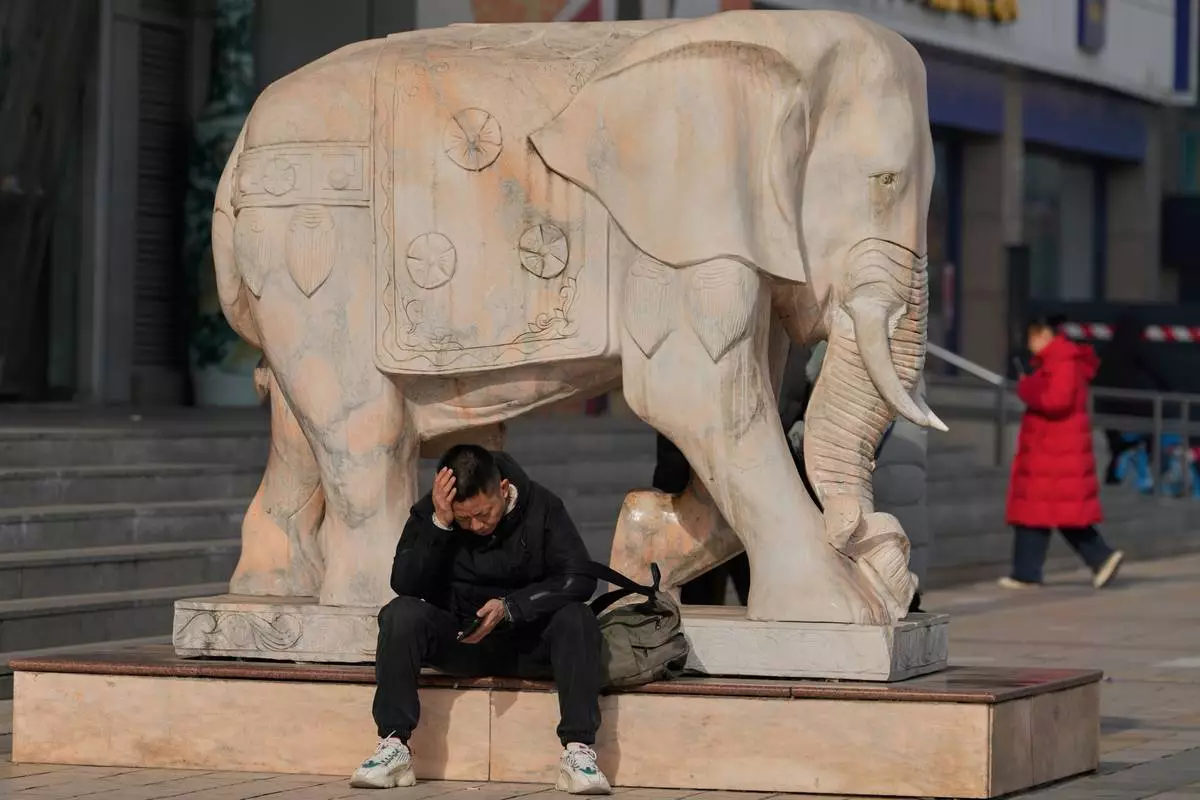
A man reacts while holding his smartphone in Beijing, China, Thursday, Jan. 15, 2026. (AP Photo/Ng Han Guan)