Skip to Content Facebook Feature Image

Louvre director acknowledges failure after jewel heist and says she offered to resign

ENT

Louvre director acknowledges failure after jewel heist and says she offered to resign
ENT

ENT

Louvre director acknowledges failure after jewel heist and says she offered to resign

2025-10-23 03:11 Last Updated At:03:21

PARIS (AP) — The Louvre's director on Wednesday acknowledged a "terrible failure" at the Paris tourist attraction after a daylight crown jewel heist over the weekend, and said that she offered to resign but it was refused.

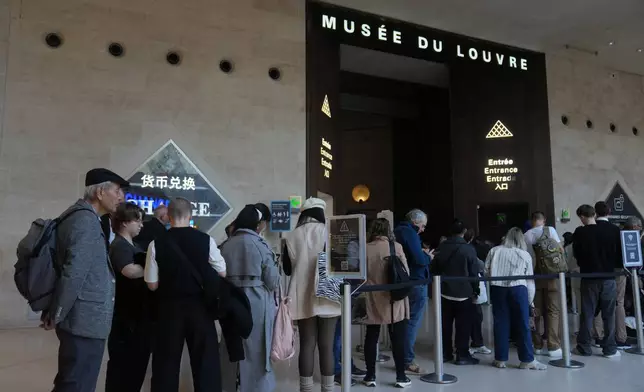
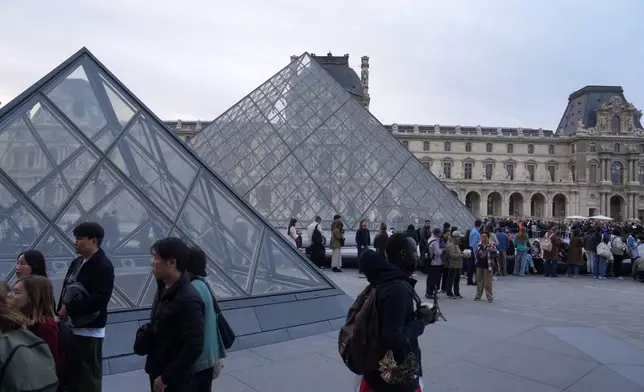
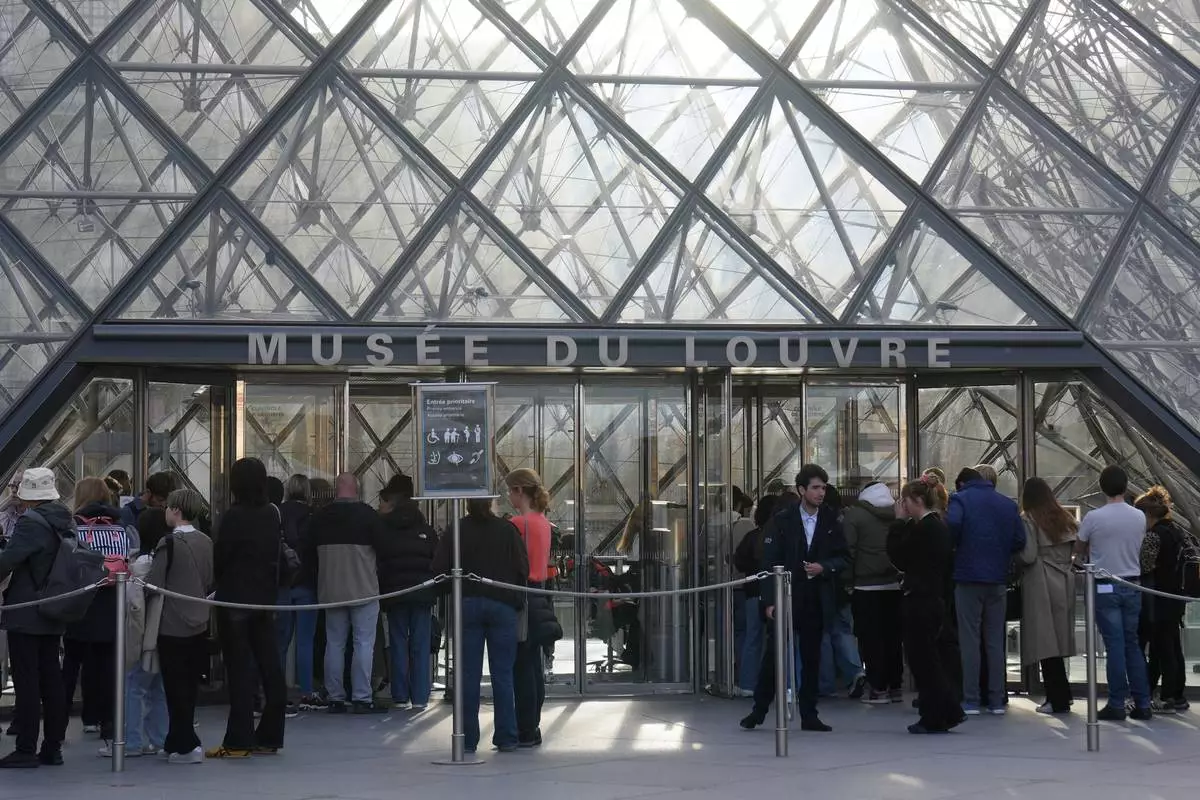
The world's most-visited museum reopened earlier in the day to long lines beneath its landmark glass pyramid for the first time since one of the highest-profile museum thefts of the century stunned the world with its audacity and scale.

More Images
Laurence des Cars, director of Le Louvre museum, poses before a hearing at the Culture commission of the Senate, three days after historic jewels were stolen in a daring daylight heist, Wednesday, Oct. 22, 2025 in Paris. (AP Photo/Emma Da Silva)
Laurence des Cars, director of Le Louvre museum, poses before a hearing at the Culture commission of the Senate, three days after historic jewels were stolen in a daring daylight heist, Wednesday, Oct. 22, 2025 in Paris. (AP Photo/Emma Da Silva)

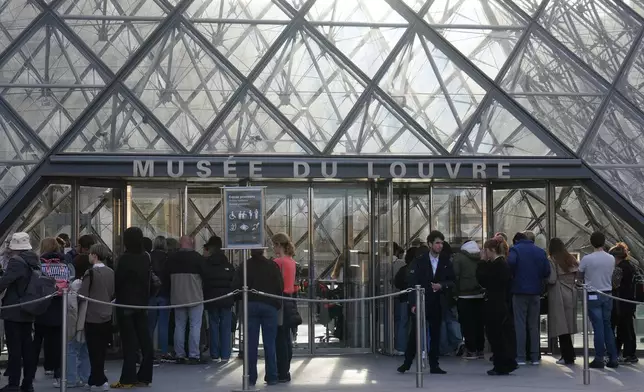
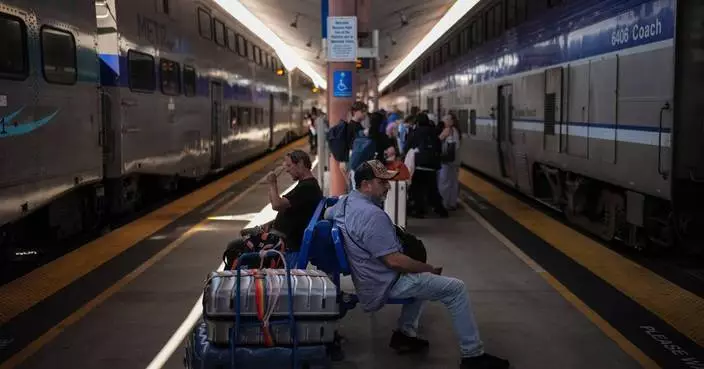
Visitors queue to enter the Louvre museum three days after historic jewels were stolen in a daring daylight heist, Wednesday, Oct. 22, 2025 in Paris. (AP Photo/Thibault Camus)
Visitors queue to enter the Louvre museum three days after historic jewels were stolen in a daring daylight heist, Wednesday, Oct. 22, 2025 in Paris. (AP Photo/Thibault Camus)
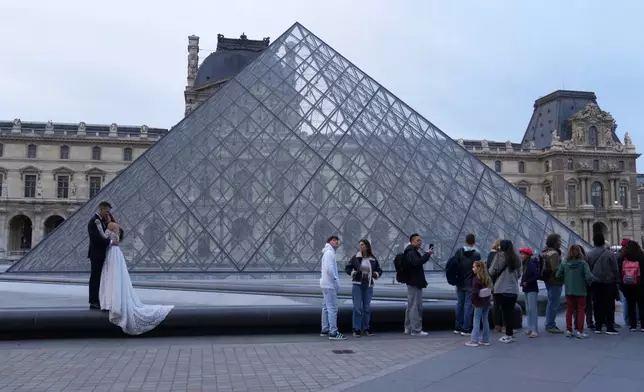
A wedding couple hugs as visitors queue to enter the Louvre museum three days after historic jewels were stolen in a daring daylight heist, Wednesday, Oct. 22, 2025 in Paris. (AP Photo/Thibault Camus)
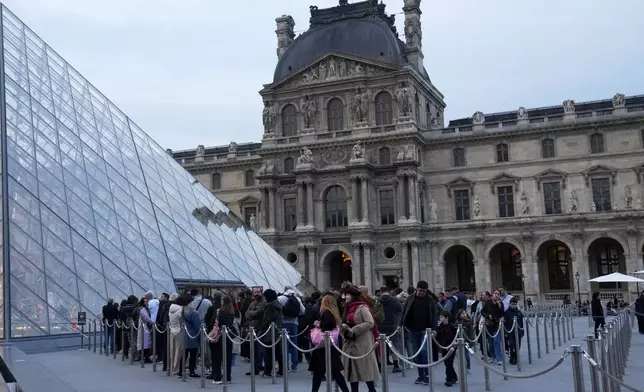
A wedding couple hugs as visitors queue to enter the Louvre museum three days after historic jewels were stolen in a daring daylight heist, Wednesday, Oct. 22, 2025 in Paris. (AP Photo/Thibault Camus)
Visitors queue inside the Louvre museum three days after historic jewels were stolen in a daring daylight heist, Wednesday, Oct. 22, 2025 in Paris. (AP Photo/Thibault Camus)

Visitors queue inside the Louvre museum three days after historic jewels were stolen in a daring daylight heist, Wednesday, Oct. 22, 2025 in Paris. (AP Photo/Thibault Camus)

Visitors queue to enter the Louvre museum three days after historic jewels were stolen in a daring daylight heist, Wednesday, Oct. 22, 2025 in Paris. (AP Photo/Thibault Camus)

Visitors queue to enter the Louvre museum three days after historic jewels were stolen in a daring daylight heist, Wednesday, Oct. 22, 2025 in Paris. (AP Photo/Thibault Camus)

Visitors queue to enter the Louvre museum three days after historic jewels were stolen in a daring daylight heist, Wednesday, Oct. 22, 2025 in Paris. (AP Photo/Thibault Camus)

Visitors queue to enter the Louvre museum three days after historic jewels were stolen in a daring daylight heist, Wednesday, Oct. 22, 2025 in Paris. (AP Photo/Thibault Camus)

In testimony to the French Senate, Louvre director Laurence des Cars said that the museum had a shortage of security cameras outside the monument and other ″weaknesses″ exposed by Sunday’s theft.

Under heavy pressure over a heist that stained France’s global image, she testified to a Senate committee that she submitted her resignation, but that the culture minister refused to accept it.

“Today we are experiencing a terrible failure at the Louvre, which I take my share of responsibility in,” she said.

The thieves slipped in and out, making off with eight pieces from France’s Crown Jewels — a cultural wound that some compared to the burning of Notre Dame Cathedral in 2019.

The theft — steps away from the “Mona Lisa” and valued at more than $100 million — has put embattled President Emmanuel Macron, Culture Minister Rachida Dati, des Cars and others under new scrutiny. It comes just months after employees went on strike, warning of chronic understaffing and not enough resources for protection, with too few eyes on too many rooms.

“We did not detect the arrival of the thieves soon enough,” des Cars said.

She said that the museum’s alarms had worked properly, but that it currently doesn't have full video surveillance of the perimeter outside the museum, though there is a plan to provide full coverage of all the Louvre's facades.

She also suggested barriers to prevent vehicles from parking directly alongside the museum’s buildings, and said that she would push for a police station inside the museum, which welcomes 30,000 visitors a day and 2,300 workers.

Three days on, the jewels remain missing and the thieves are still at large — and reactions are divided.

"For a place like the Louvre, it’s unfathomable,” said Amanda Lee, 36, an art teacher from Chicago. “I heard it took under four minutes. How is that possible here, with no police in sight?”

Others were unperturbed.

Claire Martin, a 41-year-old French lawyer from Versailles visiting with her two children during a school holiday, said that “we saw the masterpieces” even though the Apollo Gallery was shut.

“We told the kids it’s a history lesson. We came for the art," she said. "The police can deal with the thieves.”

Authorities say the thieves spent less than four minutes inside the Louvre on Sunday morning: a freight lift was wheeled to the Seine-facing facade, a window was forced open and two vitrines were smashed.

Then came the getaway on motorbikes through central Paris. Alarms had gone off, drawing agents to the gallery and forcing the intruders to bolt.

As it reopened, the Louvre declined questions from The Associated Press to detail any reinforced protocols. It said that no uniformed police were posted in the corridors. With school holidays swelling demand, the day was fully booked and access limited.

“I didn’t notice extra security — guards as always, and no police inside. It felt like a normal day,” said Tomás Álvarez, 29, a software engineer from Madrid.

The thieves made away with a total of eight objects, including a sapphire diadem, necklace and single earring from a set linked to 19th-century Queens Marie-Amélie and Hortense.

They also made off with an emerald necklace and earrings tied to Empress Marie-Louise, Napoleon Bonaparte’s second wife, as well as a reliquary brooch. Empress Eugénie’s diamond diadem and her large corsage-bow brooch — an imperial ensemble of rare craftsmanship — were also part of the loot.

One piece — Eugénie's emerald-set imperial crown, with more than 1,300 diamonds — was later found outside the museum, damaged but recoverable.

Prosecutor Laure Beccuau valued the haul at about 88 million euros ($102 million), a “spectacular” figure that still fails to capture the works’ historical weight. She warned that the thieves would be unlikely to realize anything close to that sum if they pry out stones or melt the metals — a fate curators fear would pulverize centuries of meaning into anonymous gems for the black market.

Beccuau said that expert analyses are underway; four people have been identified as being present at the scene, and roughly 100 investigators are mapping the crew and any accomplices, in addition to forensics experts.

All this comes after Macron announced new measures in January for the Louvre — complete with a new command post and expanded camera grid that the Culture Ministry says is being rolled out.

It also raises hard questions, including whether Sunday’s breach is tied to staffing levels, and how uniformly the upgrades in the overhaul are being applied.

Protection for headline works is airtight — the “Mona Lisa” is behind bulletproof glass in a climate-controlled case — yet the break-in exposed seams elsewhere in a 33,000-object labyrinth. For many French, the contrast is a public embarrassment at the landmark.

It touches a raw nerve: the issue of swelling crowds and overstretched staff.

In June, a staff walkout over overcrowding and chronic understaffing delayed opening. Unions argue that mass tourism leaves security lacking and creates pressure points where construction zones, freight access and visitor flows intersect.

On Wednesday, the Louvre’s other star attractions — from the Venus de Milo to the Winged Victory of Samothrace — were open again. But the cordoned-off vitrines in the Apollo Gallery, guarded and empty, told a different story: one of a breach measured not just in minutes and euros, but in the fragility of a nation’s patrimony.

Angela Charlton contributed to this report.

Laurence des Cars, director of Le Louvre museum, poses before a hearing at the Culture commission of the Senate, three days after historic jewels were stolen in a daring daylight heist, Wednesday, Oct. 22, 2025 in Paris. (AP Photo/Emma Da Silva)
Laurence des Cars, director of Le Louvre museum, poses before a hearing at the Culture commission of the Senate, three days after historic jewels were stolen in a daring daylight heist, Wednesday, Oct. 22, 2025 in Paris. (AP Photo/Emma Da Silva)

Visitors queue to enter the Louvre museum three days after historic jewels were stolen in a daring daylight heist, Wednesday, Oct. 22, 2025 in Paris. (AP Photo/Thibault Camus)
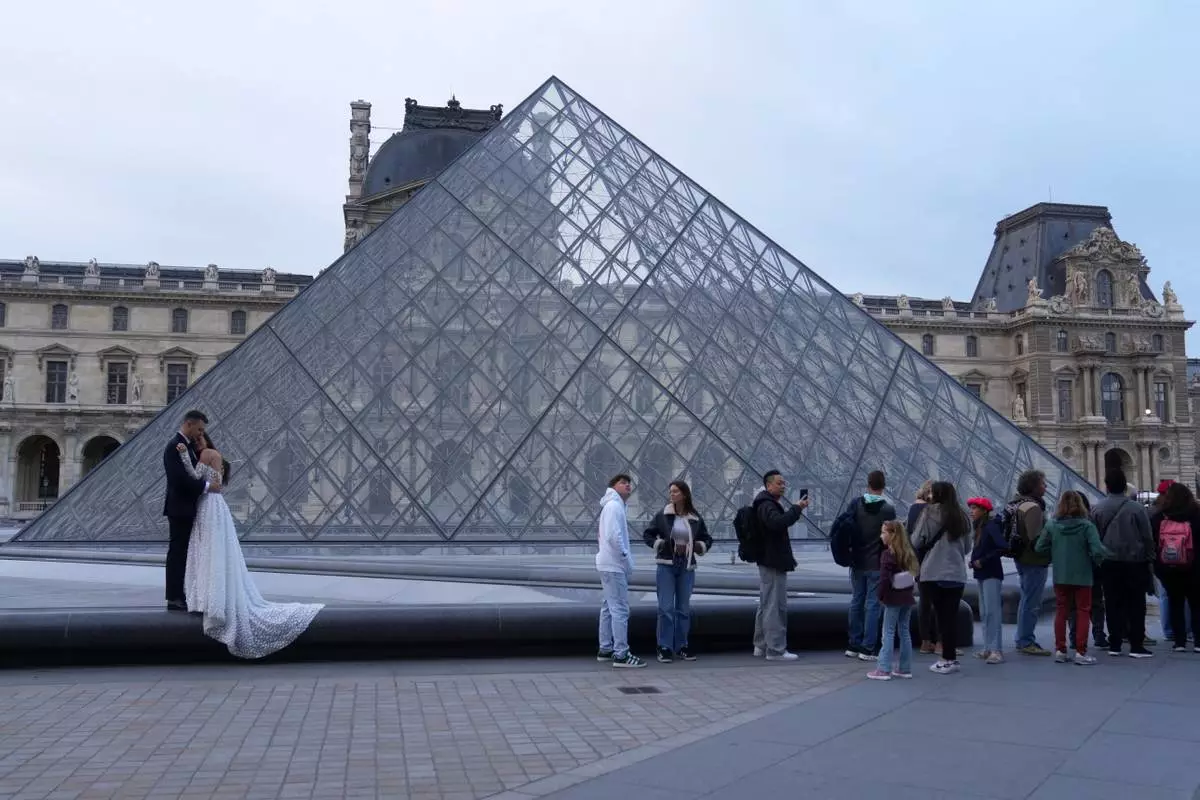
Visitors queue to enter the Louvre museum three days after historic jewels were stolen in a daring daylight heist, Wednesday, Oct. 22, 2025 in Paris. (AP Photo/Thibault Camus)
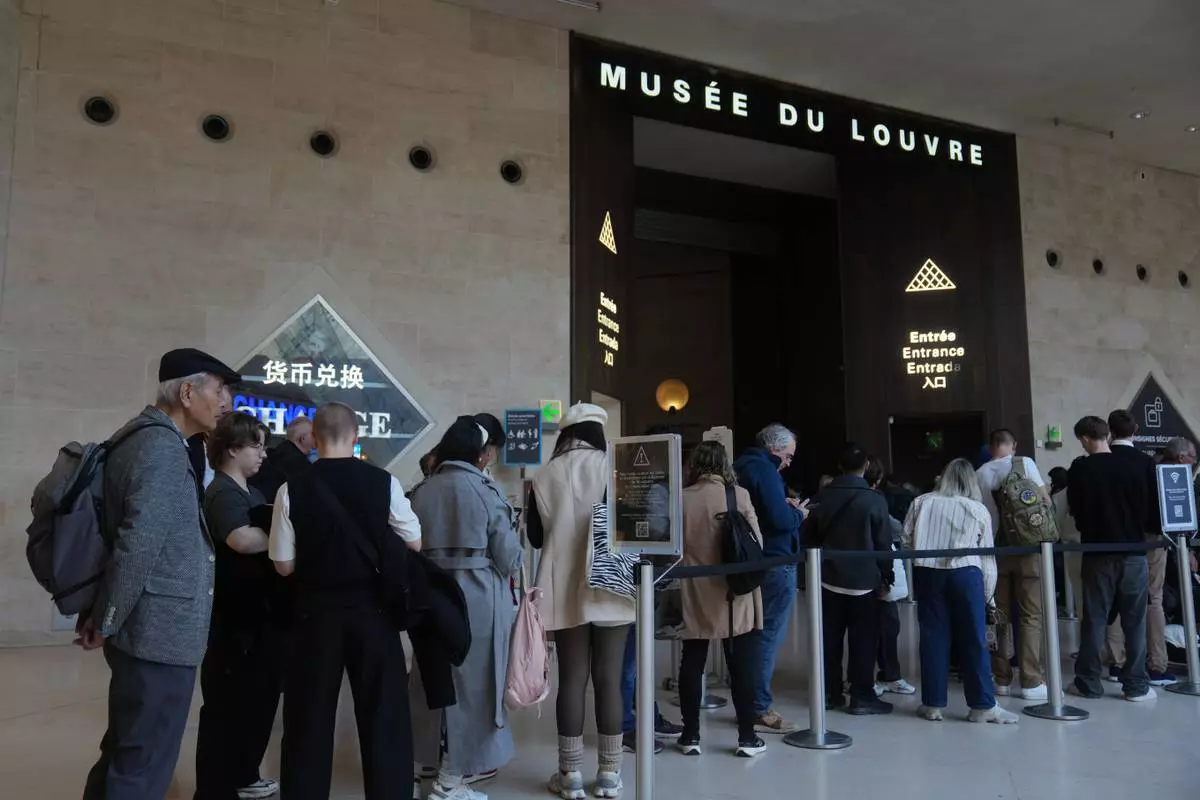
A wedding couple hugs as visitors queue to enter the Louvre museum three days after historic jewels were stolen in a daring daylight heist, Wednesday, Oct. 22, 2025 in Paris. (AP Photo/Thibault Camus)
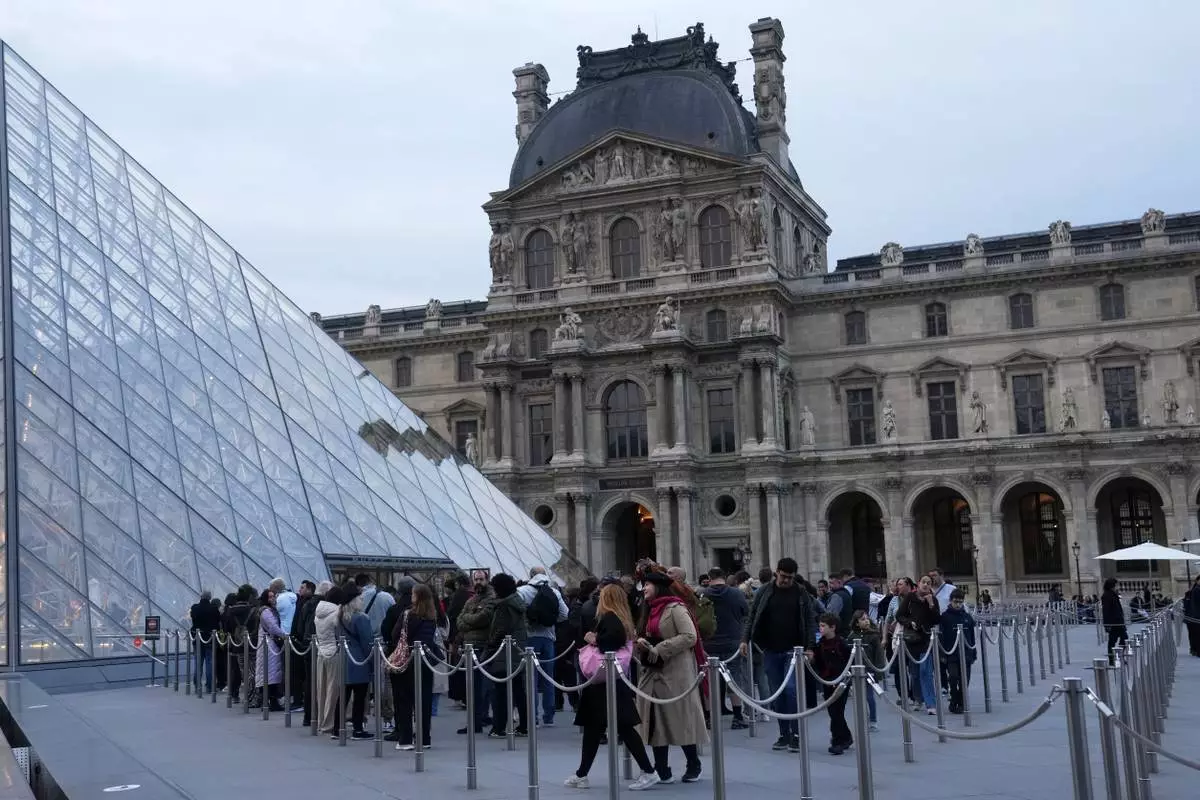
A wedding couple hugs as visitors queue to enter the Louvre museum three days after historic jewels were stolen in a daring daylight heist, Wednesday, Oct. 22, 2025 in Paris. (AP Photo/Thibault Camus)
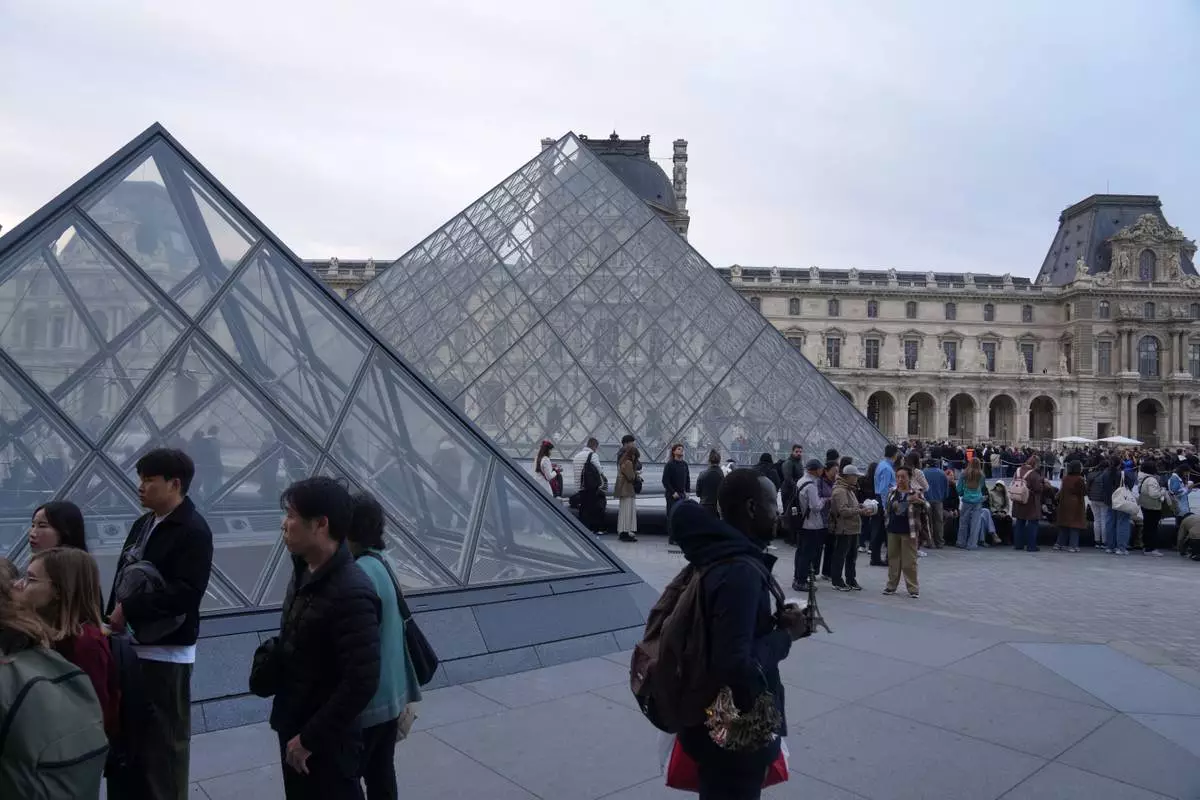
Visitors queue inside the Louvre museum three days after historic jewels were stolen in a daring daylight heist, Wednesday, Oct. 22, 2025 in Paris. (AP Photo/Thibault Camus)


Visitors queue inside the Louvre museum three days after historic jewels were stolen in a daring daylight heist, Wednesday, Oct. 22, 2025 in Paris. (AP Photo/Thibault Camus)

Visitors queue to enter the Louvre museum three days after historic jewels were stolen in a daring daylight heist, Wednesday, Oct. 22, 2025 in Paris. (AP Photo/Thibault Camus)
Visitors queue to enter the Louvre museum three days after historic jewels were stolen in a daring daylight heist, Wednesday, Oct. 22, 2025 in Paris. (AP Photo/Thibault Camus)
Visitors queue to enter the Louvre museum three days after historic jewels were stolen in a daring daylight heist, Wednesday, Oct. 22, 2025 in Paris. (AP Photo/Thibault Camus)

Visitors queue to enter the Louvre museum three days after historic jewels were stolen in a daring daylight heist, Wednesday, Oct. 22, 2025 in Paris. (AP Photo/Thibault Camus)
HAMIMA, Syria (AP) — A trickle of civilians left a contested area east of Aleppo on Thursday after a warning by the Syrian military to evacuate ahead of an anticipated government military offensive against Kurdish-led forces.

Government officials and some residents who managed to get out said the Kurdish-led Syrian Democratic Forces prevented people from leaving via the corridor designated by the military along the main road leading west from the town of Maskana through Deir Hafer to the town of Hamima.

The SDF denied the reports that they were blocking the evacuation.

In Hamima, ambulances and government officials were gathered beginning early in the morning waiting to receive the evacuees and take them to shelters, but few arrived.

Farhat Khorto, a member of the executive office of Aleppo Governorate who was waiting there, claimed that there were "nearly two hundred civilian cars and hundreds of people who wanted to leave” the Deir Hafer area but that they were prevented by the SDF. He said the SDF was warning residents they could face “sniping operations or booby-trapped explosives” along that route.

Some families said they got out of the evacuation zone by taking back roads or going part of the distance on foot.

“We tried to leave this morning, but the SDF prevented us. So we left on foot … we walked about seven to eight kilometers until we hit the main road, and there the civil defense took us and things were good then,” said Saleh al-Othman, who said he fled Deir Hafer with more than 50 relatives.

Yasser al-Hasno, also from Deir Hafer, said he and his family left via back roads because the main routes were closed and finally crossed a small river on foot to get out of the evacuation area.

Another Deir Hafer resident who crossed the river on foot, Ahmad al-Ali, said, “We only made it here by bribing people. They still have not allowed a single person to go through the main crossing."

Farhad Shami, a spokesman for the SDF, said the allegations that the group had prevented civilians from leaving were “baseless.” He suggested that government shelling was deterring residents from moving.

The SDF later issued a statement also denying that it had blocked civilians from fleeing. It said that “any displacement of civilians under threat of force by Damascus constitutes a war crime" and called on the international community to condemn it.

“Today, the people of Deir Hafer have demonstrated their unwavering commitment to their land and homes, and no party can deprive them of their right to remain there under military pressure,” it said.

The Syrian army’s announcement late Wednesday — which said civilians would be able to evacuate through the “humanitarian corridor” from 9 a.m. to 5 p.m. Thursday — appeared to signal plans for an offensive against the SDF in the area east of Aleppo. Already there have been limited exchanges of fire between the two sides.

Thursday evening, the military said it would extend the humanitarian corridor for another day.

The Syrian military called on the SDF and other armed groups to withdraw to the other side of the Euphrates River, to the east of the contested zone. The SDF controls large swaths of northeastern Syria east of the river.

The tensions in the Deir Hafer area come after several days of intense clashes last week in Aleppo city that ended with the evacuation of Kurdish fighters and government forces taking control of three contested neighborhoods.

The fighting broke out as negotiations have stalled between Damascus and the SDF over an agreement reached last March to integrate their forces and for the central government to take control of institutions including border crossings and oil fields in the northeast.

Some of the factions that make up the new Syrian army, which was formed after the fall of former President Bashar Assad in a rebel offensive in December 2024, were previously Turkey-backed insurgent groups that have a long history of clashing with Kurdish forces.

The SDF for years has been the main U.S. partner in Syria in fighting against the Islamic State group, but Turkey considers the SDF a terrorist organization because of its association with Kurdish separatist insurgents in Turkey.

Despite the long-running U.S. support for the SDF, the Trump administration has also developed close ties with the government of interim Syrian President Ahmad al-Sharaa and has so far avoided publicly taking sides in the clashes in Aleppo.

Ilham Ahmed, head of foreign relations for the SDF-affiliated Kurdish-led administration in northeast Syria, at a press conference Thursday said SDF officials were in contact with the United States and Turkey and had presented several initiatives for de-escalation. She said that claims by Damascus that the SDF had failed to implement the March agreement were false.

——

Associated Press journalist Hogir Al Abdo in Qamishli, Syria, contributed.

Members of the Syrian military police stand at a humanitarian crossing declared by the Syrian army in the village of Hamima, in the eastern Aleppo countryside, near the front line with the Kurdish-led Syrian Democratic Forces in Deir Hafer, Syria, Thursday, Jan. 15, 2026. (AP Photo/Ghaith Alsayed)

Members of the Syrian military police stand at a humanitarian crossing declared by the Syrian army in the village of Hamima, in the eastern Aleppo countryside, near the front line with the Kurdish-led Syrian Democratic Forces in Deir Hafer, Syria, Thursday, Jan. 15, 2026. (AP Photo/Ghaith Alsayed)

Members of the Syrian Civil Defense, stand next to their vehicles at a humanitarian crossing declared by the Syrian army in the village of Hamima, in the eastern Aleppo countryside, near the front line with the Kurdish-led Syrian Democratic Forces in Deir Hafer, Syria, Thursday, Jan. 15, 2026. (AP Photo/Ghaith Alsayed)

Members of the Syrian Civil Defense, stand next to their vehicles at a humanitarian crossing declared by the Syrian army in the village of Hamima, in the eastern Aleppo countryside, near the front line with the Kurdish-led Syrian Democratic Forces in Deir Hafer, Syria, Thursday, Jan. 15, 2026. (AP Photo/Ghaith Alsayed)

A displaced Syrian family rides in the back of a truck near a humanitarian crossing declared by the Syrian army next to a river in the village of Rasm Al-Abboud, in the eastern Aleppo countryside, near the front line with the Kurdish-led Syrian Democratic Forces in Deir Hafer, Syria, Thursday, Jan. 15, 2026. (AP Photo/Omar Albam)

A displaced Syrian family rides in the back of a truck near a humanitarian crossing declared by the Syrian army next to a river in the village of Rasm Al-Abboud, in the eastern Aleppo countryside, near the front line with the Kurdish-led Syrian Democratic Forces in Deir Hafer, Syria, Thursday, Jan. 15, 2026. (AP Photo/Omar Albam)

Displaced Syrian children and women ride in the back of a truck near a humanitarian crossing declared by the Syrian army in the village of Hamima, in the eastern Aleppo countryside, near the front line with the Kurdish-led Syrian Democratic Forces in Deir Hafer, Syria, Thursday, Jan. 15, 2026. (AP Photo/Omar Albam)

Displaced Syrian children and women ride in the back of a truck near a humanitarian crossing declared by the Syrian army in the village of Hamima, in the eastern Aleppo countryside, near the front line with the Kurdish-led Syrian Democratic Forces in Deir Hafer, Syria, Thursday, Jan. 15, 2026. (AP Photo/Omar Albam)

Displaced Syrians at a river crossing near the village of Jarirat al Imam, in the eastern Aleppo countryside, near the front line with the Kurdish-led Syrian Democratic Forces in Deir Hafer, Syria, Thursday, Jan. 15, 2026. (AP Photo/Omar Albam)

Displaced Syrians at a river crossing near the village of Jarirat al Imam, in the eastern Aleppo countryside, near the front line with the Kurdish-led Syrian Democratic Forces in Deir Hafer, Syria, Thursday, Jan. 15, 2026. (AP Photo/Omar Albam)

Recommended Articles