Skip to Content Facebook Feature Image

Shortages of essentials keep Gaza bakery from normal operations

China

China

China

Shortages of essentials keep Gaza bakery from normal operations

2025-10-24 15:52 Last Updated At:23:37

Two weeks into the first phase of the Israel-Hamas ceasefire deal, severe shortages of basic supplies continue to plague northern Gaza, where one of the last remaining bakeries struggles to operate amid scarce ingredients, fuel, and equipment parts.

As part of the ceasefire agreement that took effect on Oct 10, Israel would allow the entry of humanitarian aid, fuel and medical teams to the enclave. However, the World Health Organization said Thursday there had been little improvement in the amount of aid going into Gaza since the ceasefire took hold -- and no observable reduction in hunger.

At a bakery in northern Gaza, fresh flatbread continues to emerge from the oven despite dire conditions. Operating from 06:00 to 20:00 daily, the shop produces just enough bread to feed approximately 1,000 people.

The owner said the price of bread has surged nearly sixfold since before the conflict.

"We are now the only shop in northern Gaza selling ready-made bread, but we are forced to sell it at very high prices," said bakery owner Mohammed Abu Ziada.

Despite soaring prices, purchasing bread remains more practical than baking at home for many residents, as obtaining flour and firewood poses even greater challenges and costs.

"I walked about five kilometers to buy 15 loaves of flatbread, but this isn't even enough for one person. We hope all bakeries will reopen so bread becomes available again and Gaza can return to normal life," said local resident Mohammed al-Shammas Extended Israeli bombardment has destroyed most industrial equipment in Gaza. Beyond the inflated costs of flour and fuel, bakery owners face critical shortages of replacement parts for repairs.

"We're operating under extremely limited conditions. Some of the equipment can barely function and we don't have the spare parts to replace the old ones. The motor in this machine isn't even original so we just try to keep it running. Everything here is worn out, leaving us with no choice but to try to keep going against all odds," said Ziada.

Shortages of essentials keep Gaza bakery from normal operations

Shortages of essentials keep Gaza bakery from normal operations

Shortages of essentials keep bakery from normal operations in Gaza

Shortages of essentials keep bakery from normal operations in Gaza

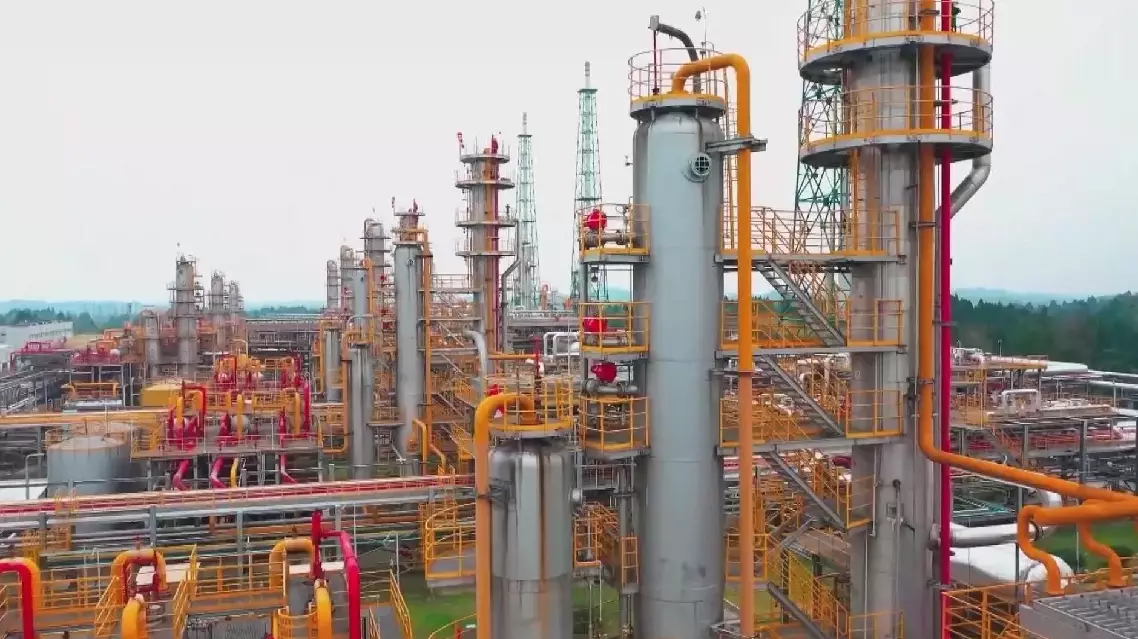
⁠⁠⁠⁠⁠⁠⁠China's natural gas production is projected to reach 300 billion cubic meters by 2030, according to a development report released in Beijing.

The report, covering the development of China's oil and gas industry during the country's 14th Five-Year Plan period (2021–2025), said proven geological reserves rose by 7 billion tons of oil and 7 trillion cubic meters of gas, up 43 percent and 40 percent respectively from the previous five-year period. Oil and gas production hit record highs.

"The oil output is likely to reach between 215 and 216 million tons this year. Natural gas has seen major growth during the 14th Five-Year Plan period (2021–2025), with annual domestic output rising by nearly 13 billion cubic meters. In the 15th Five-Year Plan period (2026-2030), we expect annual increases of more than 10 billion cubic meters, reaching 300 billion cubic meters around 2030," said Wu Mouyuan, deputy director of the Economics and Technology Research Institute of China National Petroleum Corporation (CNPC).

The report forecast that China's energy structure will feature less coal, stable oil and gas, and rising non-fossil fuels over the next decade.

By 2060, fossil fuels are expected to account for 23 percent of the energy mix, hydropower and nuclear 19 percent, wind 25 percent, and solar 30 percent, the report said.

"In the next five years, through the integrated development of fossil energy and renewables, we will achieve a heathy, stable, and resilient energy system. Clean energy will continue to grow rapidly. More than 90 percent of renewable energy will be consumed via electricity, so the electrification at end-use sectors is a key direction of transformation in the future," said Wu.

With the rapid growth of artificial intelligence and new high-energy industries, China's power demand will exceed 20 trillion kilowatt hours by 2060, double the 2025 level. Electrification at end-use sectors is expected to reach 62 percent, rising by nearly one percentage point annually, the report projected.

China to see gas output hitting 300 bcm by 2030: report

China to see gas output hitting 300 bcm by 2030: report

Recommended Articles