China is to build a childbearing-friendly society to advance high-quality population development, Lei Haichao, head of China's National Health Commission (NHC), said at a press conference in Beijing on Friday.
At the press conference following the conclusion of the fourth plenary session of the 20th Central Committee of the Communist Party of China (CPC), Lei said the Recommendations of the CPC Central Committee for Formulating the 15th Five-Year Plan for Economic and Social Development, adopted at the key meeting of the Party, has introduced the roadmap on the national health and population development.
In terms of accelerating the construction of a healthy China, the Recommendations have clearly set out the strategy of putting health first, he said.
"In promoting high quality population development, the Recommendations advocate for fostering a proactive approach towards marriage and childbearing, optimizing childbearing supporting policies and encouraging childbearing, and leveraging the comprehensive functions of measures such as child rearing subsidies and tax deductions for childcare. We will expand pilot subsidy programs for nursing and childcare services and develop the inclusive childcare services and integration of childcare to lessen the burden of families in childbearing, raising and education. We will improve and implement maternity insurance and childbirth leave systems, and enhance health services for women and children," Lei said.
Lei said China will improve the policy mechanisms for the coordinated development of the elderly care industry, optimize age restriction policies in employment and social security, and actively develop elderly human resources and silver economy.

China to build childbearing-friendly society: official
Canada is gearing up for its role as one of the co-host countries of the 2026 FIFA World Cup, but local residents in Vancouver have mixed feelings about the event, with many voicing concerns over costs, crowds, and whether the city has the necessary infrastructure in place to cope with the global football spectacle.
The tournament kicks off on Thursday and will run through July 19. It is set for its biggest ever edition, with a record number of 48 teams participating and games taking place across three countries for the first time.
Canada is one of the co-hosts alongside the U.S. and Mexico, with seven matches set to be staged in Vancouver. The city, which previously hosted the 2010 Winter Olympics, has once again entered "major event mode."
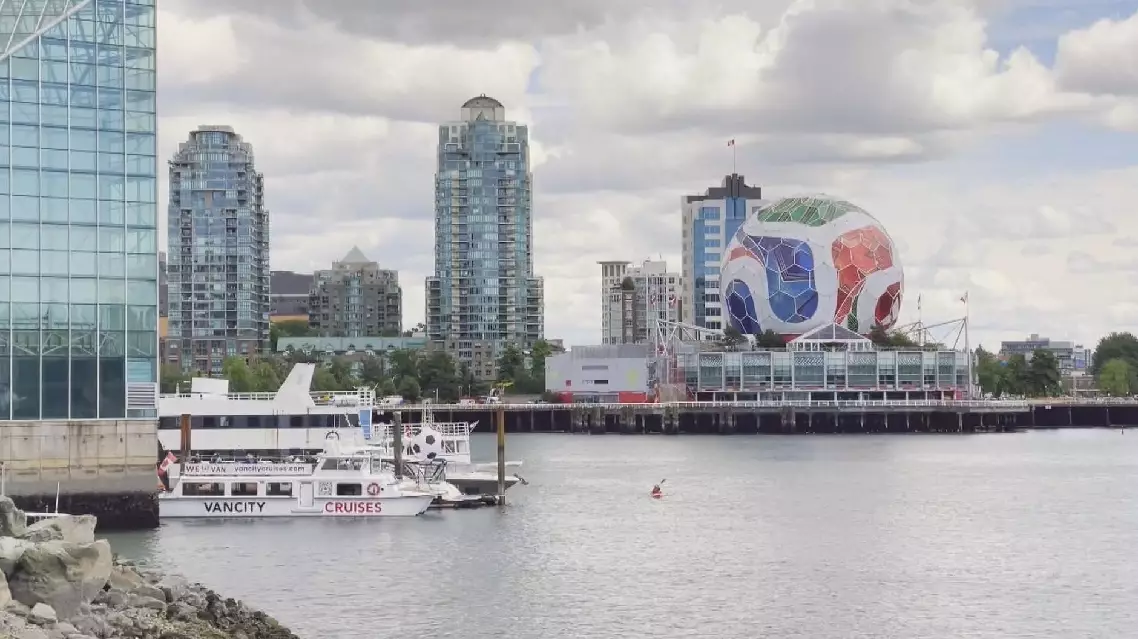
The iconic BC Place stadium will be the venue for the upcoming matches and is now surrounded by World Cup decorations, while the nearby Science World, another distinctive city landmark, has been transformed into a giant replica of the official World Cup match ball.
Despite the festive atmosphere around the city, local residents are grappling with a mix of excitement and unease about the challenges ahead.
"Generally speaking, I think Vancouverites welcome the excitement of the games and of FIFA. But some people are worried about the typical things of big events. Big events bring lots of noise and crowds and commotion," said a local resident.
Financial concerns are also at the forefront of public debate, with some questioning the extortionate costs associated with running the event and also drawing attention to the steep prices of match-day tickets.
"But there's a lot of cost. Who's really going to benefit? I mean, the [expensive] ticket prices. I mean, who's gonna go?" another resident said.
Infrastructure readiness remains another point of contention, with doubts over whether Vancouver can handle the massive influx of visitors.
"I don't know about the infrastructure we have here. I'm a little bit worried about that and [about the] transportation and what the city is going to look like," said another resident.
Behind the scenes, the financial commitment to hosting the tournament has grown significantly. According to the latest financial updates from the provincial government in British Columbia, the total budget for World Cup preparations has risen to 729 million Canadian dollars due to security and infrastructure upgrades. This averages out to more than 100 million Canadian dollars per match.
Despite the heavy investment and potential short-term disruptions, local government and tourism officials remain confident that the long-term returns will be substantial long after the last ball is kicked.
Maya Lange, vice president of global marketing at Destination British Columbia, highlighted the projected economic windfall for the region.
"Just for British Columbia and Vancouver alone, we are projecting a billion [dollars] in incremental revenue from hosting the World Cup for tourism, for the five years following these games," she said.
The first match at the BC Place lands on Sunday as Australia plays Türkiye, but all eyes will be on the Vancouver venue later this month when home favorite Canada takes on Qatar and then Switzerland in its final two group stage fixtures at the stadium.
Vancouver readies for World Cup kick-off amid mixed public sentiment, soaring costs