Xi Jinping, general secretary of the Communist Party of China (CPC) Central Committee, chaired a symposium in Beijing on Aug 27 to solicit opinions from non-Party personages on drafting the CPC Central Committee's recommendations for formulating the 15th Five-Year Plan for China's economic and social development.
While addressing the symposium, Xi said the planning of social and economic development for the 15th Five-Year Plan period (2026-2030) must be anchored to the goal of basically achieving socialist modernization.
It is imperative to gain a deep understanding of both domestic and international situations, make solid efforts to achieve greater self-reliance and strength in science and technology, steadily advance common prosperity, and mobilize the whole Party and the Chinese people of all ethnic groups to work together in building a great country and rejuvenating the Chinese nation, Xi said.
Chairpersons of the central committees of eight non-CPC parties, chairperson of the All-China Federation of Industry and Commerce, as well as a representative of personages without party affiliations, gave their views and suggestions.
Noting that the 15th Five-Year Plan period will be critical as the country works to reinforce the foundations and push ahead on all fronts toward basically achieving socialist modernization, Xi stressed focusing on key areas and critical links that affect and constrain high-quality development, consolidating and expanding advantages, breaking through bottlenecks, and strengthening weak areas.
Efforts must be concentrated on managing the country's own affairs well, regardless of changes in the external environment, Xi said.
He said achieving greater self-reliance and strength in science and technology is a strategic support for high-quality development, and called for efforts to promote the development of new quality productive forces in light of local conditions, while moving faster to build a modernized industrial system.
Underlining benefiting the people as the fundamental value orientation, Xi said continued efforts must be made to ensure and improve people's well-being through development. More tangible and accessible measures should be taken to address the needs of the people in employment, education, social security, housing, healthcare, elderly care, and childcare, he said.
Li Qiang, Wang Huning, Cai Qi and Ding Xuexiang, who are members of the Standing Committee of the Political Bureau of the CPC Central Committee, attended the symposium.
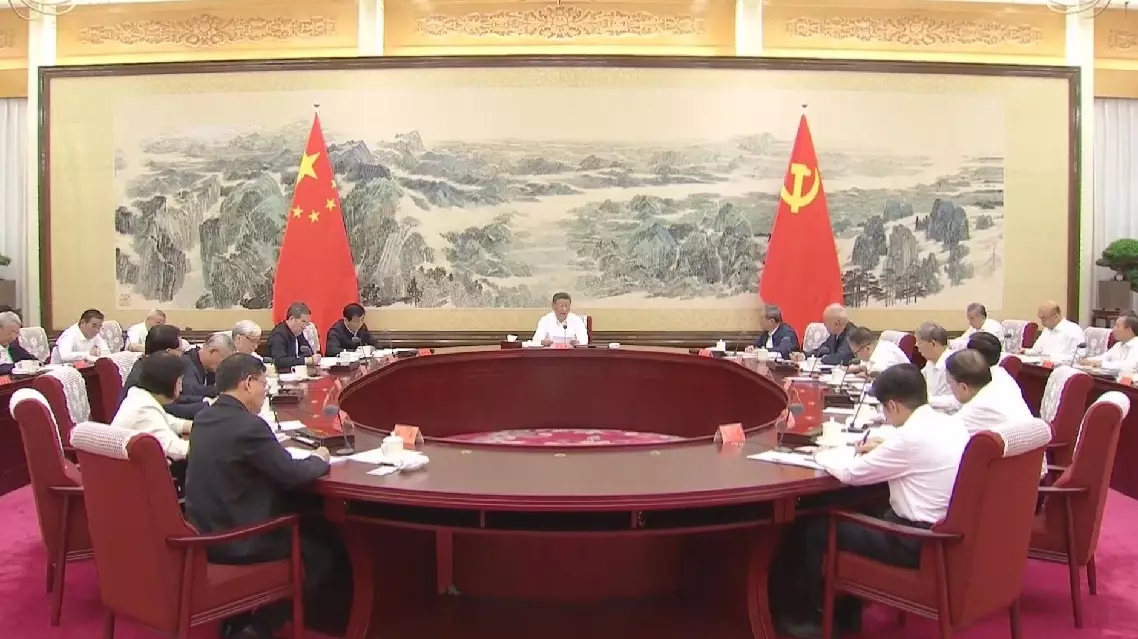
Xi chairs symposium to solicit non-CPC personages' opinions on drafting five-year plan recommendations
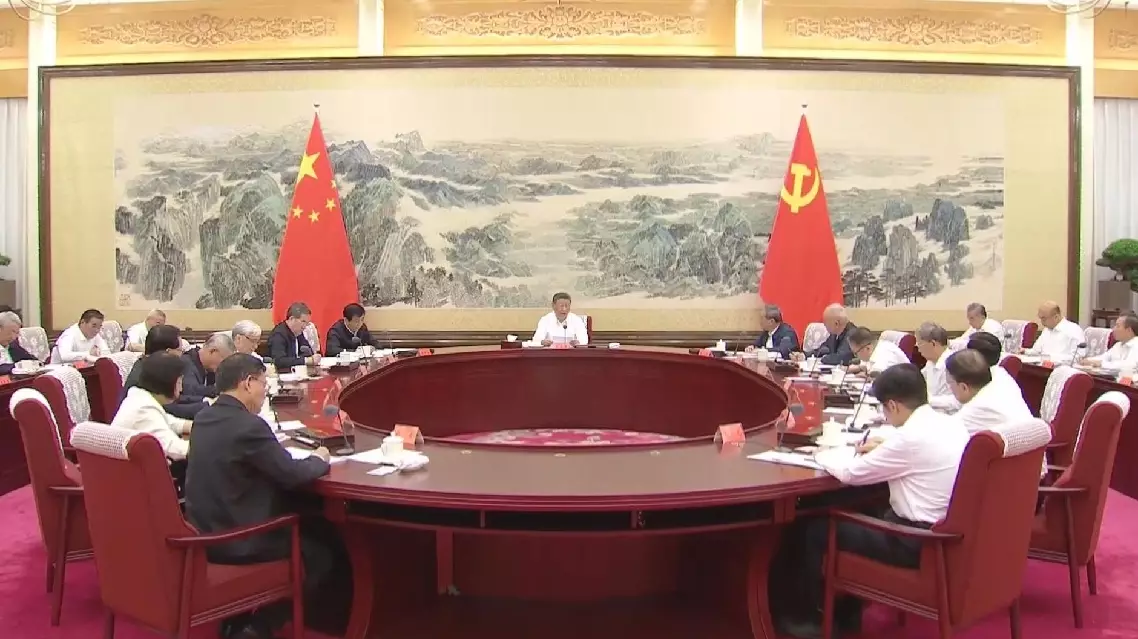
Xi chairs symposium to solicit non-CPC personages' opinions on drafting five-year plan recommendations