Skip to Content Facebook Feature Image

Trump bonds with Japan's new prime minister and says her nation is delivering on US investments

News

Trump bonds with Japan's new prime minister and says her nation is delivering on US investments
News

News

Trump bonds with Japan's new prime minister and says her nation is delivering on US investments

2025-10-28 20:30 Last Updated At:20:40

TOKYO (AP) — President Donald Trump treated his time in Japan on Tuesday as a victory lap — befriending the new Japanese prime minister, taking her with him as he spoke to U.S. troops aboard an aircraft carrier and then unveiling several major energy and technology projects in America to be funded by Japan.

Sanae Takaichi, who became the country’s first female prime minister only days ago, solidified her relationship with Trump while defending her country’s economic interests. She talked baseball, stationed a Ford F-150 truck outside their meeting and greeted Trump with, by his estimation, a firm handshake.

More Images
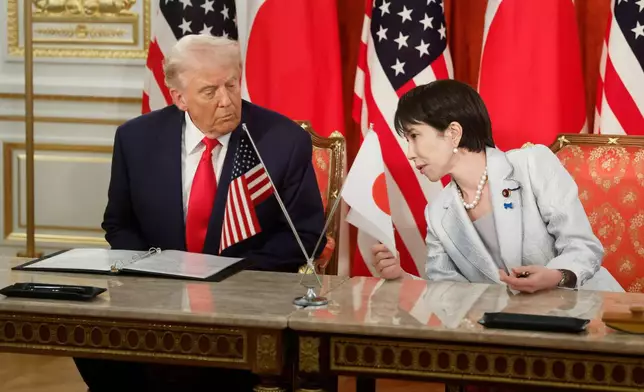
U.S. President Donald Trump, left, and Japan's Prime Minister Sanae Takaichi attend a signing ceremony at Akasaka Palace state guest house in Tokyo Tuesday, Oct. 28, 2025. (Kiyoshi Ota/Pool Photo via AP)
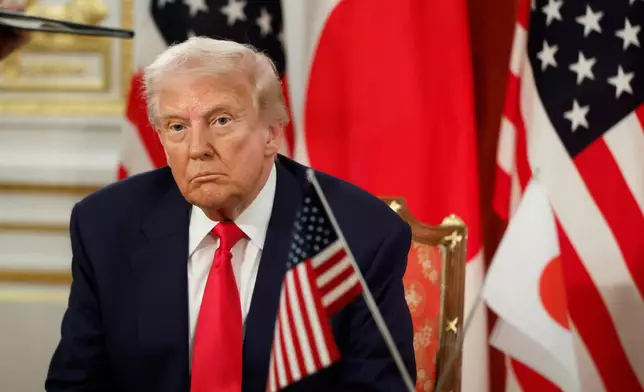
U.S. President Donald Trump, left, and Japan's Prime Minister Sanae Takaichi attend a signing ceremony at Akasaka Palace state guest house in Tokyo Tuesday, Oct. 28, 2025. (Kiyoshi Ota/Pool Photo via AP)
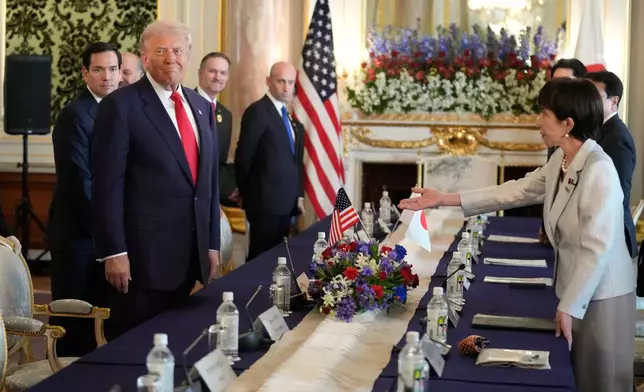
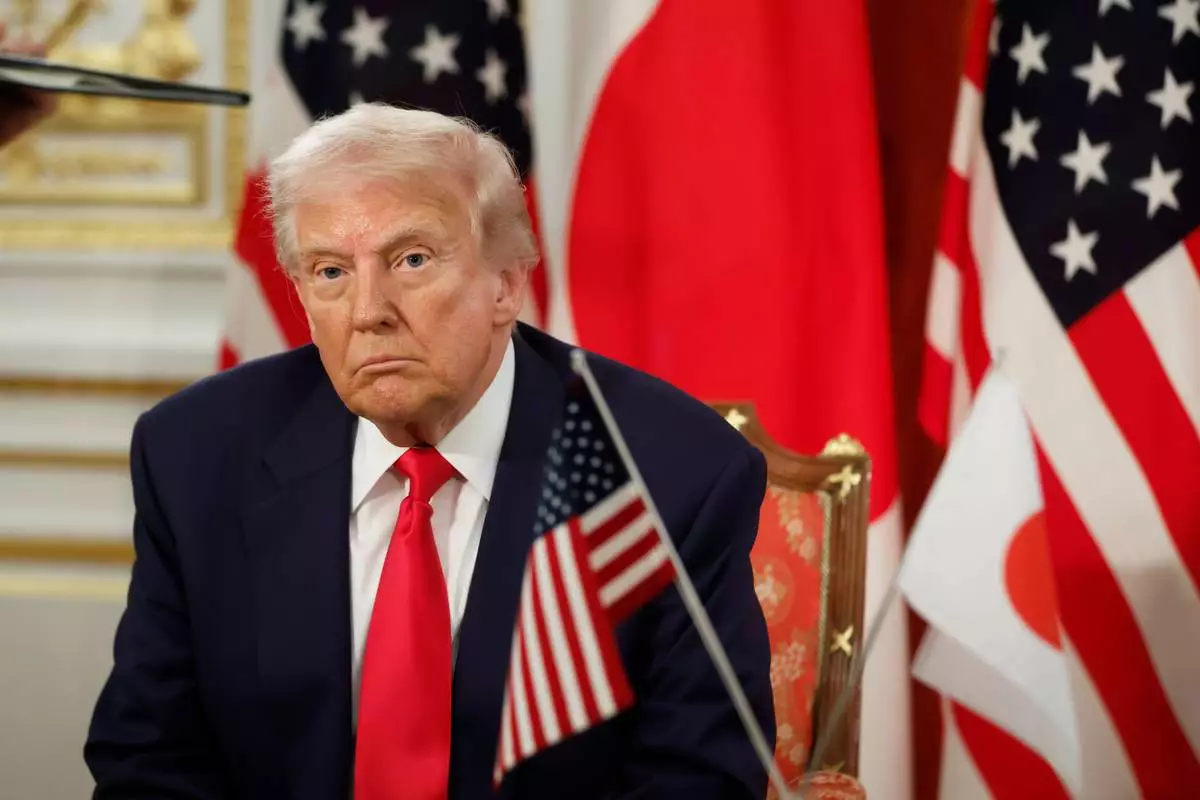
U.S. President Donald Trump attends a signing ceremony with Japan's Prime Minister Sanae Takaichi at Akasaka Palace state guest house in Tokyo Tuesday, Oct. 28, 2025. (Kiyoshi Ota/Pool Photo via AP)

U.S. President Donald Trump attends a signing ceremony with Japan's Prime Minister Sanae Takaichi at Akasaka Palace state guest house in Tokyo Tuesday, Oct. 28, 2025. (Kiyoshi Ota/Pool Photo via AP)

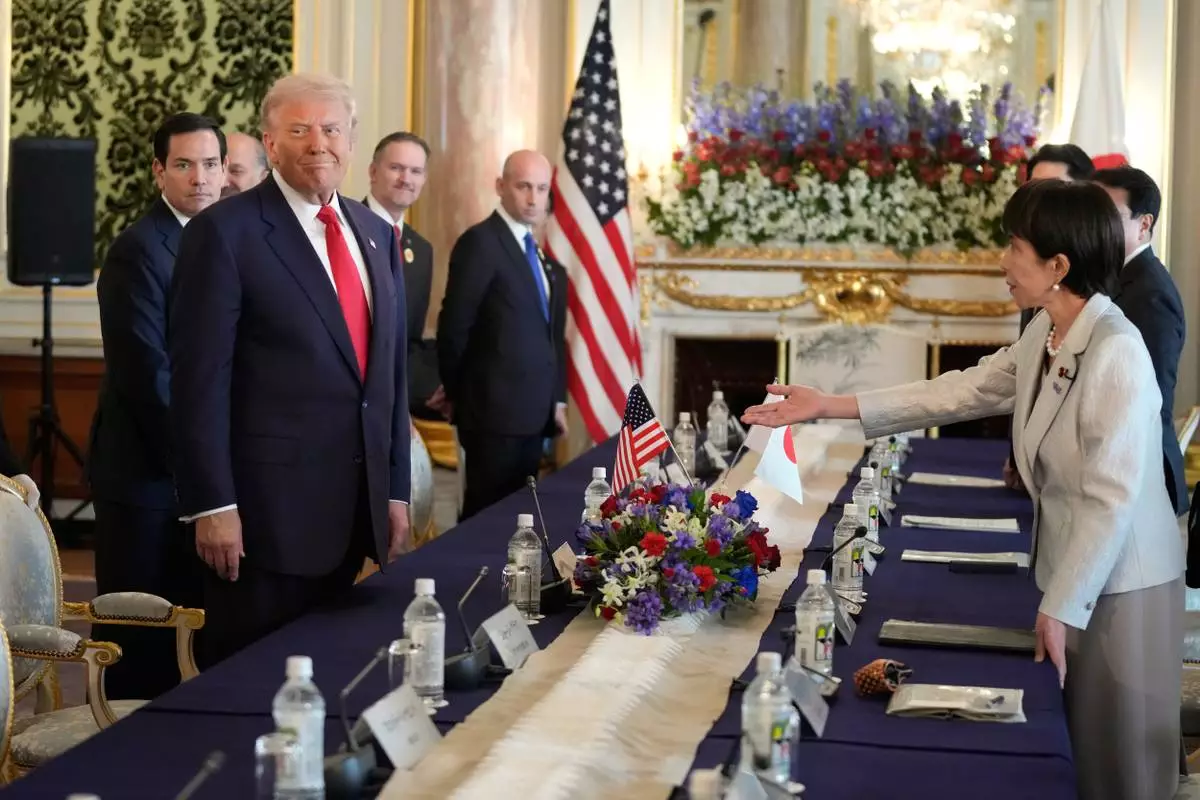
President Donald Trump, front left, and Japan's Prime Minister Sanae Takaichi, right, arrive for their bilateral meeting at Akasaka Palace in Tokyo, Japan, Tuesday, Oct. 28, 2025. (AP Photo/Mark Schiefelbein)
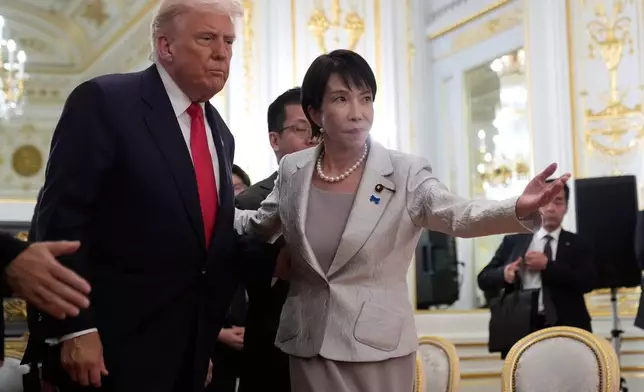
President Donald Trump, front left, and Japan's Prime Minister Sanae Takaichi, right, arrive for their bilateral meeting at Akasaka Palace in Tokyo, Japan, Tuesday, Oct. 28, 2025. (AP Photo/Mark Schiefelbein)

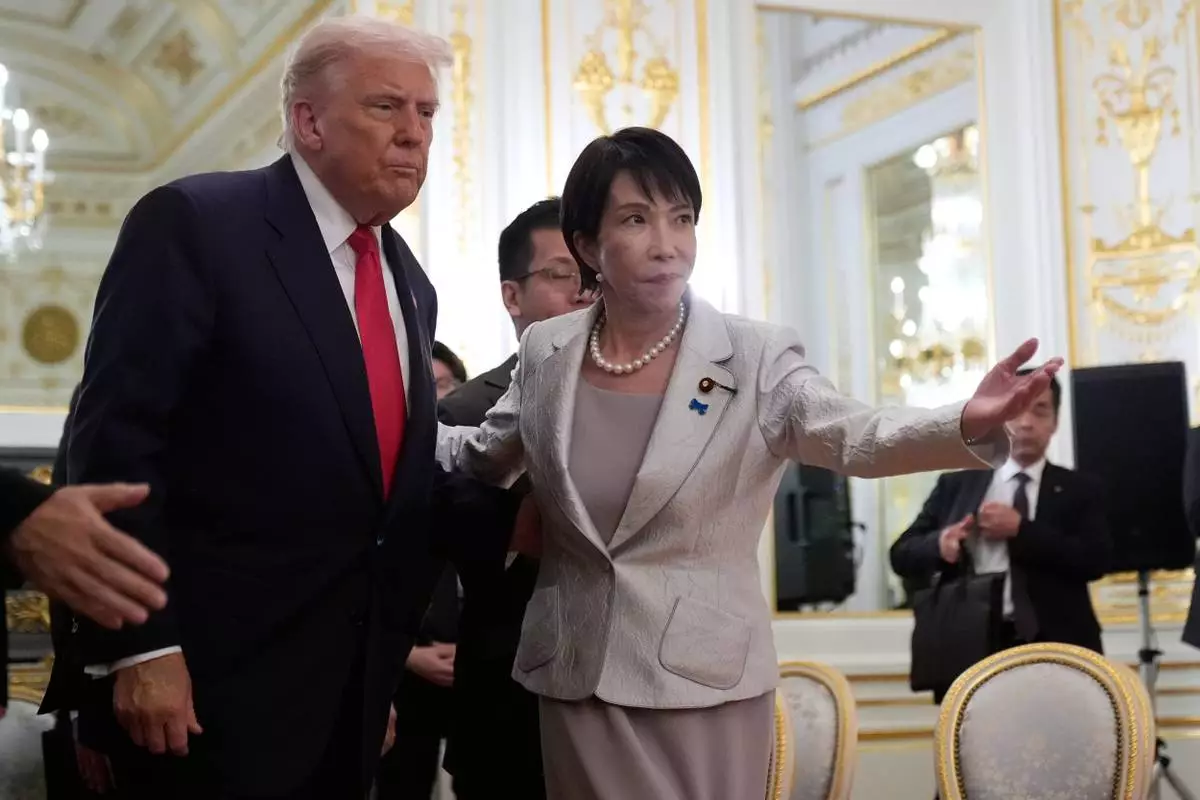
President Donald Trump, left, is escorted by Japan's Prime Minister Sanae Takaichi during a meeting with families of Japanese abductees by North Korea at Akasaka Palace in Tokyo, Japan, Tuesday, Oct. 28, 2025. (AP Photo/Mark Schiefelbein)

President Donald Trump, left, is escorted by Japan's Prime Minister Sanae Takaichi during a meeting with families of Japanese abductees by North Korea at Akasaka Palace in Tokyo, Japan, Tuesday, Oct. 28, 2025. (AP Photo/Mark Schiefelbein)

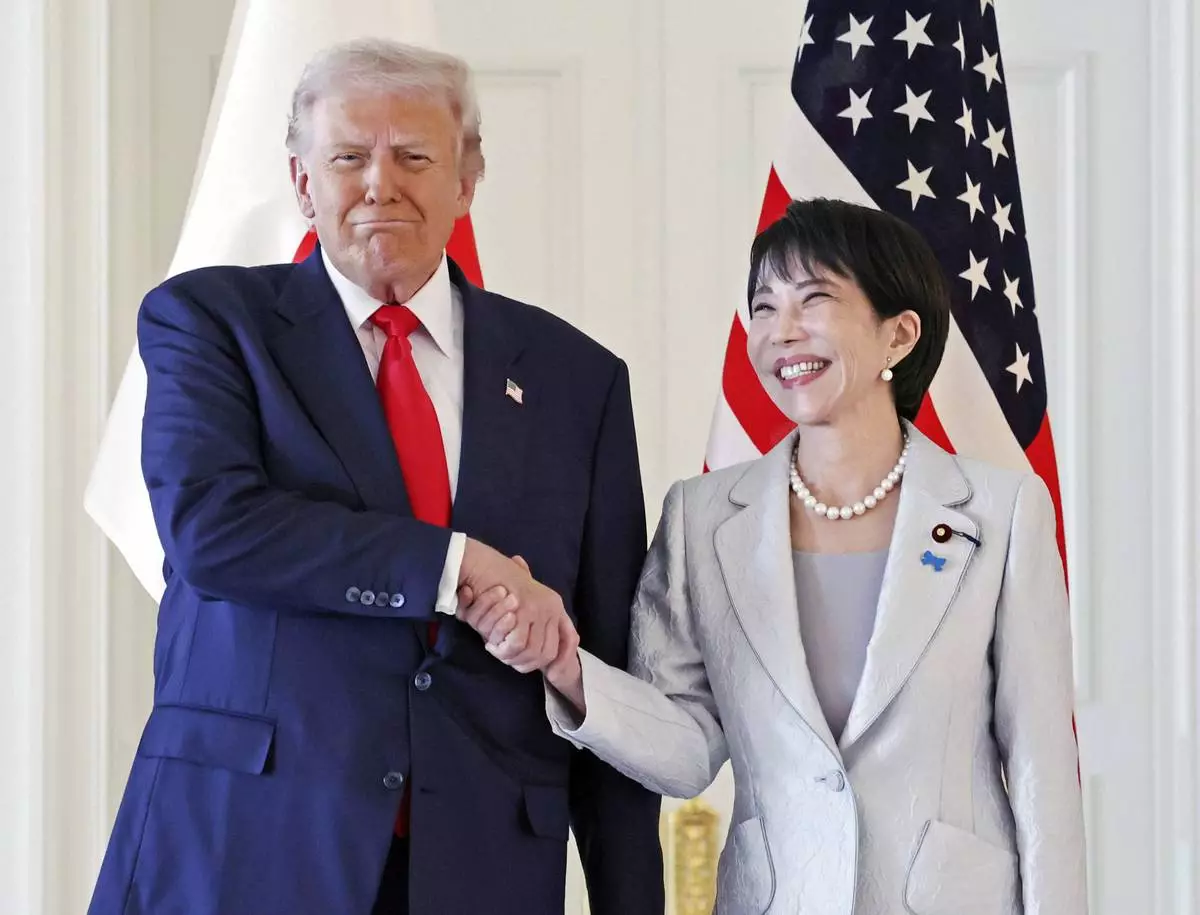
President Donald Trump, left, and Japanese Prime Minister Sanae Takaichi shake hands before their summit talk at Akasaka Palace in Tokyo, Tuesday, Oct. 28, 2025. (Kyodo News via AP)

President Donald Trump, left, and Japanese Prime Minister Sanae Takaichi shake hands before their summit talk at Akasaka Palace in Tokyo, Tuesday, Oct. 28, 2025. (Kyodo News via AP)

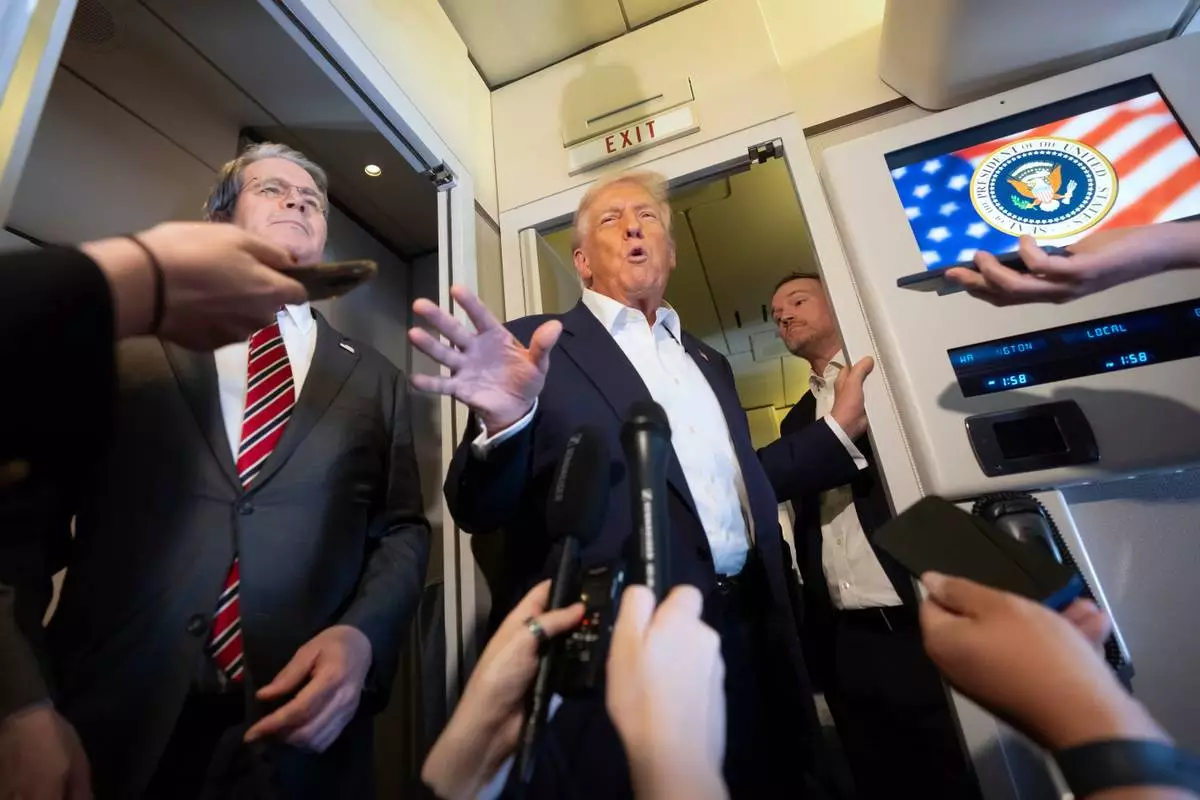
President Donald Trump, center, joined by Treasury Secretary Scott Bessent, left, and U.S. Trade Representative Jamieson Greer, right, speaks to reporters aboard Air Force One while traveling from Kuala Lumpur, Malaysia, to Tokyo, Japan, Monday, Oct. 27, 2025. (AP Photo/Mark Schiefelbein)
President Donald Trump, center, joined by Treasury Secretary Scott Bessent, left, and U.S. Trade Representative Jamieson Greer, right, speaks to reporters aboard Air Force One while traveling from Kuala Lumpur, Malaysia, to Tokyo, Japan, Monday, Oct. 27, 2025. (AP Photo/Mark Schiefelbein)

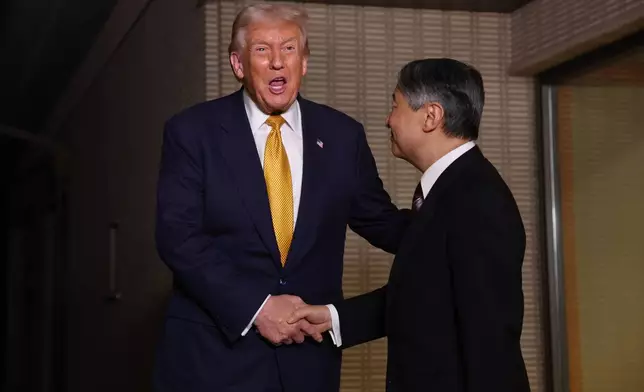
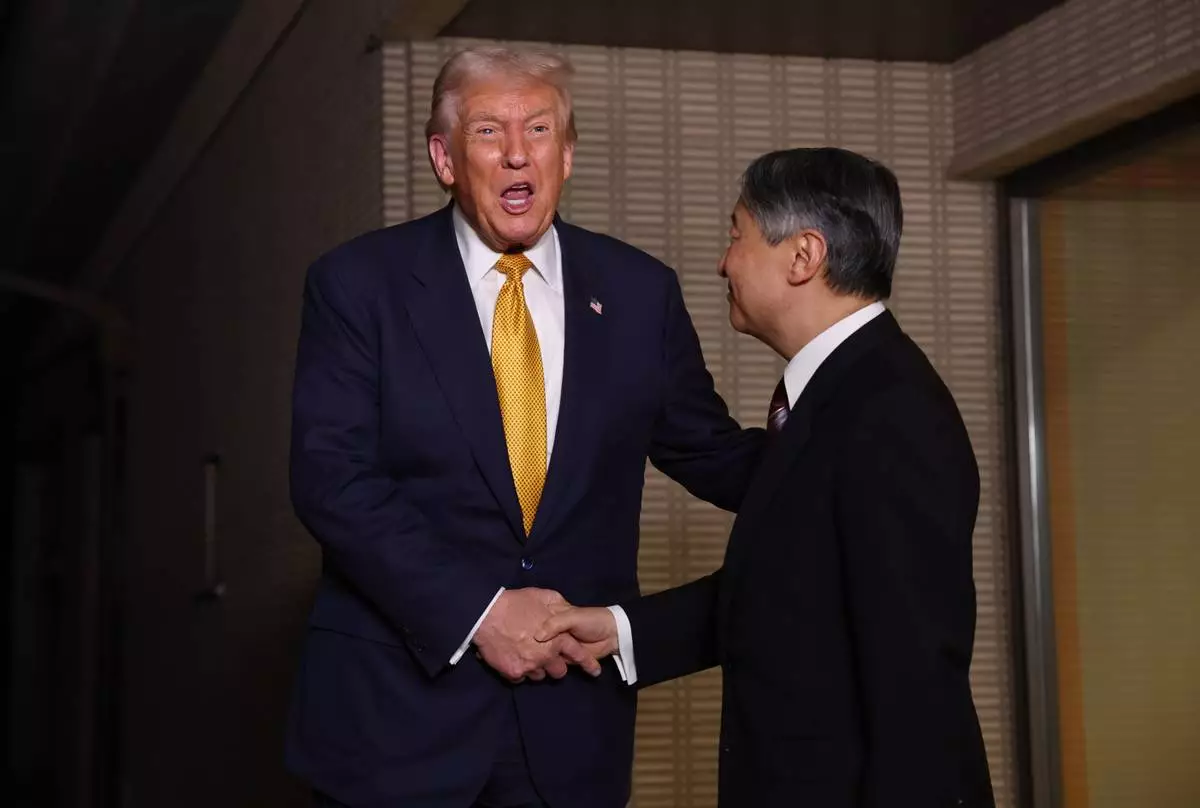
President Donald Trump, left, and Japan's Emperor Naruhito shake hands during their meeting at the Imperial Palace in Tokyo, Oct. 27, 2025. (Issei Kato/Pool Photo via AP)

President Donald Trump, left, and Japan's Emperor Naruhito shake hands during their meeting at the Imperial Palace in Tokyo, Oct. 27, 2025. (Issei Kato/Pool Photo via AP)

By the end of the day, Trump — by his administration's count — came close to nailing down the goal of $550 billion in Japanese investment as part of a trade framework. At a dinner for business leaders in Tokyo, Commerce Secretary Howard Lutnick announced up to $490 billion in commitments, including $100 billion each for nuclear projects involving Westinghouse and GE Vernova.

“You're great business people,” Trump told the gathered executives before the dinner. “Our country will not let you down.”

It was not immediately clear how the investments would operate and how they compared with previous plans, but Trump declared a win as he capped off a day of bonding with Takaichi.

The compliments started as soon as the two leaders met on Tuesday morning. “That’s a very strong handshake," Trump said to Takaichi.

She talked about watching the third game of the U.S. World Series before the event, and said Japan would give Washington 250 cherry trees and fireworks for July 4 celebrations to honor America's 250th anniversary next year.

Takaichi emphasized her ties to the late Japanese Prime Minister Shinzo Abe, her archconservative mentor who had forged a friendship with Trump during his first term through their shared interest of golf.

“As a matter of fact, Prime Minister Abe often told me about your dynamic diplomacy,” she said, later gifting Trump a putter used by Abe.

Trump told her it was a “big deal” that she is Japan's first woman prime minister, and said the U.S. is committed to Japan. While the president is known for not shying away from publicly scolding his foreign counterparts, he had nothing but praise for Takaichi.

“Anything I can do to help Japan, we will be there,” Trump said. “We are an ally at the strongest level.”

Takaichi laid out a charm offensive, serving American beef and rice mixed with Japanese ingredients during a working lunch, where the two leaders also discussed efforts to end Russia’s war in Ukraine. White House press secretary Karoline Leavitt told reporters that Takaichi would be nominating Trump for the Nobel Peace Prize.

The two leaders signed black “Japan is Back” baseball caps that resembled Trump’s own red “Make America Great Again” caps.

Reporters arriving for the meeting were hustled past a gold-hued Ford F-150 outside the Akasaka Palace, which is Tokyo's guest house for visiting foreign leaders.

Trump has often complained that Japan doesn’t buy American vehicles, which are often too wide to be practical on narrow Japanese streets. But the Japanese government is considering buying a fleet of Ford trucks for road and infrastructure inspection.

Both leaders signed the implementation of an agreement for the “golden age” of their nations' alliance, a short affirmation of a framework under which the U.S. will tax goods imported from Japan at 15% while Japan creates a $550 billion fund of investments in the U.S.

Later, at a dinner at the U.S. embassy in Tokyo packed with CEOs including Apple's Tim Cook, Trump reveled in the deals. Trump and Takaichi also signed an agreement to cooperate on critical minerals and rare earths.

Trump has focused his foreign policy toward Asia around tariffs and trade, but on Tuesday he also spoke aboard the USS George Washington, an aircraft carrier docked at an American naval base near Tokyo. The president brought Takaichi with him and she also spoke as Japan plans to increase its military spending.

The president talked about individual units on the aircraft carrier, his political opponents, national security and the U.S. economy, saying that Takaichi had told him that Toyota would be investing $10 billion in auto plants in America.

Trump arrived in Tokyo on Monday, meeting the emperor in a ceremonial visit after a brief trip to Kuala Lumpur, Malaysia, for the annual summit of the Association of Southeast Asian Nations.

Trump is scheduled to leave Japan on Wednesday for South Korea, which is hosting the Asia-Pacific Economic Cooperation summit. Trump plans to meet with South Korean President Lee Jae Myung.

On Thursday, Trump is expected to cap off his Asia trip with a highly anticipated meeting with Chinese leader Xi Jinping. There were signs that tensions between the U.S. and China were cooling off before the planned meeting in South Korea. Top negotiators from each country said a trade deal was coming together, which could prevent a potentially damaging confrontation between the world’s two largest economies.

Megerian reported from Seoul, South Korea. Mayuko Ono and Mari Yamaguchi in Tokyo contributed to this report.
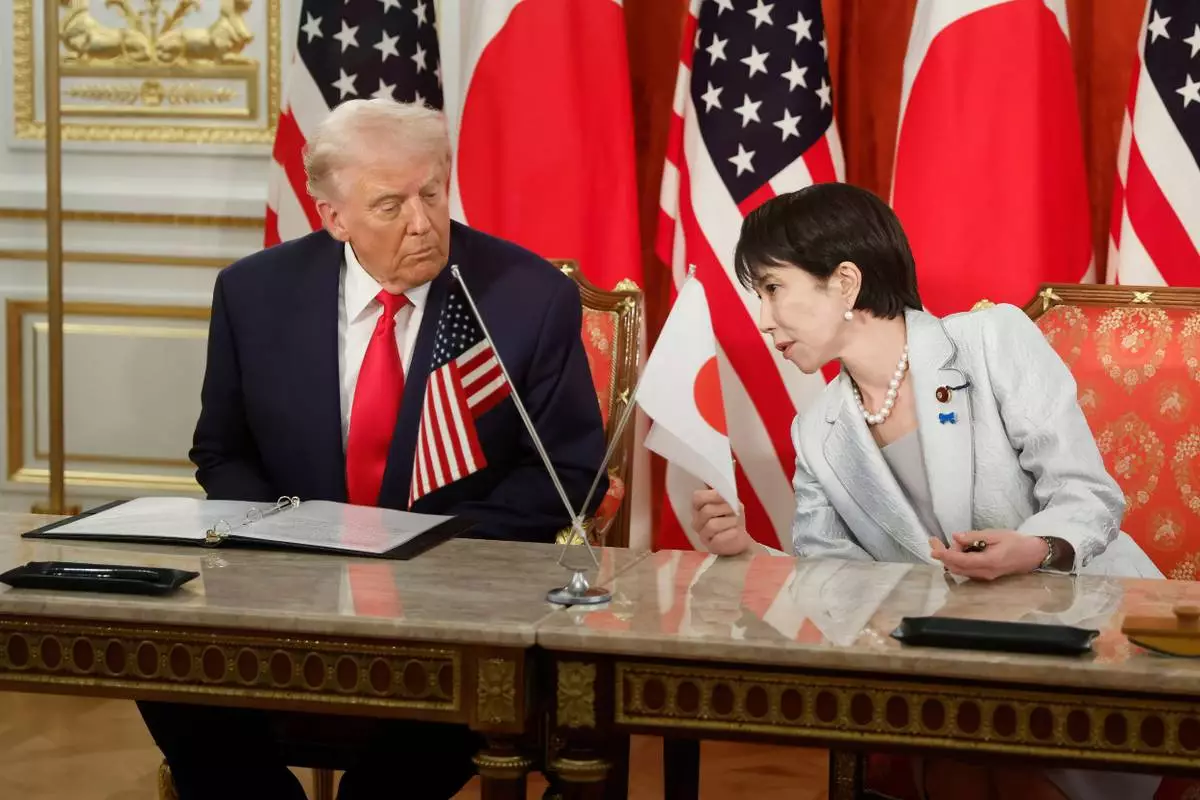
U.S. President Donald Trump, left, and Japan's Prime Minister Sanae Takaichi attend a signing ceremony at Akasaka Palace state guest house in Tokyo Tuesday, Oct. 28, 2025. (Kiyoshi Ota/Pool Photo via AP)
U.S. President Donald Trump, left, and Japan's Prime Minister Sanae Takaichi attend a signing ceremony at Akasaka Palace state guest house in Tokyo Tuesday, Oct. 28, 2025. (Kiyoshi Ota/Pool Photo via AP)
U.S. President Donald Trump attends a signing ceremony with Japan's Prime Minister Sanae Takaichi at Akasaka Palace state guest house in Tokyo Tuesday, Oct. 28, 2025. (Kiyoshi Ota/Pool Photo via AP)

U.S. President Donald Trump attends a signing ceremony with Japan's Prime Minister Sanae Takaichi at Akasaka Palace state guest house in Tokyo Tuesday, Oct. 28, 2025. (Kiyoshi Ota/Pool Photo via AP)

President Donald Trump, front left, and Japan's Prime Minister Sanae Takaichi, right, arrive for their bilateral meeting at Akasaka Palace in Tokyo, Japan, Tuesday, Oct. 28, 2025. (AP Photo/Mark Schiefelbein)
President Donald Trump, front left, and Japan's Prime Minister Sanae Takaichi, right, arrive for their bilateral meeting at Akasaka Palace in Tokyo, Japan, Tuesday, Oct. 28, 2025. (AP Photo/Mark Schiefelbein)

President Donald Trump, left, is escorted by Japan's Prime Minister Sanae Takaichi during a meeting with families of Japanese abductees by North Korea at Akasaka Palace in Tokyo, Japan, Tuesday, Oct. 28, 2025. (AP Photo/Mark Schiefelbein)
President Donald Trump, left, is escorted by Japan's Prime Minister Sanae Takaichi during a meeting with families of Japanese abductees by North Korea at Akasaka Palace in Tokyo, Japan, Tuesday, Oct. 28, 2025. (AP Photo/Mark Schiefelbein)

President Donald Trump, left, and Japanese Prime Minister Sanae Takaichi shake hands before their summit talk at Akasaka Palace in Tokyo, Tuesday, Oct. 28, 2025. (Kyodo News via AP)
President Donald Trump, left, and Japanese Prime Minister Sanae Takaichi shake hands before their summit talk at Akasaka Palace in Tokyo, Tuesday, Oct. 28, 2025. (Kyodo News via AP)

President Donald Trump, center, joined by Treasury Secretary Scott Bessent, left, and U.S. Trade Representative Jamieson Greer, right, speaks to reporters aboard Air Force One while traveling from Kuala Lumpur, Malaysia, to Tokyo, Japan, Monday, Oct. 27, 2025. (AP Photo/Mark Schiefelbein)
President Donald Trump, center, joined by Treasury Secretary Scott Bessent, left, and U.S. Trade Representative Jamieson Greer, right, speaks to reporters aboard Air Force One while traveling from Kuala Lumpur, Malaysia, to Tokyo, Japan, Monday, Oct. 27, 2025. (AP Photo/Mark Schiefelbein)

President Donald Trump, left, and Japan's Emperor Naruhito shake hands during their meeting at the Imperial Palace in Tokyo, Oct. 27, 2025. (Issei Kato/Pool Photo via AP)
President Donald Trump, left, and Japan's Emperor Naruhito shake hands during their meeting at the Imperial Palace in Tokyo, Oct. 27, 2025. (Issei Kato/Pool Photo via AP)
HAMIMA, Syria (AP) — A trickle of civilians left a contested area east of Aleppo on Thursday after a warning by the Syrian military to evacuate ahead of an anticipated government military offensive against Kurdish-led forces.

Government officials and some residents who managed to get out said the Kurdish-led Syrian Democratic Forces prevented people from leaving via the corridor designated by the military along the main road leading west from the town of Maskana through Deir Hafer to the town of Hamima.

The SDF denied the reports that they were blocking the evacuation.

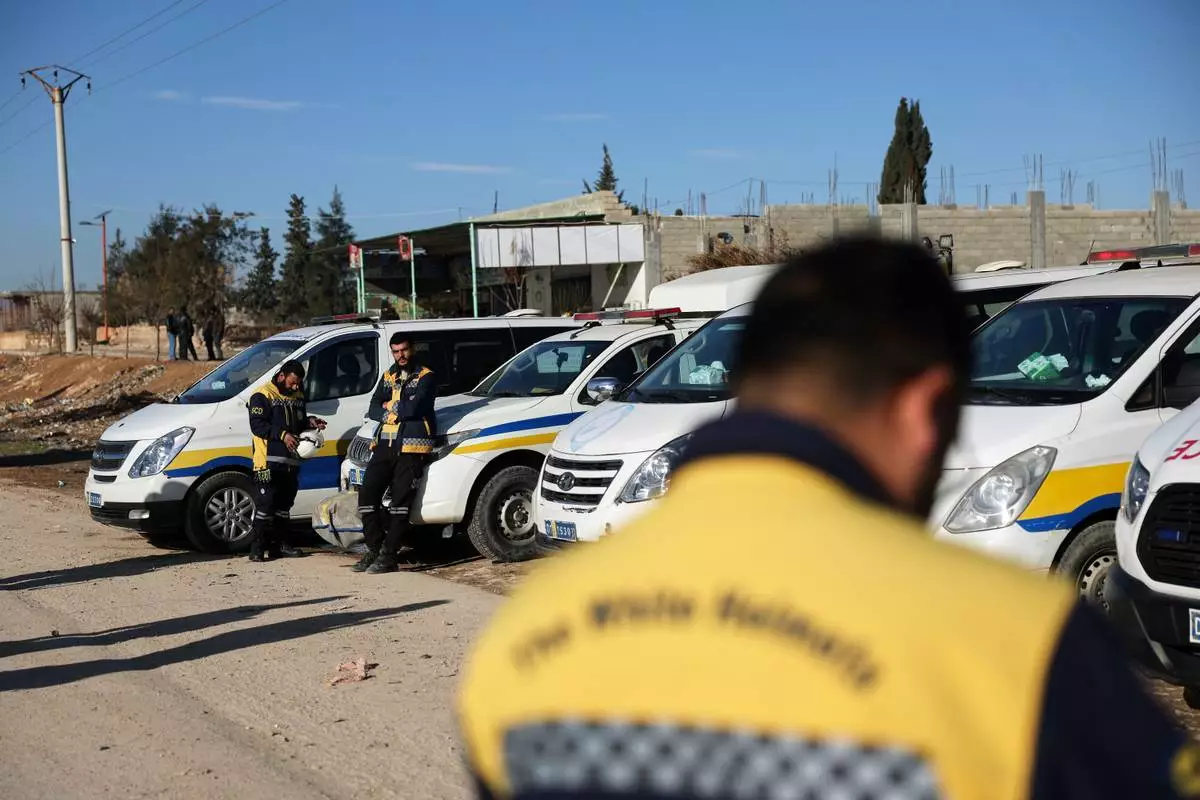
In Hamima, ambulances and government officials were gathered beginning early in the morning waiting to receive the evacuees and take them to shelters, but few arrived.

Farhat Khorto, a member of the executive office of Aleppo Governorate who was waiting there, claimed that there were "nearly two hundred civilian cars and hundreds of people who wanted to leave” the Deir Hafer area but that they were prevented by the SDF. He said the SDF was warning residents they could face “sniping operations or booby-trapped explosives” along that route.

Some families said they got out of the evacuation zone by taking back roads or going part of the distance on foot.

“We tried to leave this morning, but the SDF prevented us. So we left on foot … we walked about seven to eight kilometers until we hit the main road, and there the civil defense took us and things were good then,” said Saleh al-Othman, who said he fled Deir Hafer with more than 50 relatives.

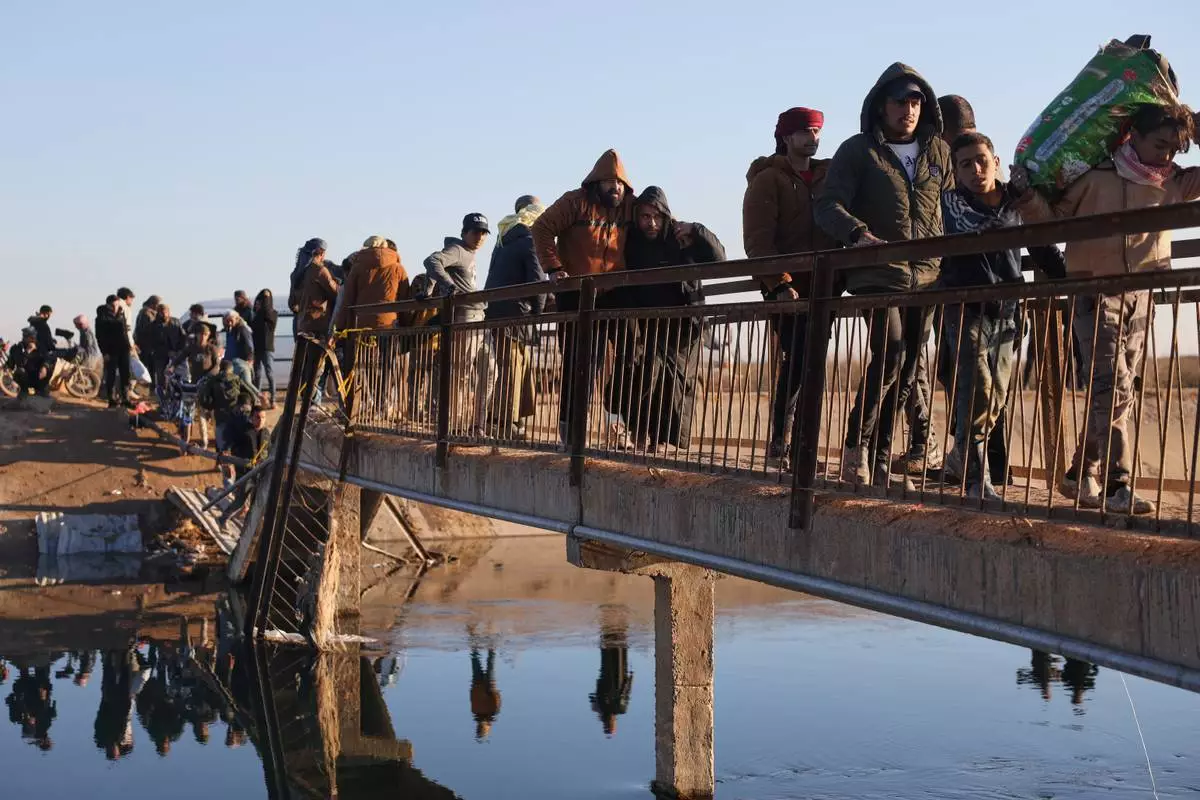
Yasser al-Hasno, also from Deir Hafer, said he and his family left via back roads because the main routes were closed and finally crossed a small river on foot to get out of the evacuation area.

Another Deir Hafer resident who crossed the river on foot, Ahmad al-Ali, said, “We only made it here by bribing people. They still have not allowed a single person to go through the main crossing."

Farhad Shami, a spokesman for the SDF, said the allegations that the group had prevented civilians from leaving were “baseless.” He suggested that government shelling was deterring residents from moving.

The SDF later issued a statement also denying that it had blocked civilians from fleeing. It said that “any displacement of civilians under threat of force by Damascus constitutes a war crime" and called on the international community to condemn it.

“Today, the people of Deir Hafer have demonstrated their unwavering commitment to their land and homes, and no party can deprive them of their right to remain there under military pressure,” it said.

The Syrian army’s announcement late Wednesday — which said civilians would be able to evacuate through the “humanitarian corridor” from 9 a.m. to 5 p.m. Thursday — appeared to signal plans for an offensive against the SDF in the area east of Aleppo. Already there have been limited exchanges of fire between the two sides.

Thursday evening, the military said it would extend the humanitarian corridor for another day.

The Syrian military called on the SDF and other armed groups to withdraw to the other side of the Euphrates River, to the east of the contested zone. The SDF controls large swaths of northeastern Syria east of the river.

The tensions in the Deir Hafer area come after several days of intense clashes last week in Aleppo city that ended with the evacuation of Kurdish fighters and government forces taking control of three contested neighborhoods.

The fighting broke out as negotiations have stalled between Damascus and the SDF over an agreement reached last March to integrate their forces and for the central government to take control of institutions including border crossings and oil fields in the northeast.

Some of the factions that make up the new Syrian army, which was formed after the fall of former President Bashar Assad in a rebel offensive in December 2024, were previously Turkey-backed insurgent groups that have a long history of clashing with Kurdish forces.

The SDF for years has been the main U.S. partner in Syria in fighting against the Islamic State group, but Turkey considers the SDF a terrorist organization because of its association with Kurdish separatist insurgents in Turkey.

Despite the long-running U.S. support for the SDF, the Trump administration has also developed close ties with the government of interim Syrian President Ahmad al-Sharaa and has so far avoided publicly taking sides in the clashes in Aleppo.

Ilham Ahmed, head of foreign relations for the SDF-affiliated Kurdish-led administration in northeast Syria, at a press conference Thursday said SDF officials were in contact with the United States and Turkey and had presented several initiatives for de-escalation. She said that claims by Damascus that the SDF had failed to implement the March agreement were false.

——

Associated Press journalist Hogir Al Abdo in Qamishli, Syria, contributed.

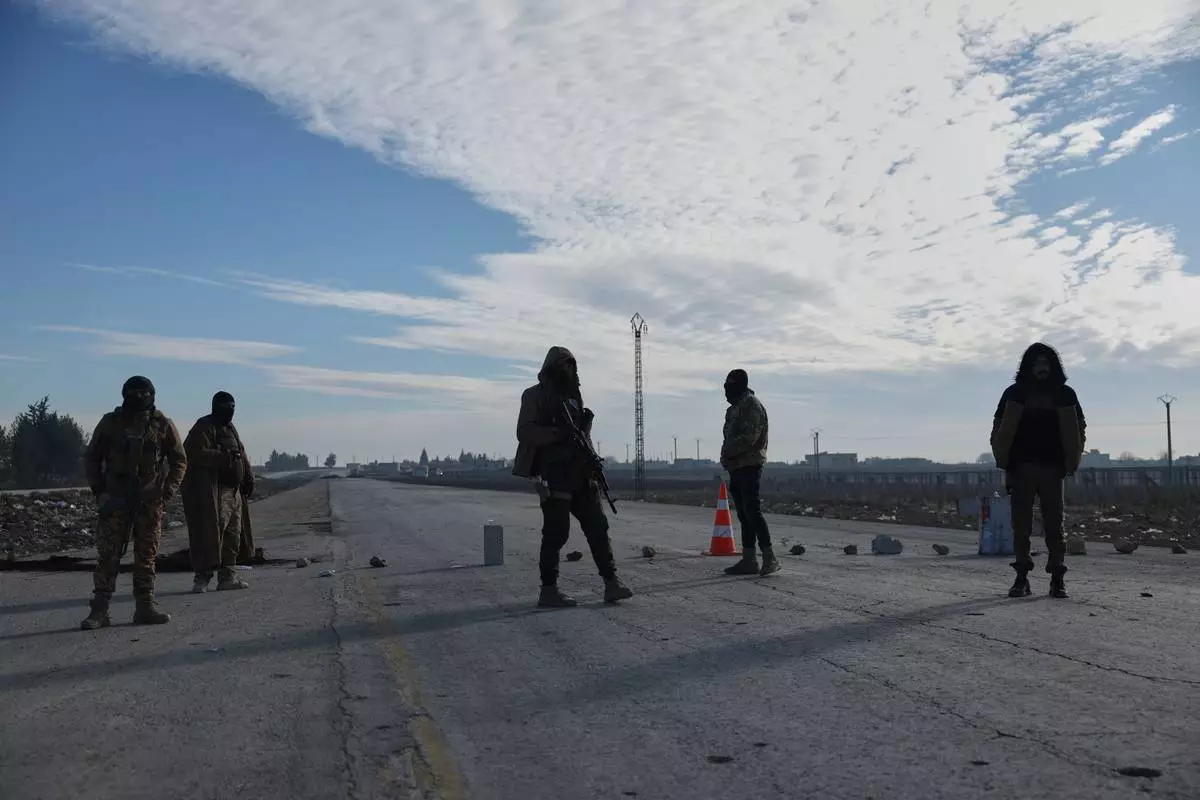
Members of the Syrian military police stand at a humanitarian crossing declared by the Syrian army in the village of Hamima, in the eastern Aleppo countryside, near the front line with the Kurdish-led Syrian Democratic Forces in Deir Hafer, Syria, Thursday, Jan. 15, 2026. (AP Photo/Ghaith Alsayed)

Members of the Syrian military police stand at a humanitarian crossing declared by the Syrian army in the village of Hamima, in the eastern Aleppo countryside, near the front line with the Kurdish-led Syrian Democratic Forces in Deir Hafer, Syria, Thursday, Jan. 15, 2026. (AP Photo/Ghaith Alsayed)

Members of the Syrian Civil Defense, stand next to their vehicles at a humanitarian crossing declared by the Syrian army in the village of Hamima, in the eastern Aleppo countryside, near the front line with the Kurdish-led Syrian Democratic Forces in Deir Hafer, Syria, Thursday, Jan. 15, 2026. (AP Photo/Ghaith Alsayed)

Members of the Syrian Civil Defense, stand next to their vehicles at a humanitarian crossing declared by the Syrian army in the village of Hamima, in the eastern Aleppo countryside, near the front line with the Kurdish-led Syrian Democratic Forces in Deir Hafer, Syria, Thursday, Jan. 15, 2026. (AP Photo/Ghaith Alsayed)

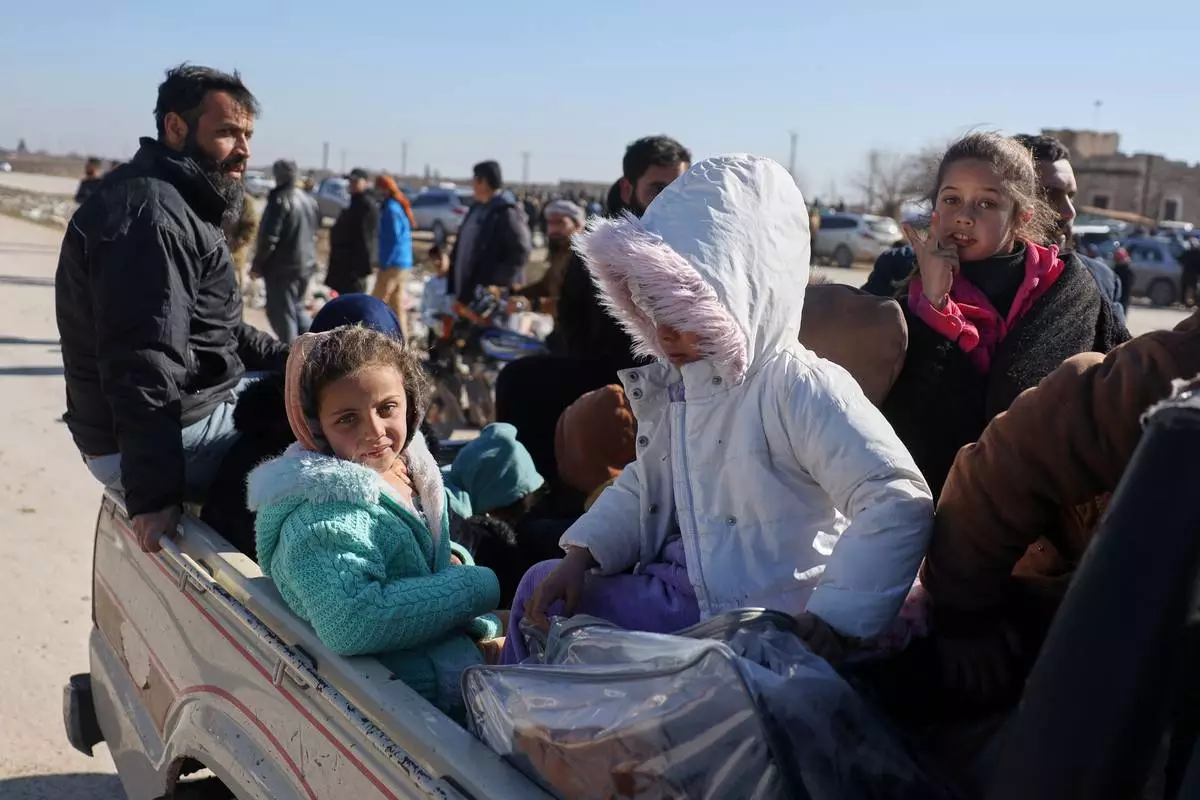
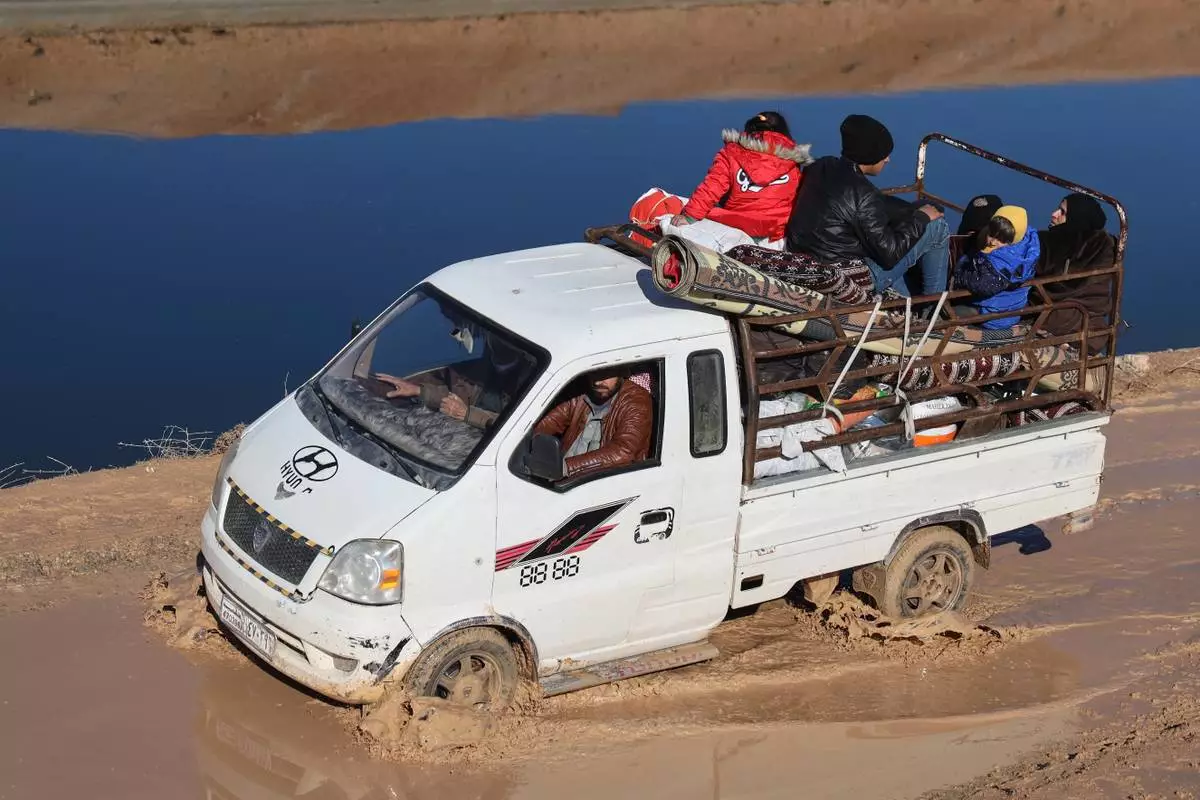
A displaced Syrian family rides in the back of a truck near a humanitarian crossing declared by the Syrian army next to a river in the village of Rasm Al-Abboud, in the eastern Aleppo countryside, near the front line with the Kurdish-led Syrian Democratic Forces in Deir Hafer, Syria, Thursday, Jan. 15, 2026. (AP Photo/Omar Albam)

A displaced Syrian family rides in the back of a truck near a humanitarian crossing declared by the Syrian army next to a river in the village of Rasm Al-Abboud, in the eastern Aleppo countryside, near the front line with the Kurdish-led Syrian Democratic Forces in Deir Hafer, Syria, Thursday, Jan. 15, 2026. (AP Photo/Omar Albam)

Displaced Syrian children and women ride in the back of a truck near a humanitarian crossing declared by the Syrian army in the village of Hamima, in the eastern Aleppo countryside, near the front line with the Kurdish-led Syrian Democratic Forces in Deir Hafer, Syria, Thursday, Jan. 15, 2026. (AP Photo/Omar Albam)

Displaced Syrian children and women ride in the back of a truck near a humanitarian crossing declared by the Syrian army in the village of Hamima, in the eastern Aleppo countryside, near the front line with the Kurdish-led Syrian Democratic Forces in Deir Hafer, Syria, Thursday, Jan. 15, 2026. (AP Photo/Omar Albam)

Displaced Syrians at a river crossing near the village of Jarirat al Imam, in the eastern Aleppo countryside, near the front line with the Kurdish-led Syrian Democratic Forces in Deir Hafer, Syria, Thursday, Jan. 15, 2026. (AP Photo/Omar Albam)

Displaced Syrians at a river crossing near the village of Jarirat al Imam, in the eastern Aleppo countryside, near the front line with the Kurdish-led Syrian Democratic Forces in Deir Hafer, Syria, Thursday, Jan. 15, 2026. (AP Photo/Omar Albam)

Recommended Articles