A prominent British economist praised China's pursuit of high-quality growth and AI-driven innovation while calling on China and the United States (US) to handle trade relations with calm and rationality.
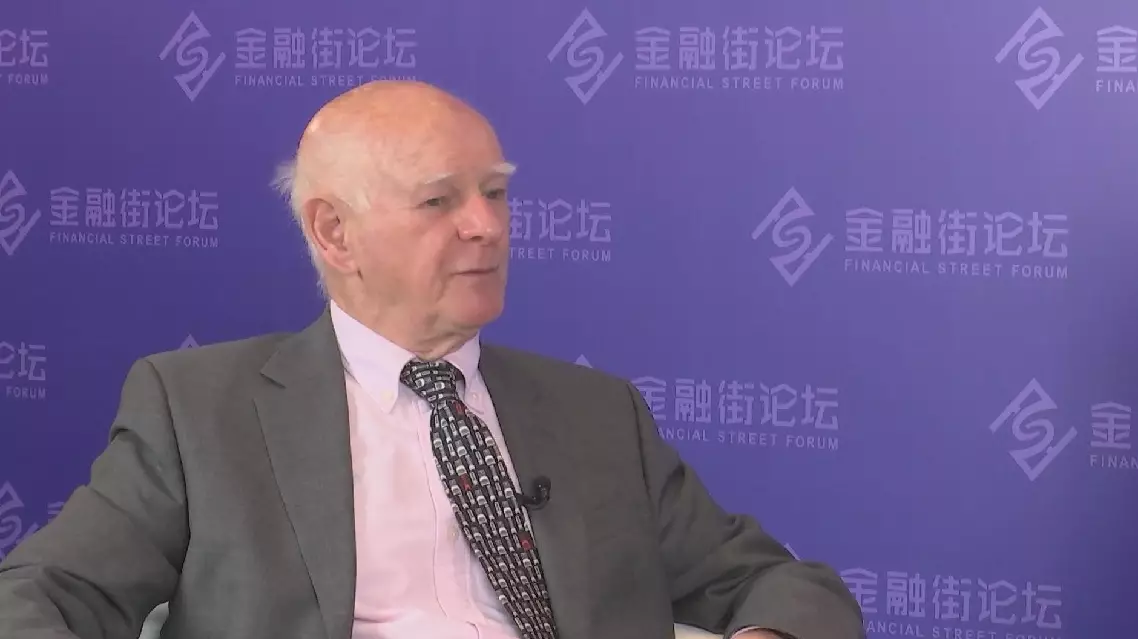
In an exclusive interview with China Global Television Network (CGTN) on the sidelines of the 2025 Financial Street Forum, held in Beijing from Monday to Thursday, Sir Howard Davies, a member of the International Advisory Council of the National Financial Regulatory Administration, shared his insights on China's development strategy and China-US relations.
Speaking about China's newly-released Explanation of the Recommendations of the Central Committee of the Communist Party of China (CPC) for Formulating the 15th Five-Year Plan for National Economic and Social Development, which was made public on Tuesday, he highlighted the country's focus on high-quality growth, saying it has set an example for many other countries to follow.
"Yes, I think it's emphasis on what China, what in the translation in English is called 'high standard growth’, and I think we all know what that means. In other words, you don't just want to be building more factories to build low cost goods that are price competitive maybe but not with a great added value in them. So I think that general aspiration comes through very strongly in the papers and it's one that I think many other countries would like to follow,” said Davies, a former chairman of NatWest group, and former Director of the London School of Economics (LSE).
As China invests heavily in artificial intelligence (AI) to power its economic growth, Davies said the country's vision for AI is forward-looking, but stressed the importance of ensuring Chinese companies can all benefit from the AI boom.
"I think all countries are noticing that AI is revolutionizing the world of work, and the valuations of companies are being very significantly affected by a perception of whether they are at the frontier of AI. For the moment, we can see in the West and I dare say this is true in China, that a few companies have been able to benefit significantly from AI and have increased their productivity and their valuation. And quite a number of companies have been rather disappointed by the results and have found it difficult to harness AI effectively. So I think the aspiration is good, but the question will be: can Chinese companies take advantage of the opportunities which AI is undoubtedly going to offer them?” said the economist.
Speaking on the outcome of the fifth round of China-US trade talks, which recently concluded in Malaysia with both sides reaching basic consensuses on arrangements to address their respective trade concerns, Davies underscored the global importance of stable trade ties and urged both countries to handle differences with calm and reason.
"Well, I hope so, because it is in both their (China and the United States) interests to do it. I don't think it's in the interests of either China or the United States, and certainly not the rest of the world, for them to have 'bad relations' on the commercial front. I mean, this is not constructive. And I think the rest of us who are not directly involved in these talks can only hope that they produce a sensible outcome for both sides, and that the emotional content is somewhat downplayed. You know, everybody needs to stop, take a deep breath and try to reach a rational agreement. And the headlines and the rhetoric have not been helpful,” he said.
British economist backs China’s growth vision, urges rational China-US ties
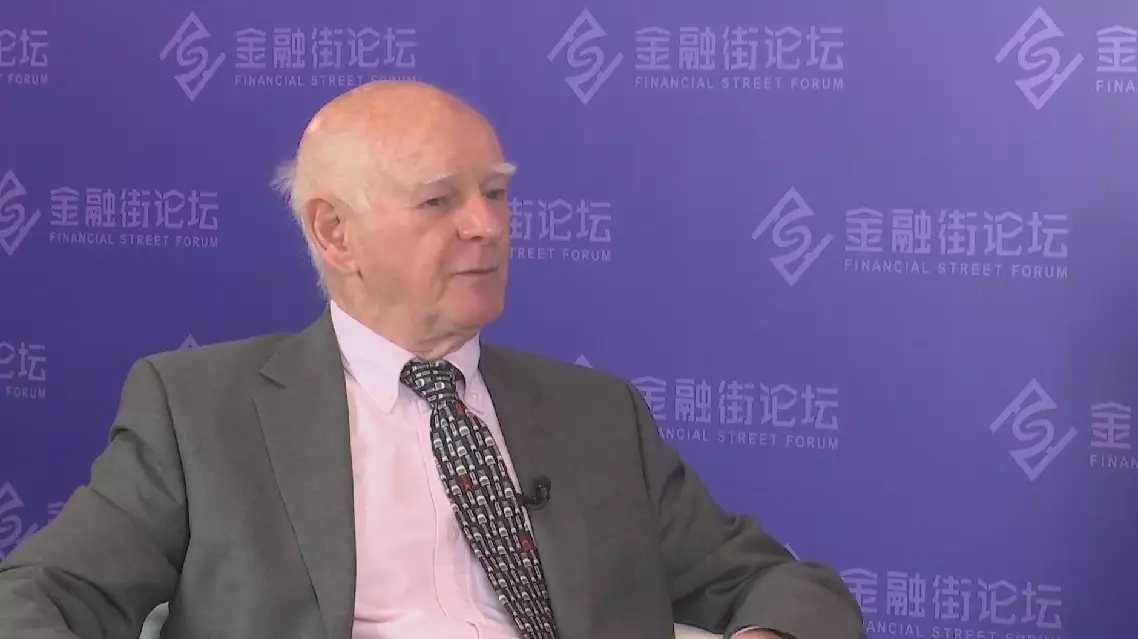
British economist backs China’s growth vision, urges rational China-US ties