Skip to Content Facebook Feature Image

What to know about the annual sign-up window for health insurance

News

What to know about the annual sign-up window for health insurance
News

News

What to know about the annual sign-up window for health insurance

2025-11-07 04:55 Last Updated At:18:41

Higher prices, less help and a government shutdown all hang over health insurance markets as shoppers start looking for coverage this month.

The annual enrollment window for millions of people to pick an individual plan opened Nov. 1 in nearly all states, and a heavy dose of politics weighs on this year’s search.

The federal government shut down as Democrats in Congress demanded negotiations to extend enhanced tax credits that have helped people buy coverage the past few years. Republicans say they won’t negotiate until Democrats vote to reopen the government.

Stuck in the middle are insurance customers, many of whom will be facing the biggest premium hikes they’ve seen in years and may be forced to consider changing plans.

“It seems overwhelming, but it really is important to shop and consider your choices,” said Sara Collins, a Commonwealth Fund insurance expert.

Here’s how shoppers can respond:

Shoppers will have until Jan. 15 in most states to find a plan for 2026, but they have to make their choice by Dec. 15 if they want coverage starting New Year's Day.

This is the main chance people with individual coverage have every year to find a plan for the next year. More than 24 million people enrolled in individual plans for 2025, according to KFF, which studies health care issues.

People can buy a new plan with help from income-based tax credits through insurance marketplaces set up in every state. Then-President Joe Biden’s administration beefed up that help with enhanced tax credits during the COVID-19 pandemic. Those are set to expire this year unless Congress works out an extension.

Shoppers also can find options outside these marketplaces — sometimes for a lower price — but they won’t get tax credit help.

KFF says premiums, or the cost of coverage, will jump more than 20% for many levels of coverage.

Those higher prices may not change even if Congress restores the enhanced tax credits before the enrollment window ends, said Karan Rustagi, a Wakely Consulting Group health actuary who works with insurers. It can take insurers weeks to complete rate changes with regulators and then update their systems and customer handbooks.

People who depended on the enhanced tax credits last year could experience additional sticker shock if Congress lets those credits expire.

Researchers at KFF were able to estimate costs for multiple income scenarios. They calculated, for instance, that someone making $35,000 a year could see their monthly cost for a typical silver-level plan jump to $218 from $86.

The most extreme cases involve people with salaries that exceed 400% of the federal poverty level. This group would lose tax credits entirely and pay the full premium price, which can vary by age and location. For example, a 60-year-old in Monroe County, Florida, could wind up paying $2,702 a month without credits versus $460 with credits.

For shoppers still receiving tax credits, one option to soften big price hikes is to buy down, or opt for a cheaper plan. The tradeoff: less coverage.

The Centers for Medicare and Medicaid Services in February cut funding by 90% for a federal program that provides navigators who help people find coverage.

That will lead to less free help in more than two dozen states that rely on the federal government to run their health insurance marketplaces. Kaye Pestaina, a vice president with KFF, said help like this is especially important for first-time shoppers who need to predict their income to get tax credit help.

That task can be especially challenging for seasonal workers or others who see their income fluctuate.

“That one-on-one assistance is going to be really important,” Pestaina said. “It’s not intuitive.”

If navigators are not available, health insurance brokers or agents can help. They receive commissions paid by insurers, often a flat fee.

Shoppers can get a sense for their options by checking their state marketplace. You can find that by visiting healthcare.gov.

Collins said people should start there, not Google. Search engine results could connect you with someone selling more limited, short-term insurance.

Fill out the application for tax credit help first, said Joshua Brooker, a Lancaster, Pennsylvania-based independent insurance agent.

That will tell you whether any help is available to you now. That assistance will automatically be updated if the enhanced tax credits are renewed.

“Doing that first application is not lost time,” he said.

Then pick a plan. Look beyond the premium. Consider any deductibles you may have to pay, what doctors or hospitals are in the insurer's network and how any prescriptions would be covered.

Don’t wait to see whether the extra tax credit debate is resolved. That may not happen during your enrollment window. If it does, you can revisit your choice.

“You do have a mulligan,” Brooker said.

Agents say many people procrastinate on insurance shopping. That can make it tougher to find help as sign-up deadlines approach.

“I have people every year either wait until the very last day to enroll or they miss the deadline entirely,” said Shayla Teague, an insurance agent based in Anchorage, Alaska. “Make sure you have something in place, ready to go.”

The Associated Press Health and Science Department receives support from the Howard Hughes Medical Institute’s Department of Science Education and the Robert Wood Johnson Foundation. The AP is solely responsible for all content.
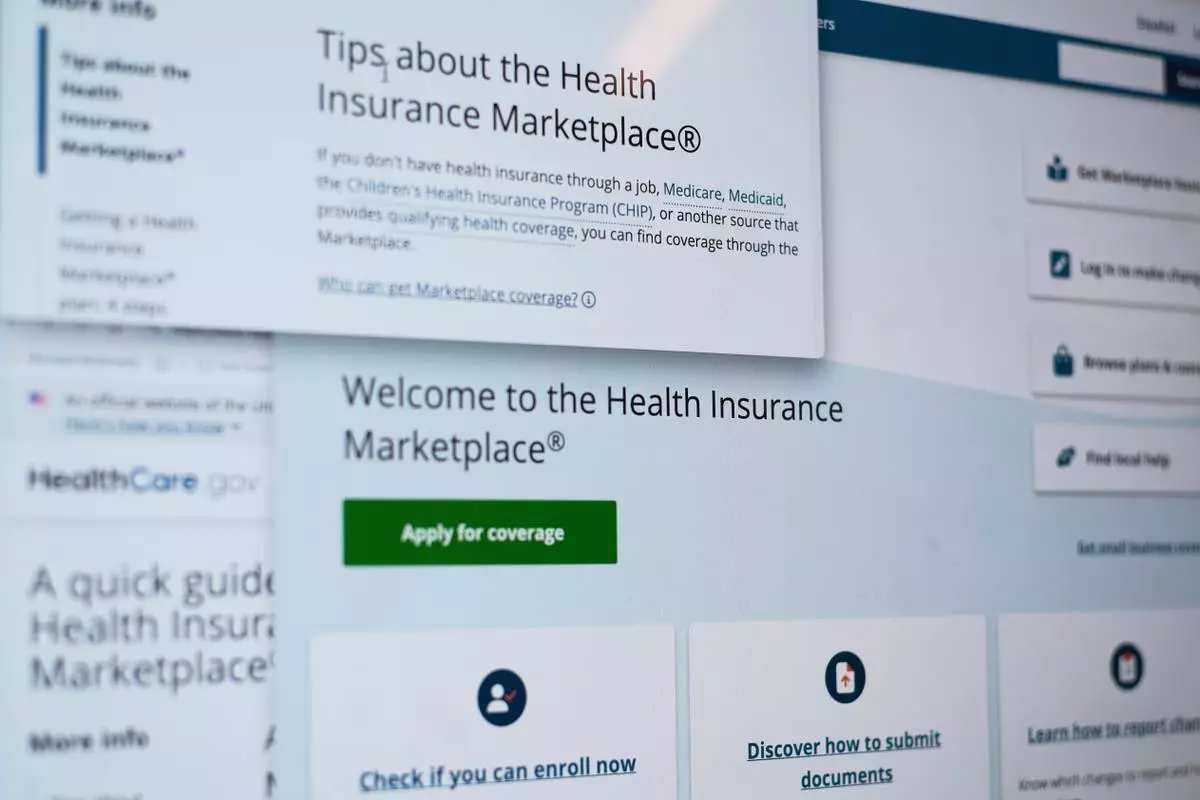
FILE - Pages from the U.S. Affordable Care Act health insurance website healthcare.gov are seen on a computer screen in New York on Tuesday, Aug. 19, 2025. (AP Photo/Patrick Sison, File)

FILE - Pages from the U.S. Affordable Care Act health insurance website healthcare.gov are seen on a computer screen in New York on Tuesday, Aug. 19, 2025. (AP Photo/Patrick Sison, File)

NEW YORK (AP) — Thousands of nurses in three hospital systems in New York City went on strike Monday after negotiations through the weekend failed to yield breakthroughs in their contract disputes.

The strike was taking place at The Mount Sinai Hospital and two of its satellite campuses, with picket lines forming. The other affected hospitals are NewYork-Presbyterian and Montefiore Medical Center in the Bronx.

About 15,000 nurses are involved in the strike, according to New York State Nurses Association.

“After months of bargaining, management refused to make meaningful progress on core issues that nurses have been fighting for: safe staffing for patients, healthcare benefits for nurses, and workplace violence protections,” the union said in a statement issued Monday. “Management at the richest hospitals in New York City are threatening to discontinue or radically cut nurses’ health benefits.”

The strike, which comes during a severe flu season, could potentially force the hospitals to transfer patients, cancel procedures or divert ambulances. It could also put a strain on city hospitals not involved in the contract dispute, as patients avoid the medical centers hit by the strike.

The hospitals involved have been hiring temporary nurses to try and fill the labor gap during the walkout, and said in a statement during negotiations that they would “do whatever is necessary to minimize disruptions.” Montefiore posted a message assuring patients that appointments would be kept.

“NYSNA’s leaders continue to double down on their $3.6 billion in reckless demands, including nearly 40% wage increases, and their troubling proposals like demanding that a nurse not be terminated if found to be compromised by drugs or alcohol while on the job," Montefiore spokesperson Joe Solmonese said Monday after the strike had started. "We remain resolute in our commitment to providing safe and seamless care, regardless of how long the strike may last.”

New York-Presbyterian accused the union of staging a strike to “create disruption,” but said in a statement that it has taken steps to ensure patients receive the care they need.

"We’re ready to keep negotiating a fair and reasonable contract that reflects our respect for our nurses and the critical role they play, and also recognizes the challenging realities of today’s healthcare environment,” the statement said.

The work stoppage is occurring at multiple hospitals simultaneously, but each medical center is negotiating with the union independently. Several other hospitals across the city and in its suburbs reached deals in recent days to avert a possible strike.

The nurses’ demands vary by hospital, but the major issues include staffing levels and workplace safety. The union says hospitals have given nurses unmanageable workloads.

Nurses also want better security measures in the workplace, citing incidents like a an incident last week, when a man with a sharp object barricaded himself in a Brooklyn hospital room and was then killed by police.

The union also wants limitations on hospitals’ use of artificial intelligence.

The nonprofit hospitals involved in the negotiations say they’ve been working to improve staffing levels, but say the union’s demands overall are too costly.

Nurses voted to authorize the strike last month.

Both New York Gov. Kathy Hochul and Mayor Zohran Mamdani had expressed concern about the possibility of the strike. As the strike deadline neared, Mamdani urged both sides to keep negotiating and reach a deal that “both honors our nurses and keeps our hospitals open.”

“Our nurses kept this city alive through its hardest moments. Their value is not negotiable,” Mamdani said.

State Attorney General Letitia James voiced similar support, saying "nurses put their lives on the line every day to keep New Yorkers healthy. They should never be forced to choose between their own safety, their patients’ well-being, and a fair contract.”

The last major nursing strike in the city was only three years ago, in 2023. That work stoppage, at Mount Sinai and Montefiore, was short, lasting three days. It resulted in a deal raising pay 19% over three years at those hospitals.

It also led to promised staffing improvements, though the union and hospitals now disagree about how much progress has been made, or whether the hospitals are retreating from staffing guarantees.

Nurses strike outside New York-Presbyterian Hospital, Monday, Jan. 12, 2026, in New York. (AP Photo/Yuki Iwamura)

Nurses strike outside New York-Presbyterian Hospital, Monday, Jan. 12, 2026, in New York. (AP Photo/Yuki Iwamura)

Nurses strike outside New York-Presbyterian Hospital, Monday, Jan. 12, 2026, in New York. (AP Photo/Yuki Iwamura)

Nurses strike outside New York-Presbyterian Hospital, Monday, Jan. 12, 2026, in New York. (AP Photo/Yuki Iwamura)

Nurses strike outside New York-Presbyterian Hospital, Monday, Jan. 12, 2026, in New York. (AP Photo/Yuki Iwamura)

Nurses strike outside New York-Presbyterian Hospital, Monday, Jan. 12, 2026, in New York. (AP Photo/Yuki Iwamura)

Nurses strike outside New York-Presbyterian Hospital, Monday, Jan. 12, 2026, in New York. (AP Photo/Yuki Iwamura)

Nurses strike outside New York-Presbyterian Hospital, Monday, Jan. 12, 2026, in New York. (AP Photo/Yuki Iwamura)

Nurses strike outside New York-Presbyterian Hospital, Monday, Jan. 12, 2026, in New York. (AP Photo/Yuki Iwamura)

Nurses strike outside New York-Presbyterian Hospital, Monday, Jan. 12, 2026, in New York. (AP Photo/Yuki Iwamura)

Nurses strike outside Mount Sinai West Hospital, Monday, Jan. 12, 2026, in New York. (AP Photo/Yuki Iwamura)

Nurses strike outside Mount Sinai West Hospital, Monday, Jan. 12, 2026, in New York. (AP Photo/Yuki Iwamura)

Nurses strike outside Mount Sinai West Hospital, Monday, Jan. 12, 2026, in New York. (AP Photo/Yuki Iwamura)

Nurses strike outside Mount Sinai West Hospital, Monday, Jan. 12, 2026, in New York. (AP Photo/Yuki Iwamura)

Nurses strike outside Mount Sinai West Hospital, Monday, Jan. 12, 2026, in New York. (AP Photo/Yuki Iwamura)

Nurses strike outside Mount Sinai West Hospital, Monday, Jan. 12, 2026, in New York. (AP Photo/Yuki Iwamura)

Nurses strike outside Mount Sinai West Hospital, Monday, Jan. 12, 2026, in New York. (AP Photo/Yuki Iwamura)

Nurses strike outside Mount Sinai West Hospital, Monday, Jan. 12, 2026, in New York. (AP Photo/Yuki Iwamura)

FILE - A medical worker transports a patient at Mount Sinai Hospital, April 1, 2020, in New York. (AP Photo/Mary Altaffer, File)

FILE - A medical worker transports a patient at Mount Sinai Hospital, April 1, 2020, in New York. (AP Photo/Mary Altaffer, File)

Recommended Articles