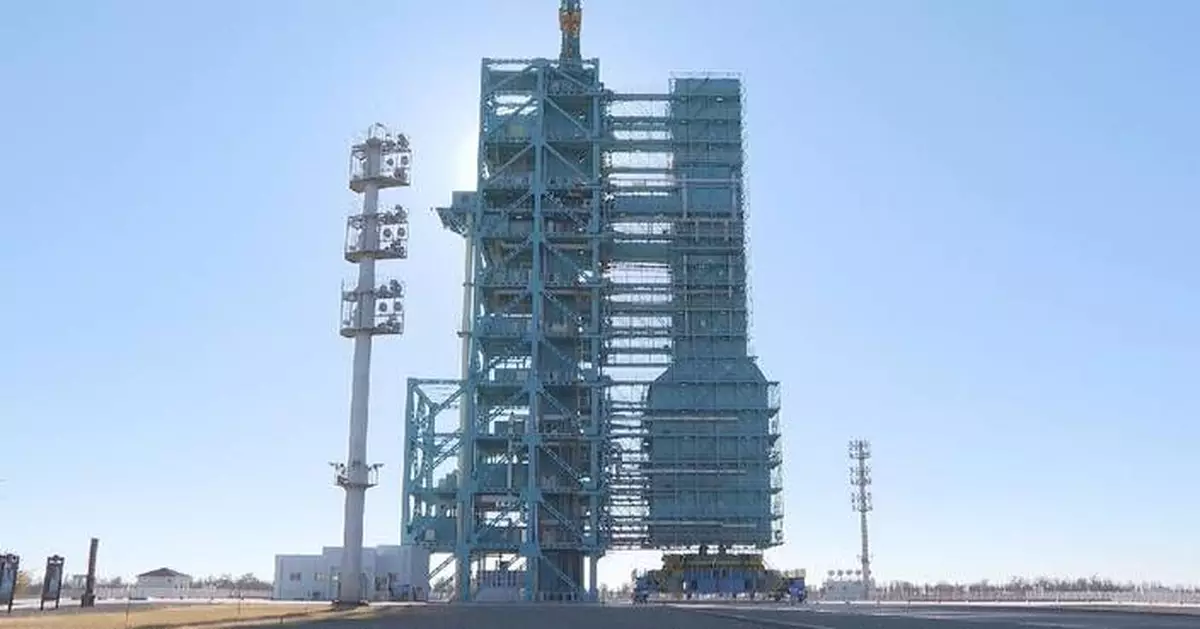
The Shenzhou-21 spaceship is in good shape and ready for launch, with a favorable weather condition, according to staff workers at the launch site.
The crewed spaceship is scheduled to blast off at 23:44 Beijing Time from the Jiuquan Satellite Launch Center in northwest China, sending astronauts Zhang Lu, Wu Fei and Zhang Hongzhang to China's Tiangong space station.
The propellant loading for the launch vehicle was finished on Thursday afternoon, marking the beginning of the Shenzhou-21 mission's countdown phase.
From the start of propellant loading until tonight's launch, staff will continuously monitor rocket propellant leakage concentrations, propellant tank pressure and temperature, and the verticality of the rocket body.
The spaceship, which has also finished propellant filling before it was transferred to the launch area in combination with the Long March-2F Y21 carrier rocket, is now well connected with all systems, according to Liu Xiaozhen, a designer of the spacecraft.
"After docking with the launch vehicle, the assembly was transferred to the launch pad. Subsequently, we conducted a joint test involving astronauts and all systems to verify interfaces and coordination among the systems. The spaceship is now in optimal condition, fully compatible with all system interfaces, and ready for launch," Liu said.
The launch window for the Shenzhou-21 crewed spacecraft was determined by meteorologists at the center after analyzing thousands of meteorological datasets and repeated consultations.
According to the Jiuquan Satellite Launch Center's meteorological office, this year's launch window falls during a lull in cold air activity, with stable weather highly favorable for the mission.
Now, the scientists are closely monitoring relevant real-time weather conditions, including surface winds and temperature, upper-level winds, as well as solar flare and geomagnetic storm events in space, according to Zhang Fang, a meteorologist at the launch center.
"The launch window today features light surface and upper-level winds, with temperatures around 10 degrees Celsius, and favorable space weather conditions, all conducive to the mission's launch tonight," Zhang said.
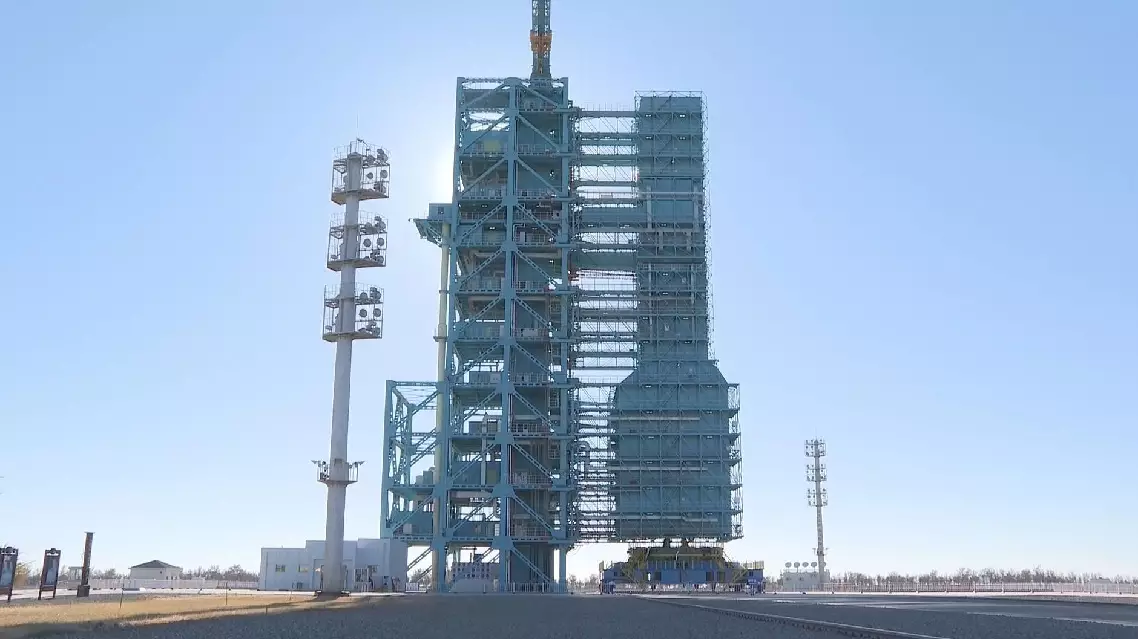
Shenzhou-21 spaceship ready for launch with favorable weather conditions
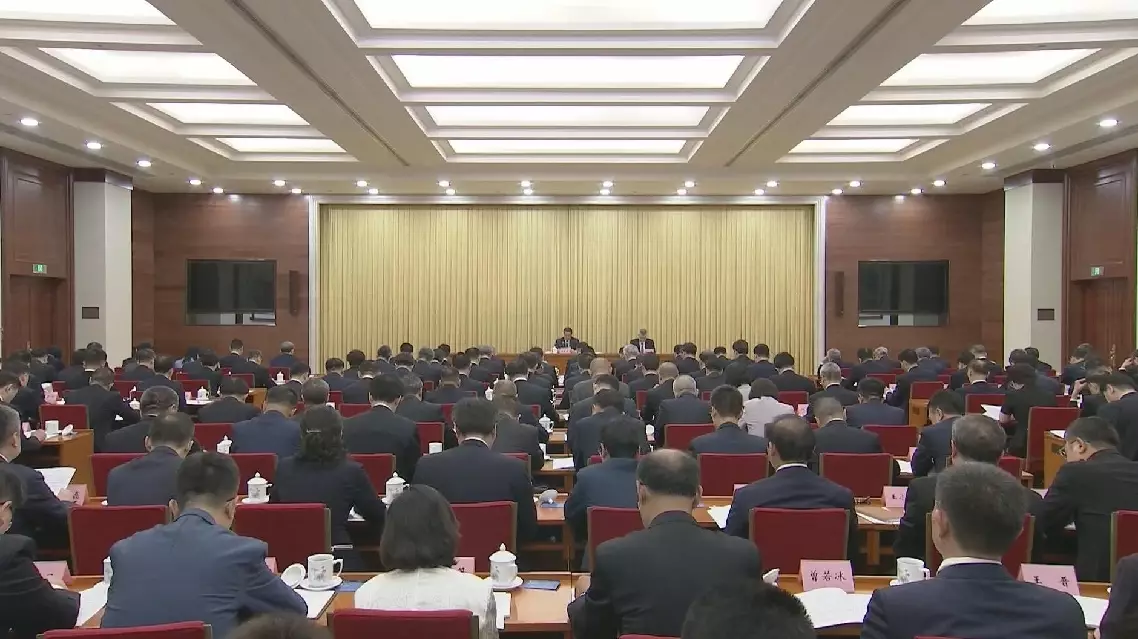
China is witnessing the deep integration of film-related technologies into various sectors, creating diverse application scenarios and innovative experiences, and this cross-industry fusion is effectively stimulating economic growth by driving investment, boosting consumption, and expanding exports.
The continuous improvement in cinematic picture quality and audio effects is steadily propelling the evolution and upgrading of consumer electronics products. In major shopping malls across China, an increasing number of consumer electronics devices supporting high-end film playback features are made available to the public, including 120fps (frames per second) high-frame-rate equipment and 4K HDR (high dynamic range) players.
By incorporating HDR imaging technology, these products deliver brighter highlights, richer shadow detail, and faithfully reproduce the true colors and lighting nuances captured during filming.
"Contemporary laser televisions have incorporated a lot of cinematic technologies, offering larger screens, better picture quality, and superior sound effects. This allows consumers to enjoy a true cinema-like viewing experience in the comfort of their homes, directly boosting our store sales by 100 percent," said Li Xinghua, sales manager of a Chinese e-commerce giant Suning's super experience store located in the Xinjiekou business district in Nanjing City, east China's Jiangsu Province.
In addition, as China’s new energy vehicle market continues to expand, more consumers are now able to enjoy the immersive experience of a mobile cinema on the go.
The deep integration of film audio-visual technologies with smart automotive cabins of new energy vehicles enable films to interact with ambient lighting, seat movement, and air conditioning, generating an immersive viewing experience inside the car. This not only adds entertainment options for long-haul trips but also drives innovation and upgrades in the automotive industry.
"By incorporating advanced cinematic audio technologies,the vehicle features comprehensive sound insulation upgrades at more than 30 key locations throughout the cabin. This is complemented by over 200 targeted noise optimizations and the application of more than 120 innovative acoustic materials. These enhancements create a profoundly quieter interior environment while delivering the distinctive Dolby Atmos immersive sound experience, previously exclusive to cinemas. Leveraging a cinema-inspired sound field layout, the system ensures that passengers in every seat enjoy identical, fully enveloping audio immersion," said Chen Xianling, an engineer from Xiaomi Auto.
Moreover, with the widespread adoption of mobile smart devices and Chinese viewers' rising expectations for high-quality cinematic content, more film production techniques are now being applied to the short drama industry.
This has enabled short drama -- a sector once defined by low cost and fast turnover -- to achieve a leap forward in visual quality, narrative pacing, and audiovisual experience. It helps the sector to shift from a focus on quick traffic gains to a model centered on high-quality content, creating a new growth driver in China's cultural and entertainment market.
"Film technology is quietly yet powerfully reshaping a wide range of industries, bringing sustained innovation and added value far beyond the screen," said Deng Guiyao, director of the audiovisual center under the industrial culture development center of China's Ministry of Industry and Information Technology (MIIT).
Film technologies drive cross-industry growth in China