Skip to Content Facebook Feature Image

Main roads reopen in Yemen as peace process makes headway

HotTV

HotTV

HotTV

Main roads reopen in Yemen as peace process makes headway

2025-11-07 09:20 Last Updated At:11-08 17:31

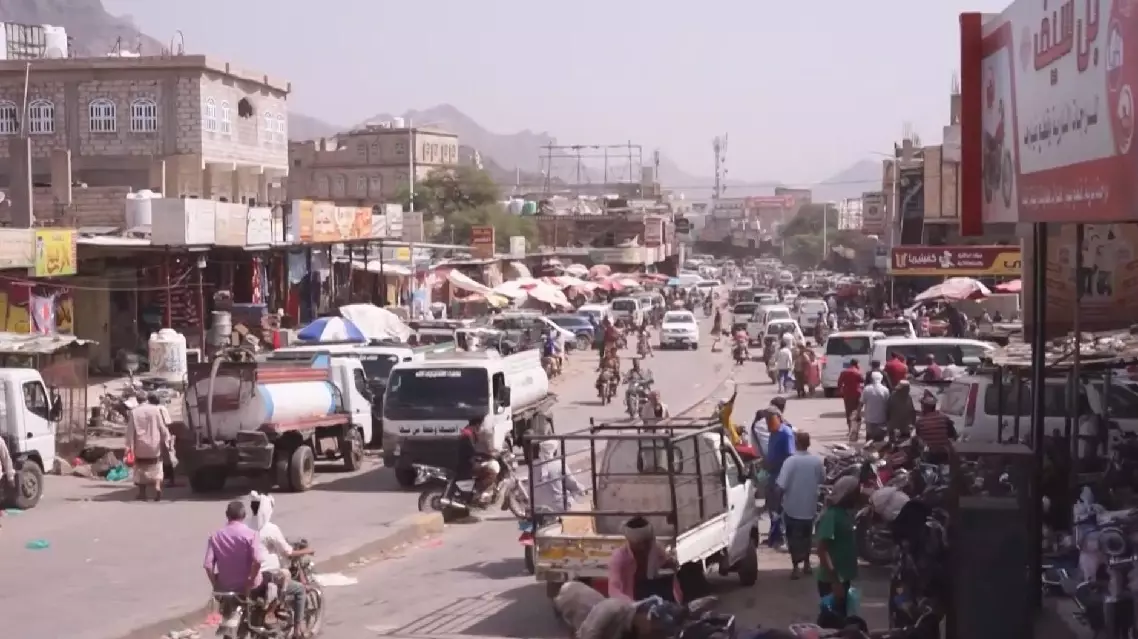
Some of Yemen's most vital roads have recently reopened as the country's stalled peace process gradually resumes, driven by a ceasefire in the Gaza Strip and a cooling regional situation.

Since the outbreak of Yemen's civil war in 2015, many sections and bridges of the country's main north-south transportation arteries have been destroyed during fighting.

Military checkpoints have been established on the remaining routes, leading to prolonged road closures.

This has forced Yemeni citizens to take circuitous routes through mountains and deserts to travel between the north and south of the country.

The reopened routes include the main north-south artery connecting the capital Sanaa and Aden, as well as sections linking Taiz, Dhale, and Hodeidah provinces.

Many residents said that the reopened roads have greatly facilitated travel, saving both time and money.

"Before the roads opened, the city was virtually paralyzed. After reopening, life begins returning to normal. Commercial activities have resumed, and it's become much easier and cheaper for merchants and patients to travel between regions or provinces. Life is gradually getting back on track," said Mohammed Al-Muraisi, a resident of Dhale Province.

Analysts say this has spurred economic recovery in both northern and southern regions.

Particularly amid the ongoing stark humanitarian crisis, the road opening will greatly facilitate the transport and distribution of essential supplies.

They further note that the continued implementation of the peace roadmap, including the road opening, will serve as a crucial indicator of all Yemeni parties' commitment to peace.

"I see the opening of ports, crossings, and roads as real signs of progress to move closer to the peace process. It was also preceded by the cessation of military operations and the laying down of arms on all fronts. These are all signs that confirm or lead to the conclusion that Yemenis are close to reaching a peace agreement; only the details related to the peace process and the timing remain to be worked out," said Mohammed Shamsan, a political analyst.
Main roads reopen in Yemen as peace process makes headway


Main roads reopen in Yemen as peace process makes headway
The escalating military conflict in the Middle East could bring severe economic consequences and job losses to the region which may plunge up to 4 million people into poverty, a United Nations spokesman has warned.

Stephane Dujarric, spokesperson for United Nations Secretary-General Antonio Guterres, outlined the growing concerns surrounding the deepening conflict during a regular press briefing on Tuesday.

Citing data released by the United Nations Development Programme (UNDP), Dujarric said the widening war could result in a devastating economic impact, which will have a profound effect on people's livelihoods.

"I wanted to flag some interesting data just released by the United Nations Development Programme that suggests the military escalation in the Middle East may cost economies in the region from 3.7 to 6 percent of their collective gross domestic product (GDP). This represents a staggering loss of 120 to 194 billion U.S. dollars and exceeds the cumulative regional GDP growth achieved in 2025. This is coupled with an estimated rise in unemployment of up to 4 percentage points or 3.6 million lost jobs, which is more than the total jobs created in the region last year. These reversals will push up to 4 million people into poverty, according to UNDP's analysis," he said.

The conflict erupted on Feb. 28 when the United States and Israeli launched joint airstrikes on the Iranian capital Tehran and several other cities. U.S-Israeli attacks have continued since, targeting key Iranian military command centers, missile installations, energy infrastructures and nuclear facilities.

In response, Iran has launched waves of missile and drone strikes against Israel and U.S. military facilities across the Middle East, including those in Kuwait, Bahrain, Qatar, Jordan, Saudi Arabia and the United Arab Emirates.

The situation shows little sign of de-escalation as Iranian Foreign Ministry spokesman Esmaeil Baghaei said on Monday that a recent truce plan proposed by the United States contains "very excessive, unrealistic and unreasonable" demands.

Wider concerns are also mounting over the disruption to trade and transport along the Strait of Hormuz, a vital shipping passageway that carries about one-quarter of global seaborne oil trade.

UN spokesman warns up to 4 million could be pushed into poverty by Mideast conflict

UN spokesman warns up to 4 million could be pushed into poverty by Mideast conflict

Recommended Articles