The future of healthcare is on full display at the ongoing 8th China International Import Expo (CIIE), as global companies vie to take advantage of the country's rapidly reshaping consumer trends around healthier lifestyles and graceful aging.
In recent years, Chinese residents have become increasingly proactive about their health. This shift in mindset has given rise to a booming "health consumption" market.
At this year's CIIE, running from November 5 to 10, the global healthcare sector has been showcased in all its breadth, with everything from nutritional formulas to elder care products being represented by a diverse range of exhibitors.
"China is one of the most advanced healthcare markets anywhere in the world. They're pushing the boundaries in terms of so many things, so many innovations within healthcare," said Stephen Towe, CEO of Leo Cancer Care, a U.S. radiation therapy company.
"I would say it's called self-optimization. We want to be the best version that we can be," said Frank Hammes, global CEO of IQAir, an air quality technology company based in Switzerland.
"It's a vast market, the huge population and aging society and just a combination of the two advanced economy. So, I think as the society most developed and the economy more developed as people's health conscience more developed, I think people were shifting more attention to healthcare overall," said Jason Liu, CEO of Intuitive Fosun, a joint venture of the representative of robotic-assisted surgical system.
China's market for elderly consumer goods is still in its early stages. While a few local companies have started developing brands targeting the aging population, most available products currently focus on medical equipment, pharmaceuticals, and health supplements.
There is also a notable shortage of skilled professionals in specialized health services, prompting innovative solutions from global companies.
"This trend has become very, very urgent and very, very important. So I think with the aging population, now we're looking at patients that are 80, that are 90. I think they need a couple of things. I think number one is certainly more minimally invasive treatment. And then secondly, I think something that we're doing more of these days is also the localization of clinical data," said Ben Cheong, senior vice president for the Greater China Region at Edwards Lifesciences, a U.S. medical technology company.
"And so, one service that we recently launched to help these senior patients is for very low cost on an annual basis. There's a 24/7 primary care doctor, family doctor that's accessible to them and their family with the food to them, the access to their medical records. And this person, who's on WeChat, can help remind them when to come back for diagnosis, when to take their medicine," said Carl Wu, CEO of United Family Healthcare, an international hospital and clinic network.
In the first three quarters of 2025, the average Chinese consumer spent roughly 300 U.S. dollars on healthcare, about 8.9 percent of their total expenditure, and that number has continued to rise.
According to a survey by McKinsey and Company, 64 percent of Chinese consumers said they would maintain or even increase their spending on health, even if their incomes were to decrease.
The energy at the CIIE this year has been palpable. From innovative wellness products to cutting-edge health technologies, the health consumption market is attracting companies focused on promoting healthier lifestyles.
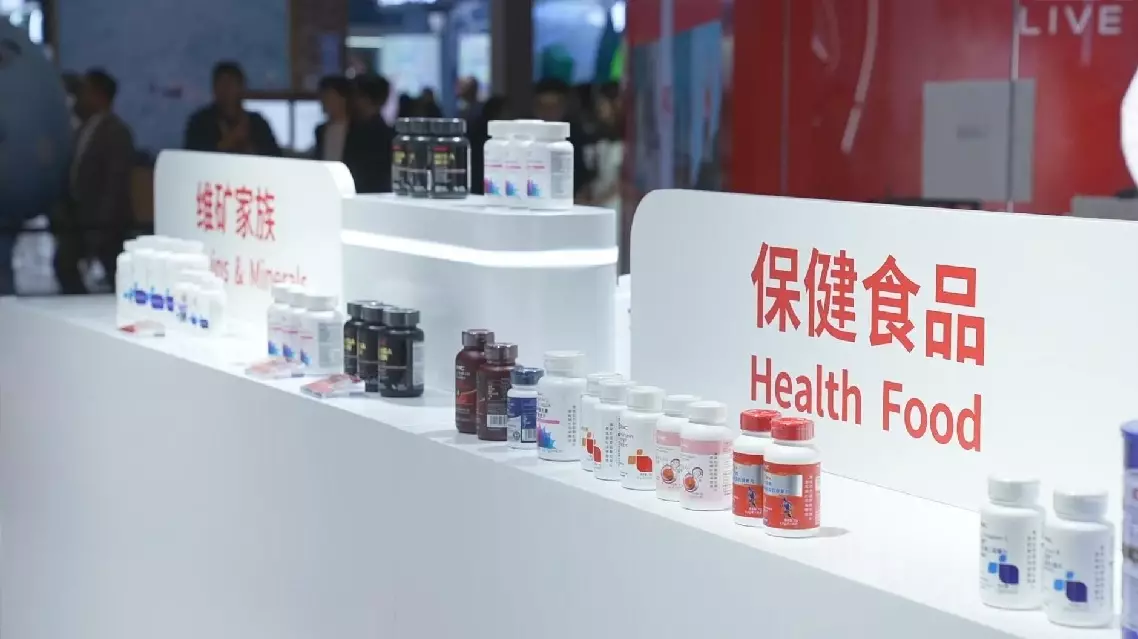
China's 'health consumption' boom takes center stage at CIIE