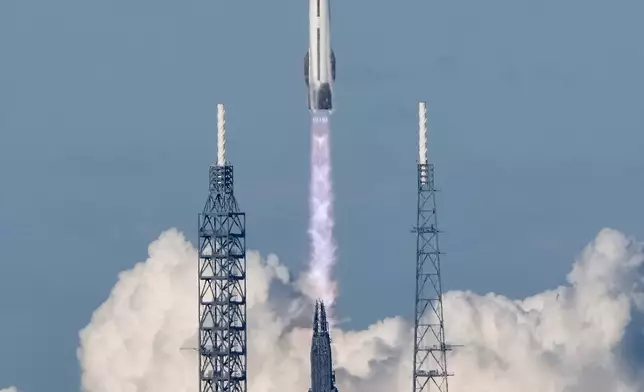
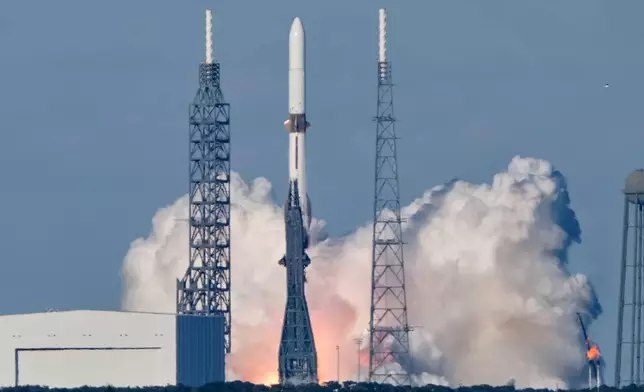
CAPE CANAVERAL, Fla. (AP) — Blue Origin launched its huge New Glenn rocket Thursday with a pair of NASA spacecraft destined for Mars.
It was only the second flight of the rocket that Jeff Bezos’ company and NASA are counting on to get people and supplies to the moon — and it was a complete success.
Click to Gallery
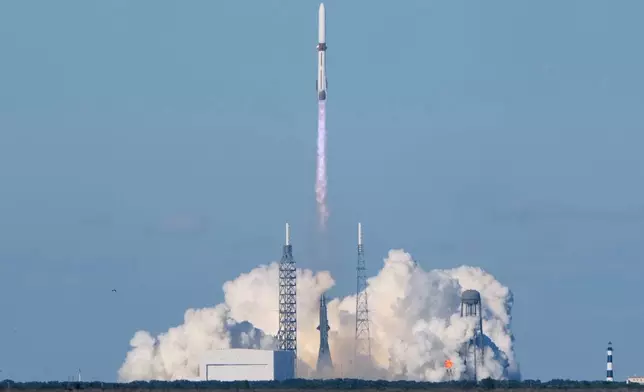
Spectators on the beach watch a Blue Origin New Glenn rocket as it lifts off from Launch Complex 36 at the Cape Canaveral Space Force Station in Cape Canaveral, Fla., Thursday, Nov. 13, 2025. (AP Photo/John Raoux)
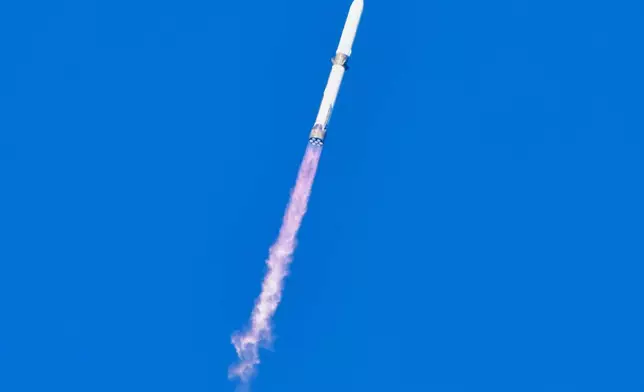
A Blue Origin New Glenn rocket lifts off from Launch Complex 36 at the Cape Canaveral Space Force Station in Cape Canaveral, Fla., Thursday, Nov. 13, 2025. (AP Photo/John Raoux)
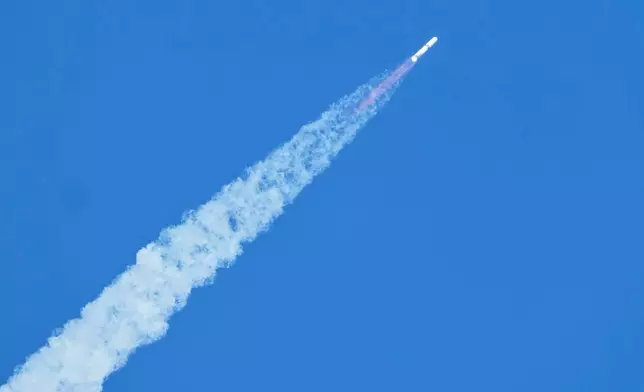
A Blue Origin New Glenn rocket lifts off from Launch Complex 36 at the Cape Canaveral Space Force Station in Cape Canaveral, Fla., Thursday, Nov. 13, 2025. (AP Photo/John Raoux)
A Blue Origin New Glenn rocket lifts off from Launch Complex 36 at the Cape Canaveral Space Force Station in Cape Canaveral, Fla., Thursday, Nov. 13, 2025. (AP Photo/John Raoux)
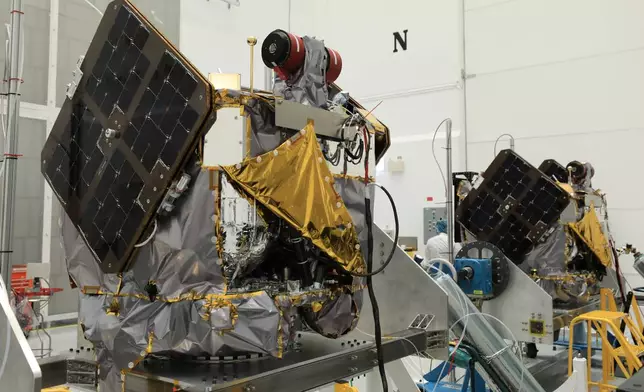
In this image provided by NASA, the agency's identical Mars orbiters, named Escapade (Escape and Plasma Acceleration and Dynamics Explorers) are inspected and processed at the Astrotech Space Operations Facility near the agency’s Kennedy Space Center in Cape Canaveral, Fla., Thursday, Aug. 22, 2025. (Kim Shiflett/NASA via AP)
A Blue Origin New Glenn rocket lifts off from Launch Complex 36 at the Cape Canaveral Space Force Station in Cape Canaveral, Fla., Thursday, Nov. 13, 2025. (AP Photo/John Raoux)
A Blue Origin New Glenn rocket lifts off from Launch Complex 36 at the Cape Canaveral Space Force Station in Cape Canaveral, Fla., Thursday, Nov. 13, 2025. (AP Photo/John Raoux)
A Blue Origin New Glenn rocket lifts off from Launch Complex 36 at the Cape Canaveral Space Force Station in Cape Canaveral, Fla., Thursday, Nov. 13, 2025. (AP Photo/John Raoux)
The 321-foot (98-meter) New Glenn blasted into the afternoon sky from Cape Canaveral Space Force Station, sending NASA’s twin Mars orbiters on a drawn-out journey to the red planet. Liftoff was stalled four days by lousy local weather as well as solar storms strong enough to paint the skies with auroras as far south as Florida.
In a remarkable first, Blue Origin recovered the booster following its separation from the upper stage and the Mars orbiters, an essential step to recycle and slash costs similar to SpaceX. Company employees cheered wildly as the booster landed upright on a barge 375 miles (600 kilometers) offshore. An ecstatic Bezos watched the action from Launch Control.
“Next stop, moon!” employees chanted following the booster's bull's-eye landing. Twenty minutes later, the rocket's upper stage deployed the two Mars orbiters in space, the mission's main objective. Congratulations poured in from NASA officials as well as SpaceX's Elon Musk, whose booster landings are now routine.
New Glenn’s inaugural test flight in January delivered a prototype satellite to orbit, but failed to land the booster on its floating platform in the Atlantic.
The identical Mars orbiters, named Escapade, will spend a year hanging out near Earth, stationing themselves 1 million miles (1.5 million kilometers) away. Once Earth and Mars are properly aligned next fall, the duo will get a gravity assist from Earth to head to the red planet, arriving in 2027.
Once around Mars, the spacecraft will map the planet’s upper atmosphere and scattered magnetic fields, studying how these realms interact with the solar wind. The observations should shed light on the processes behind the escaping Martian atmosphere, helping to explain how the planet went from wet and warm to dry and dusty. Scientists will also learn how best to protect astronauts against Mars' harsh radiation environment.
“We really, really want to understand the interaction of the solar wind with Mars better than we do now,” Escapade’s lead scientist, Rob Lillis of the University of California, Berkeley, said ahead of the launch. “Escapade is going to bring an unprecedented stereo viewpoint because we’re going to have two spacecraft at the same time.”
It’s a relatively low-budget mission, coming in under $80 million, that's managed and operated by UC Berkeley. NASA saved money by signing up for one of New Glenn’s early flights. The Mars orbiters should have blasted off last fall, but NASA passed up that ideal launch window — Earth and Mars line up for a quick transit just every two years — because of feared delays with Blue Origin's brand-new rocket.
Named after John Glenn, the first American to orbit the world, New Glenn is five times bigger than the New Shepard rockets sending wealthy clients to the edge of space from West Texas. Blue Origin plans to launch a prototype Blue Moon lunar lander on a demo mission in the coming months aboard New Glenn.
Created in 2000 by Bezos, Amazon's founder, Blue Origin already holds a NASA contract for the third moon landing by astronauts under the Artemis program. Musk’s SpaceX beat out Blue Origin for the first and second crew landings, using Starships, nearly 100 feet (30 meters) taller than Bezos' New Glenn.
But last month NASA Acting Administrator Sean Duffy reopened the contract for the first crewed moon landing, citing concern over the pace of Starship’s progress in flight tests from Texas. Blue Origin as well as SpaceX have presented accelerated landing plans.
NASA is on track to send astronauts around the moon early next year using its own Space Launch System, or SLS, rocket. The next Artemis crew would attempt to land; the space agency is pressing to get astronauts back on the lunar surface by decade’s end in order to beat China.
Twelve astronauts walked on the moon more than a half-century ago during NASA's Apollo program.
The Associated Press Health and Science Department receives support from the Howard Hughes Medical Institute’s Department of Science Education and the Robert Wood Johnson Foundation. The AP is solely responsible for all content.

Spectators on the beach watch a Blue Origin New Glenn rocket as it lifts off from Launch Complex 36 at the Cape Canaveral Space Force Station in Cape Canaveral, Fla., Thursday, Nov. 13, 2025. (AP Photo/John Raoux)
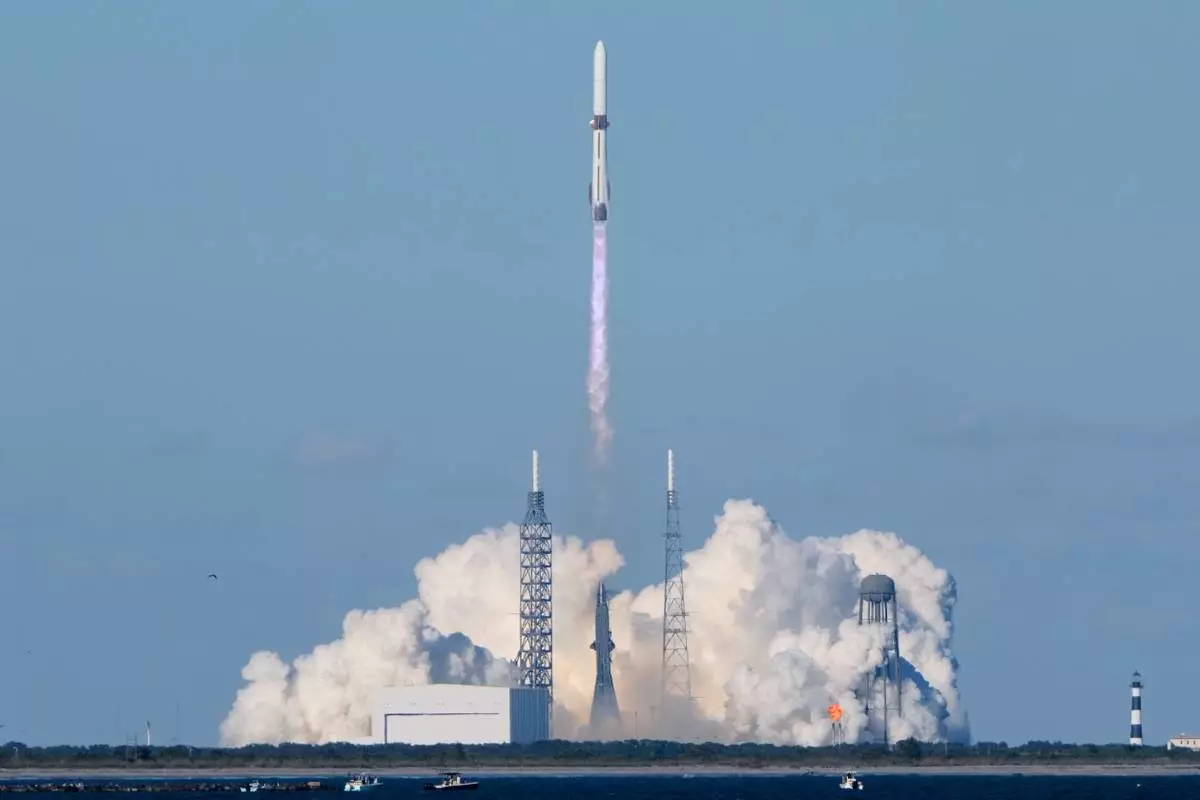
A Blue Origin New Glenn rocket lifts off from Launch Complex 36 at the Cape Canaveral Space Force Station in Cape Canaveral, Fla., Thursday, Nov. 13, 2025. (AP Photo/John Raoux)

A Blue Origin New Glenn rocket lifts off from Launch Complex 36 at the Cape Canaveral Space Force Station in Cape Canaveral, Fla., Thursday, Nov. 13, 2025. (AP Photo/John Raoux)
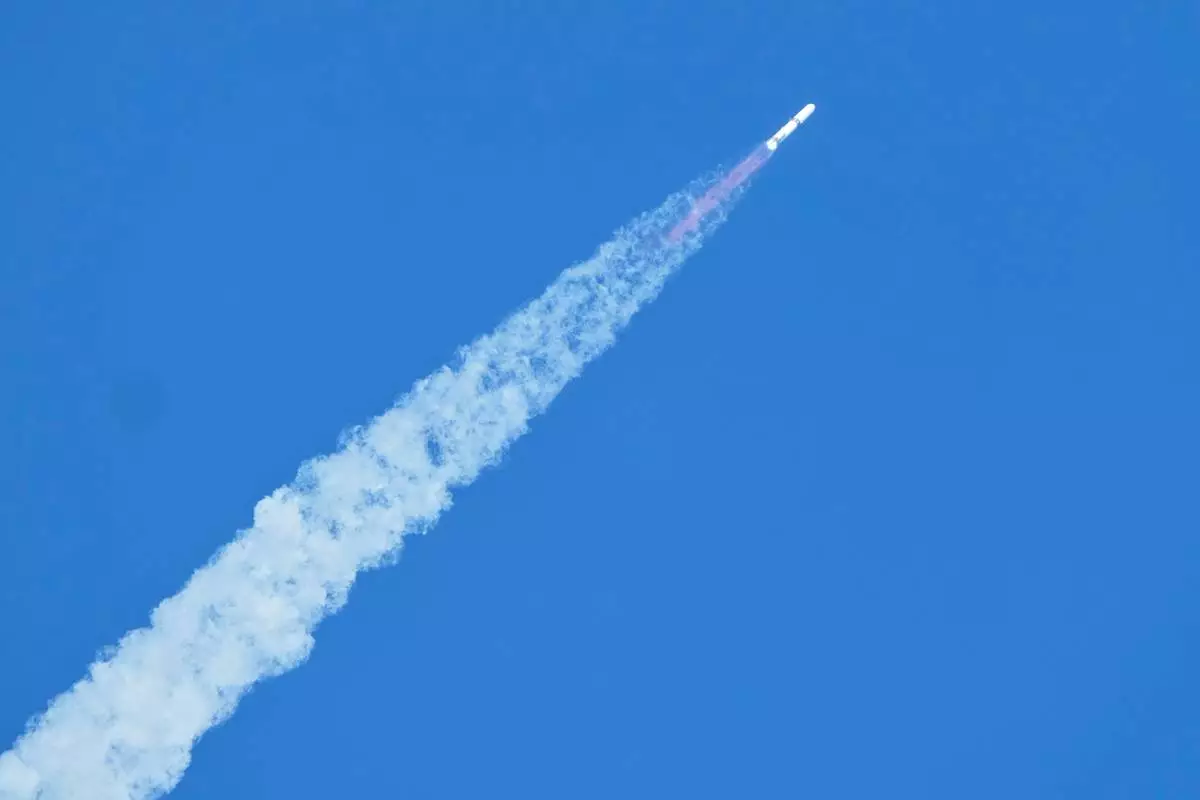
A Blue Origin New Glenn rocket lifts off from Launch Complex 36 at the Cape Canaveral Space Force Station in Cape Canaveral, Fla., Thursday, Nov. 13, 2025. (AP Photo/John Raoux)

In this image provided by NASA, the agency's identical Mars orbiters, named Escapade (Escape and Plasma Acceleration and Dynamics Explorers) are inspected and processed at the Astrotech Space Operations Facility near the agency’s Kennedy Space Center in Cape Canaveral, Fla., Thursday, Aug. 22, 2025. (Kim Shiflett/NASA via AP)
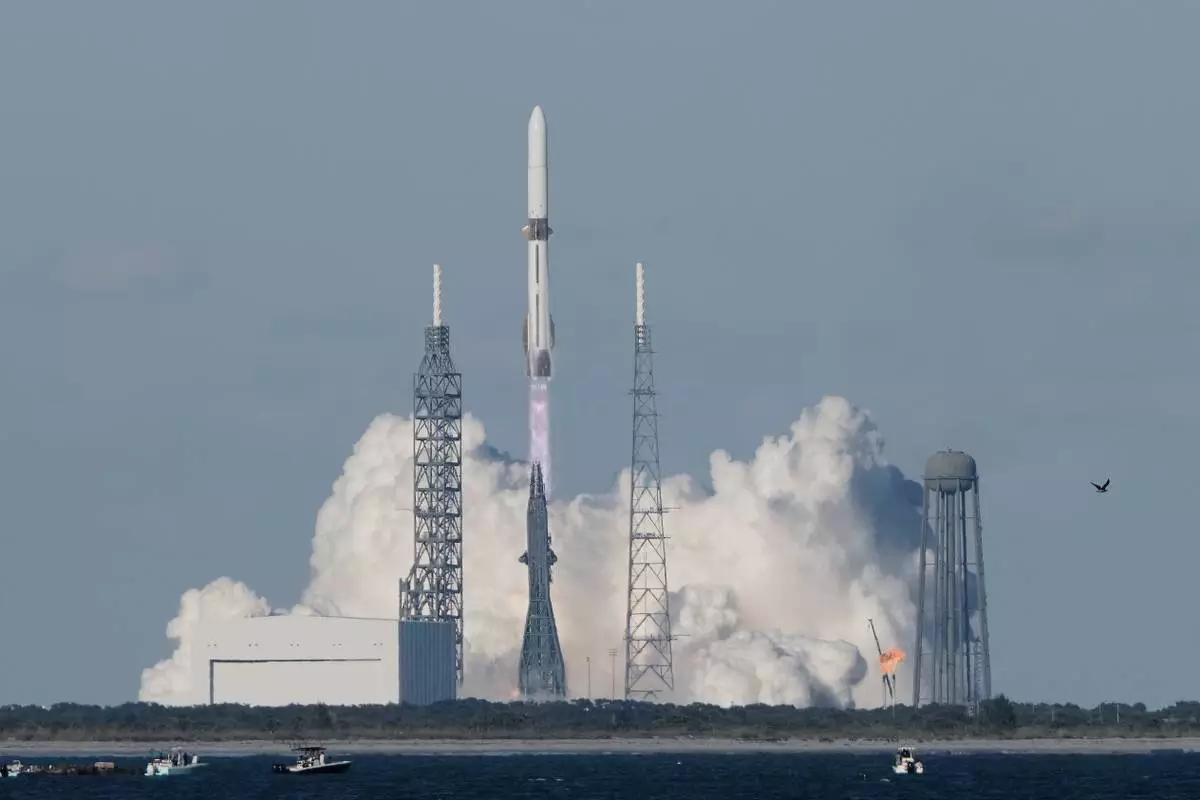
A Blue Origin New Glenn rocket lifts off from Launch Complex 36 at the Cape Canaveral Space Force Station in Cape Canaveral, Fla., Thursday, Nov. 13, 2025. (AP Photo/John Raoux)

A Blue Origin New Glenn rocket lifts off from Launch Complex 36 at the Cape Canaveral Space Force Station in Cape Canaveral, Fla., Thursday, Nov. 13, 2025. (AP Photo/John Raoux)

A Blue Origin New Glenn rocket lifts off from Launch Complex 36 at the Cape Canaveral Space Force Station in Cape Canaveral, Fla., Thursday, Nov. 13, 2025. (AP Photo/John Raoux)
DUBAI, United Arab Emirates (AP) — Iran kept up its attacks on Israel and Persian Gulf neighbors on Wednesday as airstrikes pounded Tehran and U.S. President Donald Trump again made contradictory statements about whether he was ready to wind down the war or escalate it.
Trump struck a belligerent tone Wednesday in a Truth Social post, demanding that Iran stop blocking the Strait of Hormuz — the waterway vital to global oil supplies — or the U.S. would bomb the Islamic Republic “back to the Stone Ages.” A day earlier, Trump said the U.S. “will not have anything to do with” ensuring the security of ships passing through Hormuz; that was an apparent backtrack from a previous threat to attack Iran's power grid if it didn't open the strait by April 6.
Trump, who is scheduled to give a televised address Wednesday evening, said Tuesday he could walk away from the war in two to three weeks once he felt confident Iran would not be able to build a nuclear weapon — even if Tehran does not agree to a ceasefire. The hint of an end in sight has buoyed Wall Street the past two days.
His latest Truth Social post struck a harder line as more American troops move into the region for a possible ground offensive after weeks of airstrikes targeting Iran.
Trump also claimed Wednesday that “Iran's New Regime President” wanted a ceasefire. It wasn't clear to whom the U.S. president was referring since Iran still has the same president. Iran’s Foreign Ministry spokesman, Esmail Baghaei, called Trump's claim “false and baseless,” according to a report on Iranian state television.
Speaking earlier to Al Jazeera, Iranian Foreign Minister Abbas Araghchi signaled Tehran’s willingness to keep fighting. “You cannot speak to the people of Iran in the language of threats and deadlines,” he said. “We do not set any deadline for defending ourselves.”
Since the war began on Feb. 28, Trump has offered shifting objectives and repeatedly has said it could be over soon while also threatening to widen the conflict. Thousands of additional U.S. troops are currently heading to the Middle East, and speculation abounds about the purpose of their deployment.
Just days ago, Trump threatened to attack Iran’s Kharg Island oil export hub. And there has also been speculation about whether the U.S. could decide to send in military forces to secure Iran’s uranium stockpile — a complex and risky operation, fraught with radiation and chemical dangers, according to experts and former government officials.
Adding to the confusion is what role Israel — which has been bombing Iran alongside the U.S. — might play in any of these scenarios.
Trump has been under growing pressure to end the war as oil prices have skyrocketed, pushing up the cost of gasoline, food and other goods. The price of Brent crude, the international standard, is up more than 40% since the start of the war, though it declined slightly on Wednesday and traded at around $101 a barrel.
The U.S. has presented Iran with a 15-point plan aimed at bringing about a ceasefire, including a demand for the strait to be reopened and for its nuclear program to be rolled back.
Iran insists its nuclear program is peaceful. And in a report last week by Iranian state TV's English-language broadcaster, an anonymous official was quoted as saying Iran had its own demands to end the fighting, including retaining sovereignty over the strait.
In the interview with Al Jazeera, Araghchi acknowledged receiving direct messages from U.S. Mideast envoy Steve Witkoff. He insisted, however, that there were no direct negotiations and said Iran has no faith that talks with the U.S. could yield any results, saying “the trust level is at zero.”
He warned against any U.S. attempt to launch a ground offensive, saying “we are waiting for them.”
In a deal ostensibly to give diplomacy a chance, U.S. officials have given “clear assurances” that Araghchi and Iran's Parliamentary Speaker Mohammad Bagher Qalibaf won't be targeted, according to three officials who spoke on condition of anonymity because they're not authorized to speak publicly about the matter.
President Masoud Pezeshkian posted on social media Wednesday a letter addressing U.S. citizens, saying that before the war, his country had pursued negotiations, but that the U.S. chose to withdraw from that path. “Exactly which of the American people’s interests are truly being served by this war? Was there any objective threat from Iran to justify such behavior?” Pezeshkian asked in the letter posted in English on his X account.
A cruise missile slammed into an oil tanker off Qatar’s coast Wednesday, the Defense Ministry said. The crew was evacuated and no casualties were reported. A Kuwaiti oil tanker came under attack off Dubai the day before, one of more than 20 ships attacked by Iran during the war.
In the United Arab Emirates, a person was killed when he was hit by debris from an intercepted drone in Fujairah, one of the country’s seven emirates.
In Kuwait, the state-run KUNA news agency said a drone hit a fuel tank at Kuwait International Airport, sparking a large fire.
Jordan’s military said it intercepted a ballistic missile and two drones fired from Iran in the last 24 hours. No casualties were reported. Two drones were also intercepted in Saudi Arabia.
In Israel, sirens sounded to warn of incoming missiles and AP reporters heard loud booms in Tel Aviv as the windows of buildings shook from the reverberations. There were no immediate reports of damage or casualties.
An airstrike on Tehran appeared to have hit the former U.S. Embassy compound, which has been controlled by Iran’s Revolutionary Guard since American diplomats were held hostage there in 1979. Witnesses said buildings outside the massive compound had their windows blown out.
In Lebanon, at least five people were killed in an Israeli strike on a Beirut neighborhood.
Israel invaded southern Lebanon after the Iran-linked Hezbollah militant group began launching missiles into northern Israel days after the outbreak of the war. Many Lebanese fear another prolonged military occupation.
More than 1,200 people have been killed in Lebanon and more than 1 million displaced, according to authorities. Ten Israeli soldiers have also died there.
In Iran, authorities say more than 1,900 people have been killed, while 19 have been reported dead in Israel. More than two dozen people have died in Gulf states and the occupied West Bank, while 13 U.S. service members have been killed.
Rising reported from Bangkok. Associated Press writers Giovanna Dell’Orto in Miami, Farnoush Amiri in New York and Samy Magdy in Cairo contributed to this report.

A young girl is comforted by her father and Israeli soldiers as they take cover in a bomb shelter during air raid sirens warning of incoming Iranian missile strikes in Bnei Brak, Israel, Wednesday, April 1, 2026. (AP Photo/Oded Balilty)
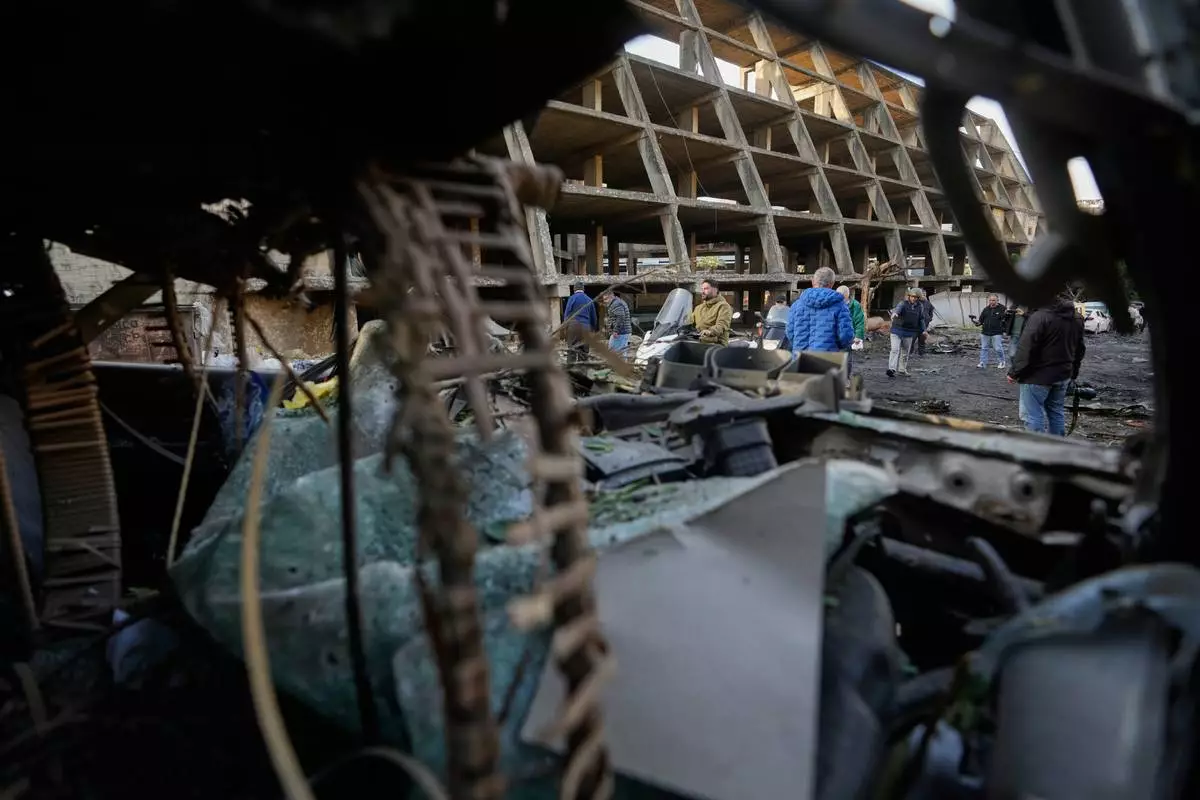
People inspect the site of an Israeli strike amid debris and damaged vehicles in Beirut, Lebanon, Wednesday, April 1, 2026. (AP Photo/Hassan Ammar)

A man feeds stray cats in Tehran, Iran, Tuesday, March 31, 2026. (AP Photo/Vahid Salemi)
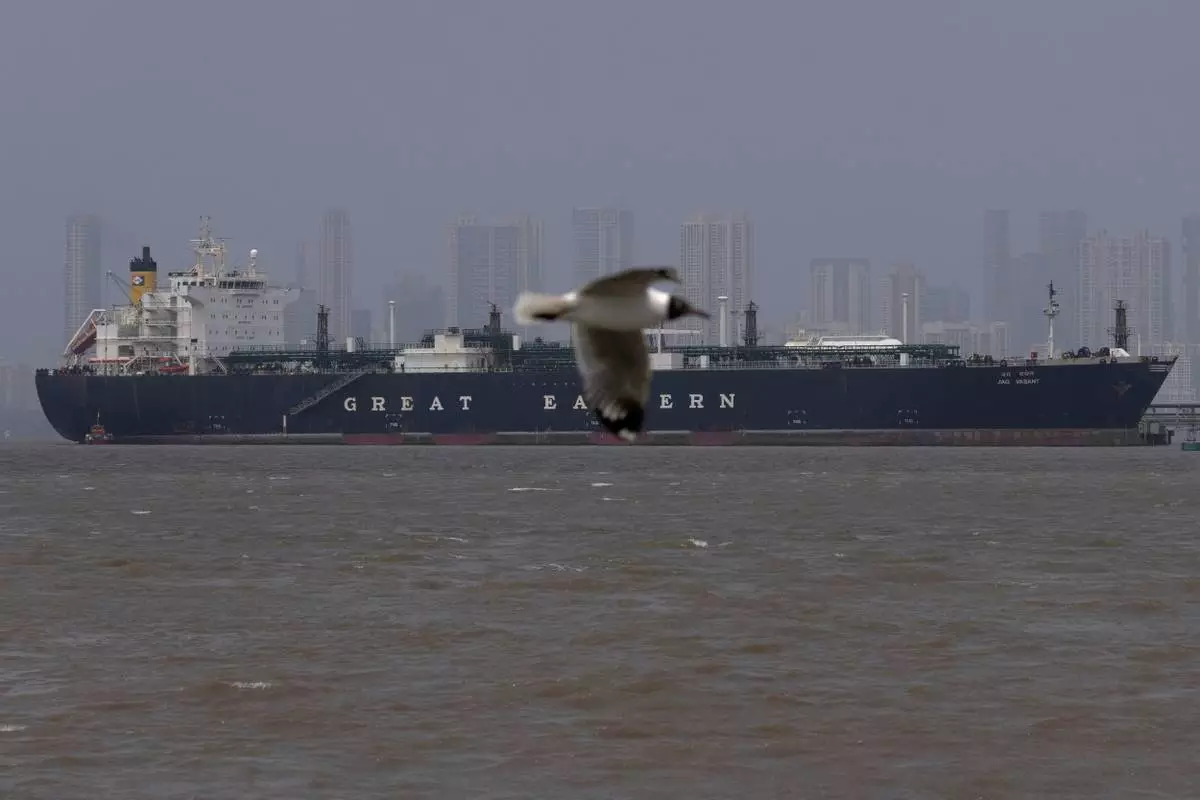
The Indian flagged LPG carrier Jag Vasant transporting liquefied petroleum gas, is seen at the Mumbai Port in Mumbai, India, after it arrived clearing the Strait of Hormuz, Wednesday, April 1, 2026. (AP Photo/Rafiq Maqbool)

Firefighters and rescue workers work at the site of Israeli airstrikes, in Beirut, Lebanon, Wednesday, April 1, 2026. (AP Photo/Hussein Malla)

A firefighter extinguishes a car at the site of Israeli airstrikes, in Beirut, Lebanon, Wednesday, April 1, 2026. (AP Photo/Hussein Malla)

Israel's rescue teams and residents take shelter as sirens sounds next to a site struck by an Iranian missile in Bnei Brak, Wednesday, April 1, 2026. (AP Photo/Oded Balilty)

A police vehicle is seen through a shattered windshield at the site of an Israeli strike in Beirut, Lebanon, Wednesday, April 1, 2026. (AP Photo/Hassan Ammar)

Two men ride scooters past charred debris at the site of an Israeli strike in Beirut, Lebanon, Wednesday, April 1, 2026. (AP Photo/Hassan Ammar)