Skip to Content Facebook Feature Image

U.S. historian slams Takaichi's Taiwan remarks, highlights 'no-war' clause of Japan's constitution

HotTV

HotTV

HotTV

U.S. historian slams Takaichi's Taiwan remarks, highlights 'no-war' clause of Japan's constitution

2025-11-19 17:37 Last Updated At:11-20 12:37

A noted U.S. historian on Tuesday condemned recent comments by Japanese Prime Minister Sanae Takaichi on China's Taiwan, calling them a breach of the post-war order that seriously undermines regional peace.

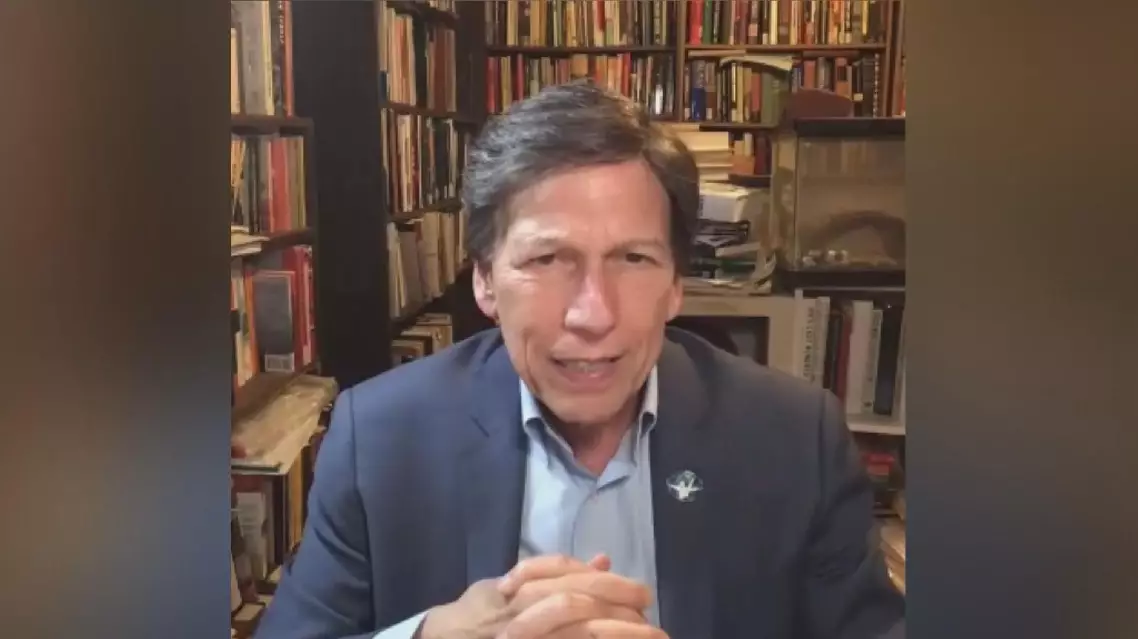
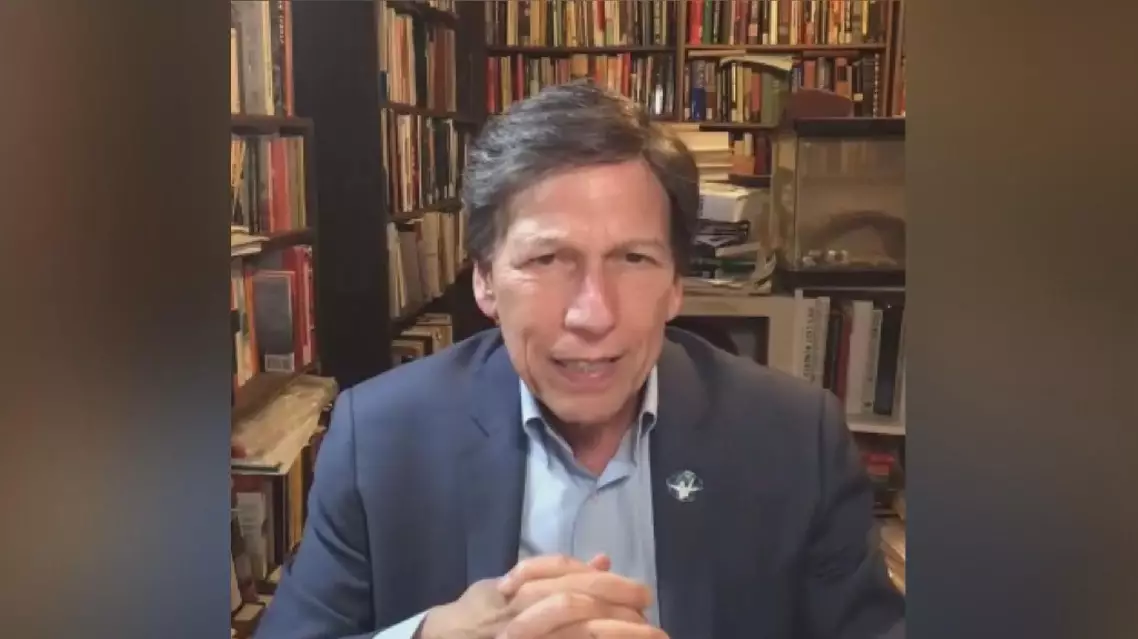
Peter Kuznick, professor of history at American University, said in an interview with China Central Television that Takaichi's erroneous remarks pose a danger that cannot be ignored to Sino-Japanese relations and peace across Asia as a whole.

The scholar noted that Takaichi's recent use of the argument "a Taiwan emergency is a Japanese emergency" ignored the most sensitive historical context of Sino-Japanese relations and overlooked a bottom line set by the post-war international order.

"It was such a stupid, provocative, ignorant thing to say. Japan has adhered to the post-war agreements including in 1971 vote in the United Nations. So, Japan has always implicitly recognized the one-China policy. And Takaichi is the first one to really disavow that. It's very dangerous and very provocative," he said, referring to the vote on UN General Assembly Resolution 2758 in October 1971. The resolution, adopted with an overwhelming majority, solemnly confirms and fully embodies the one-China principle.

Kuznick, who also directs the university's Nuclear Studies Institute, pointed out that Takaichi's government is actively eroding Japan's post-war pacifist constitution, a key cornerstone of regional stability, and sheering the nation towards rearmament.

He highlighted that Article 9, the "no-war" clause contained in Japan's constitution, prohibits the country from possessing military forces and other "war potential."

"Article 9 created a peace constitution saying that it's not going to use military forces anywhere in any aggressive way. But increasingly in recent years, the Japanese governments have gotten around Article 9, and they deployed the Self-Defense Forces. And how they say they're allowed to deploy Self-Defense Forces to support Japan's allies in the region, meaning the United States and especially over Taiwan. And so Article 9 [of] the peace constitution, is still on the books, but Takaichi, like her predecessors, has made clear she wants to get rid of it. And it would be very unfortunate," said Kuznick.
U.S. historian slams Takaichi's Taiwan remarks, highlights 'no-war' clause of Japan's constitution
U.S. historian slams Takaichi's Taiwan remarks, highlights 'no-war' clause of Japan's constitution
U.S. historian slams Takaichi's Taiwan remarks, highlights 'no-war' clause of Japan's constitution
U.S. historian slams Takaichi's Taiwan remarks, highlights 'no-war' clause of Japan's constitution
Israel has moved to hike up fuel costs starting Wednesday, setting the highest prices in nearly four years, as the impact of the U.S.-Israeli war with Iran sees global oil prices soar.

The country's Energy Ministry announced Monday that starting from April 1, the price of unleaded 95-octane gasoline would rise to 8.05 shekels (over 2.5 U.S. dollars) per liter, up from 7.02 shekels, representing a 14.7 percent increase.

The ministry said the hike was necessitated by a nearly 50 percent rise in fuel prices across Mediterranean countries, amid higher global oil costs linked to the ongoing war with Iran and concerns over the disruption to shipping through the Strait of Hormuz -- a vital passageway vital that carries about one-quarter of global seaborne oil trade.

In addition, the ministry said the exchange rate for the shekel also rose slightly by about 2 percent, which has pushed up Israel's import costs and further contributed to the increase in fuel prices.

Gasoline prices at Israeli gas stations are set by the Energy Ministry at the end of each month, based on the average fuel prices in the Mediterranean region and the exchange rate of the local currency.

The new price is the highest for more than three and a half years, with ministry figures showing the last peak was 8.08 shekels per liter in July 2022.

Israeli public broadcaster Kan TV News reported that the government is considering intervening to lower prices by cutting the excise tax. The finance ministry is opposed to the move, however, citing increased spending tied to the war and the need to preserve fuel tax revenues.

The conflict erupted on Feb. 28 when Israel and the United States launched joint attacks on the Iranian capital Tehran and several other cities, killing Iran's then Supreme Leader Ali Khamenei, along with senior military commanders and civilians. Iran has responded by launching waves of missile and drone strikes targeting Israel and U.S. bases and assets in the Middle East.

Israel raises fuel prices to nearly four-year-high as oil costs soar amid Iran war

Israel raises fuel prices to nearly four-year-high as oil costs soar amid Iran war

Recommended Articles