International observers from politics, academia and civil society have condemned Japanese Prime Minister Sanae Takaichi's recent remarks on China's Taiwan region as a violation of international law and a risk to regional stability, urging her to retract the statements.
Takaichi claimed in a parliamentary meeting last week that Japan's Self-Defense Forces could invoke the right of collective self-defense if the Chinese mainland "resorts to military force against Taiwan," a position critics view as signaling readiness to intervene militarily in the Taiwan Strait. Despite formal protests from China, she has refused to withdraw the comments.
The remarks have sparked criticism across Asia, including from former Thai deputy prime minister Phinij Jarusombat.
"Japanese Prime Minister Sanae Takaichi's remarks about Taiwan in the Diet were completely wrong. In my view, it posed a major challenge to global peace and also threaten stability across Asia. I firmly oppose her actions, and Takaichi should withdraw her statements," he said.
Criticism also came from peace organizations in North America. Kimball Cariou, president of the Vancouver Peace Council, said Takaichi's statements disregard both the one-China principle and international law.
"According to international law and long-standing historical tradition, Taiwan is an integral part of China. This is not a matter for other countries to interfere with. Japan has no right to declare that the one-China policy should be discarded, that Japan should somehow have the right to declare its ability to intervene in other countries, supposedly for its own protection, when there is absolutely no threat to Japan from any country, let alone from China," he said.
Cariou said Takaichi's stance fits into a longer trend in Japanese domestic politics, saying: "So we are very concerned that the Japanese Prime Minister Takaichi is arbitrarily trying to rewrite history, trying to rewrite international law, simply on the basis of her own reactionary political views. And this is not simply a recent development. In a way, there is a long pattern of the militarist reactionary forces in Japan seeking to rebuild the Japanese military, to make it stronger, to enable it at some point to be able to carry out offensive military operations."
"So they're taking advantage of some shift in Japanese politics to press this point of view, but this is a violation of long-standing international law and agreements between these countries. This creates the basis for considerable instability and fears that Japan might go further, as Japanese militarism has at other times in the past," Cariou continued.
Rodolfo Sanz, vice president of the China-Venezuela Parliamentary Friendship Group at the National Assembly of Venezuela, said Takaichi's remarks ignore widely recognized principles.
"Takaichi's remarks also ignore the one-China principle. Taiwan is an inseparable part of China, and I consider her comments highly provocative. For the peace, stability and security of the broader Pacific region, the prime minister should withdraw her statements," said Sanz.
The controversy has also triggered reactions within Japan. On Wednesday, residents in Kyoto held a rally in front of Kyoto City Hall calling on Takaichi to retract her comments.
Yasukatsu Matsushima, a professor at Ryukoku University in Kyoto, said the comments raise serious questions concerning both international and domestic law.
He said the remarks run counter to Japan's constitution, which permits only "exclusive self-defense" and bans offensive military capabilities. The Takaichi administration's push to stretch these limits contradicts Japan's existing legal framework.
"From the perspective of international law, this is also a serious problem. Before the war, Japan was a fascist state that invaded countries and regions across the Asia-Pacific, and for that reason the 'enemy state clauses' remain in the UN Charter to this day. Under these clauses, Japan's moves to wield force against other countries or regions can be seen as falling within their scope. From this standpoint, Japan is violating international law as well as its own constitution. Combined with the militaristic policies of the Takaichi administration, these statements are pushing Japan further into crisis," said Matsushima.
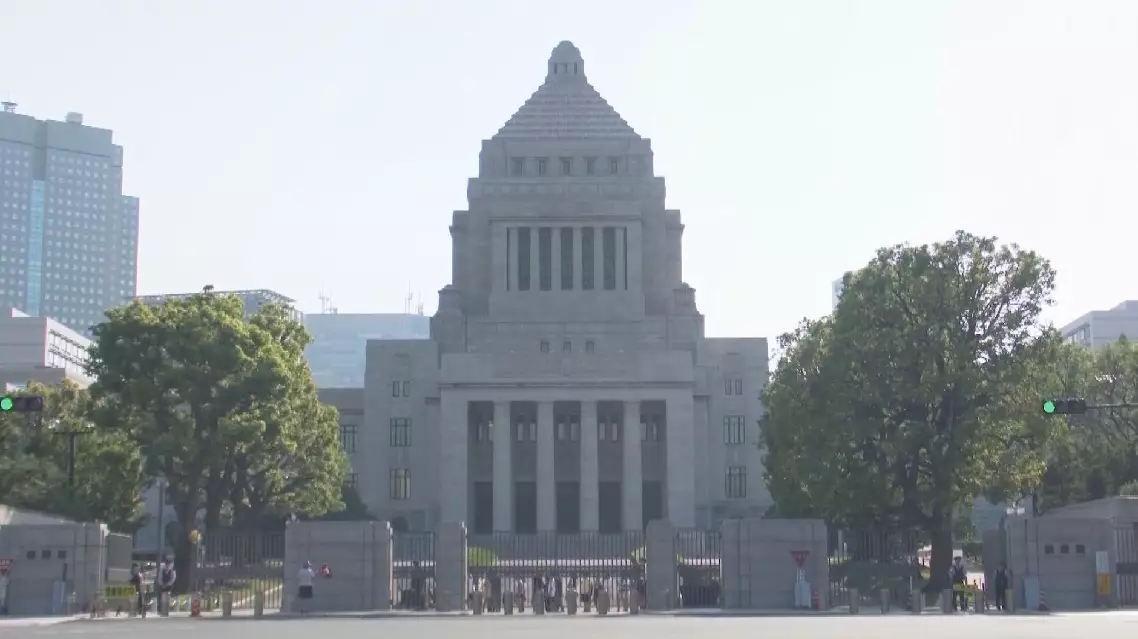
Critics around world slam Takaichi's China remarks as breaching international law