Skip to Content Facebook Feature Image

China-US relations at forum in Hong Kong calls for maintaining partners' relationship

China

China

China

China-US relations at forum in Hong Kong calls for maintaining partners' relationship

2025-11-20 06:40 Last Updated At:07:17

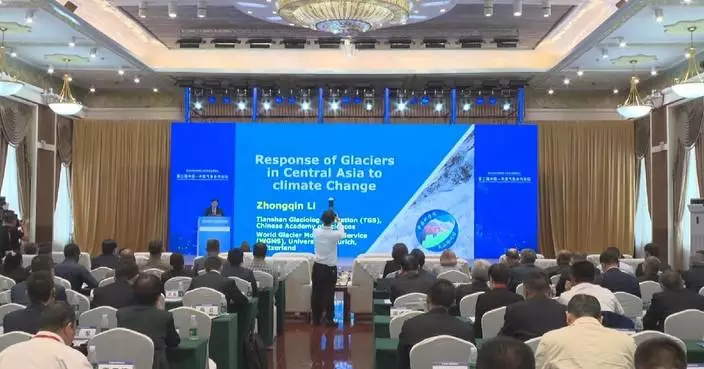
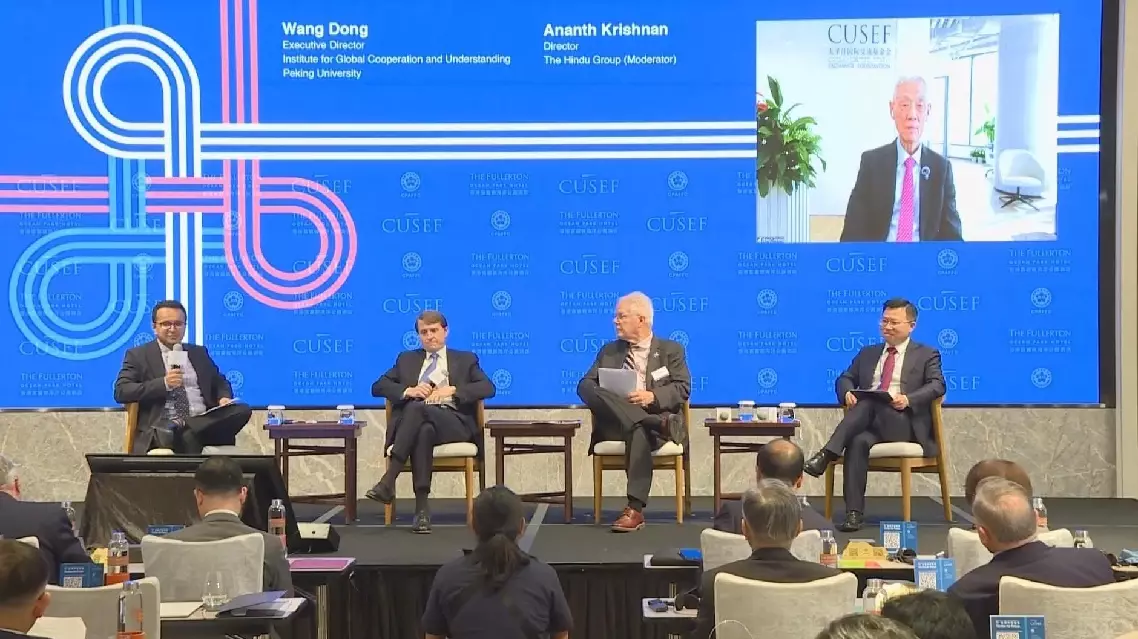
Global experts and scholars gathered at the sixth United States-China Hong Kong Forum in the Hong Kong Special Administrative Region on Monday and Tuesday, calling for overcoming differences between the two countries and maintaining the partners' relationship.

The annual event brought together more than 350 guests from across China, the United States, Singapore, Germany, and India to discuss topics such as deepening people-to-people exchanges between the two countries.

National Committee on U.S.-China Relations Board Chair Charlene Barshefsky, a former U.S. trade representative, rebuked the decoupling between China and the United States advocated by some U.S. think tanks.

"I think to decouple the economies is, first of all, highly unrealistic, and second of all, potentially destructive of global growth, which would be counterproductive," she said.

Late former U.S. President Richard Nixon's grandson, Christopher Nixon Cox, a board member of the Richard Nixon Foundation, expressed his hope that the diplomatic wisdom his grandfather demonstrated in breaking the ice for U.S.-China relations back then can continue to contribute to the healthy development of bilateral ties today.

"It's through that focusing on mutual interest, and then working out differences that I think he could make a very big difference today in terms of making the relationship between China and the United States even better," he said.

Participants also discussed topics such as artificial intelligence, technology governance, and supply chain resilience.

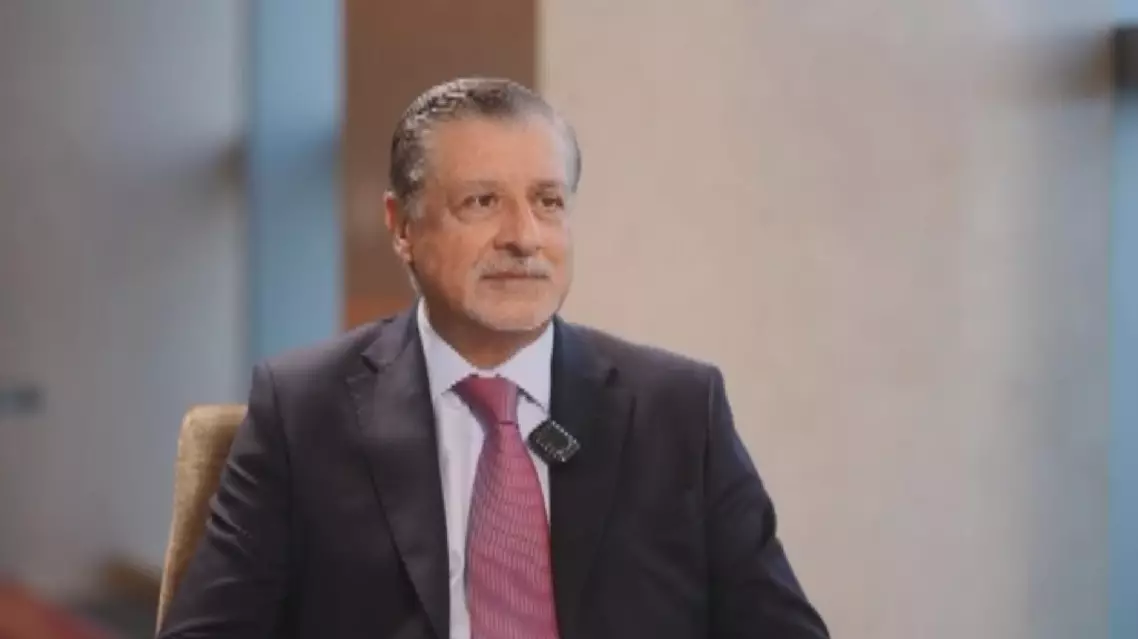
"All voices should be heard, and then together form a joint force to promote the development of relations between the two countries. I think it's fine for voices to differ and opinions to vary, but there must be one consensus, that is, China and the United States should be partners," said Shen Xin, vice president of the Chinese People's Association for Friendship with Foreign Countries.

Themed "Circles for Peace", the sixth U.S.-China Hong Kong Forum is organized by the China-United States Exchange Foundation (CUSEF), a Hong Kong-based non-governmental organization dedicated to promoting dialogue between the two countries, and co-organized by the Chinese People's Association for Friendship with Foreign Countries.
China-US relations at forum in Hong Kong calls for maintaining partners' relationship
China-US relations at forum in Hong Kong calls for maintaining partners' relationship
Luke Johnston, a British PhD graduate from Shanghai Jiao Tong University who has lived in China for nearly seven years, is documenting how artificial intelligence (AI) is being deployed not just in China's mega cities of Beijing or Shanghai, but in its most remote regions, such as Xinjiang Uygur Autonomous Region.

In his vlog, Johnston said AI is quietly reshaping daily life in Xinjiang, from visa processing to hospital diagnostics and cross-border logistics,

At the Xinjiang Library, Johnston pointed to a large real-time data dashboard powered by analytics and AI, which tracks visitor numbers, book loan volumes and the most popular titles in stock.

Johnston later visited the Xinjiang Software Park, home to data centers, cloud hubs and AI companies. Inside, AI-powered robotic sweepers clean floors autonomously, a small but visible example of automation in public spaces.

"And it's important to know that Xinjiang, they are not copying other places in China. They need to have their own localized AI system. You look at the geography and the terrain of this area, it's far different from the rest of China, and also, the cities. The distance between them is far greater than the rest China so AI needs to be locally created," Johnston said in his vlog.

One of the most significant applications Johnston highlighted was in healthcare. At the First Affiliated Hospital of Xinjiang Medical University, AI models developed by students are deployed directly in clinical settings. As a PhD focused on medical AI, Johnston described the hospital application as one of the most impressive examples he encountered.

"These AI models, they might not be the flashiest and most expensive, but they genuinely affect daily life. They can improve information flow, they can generate reports and they can help senior and junior doctors to make things much quicker and better," said Johnston.

The final stop in his vlog was the Urumqi International Land Port, a major logistics hub connecting Xinjiang with Central Asia and Europe via railways stretching into Kazakhstan, Kyrgyzstan, Uzbekistan and beyond. The area is filled with cargo trucks and shipping containers destined for international markets.

Johnston learned that the land port has implemented numerous AI models over the past year to manage this complex logistics operation.

As someone who has closely followed China's AI industry throughout his seven years in China, Johnston is sending a clear message that the AI revolution is reaching even the most geographically remote regions and has been adapted to local needs to transform everyday life in meaningful ways.

British vlogger shows how AI is transforming daily life in Xinjiang

British vlogger shows how AI is transforming daily life in Xinjiang

Recommended Articles