BEIRUT (AP) — The secretary general of Amnesty International said Saturday that the new authorities in Syria have taken steps to show commitment to reform, transitional justice and reconciliation but says democracy is still lacking.
A year after the fall of President Bashar Assad’s government, Agnes Callamard, who visited Damascus this week, said that having legal reform plans before parliament, committees for transitional justice and welcoming international rights groups and other experts were signs that change is happening in Syria.
“All of those things are very good signs but they are not very deep,” Callamard said in an interview with The Associated Press.
Messages left with Syrian officials seeking comment Saturday were not immediately returned.
After the fall of Assad in an offensive led by the Islamist Hayat Tahrir al-Sham of interim President Ahmad al-Sharaa, Syria remains unstable. Forces loyal to the government were blamed for taking part this year in sectarian violence against members of the country’s Druze and Alawite minorities in the coastal region and the southern province of Sweida that left hundreds dead.
The state has formed committees to investigate atrocities against Druze in Sweida and the trial of those suspected of involvement in the violence along the coast in March began last week.
Over the past year, scores of Assad-era officials have been detained and are expected to be put on trial in the near future to face charges for human rights violations committed over decades in the Arab country.
Callamard said she was told by Syrian officials, including the minister of justice, that hundreds of detainees are being held in “relation to abuses by the former regime.”
“There is seemingly a process whereby charges will be drafted very soon,” she said, asking what are the grounds for their arrest and who is going to try them. Callamard added that the legal framework needs urgent reform “because some of the most gruesome crimes under international law have not been domesticated.”
Callamard said that she held talks with members of the National Commission on Transitional Justice and the National Commission for the Missing, on the process of collecting evidence from Assad-era prisons, adding that the process is ongoing and “will be a long process and slow.”
She said that unlike Ukraine, where some European countries established teams of experts to support Ukrainian authorities in their investigation into atrocities “nothing like that is happening in Syria. Nothing. So that needs to change.”
“We really need to see the international community doing a bit more of a leap of faith, hearing the cries for change of the Syrian people,” Callamard said. She added that despite lack of movement by international community, several small civil society organizations are the one providing all that kind of evidence in Syria.
“My impression after that very short visit, arguably, is that for the international community, Syria is a problem that must be contained,” she said. “It seems to me that very few countries are prepared to to do the leap of faith into that and frankly.”
“Without that support, I don’t know whether what’s happening right now will be sustainable,” she said.
Last month, Syria held its first parliamentary elections since Assad’s fall but there was no direct popular vote in the elections. Two-thirds of the 210-member assembly seats were elected through province-based electoral colleges, with seats distributed by population, while one-third will be appointed directly by al-Sharaa. The new parliament will serve a 30-month term while preparing for future elections.
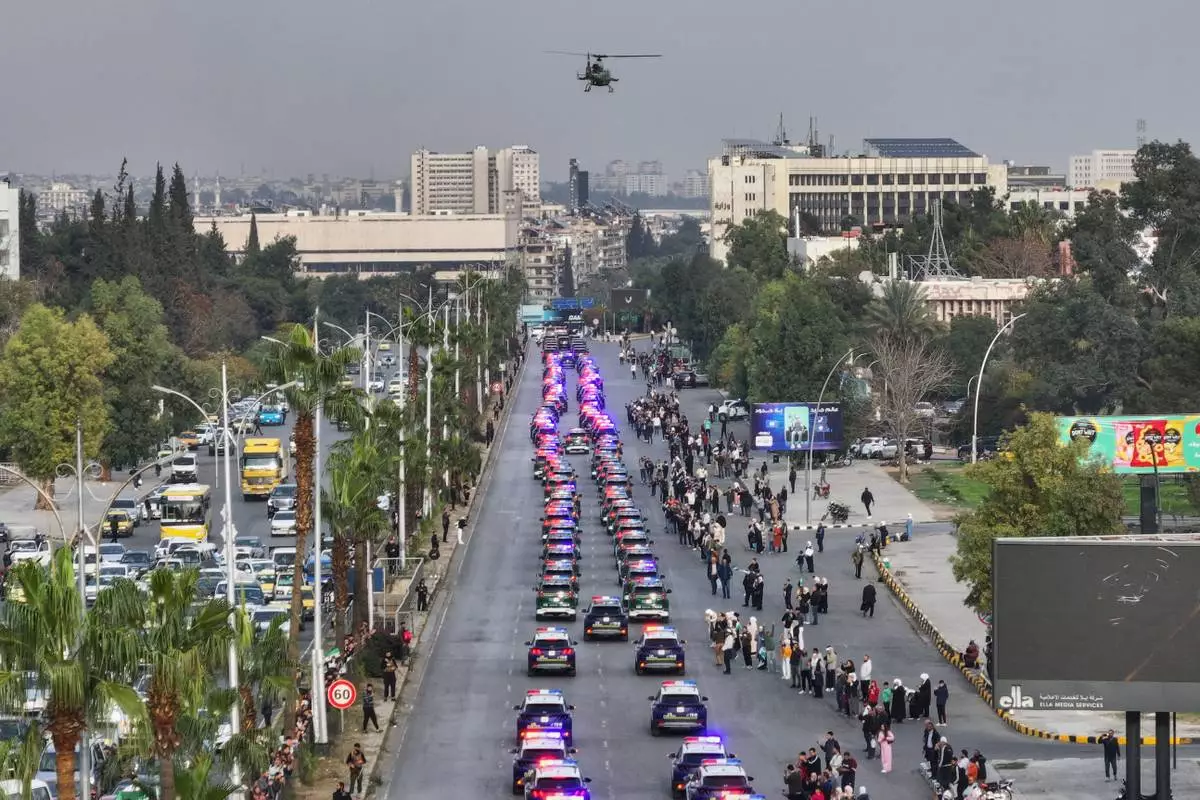
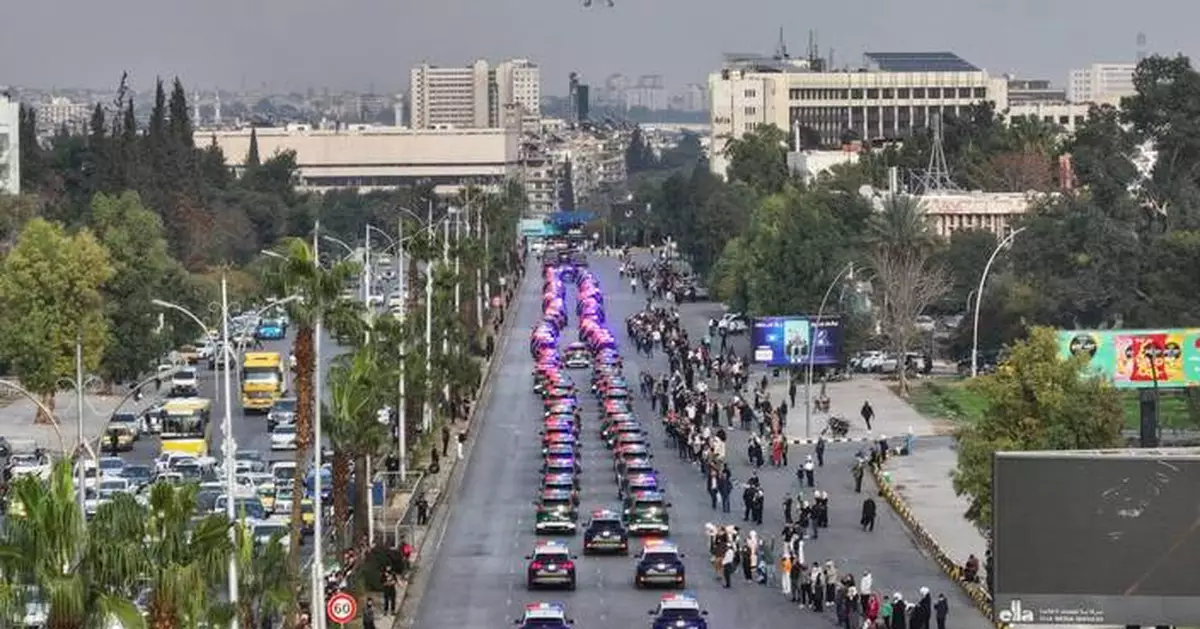
A Syrian army helicopter flies overhead as Ministry of Interior vehicles drive in formation through central Damascus during an official rollout of their new visual identity, as crowds watch from the roadside, in Damascus, Syria, Saturday, Nov. 29, 2025. (AP Photo/Ghaith Alsayed)
BISMARCK, N.D. (AP) — Federal officials on Thursday gave final approval for the Dakota Access oil pipeline to continue operating its contentious Missouri River crossing, an outcome that comes nearly a decade after boisterous protests against the project on the North Dakota prairie.
The U.S. Army Corps of Engineers’ decision to grant the key easement means the pipeline will keep operating but with added conditions for detecting leaks and monitoring groundwater, among others. The announcement brings an end to a drawn-out legal and regulatory saga stemming from the protests in 2016 and 2017, though further litigation over the pipeline is likely.
The $3.8 billion, multistate pipeline has been transporting oil since June 2017 from North Dakota’s Bakken oil field to a terminal in Illinois. The line carries about 4% of U.S. daily oil production, or roughly 540,000 barrels per day,
The Corps is “decisively putting years of delays to rest and moving out to safely execute this crossing beneath Lake Oahe," Assistant Secretary of the Army for Civil Works Adam Telle said in a statement.
The pipeline crosses the river upstream from the Standing Rock Sioux Tribe’s reservation, which straddles the Dakotas. The tribe has long opposed the pipeline, fearing a spill and contamination of its water supply. In 2016 and 2017, thousands of people camped and protested for months near the river crossing.
The protests resulted in hundreds of arrests and related criminal cases and lawsuits, some of them still ongoing, including litigation that threatens the future of the environmental group Greenpeace.
In December, the Corps released its final environmental impact statement nearly six years after a federal judge ordered a more rigorous review of the pipeline's crossing. In that document, the Corps endorsed the option to grant the easement for the crossing and keep the pipeline operating with modifications.
Those measures include enhanced leak detection and monitoring systems, expanded groundwater and surface water monitoring and third-party expert evaluation of the leak and detection systems, among others, the Corps said. The conditions also include water supply contingency planning and other studies coordinated with affected tribes.
The Corps had weighed several options, including removing or abandoning the pipeline's river crossing or even rerouting it north. The agency said its decision “best balances public safety, protection of environmental resources, and leak detection and response considerations while meeting the project’s purpose and need.”
Pipeline developer Energy Transfer hailed the decision, saying the pipeline has been safely operating for nearly 10 years and is critical to the country’s energy infrastructure.
“We want to thank the Corps for the tremendous amount of time and effort put in by so many to bring this matter to a thoughtful close,” said Vicki Granado, a company spokesperson.
The Associated Press sent text messages and emails to media representatives for the tribe and left a voicemail at the tribe's headquarters. They didn't immediately respond Thursday.
North Dakota Republican Gov. Kelly Armstrong, Interior Secretary and former North Dakota governor Doug Burgum and U.S. Senators John Hoeven and Kevin Cramer each welcomed the decision to ensure the pipeline continues operating.
The Corps' announcement came as officials and oil industry leaders were gathered for a trade conference in Bismarck.
Energy Transfer and Enbridge are in early stages of a project to move about 250,000 daily barrels of light Canadian crude oil through the Dakota Access Pipeline by using another pipeline and building a 56-mile connecting line, spokespersons for the companies said. Enbridge will decide sometime in mid-2026 whether to move ahead.
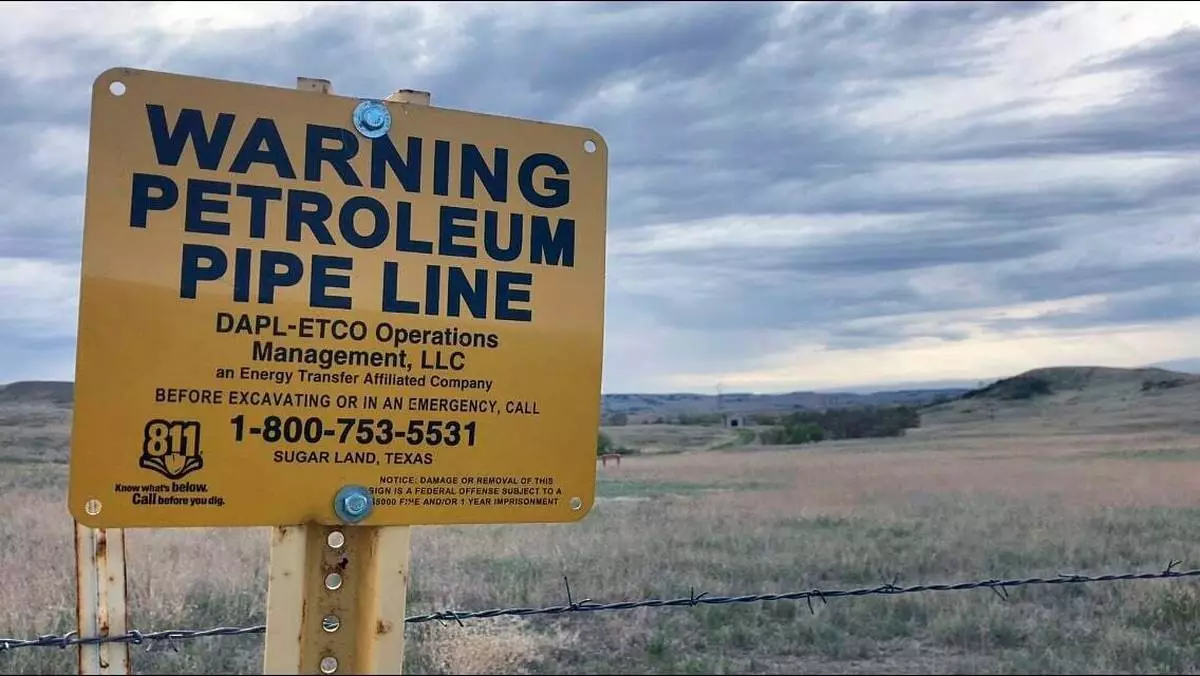
FILE - A sign for the Dakota Access Pipeline is seen north of Cannonball, N.D. and the Standing Rock Reservation on May 20, 2021. (AP Photo/Matthew Brown, File)