Host Australia and three-time champion New Zealand were drawn into the same group Wednesday for the expanded Rugby World Cup in 2027, with the winner likely to meet defending champion South Africa in the quarterfinals.
No. 2-ranked New Zealand was the last team pulled out in the draw by World Rugby chairman Brett Robinson in Sydney. Australia had already been placed into Pool A from the second band of teams that were ranked from seventh to 12th.
“As an Australian, you always love to (play) New Zealand," Wallabies captain Harry Wilson said, before proposing that the Bledisloe Cup showdown should be the tournament opener. "The opening match of a World Cup, doesn't get much better than that!
“In the World Cup, if you want to win it, you’ve got to beat the best teams, and they’re obviously one of the best teams in the world.”
The All Blacks are on an 11-match winning streak against two-time World Cup champion Australia, which has slumped to No. 7 in the rankings. The Tasman rivals will be joined by Chile and Hong Kong in the group stage.
South Africa, aiming for a third consecutive title, was the next-to-last team pulled in the draw and landed in Pool B with Italy, Georgia and Romania.
The result means the 2023 finalists could meet in the quarterfinals, if both the Springboks and the All Blacks top their groups.
“We are pleased with the pool we have been drawn in, but this is a World Cup and every team will go out there with great passion and do their utmost to represent their nations with pride,” Springbok coach Rassie Erasmus said in a statement. "There have been surprises in the tournament before, so we’ll need to be up mentally and physically for every match.”
England, winner of the last Rugby World Cup staged in Australia in 2003, was drawn into Pool F with Wales, Tonga and Zimbabwe.
England head coach Steve Borthwick refused to be drawn on potential opponents beyond the group stage and expressed caution.
“We know the margins in the knockout games, with so many decided by less than three points," Borthwick said.
No. 6 Argentina was drawn into Pool C with Fiji, Spain and Canada, while three-time finalist France will face Japan, the United States and Samoa in Pool E. Ireland is in Pool D with Scotland, Uruguay and Portugal.
“There's a lot of matchups — England-Wales, Ireland-Scotland — there's a lot of clumps that are going to be teams that know each other, and play each other often," Australia head coach Joe Schmidt said. New Zealand will "be looking at Australia and thinking, 'Well, at least we're going to know who we're up against.'
"It's a trans-Tasman battle which I think both teams are going to love having.”
France coach Fabien Galthié said his side can win the tournament after falling short as favorite on home soil in 2023, when it was agonizingly beaten by one point in the quarterfinals by South Africa.
"Yes, that’s our ambition. In a very clear manner I say yes," Galthié said. “France has never done it and that’s our ambition. To be forever the first. The pressure is always there in a way and that's normal."
Galthié was pleased with the draw, even though he struck a cautious note.
“The team we know best is Japan, we'll actually be facing them in Tokyo this summer," he said. "It's a group that appears manageable to us. It's perfect for building momentum.”
The runner-up in Pool A will meet the runner-up in Pool E, likely Japan, in the Round of 16 and likely England in the quarterfinals. The winners of Pools C and D are seeded to meet in the quarterfinals.
The French are seeded to top Pool E, which would set up a last-16 match against the runner-up in Pool D and a likely quarterfinal against the winner of the second-place teams in Pool C and Pool F.
The tournament was expanded to 24 teams for the 2027 edition, which kicks off in Perth on Oct. 1 and culminates in a Nov. 13 final in Sydney.
The teams were divided into four bands of six based on World Rugby rankings at the time of the draw. Each of the six pools contain one team from each of the four bands.
The Australians, World Cup winners in 1991 and ’99 and runners-up the last time the tournament was played Down Under, missed a seeding in the top six after their first winless November tour to Europe since 1958.
The addition of four teams in the draw means the tournament will have a Round of 16 for the first time, a stage that World Rugby chairman Robinson predicted “brings greater jeopardy, earlier knockout drama, and even more entertainment from the opening matches.”
AP rugby: https://apnews.com/hub/rugby

South Africa's Jesse Kriel, center, with teammates waves to supporters following the rugby union Nations Series match between Ireland and South Africa in Dublin, Ireland, Saturday, Nov. 22, 2025. (AP Photo/Peter Morrison)

Australia's Harry Potter catches the ball during the rugby union Nations Series match between France and Australia in Saint-Denis, outside Paris, Saturday, Nov. 22, 2025. (AP Photo/Christophe Ena)
DUBAI, United Arab Emirates (AP) — Iran responded to U.S. President Donald Trump’s address to Americans on the war with new missile attacks targeting Israel and the Gulf Arab states Thursday, underlining Tehran’s insistence that it rejected Washington’s outreach for a ceasefire while maintaining its grip on the Strait of Hormuz.
Britain planned to hold a call Thursday with nearly three dozen countries about how to reopen the strait, through which 20% of all oil and natural gas traded passes in peacetime. The 35 countries, including all G7 industrialized democracies except the U.S., as well as the United Arab Emirates and Bahrain, signed a declaration last month demanding Iran stop blocking the strait. The call will discuss “diplomatic and political measures” that could restore shipping once the fighting is over.
Washington has insisted that Iran allow ships to freely transit the strait, but Trump this week has said it is not up to the U.S. to force it, and in his address encouraged countries that receive oil through Hormuz to “build some delayed courage” and go “take it.”
In his address, Trump said the U.S. would hit Iran “extremely hard over the next two to three weeks,” while also insisting American “core strategic objectives are nearing completion.”
Iran's military said defiantly on Thursday that its armament facilities are hidden and will never be reached by Israeli or American attacks.
“The centers you think you have targeted are insignificant,” said Lt. Col. Ebrahim Zolfaghari, a spokesman for the Iranian military’s Khatam Al-Anbiya Central Headquarters.
Just before Trump began his nearly 20-minute address on Wednesday, explosions were heard in Dubai as air defenses worked to intercept an Iranian missile barrage. Less than a half hour after the president was done, Israel said its military was working to intercept incoming missiles.
Sirens sounded in Bahrain, home to the U.S. Navy's 5th Fleet, immediately after the speech.
Following a joint statement in March condemning Iranian attacks on unarmed commercial vessels that called upon Iran to “cease immediately its threats, laying of mines, drone and missile attacks and other attempts to block the strait,” the 35 signatories were to hold a virtual meeting Thursday hosted by British Foreign Secretary Yvette Cooper.
Though the oil and gas that typically transits the Strait of Hormuz primarily is sold to Asian nations, Japan and South Korea were the only two countries from the region that were joining.
“Trump’s message was that the United States can sustain its own economic and energy ecosystem, while countries dependent on regional exports will either have to buy from the United States or manage the Strait themselves,” the New York-based Soufan Center think tank wrote after the address.
“While Trump explicitly thanked U.S. allies in the Persian Gulf for their cooperation and allyship, an expedited U.S. withdrawal without securing the strait will leave many of these countries, whose economies are dependent on energy exports, in the lurch.”
No country appears willing to try and open the strait by force while the war is raging. British Prime Minister Keir Starmer said the group “will assess all viable diplomatic and political measures we can take to restore freedom of navigation, guarantee the safety of trapped ships and seafarers and to resume the movement of vital commodities.”
Bahrain, which now holds the presidency of the United Nations Security Council, has been working to get the world body to address the crisis as well.
Though Iran has allowed a trickle of ships through the strait, it remains largely closed. Iran has also been repeatedly attacking Gulf Arab energy infrastructure, sending oil prices skyrocketing and giving rise to broader economic problems worldwide.
Following Trump's speech, Brent crude, the international standard, rose again and was at $108 in early spot trading, up nearly 50% from Feb. 28 when Israel and the U.S. started the war with their attacks on Iran.
The rising energy prices and stock market jitters have been putting increasing domestic pressure on Trump, who used his address to offer a defense of the war while also suggesting it was close to winding down.
He acknowledged American service members who had been killed and said: “We are going to finish the job, and we’re going to finish it very fast. We’re getting very close.”
The U.S. has presented Iran with a 15-point plan for a ceasefire, but Trump didn’t say anything about the diplomatic efforts or bring up his April 6 deadline for Iran to reopen the Strait of Hormuz or face severe retaliation from the U.S.
More than 1,900 people have been killed in Iran during the war, while 19 have been reported dead in Israel. More than two dozen people have died in Gulf states and the occupied West Bank, while 13 U.S. service members have been killed.
More than 1,200 people have been killed in Lebanon and more than 1 million displaced, according to authorities. Ten Israeli soldiers have also died there.
Weissert reported from Washington and Rising reported from Bangkok.
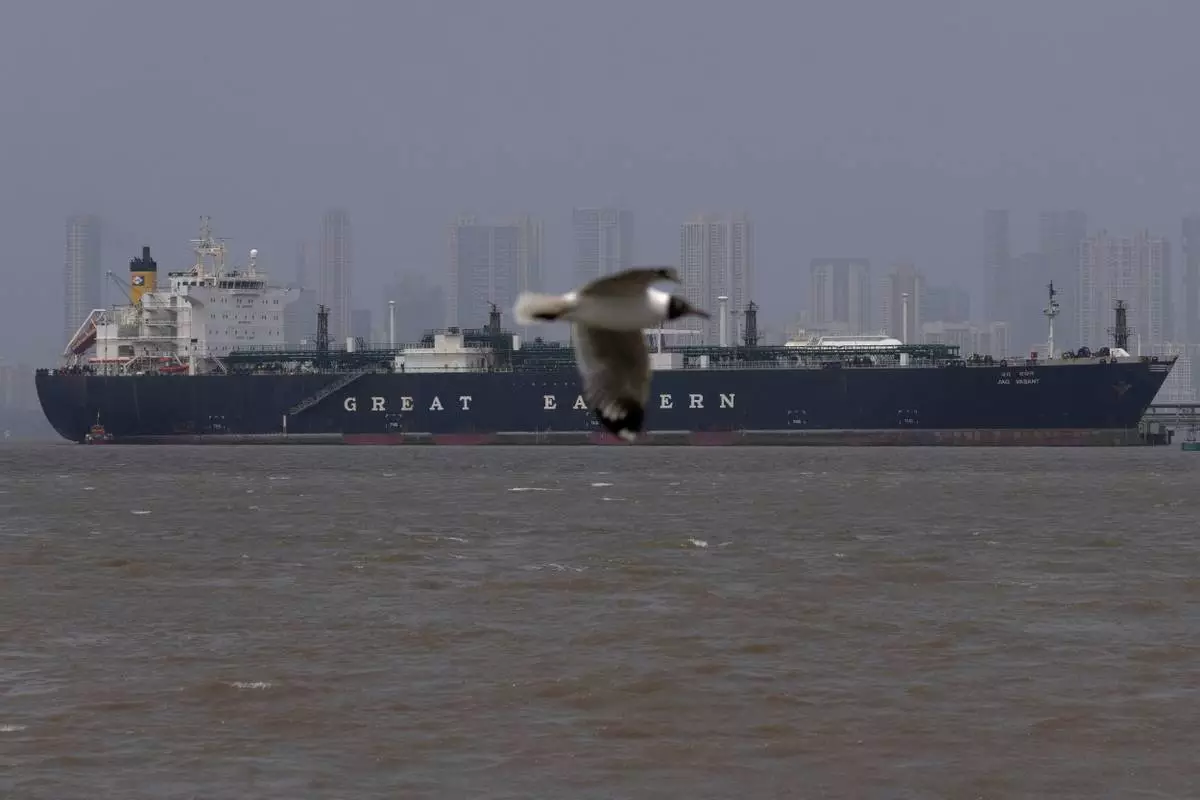
The Indian flagged LPG carrier Jag Vasant transporting liquefied petroleum gas, is seen at the Mumbai Port in Mumbai, India, after it arrived clearing the Strait of Hormuz, Wednesday, April 1, 2026. (AP Photo/Rafiq Maqbool)
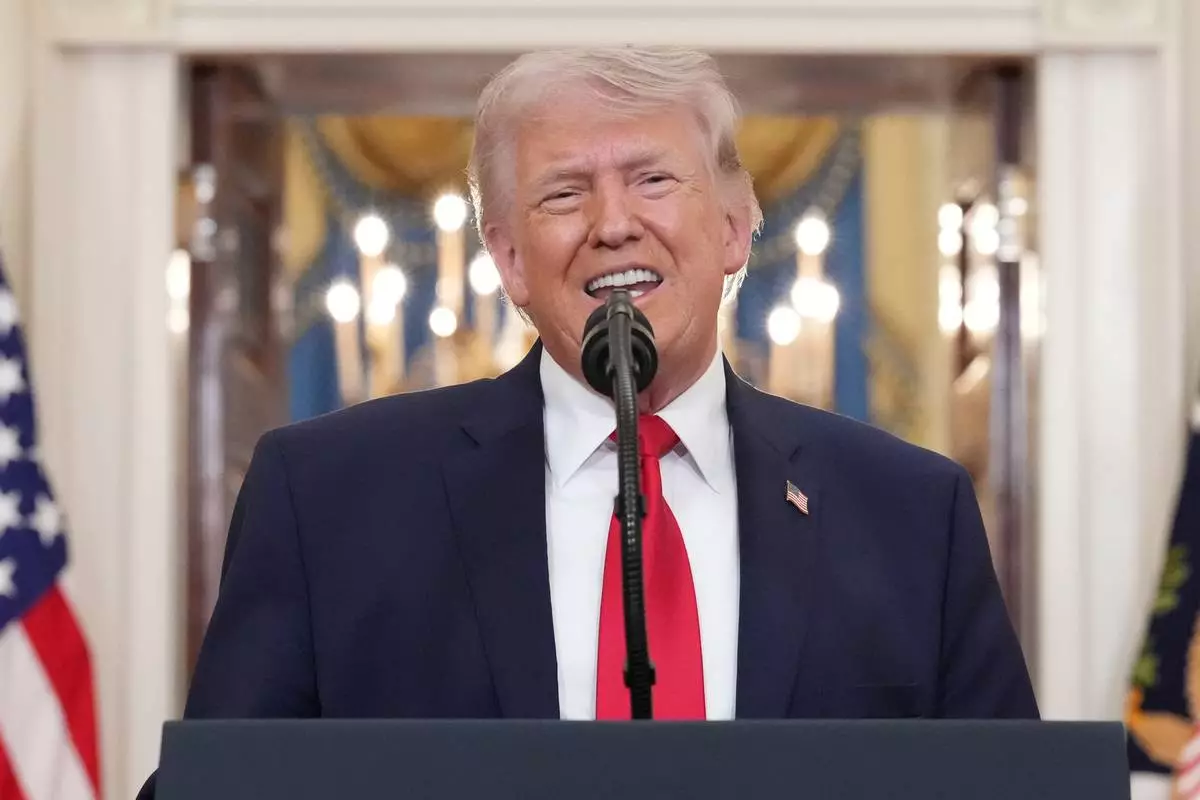
President Donald Trump speaks about the Iran war from the Cross Hall of the White House on Wednesday, April 1, 2026, in Washington. (AP Photo/Alex Brandon, Pool)
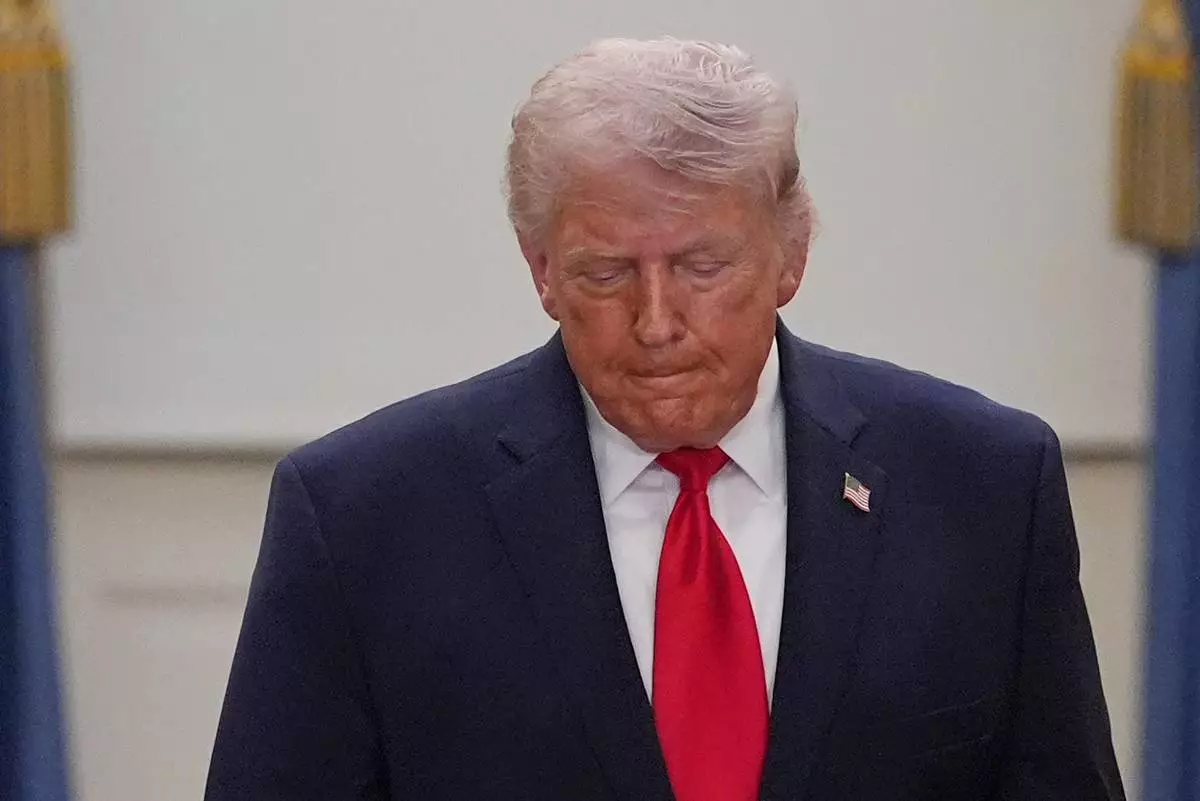
President Donald Trump walks from the Blue Room to speak about the Iran war from the Cross Hall of the White House on Wednesday, April 1, 2026, in Washington. (AP Photo/Alex Brandon, Pool)
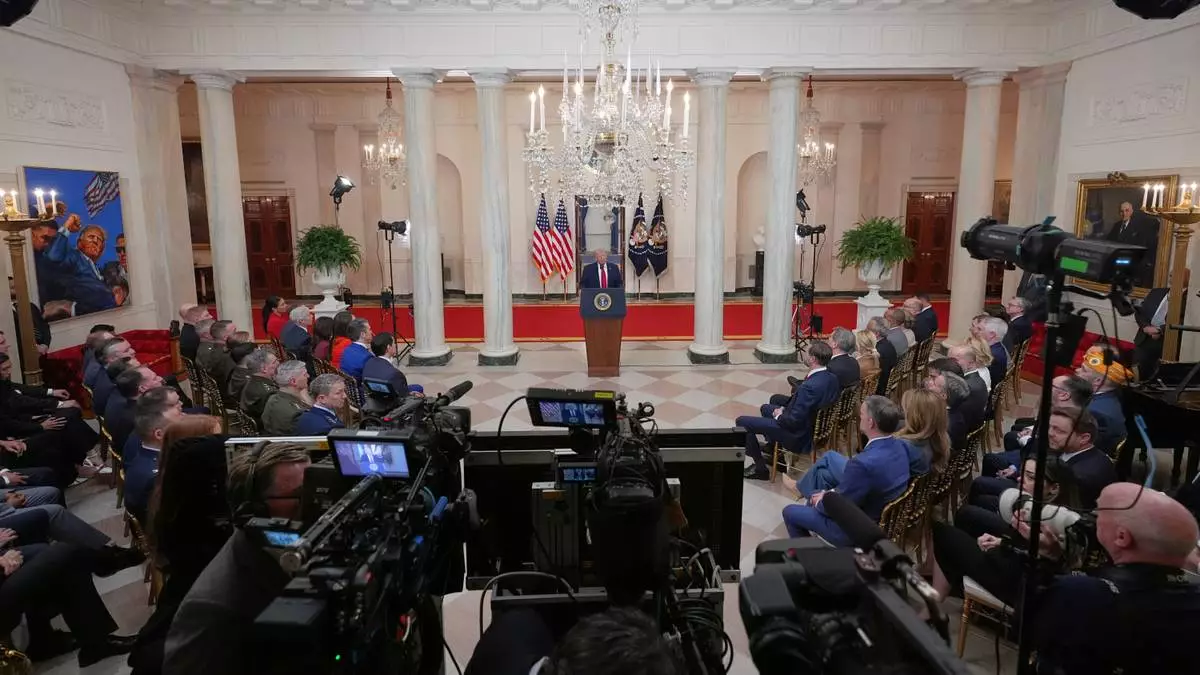
President Donald Trump speaks about the Iran war from the Cross Hall of the White House on Wednesday, April 1, 2026, in Washington. (AP Photo/Alex Brandon, Pool)
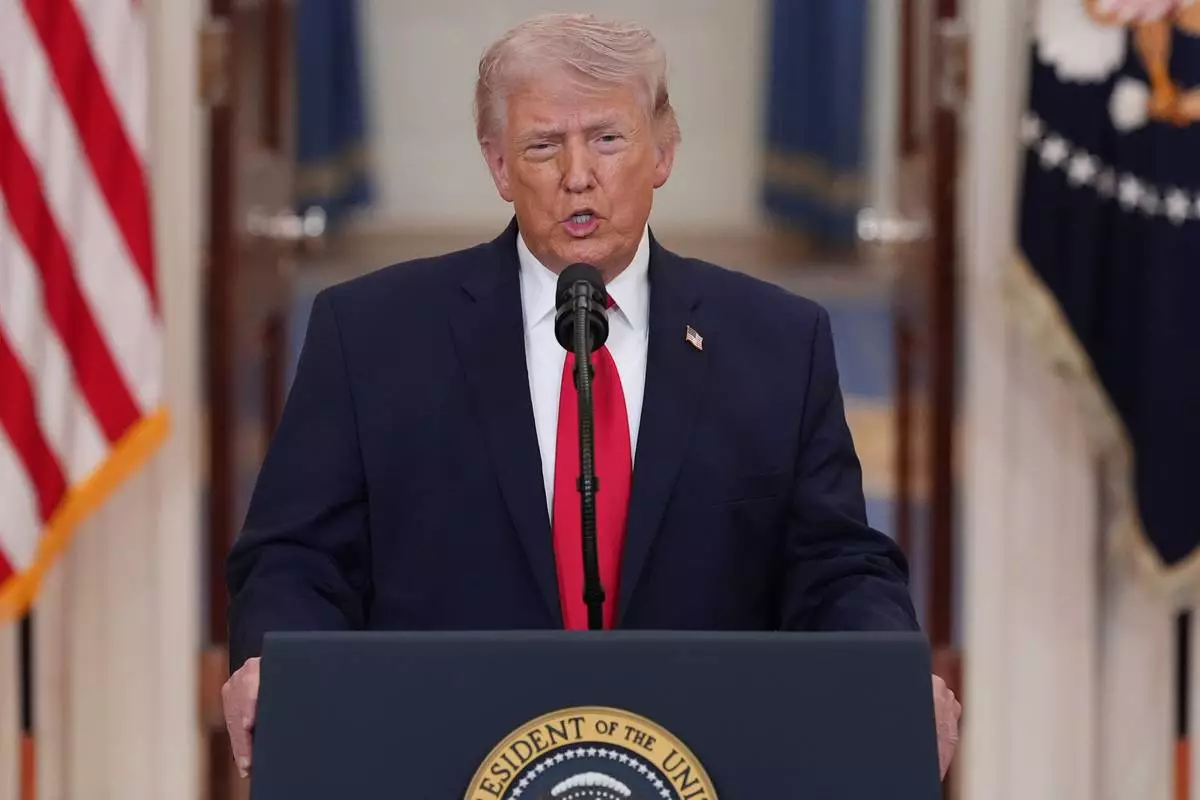
President Donald Trump speaks about the Iran war from the Cross Hall of the White House on Wednesday, April 1, 2026, in Washington. (AP Photo/Alex Brandon, Pool)