Skip to Content Facebook Feature Image

What to know about the Eurovision Song Contest as Israel's participation sparks walkouts

ENT

What to know about the Eurovision Song Contest as Israel's participation sparks walkouts
ENT

ENT

What to know about the Eurovision Song Contest as Israel's participation sparks walkouts

2025-12-05 23:21 Last Updated At:12-06 09:25

LONDON (AP) — The Eurovision Song Contest, which aims to be an upbeat celebration of music and unity, is facing the biggest crisis in its seven-decade history after four countries walked out of the competition over Israel’s participation and others weighed whether to join the boycott.

Spain, the Netherlands, Ireland and Slovenia announced they will not take part in the 2026 contest in Vienna in May after organizers declined to expel Israel over its conduct of the war against Hamas in Gaza. Iceland is considering whether to follow suit.

More Images
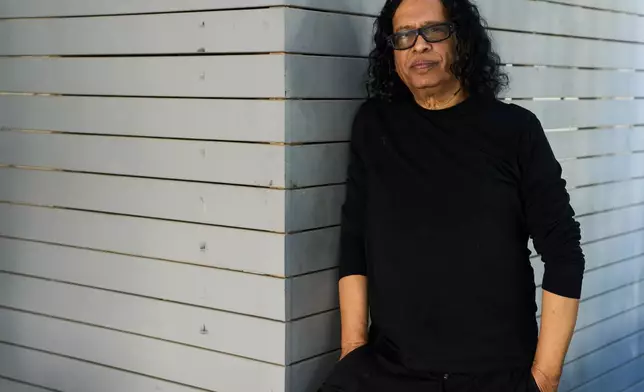
Izhar Cohen, an Israeli singer who won the 1978 Eurovision song contest poses for a photo in Tel Aviv, Israel, Friday, Dec. 5, 2025. (AP Photo/Oded Balilty)

Izhar Cohen, an Israeli singer who won the 1978 Eurovision song contest poses for a photo in Tel Aviv, Israel, Friday, Dec. 5, 2025. (AP Photo/Oded Balilty)

FILE - Singer Yuval Raphael, from Israel, holds the national flag during a dress rehearsal for the Grand Final of the 69th Eurovision Song Contest, May 16, 2025, in Basel, Switzerland. (AP Photo/Martin Meissner, File)

FILE - Singer Yuval Raphael, from Israel, holds the national flag during a dress rehearsal for the Grand Final of the 69th Eurovision Song Contest, May 16, 2025, in Basel, Switzerland. (AP Photo/Martin Meissner, File)

FILE - Israeli fans cheer for Yuval Raphael, from Israel, after she performed during the semi-final of the 69th Eurovision Song Contest in Basel, Switzerland, May 15, 2025. (AP Photo/Martin Meissner, File)

FILE - Israeli fans cheer for Yuval Raphael, from Israel, after she performed during the semi-final of the 69th Eurovision Song Contest in Basel, Switzerland, May 15, 2025. (AP Photo/Martin Meissner, File)

FILE - JJ, from Austria, stands on the stage with his trophy after winning the Grand Final of the 69th Eurovision Song Contest in Basel, Switzerland, May 18, 2025. (AP Photo/Martin Meissner, File)

FILE - JJ, from Austria, stands on the stage with his trophy after winning the Grand Final of the 69th Eurovision Song Contest in Basel, Switzerland, May 18, 2025. (AP Photo/Martin Meissner, File)

The walkouts cast a cloud over the future of what's meant to be a feel-good cultural party, dealing a blow to fans, broadcasters and the contest's finances.

Eurovision expert Paul Jordan said Friday “it’s unlikely we’ll see a mass exodus” but that 2026 will be a "tense year.”

Founded in 1956, in part to help unite a shattered continent after World War II, Eurovision pits acts from dozens of countries against one another for the continent’s musical crown.

Overtly political symbols and lyrics are prohibited, but global tensions have often imposed themselves. Russia, for example, was expelled in 2022 after its full-scale invasion of Ukraine.

Tensions rose again after Hamas’ Oct. 7, 2023, attack on Israel, which killed some 1,200 people, and Israel’s subsequent campaign in Gaza that has left more than 70,000 people dead. The last two Eurovision contests have seen pro-Palestinian protests both outside the venues and inside, forcing organizers to clamp down on political flag-waving.

A number of performers and countries have called for the exclusion of Israel, which has taken part in Eurovision since 1973, one of a few non-European countries to compete.

The Geneva-based European Broadcasting Union — a group of public broadcasters from 56 countries that runs Eurovision — tried to assuage concerns by tightening rules on contest voting and campaigning in response to allegations that Israel manipulated the public vote in favor of its competitor Yuval Raphael. She came second in this year’s contest behind Austrian singer JJ.

The EBU’s general assembly approved the new rules Thursday, but did not hold a vote on Israel’s participation. It said “a large majority of members” felt the contest "should proceed as planned, with the additional safeguards in place.”

Eurovision Director Martin Green told Swedish television that the meeting reaffirmed “the belief that the Eurovision Song Contest shouldn’t be used as a political theater. It must retain some sense of neutrality.”

Immediately after the EBU decision, broadcasters RTVE in Spain, AVROTROS in the Netherlands, RTÉ in Ireland and Slovenia’s RTVSLO announced they were pulling out.

RTVE said the situation in Gaza, despite the recent ceasefire, and “Israel’s use of the contest for political purposes, make it increasingly difficult to maintain Eurovision as a neutral cultural event.” RTÉ said participation was “unconscionable given the appalling loss of lives in Gaza.”

Icelandic broadcaster RUV, which had recommended Israel be barred, said its chiefs will meet Wednesday to discuss whether to join the walkout.

Other countries’ broadcasters, including Norway’s NRK and Britain’s BBC, welcomed the decision to keep Israel in the competition.

“We support the collective decision made by members of the EBU,” the BBC said in a statement. “This is about enforcing the rules of the EBU and being inclusive.”

French Foreign Affairs Minister Jean-Noël Barrot said his country opposes a cultural boycott of Israel.

“I am pleased that Eurovision did not give in to pressure, and that France helped prevent a boycott of Israel in this forum,” he wrote on X. “I deeply regret that several European television channels made a different choice.”

Israeli President Isaac Herzog said on social platform X that he was “pleased” Israel will again take part and hoped “the competition will remain one that champions culture, music, friendship between nations and cross-border cultural understanding.”

Some Israelis said they were glad their country was participating but felt the debate around them was unfair.

“I’m happy but I’m not dancing in the streets,” Izhar Cohen, who won Eurovision in 1978, told The Associated Press in Tel Aviv. “Eurovision should be a meeting and gathering together with no politics of all the people from all nations,” he said.

Tel Aviv resident Bret Katz said “it’s a terrible, terrible thing to ostracize a country and not to understand who was attacked on October 7, 2023.”

The boycotting countries will not send a musical act to the 2026 contest and will not broadcast it. That will likely cut into viewership of a contest that typically draws more than 150 million viewers.

Fans in the boycotting countries should still be able to watch on digital platforms including YouTube, and another Dutch broadcaster, NPO, said it will air the show in the Netherlands.

The boycotts are a financial blow to Eurovision, which is funded largely by participating broadcasters — and to boycotting public broadcasters at a time when many are under financial pressure from government funding cuts and competition from social media.

The EBU does not disclose how much each country pays, but the pullouts include Spain, one of the “Big Five” large-market countries that contribute the most to the contest.

So far, more than two dozen countries have confirmed they will compete in Vienna, including heavyweights like seven-time champion Sweden. The EBU says a final list of participants will be released before Christmas.

The boycott is offset to an extent by the return of Bulgaria, Moldova and Romania to Eurovision after periods of absence because of financial and artistic reasons.

Jordan said viewing figures would be closely watched, “and if they are significantly down, then that’ll probably raise alarm bells.

“But I think overall the contest is a sturdy thing,” he said.

Keaten reported from Geneva. Associated Press writers Paz Bar in Tel Aviv and Samuel Petrequin contributed to this story.
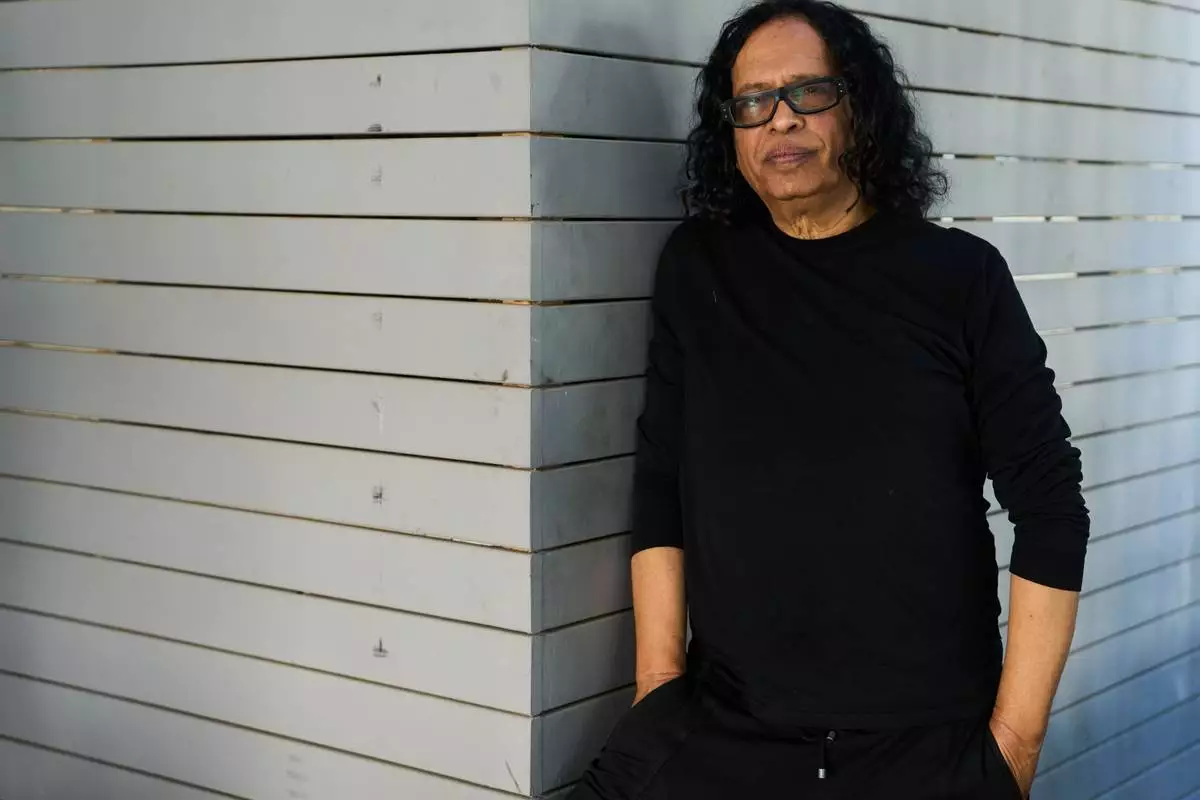
Izhar Cohen, an Israeli singer who won the 1978 Eurovision song contest poses for a photo in Tel Aviv, Israel, Friday, Dec. 5, 2025. (AP Photo/Oded Balilty)

Izhar Cohen, an Israeli singer who won the 1978 Eurovision song contest poses for a photo in Tel Aviv, Israel, Friday, Dec. 5, 2025. (AP Photo/Oded Balilty)

FILE - Singer Yuval Raphael, from Israel, holds the national flag during a dress rehearsal for the Grand Final of the 69th Eurovision Song Contest, May 16, 2025, in Basel, Switzerland. (AP Photo/Martin Meissner, File)

FILE - Singer Yuval Raphael, from Israel, holds the national flag during a dress rehearsal for the Grand Final of the 69th Eurovision Song Contest, May 16, 2025, in Basel, Switzerland. (AP Photo/Martin Meissner, File)

FILE - Israeli fans cheer for Yuval Raphael, from Israel, after she performed during the semi-final of the 69th Eurovision Song Contest in Basel, Switzerland, May 15, 2025. (AP Photo/Martin Meissner, File)

FILE - Israeli fans cheer for Yuval Raphael, from Israel, after she performed during the semi-final of the 69th Eurovision Song Contest in Basel, Switzerland, May 15, 2025. (AP Photo/Martin Meissner, File)

FILE - JJ, from Austria, stands on the stage with his trophy after winning the Grand Final of the 69th Eurovision Song Contest in Basel, Switzerland, May 18, 2025. (AP Photo/Martin Meissner, File)
FILE - JJ, from Austria, stands on the stage with his trophy after winning the Grand Final of the 69th Eurovision Song Contest in Basel, Switzerland, May 18, 2025. (AP Photo/Martin Meissner, File)
NEW YORK (AP) — With no clear end in sight, the war with Iran is sending oil prices back to $100 per barrel, and stocks are sinking worldwide on Thursday.

The S&P 500 fell 1.2% and is returning to big swings following a couple days of relative calm. The Dow Jones Industrial Average was down 607 points, or 1.3%, as of 11 a.m. Eastern time, and the Nasdaq composite was 1.7% lower.

The center of action was again the oil market, where the price of a barrel of Brent crude, the international standard, got as high as $101.59 overnight before pulling back to $100.44, a 9.2% rise. Worries are worsening that the war could block the production of oil in the Persian Gulf for a long time and cause a debilitating surge of inflation for the global economy.

Iran's new supreme leader released his first statement Thursday since succeeding his late father, saying his country would keep up attacks on Gulf Arab neighbors and use the effective closure of the Strait of Hormuz as leverage against the United States and Israel. A fifth of the world’s oil typically sails through the strait, and oil producers in the region are cutting production because their crude has nowhere to go.

Countries around the world are trying to make up for that, and the International Energy Agency said Wednesday that its members would release a record amount of oil, 400 million barrels, from their stockpiles built for such emergencies.

But such moves are short-term fixes, and they do not clear the long-term risks. Analysts have said that if the Strait of Hormuz remains closed, oil prices could jump to $150.

To be sure, the U.S. stock market has a history of bouncing back relatively quickly from military conflicts in the Middle East and elsewhere, as long as oil prices don't stay too high for too long. Even with all the up- and- down swings of the last couple weeks, many rocking markets hour to hour, the S&P 500 is still just roughly 4% below its all-time high set in January.

What’s made this jump for oil prices frightening is not only the degree — prices jumped near $120 earlier this week to their highest level since 2022 — but that they’re also occurring during an uncertain time for the economy.

Last month’s report on hiring by U.S. employers was surprisingly weak, which raised worries about a possible worst-case scenario for the economy called “stagflation.” That’s one where economic growth stagnates while inflation remains high. And it's a miserable mix that the Federal Reserve has no good tools to fix.

A more encouraging signal arrived Thursday. A report said that the number of U.S. workers applying for unemployment benefits inched lower last week. That’s a sign that layoffs are potentially remaining low around the country.

Dollar General, meanwhile, reported better profit and revenue for the latest quarter than analysts expected. But the retailer with relatively low prices, whose customers often have the least cushion to absorb higher gasoline prices, gave forecasts for revenue this upcoming year that indicated a slowdown in growth. Its stock fell 5.8%.

Some of the worst losses on Wall Street again hit companies with big fuel bills. United Airlines sank 3.9%, and cruise-ship operator Carnival fell 5.7%.

Worries about the private-credit industry continued to hurt the market. Investors have been rushing to pull their money out of some funds and companies that have lent to businesses whose profits are potentially under threat. Many of the worries are focused on business that could be made obsolete by new AI-powered rivals and may not pay back their loans.

Morgan Stanley fell 4% after its North Haven Private Income fund said it allowed investors to redeem only 5% of its total shares instead of the nearly 11% they had requested. That 5% cap is the advertised limit.

In stock markets abroad, indexes fell across Europe and Asia.

Japan’s Nikkei 225 dropped 1%, and France’s CAC 40 sank 0.9% for two of the world’s bigger moves.

In the bond market, Treasury yields continued to climb because of upward pressure from rising oil prices. The yield on the 10-year Treasury rose to 4.24% from 4.21% late Wednesday and from just 3.97% before the war started.

Higher yields help make all kinds of borrowing more expensive, such as mortgages for potential U.S. homebuyers and bond offerings for companies looking to expand. They also push down on prices for all kinds of investments, from stocks to crypto.

Because of the spike for oil prices, traders have pushed back forecasts for when the Fed could resume its cuts to interest rates. President Donald Trump has been angrily calling for such cuts, which would give the economy and job market a boost but also potentially worsen inflation.

A barrel of benchmark U.S. crude rose 10.1% to $96.12.

AP Business Writers Matt Ott and Elaine Kurtenbach contributed.

An earlier version of the story incorrectly reported the percentage drop for United Airlines’ stock.

Gregg Maloney works on the floor at the New York Stock Exchange in New York, Tuesday, March 10, 2026. (AP Photo/Seth Wenig)

Gregg Maloney works on the floor at the New York Stock Exchange in New York, Tuesday, March 10, 2026. (AP Photo/Seth Wenig)

Gas prices are displayed at a station Wednesday, March 11, 2026, in Evanston Ill. (AP Photo/Erin Hooley)

Gas prices are displayed at a station Wednesday, March 11, 2026, in Evanston Ill. (AP Photo/Erin Hooley)

Pedestrians mill about outside the New York Stock Exchange in New York, Friday, March 6, 2026. (AP Photo/Seth Wenig)

Pedestrians mill about outside the New York Stock Exchange in New York, Friday, March 6, 2026. (AP Photo/Seth Wenig)

The New York Stock Exchange is seen in New York, Friday, March 6, 2026. (AP Photo/Seth Wenig)

The New York Stock Exchange is seen in New York, Friday, March 6, 2026. (AP Photo/Seth Wenig)

Traders work on the floor at the New York Stock Exchange in New York, Tuesday, March 10, 2026. (AP Photo/Seth Wenig)

Traders work on the floor at the New York Stock Exchange in New York, Tuesday, March 10, 2026. (AP Photo/Seth Wenig)

Recommended Articles