Skip to Content Facebook Feature Image

Europe has to pay for US protection given its military weakness: former WTO chief

China

China

China

Europe has to pay for US protection given its military weakness: former WTO chief

2025-12-03 23:30 Last Updated At:12-04 01:27

The European Union (EU) has to foot the bill for U.S. protection through budgets or tariffs, with no other options currently available given the bloc's military weakness, said former chief of the World Trade Organization (WTO).

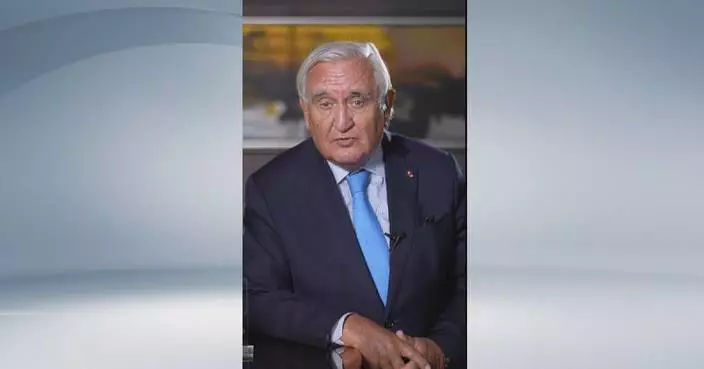
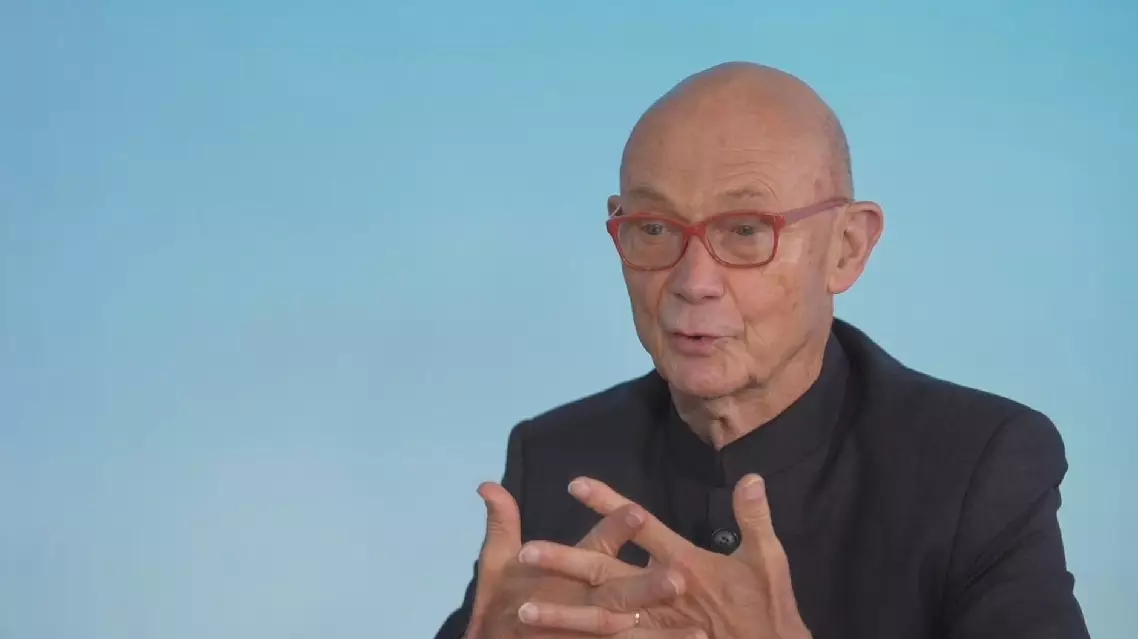
In an exclusive interview with China Global Television Network (CGTN), Pascal Lamy, former WTO director-general, stated that U.S. President Donald Trump's effort to monetize American protection is turning transatlantic relations into a medieval-like system of lords and barons.

The French political consultant also said that he believes that until Europe strengthens its economy, technology, and defense, the situation will remain vulnerable.

"In this world, which is now dominated by force and not by law, the EU is weak. And the reason why the EU is weak is that we still need the U.S. military and strategic protection, notably against Russia. This is the reason why the EU had to accept in Turnberry a very unbalanced deal. The EU did not want to provoke Mr. Trump. The big change in the transatlantic relation is that Mr. Trump wants to monetize U.S. protection," said Lamy.

"It's like in the Middle Ages, there is a lord, there are barons, and the barons side with the Lord because the Lord has the biggest army and protects them. So this is the situation. We still need the U.S., and we now have to pay for that either budget-wise, which by the way makes some sense, or tariff-wise, which by the way does not make sense. But given our strategic weakness, for the moment, we have no other option. And the consequence of that is that the EU has to become stronger in economic intake, in defense, in military capacities. That's the way to go. It will take time," he continued.

The United States and the EU reached a trade deal following talks between President Trump and European Commission President Ursula von der Leyen on July 27 at the Trump Turnberry in South Ayrshire, Scotland.

The agreement allows the U.S. to impose a broad 15 percent tariff on EU goods while securing zero-tariff access for a range of strategic American exports. In contrast, the EU has pledged to purchase 750 billion U.S. dollars' worth of American energy and commit an additional 600 billion U.S. dollars in investments in the United States.

The trade deal, hailed by the White House as historic, drew widespread criticism across Europe for imposing steep tariffs on EU exports and being heavily imbalanced in favor of the United States.
Europe has to pay for US protection given its military weakness: former WTO chief
Europe has to pay for US protection given its military weakness: former WTO chief
China holds a core and dominant position in global offshore wind power production capacity, according to a report released Thursday at the 22nd World Wind Energy Conference and the 3rd Shantou International Wind Power Technology Innovation Conference in Shantou City, south China's Guangdong Province.

The report indicates that suppliers within the global wind power industrial chain are primarily concentrated across three major regions: Asia-Pacific, Europe, and the Americas.

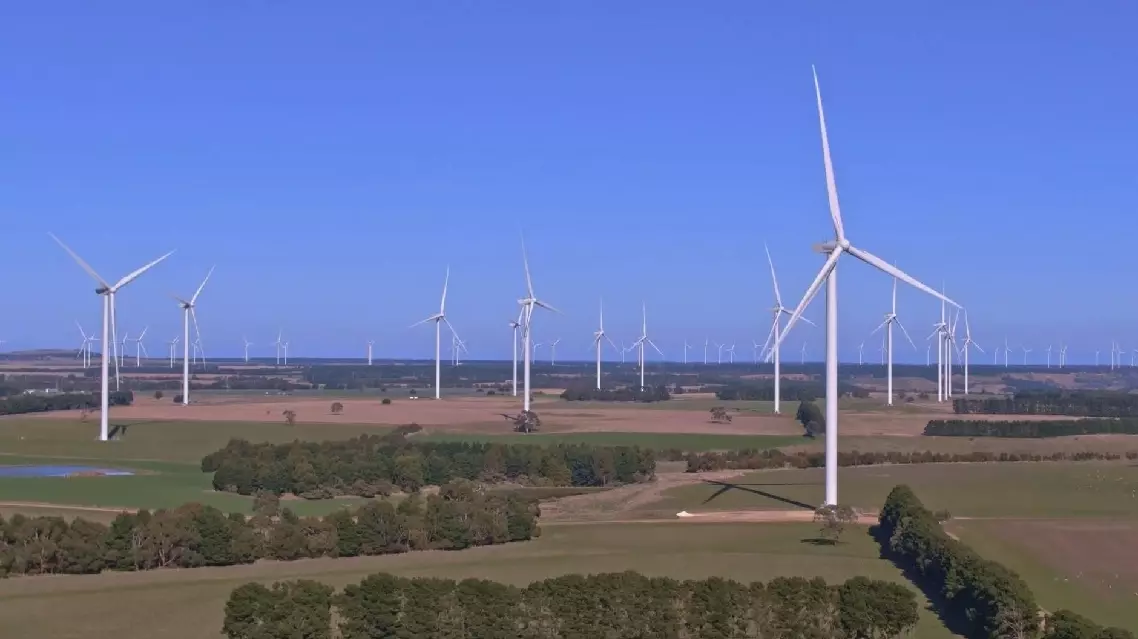
In terms of production capacity distribution, the Asia-Pacific region maintains its position as the world's largest hub for wind turbine assembly and key component manufacturing, leveraging its comprehensive industrial ecosystem. China and India dominate onshore wind power production capacity, while China serves as the core center for offshore wind power capacity, said the report.

Stefan Gsanger, secretary general of the World Wind Energy Association (WWEA), hailed China's market scale and technological development for wind power. "General wind power is around 1.2 terawatts now of installed capacity worldwide, out of which offshore wind is around 83 gigawatts. China is by far the largest market, offshore and onshore. It's a stable market. There is a very strong supply chain here in China. Technology-wise, China is a leading country now," he said.

Gsanger also underscored the great potential for China's wind power export.

"China has just started to export wind turbines. I think there is a big potential because many markets, many countries need to buy the equipment, and that is a great opportunity now for the Chinese wind industry," said the secretary general.

The report predicts that by 2030, most countries will face capacity bottlenecks in both onshore and offshore wind power supply, but China is not among them.

Data indicates that China's wind power industry is accelerating its expansion overseas.

"Over the past few years, China's wind power exports have accelerated at a rapid pace, achieving a compound annual growth rate exceeding 50 percent. To date, we have cumulatively exported wind turbines with a total capacity exceeding 20 million kilowatts, reaching 57 countries and regions worldwide," said Qin Haiyan, secretary general of the Chinese Wind Energy Association.

China holds core leading position in global offshore wind power production: report

China holds core leading position in global offshore wind power production: report

Recommended Articles