Skip to Content Facebook Feature Image

WMO forecasts weak La Nina in coming months

HotTV

HotTV

HotTV

WMO forecasts weak La Nina in coming months

2025-12-05 19:05 Last Updated At:12-06 10:14

There is a 55 percent chance of a weak La Nina impacting global weather and climate patterns during the next three months, according to the latest updates from the World Meteorological Organization (WMO) on Thursday.

La Nina refers to the periodic large-scale cooling of the surface temperatures in the central and eastern equatorial Pacific Ocean, coupled with changes in tropical atmospheric circulation, including shifts in winds, pressure, and rainfall patterns.

According to the latest forecasts from the WMO Global Producing Centers for Seasonal Prediction, as of mid-November 2025, oceanic and atmospheric indicators reveal borderline La Nina conditions, with a 55 percent probability of crossing La Nina thresholds during the period between December 2025 and February 2026.

For January-March and February-April 2026, the likelihood of returning to El Nino Southern Oscillation (ENSO)-neutral conditions gradually rises from about 65 percent to 75 percent. There is little likelihood of an El Nino, which typically has the opposite impacts of La Nina.

Naturally occurring large-scale climate events such as La Nina and El Nino are taking place in the broader context of human-induced climate change, which is increasing global temperatures in the long term, exacerbating extreme weather and climate events, and impacting seasonal rainfall and temperature patterns.

To provide a more comprehensive climate outlook, the WMO also issues regular Global Seasonal Climate Updates (GSCU), taking into account the influence of key climate variability patterns, such as the North Atlantic Oscillation, the Arctic Oscillation, and the Indian Ocean Dipole. The updates also monitor global and regional anomalies of surface temperature and precipitation and their evolution over the upcoming season.

According to the latest GSCU, for December 2025 to February 2026, temperatures are expected to be above normal in much of the Northern Hemisphere, and large parts of the Southern Hemisphere. Meanwhile, rainfall predictions resemble conditions typically observed during a weak La Nina.
WMO forecasts weak La Nina in coming months
WMO forecasts weak La Nina in coming months
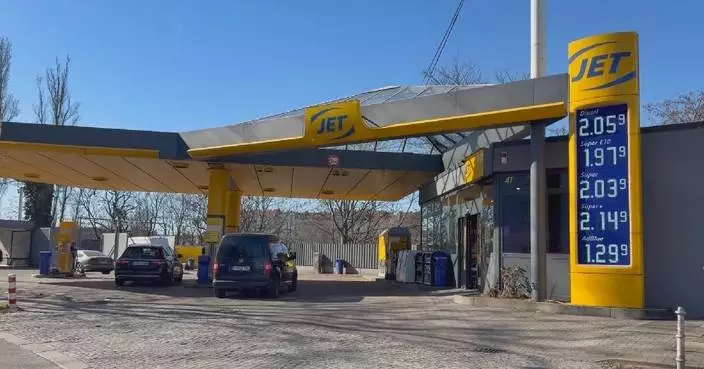
The International Energy Agency (IEA) has recommended a release of 400 million barrels of oil from stockpiles, the largest such move in IEA history, Executive Director Fatih Birol said on Wednesday.

The 32 IEA member countries unanimously agreed to make available 400 million barrels of oil from their emergency reserves to the market, Birol said at a press conference.

The release would take place over a timeframe appropriate to the national circumstances of each member country, he added.

Birol said the IEA secretariat will provide further details of how this collective action will be implemented in due course, and the agency will continue to closely monitor global oil and gas markets.

IEA members hold emergency stockpiles of over 1.2 billion barrels, with a further 600 million barrels of industry stocks held under government obligation.

The conflict in the Middle East has impeded oil flows through the Strait of Hormuz, with export volumes of crude and refined products falling to less than 10 percent of pre-conflict levels, according to the IEA.

The move to release emergency oil reserves came ahead of an online meeting of the Group of Seven (G7) leaders, scheduled later in the day, to discuss the economic consequences of the conflict between the United States, Israel and Iran.

The G7 energy ministers, under the French presidency, met via videoconference on Tuesday against a backdrop of heightened volatility in oil prices. On Monday, the price for Brent crude, the international benchmark, briefly climbed to around 119 U.S. dollars per barrel, its highest level since mid-2022.

In a statement released earlier on Wednesday, the ministers said that in principle they support the implementation of proactive measures to address the situation, including the use of strategic reserves.

IEA members agree to release emergency oil reserves amid Mideast turmoil

IEA members agree to release emergency oil reserves amid Mideast turmoil

Recommended Articles