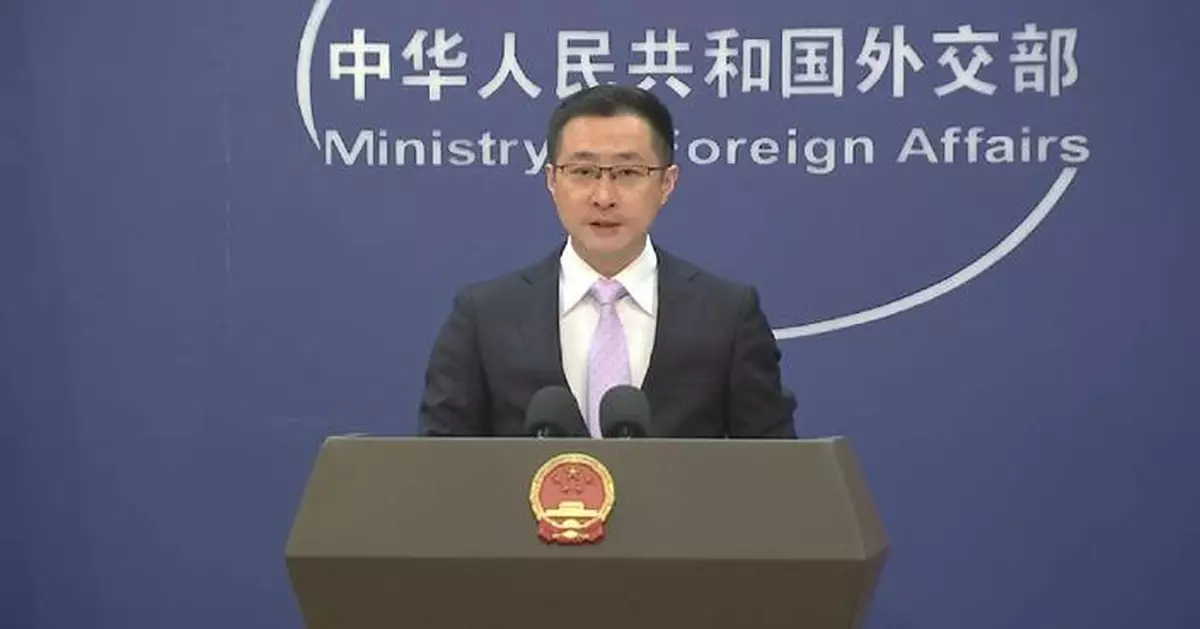
China will offer 100 million U.S. dollars in aid to Palestine to help ease the humanitarian crisis in Gaza, which is expected to alleviate the suffering of the Palestinian people, Foreign Ministry spokesman Lin Jian said during a press briefing in Beijing on Friday.
Lin made the statement while responding to a media query concerning the aid package announced by Chinese President Xi Jinping on Thursday.
"China remains deeply concerned about the prolonged Gaza conflict, which has dragged on for more than two years and created an unprecedented humanitarian crisis. Since the outbreak of conflicts, China has extended multiple batches of humanitarian supplies to the Gaza Strip through the United Nations, Egypt, Jordan and other channels, which have been widely welcomed and appreciated by the Palestinian government and people. The new assistance package worth 100 million U.S. dollars, announced by President Xi Jinping, will be used to help ease the humanitarian crisis in Gaza and support post-conflict reconstruction. We believe it will help improve the dire humanitarian situation in Gaza and alleviate the suffering of the Palestinian people," said Lin.
"President Xi stressed that the Palestinian question is a test of the effectiveness of the global governance system. He called on the international community to face up to the root causes of the Palestinian issue, shoulder its responsibilities, take concrete actions, correct historical injustice and uphold fairness and justice. China has always firmly supported the just cause of the Palestinian people in restoring their legitimate national rights, stands ready to work with the international community to push for a comprehensive and lasting ceasefire in Gaza, improve humanitarian conditions in the Gaza Strip, and make unremitting efforts to realize at an early date a political settlement of the Palestinian question on the basis of the two-state solution," the spokesman continued.
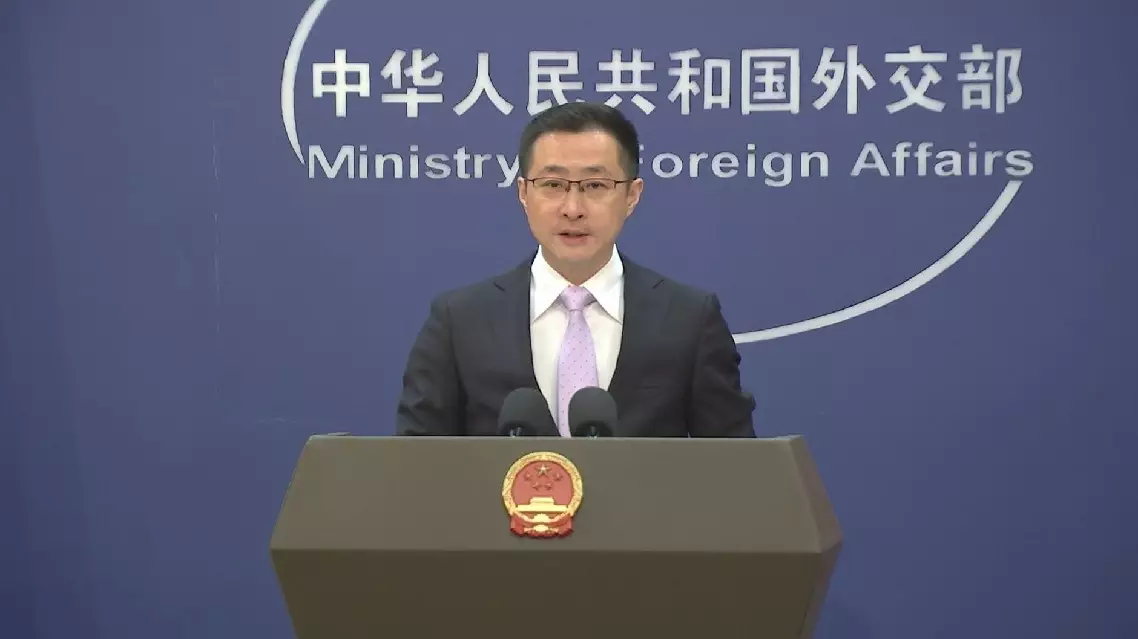
China to offer 100 million USD in aid for Palestine: spokesman
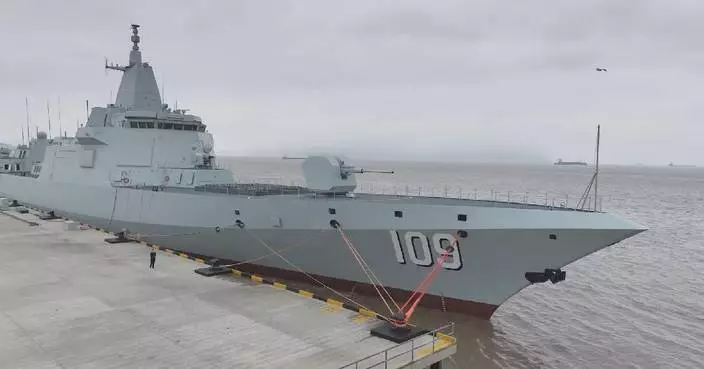
A new Type 055 guided-missile destroyer, the Dongguan (Hull 109), recently completed its first maritime training at the waters of the East China Sea after commissioning to the Chinese People's Liberation Army (PLA) Navy.
During this combat-oriented training exercise, the Dongguan not only completed single-vessel training subjects such as navigating through narrow waterways and damage control, but also coordinated with other warships in the formation to conduct joint operation drills, including maritime assault missions, at-sea replenishment, and multi-domain coordinated strikes.
With the improved performance of weaponry and equipment, the software and hardware of the Dongguan are vastly different from those of previous vessels. Sailors onboard the warship said that it's much more well-equipped and responsive.
"The Dongguan can now observe farther and hear more clearly. From detecting the target to launching strikes, it may take only a few seconds. However, seeing farther and wider also brings exponentially more interference factors. This requires us to practice and observe more frequently to accumulate experience, so as to enable rapid identification and efficient response," said Guo Tian, a lieutenant onboard the Gongguan.
In addition to diversified subjects with a clear combat focus, the Dongguan also faced challenges posed by harsh weather conditions during the training exercise. The crew remained at their posts throughout the process, demonstrating exceptional skills in maneuvering the vessel.
"To accelerate the combat readiness of the vessel, we participated fully in the testing and trial navigation missions from the very beginning of taking over the ship. The very first power trial navigation was independently completed by our own crew. Throughout this process, we not only learned how to operate the ship, but also understood the working principles behind its operation. This has laid a solid foundation for our combat-oriented training and equipment maintenance," said Zhang Chen, a helmsman onboard the Dongguan.
"During this maritime training exercise, we adhered to a problem-oriented approach. By creating complex settings and simulating real combat scenarios, we thoroughly tested the quality and effectiveness of the integration of trial and training during the equipment handover period, while systematically validating the combat effectiveness of the new equipment. Next, we will further optimize deployment, consolidate our foundation, strengthen coordination and cooperation, actively integrate into formation and group training, and continuously enhance the vessel’s comprehensive combat capabilities," said Shen Kai, commanding officer onboard the Dongguan.
The Type 055 destroyer is the fourth-generation destroyer independently developed and built by China. As one of the Chinese PLA Navy's most advanced surface warships, it carries advanced radar, universal vertical launch systems, and comprehensive radio frequency system, serving as the core the naval fleets for far-sea missions.
The Dongguan was commissioned to the PLA Navy together with another Type 055, the Anqing (Hull 110). With these additions, the number of China's Type 055 10,000-ton-class destroyers has risen to 10 since the first Type 055 destroyer Nanchang (Hull 101) was commissioned in 2020.
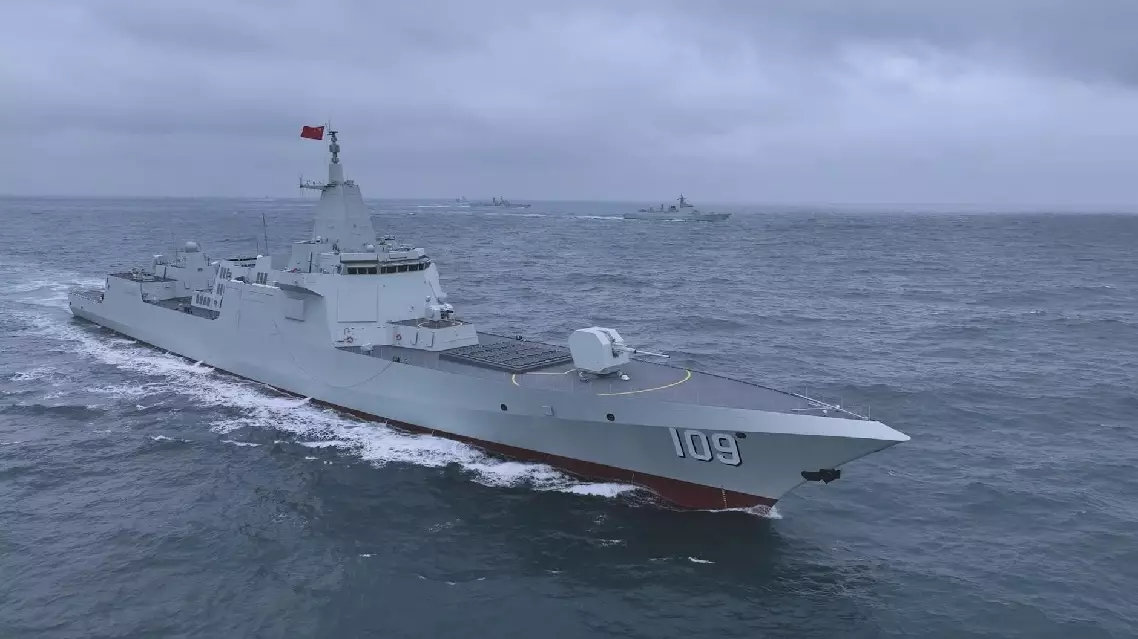
China's newly commissioned Type 055 destroyer Donggaun completes 1st maritime training