Russia said on Friday that its armed forces had struck Ukrainian targets including military-industrial and energy infrastructure, while Ukraine, on the same day, reported hitting a port and an oil refinery in Russia.
The Russian Ministry of Defense said in its latest report that in response to Ukrainian forces' attacks on Russian civil facilities over the past week, the Russian military carried out one massive strike and four group strikes against Ukrainian military-industrial facilities and their associated energy infrastructure, as well as Ukrainian military transportation infrastructure, military airfields, and production workshops for long-range attack drones.
Russian air defense systems shot down five long-range "Neptune" cruise missiles, one U.S.-made HIMARS rocket, and 1,120 Ukrainian drones, the ministry said.
Forces of Russia's Black Sea Fleet also destroyed seven Ukrainian unmanned boats in the northwestern part of the Black Sea, it added.
In addition, the Russian military captured seven settlements in areas including Krasnoarmiisk (known as Pokrovsk in Ukraine) and Volchansk, said the ministry.
Meanwhile, the General Staff of the Armed Forces of Ukraine said that by Friday afternoon, 106 battles had taken place on the frontlines with the fighting in the direction of Pokrovsk being the fiercest.
Furthermore, the Ukrainian forces attacked a port in southern Russia's Krasnodar region and an oil refinery in the country's Samara region, the Ukrainian side said.
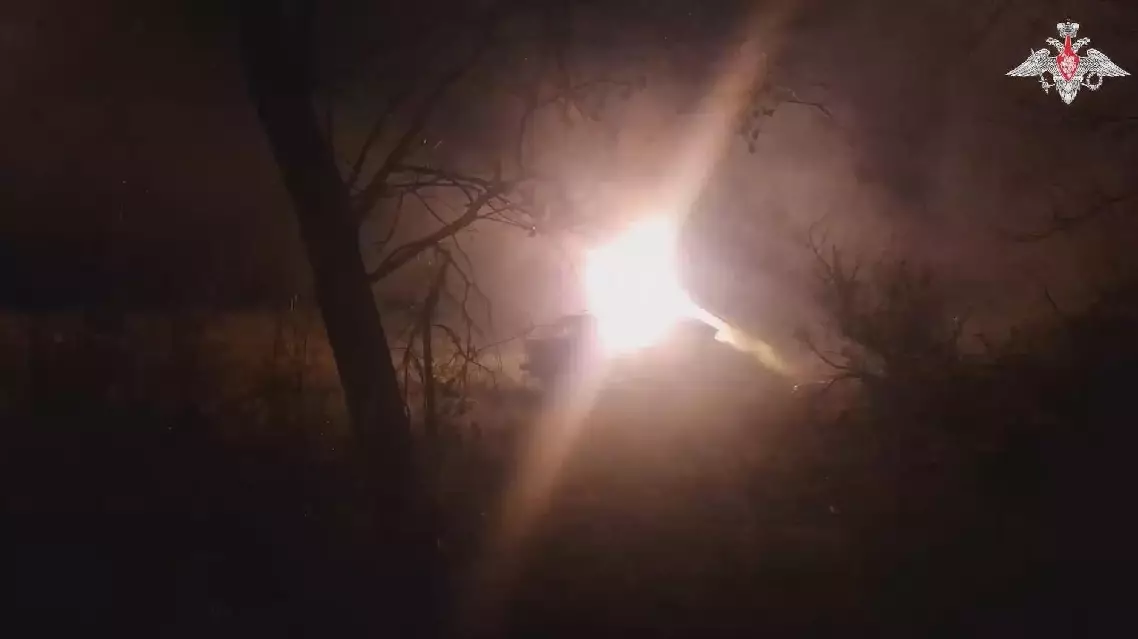
Russia strikes Ukrainian military, energy infrastructure, Ukraine hits Russian port

China has continued to strengthen its capacity to ensure energy and resource security, according to the Global Mining Development Report 2026 released by the China Geological Survey under the Ministry of Natural Resources on Friday.
The report indicates that since China launched a new round of strategic actions for mineral exploration in 2021, the exploration of strategic emerging minerals has achieved leapfrog development, and the country's capacity for independent resource supply has been significantly enhanced.
According to the report, China's new round of strategic actions for mineral exploration has produced remarkable results, with mineral resource reserves growing substantially. China currently ranks the first in the world in reserves of 14 minerals and has achieved three-dimensional expansion in oil and gas exploration, with deep-layer and deep-sea areas becoming new growth points.
Meanwhile, China's scale of mineral product production and smelting and processing remains the world's largest, and its leading position in the industrial chain has been continuously consolidated. In the smelting and processing sector in particular, the output of more than 30 metallurgical products ranks the first in the world, and the output of 17 mineral products accounts for about 50 percent of global mineral product output. This signifies that China is not only a major mineral resource producer, but also a supply leader and important driver in the global smelting and processing industry.
In addition, the scale of China's mining economy and its role in driving employment have continued to strengthen, providing strong support for socioeconomic development. As of April 2026, China had boasted 12,600 exploration rights and 30,400 mining rights, along with 55,000 mining enterprises and 834,000 smelting and processing enterprises. The mining industry and its related sectors have become an important pillar of regional economic development and people's livelihoods and employment.
"China has actively contributed its strength to global mining transformation. China has signed memorandums of understanding on geological and mining cooperation with more than 70 other countries, and technologies and equipment such as autonomous mining trucks, mining large models, and tailings resource recovery have been deployed globally," said Zou Xiehua, chief drafter of the Global Mining Development Report 2026.
China continues to strengthen energy, resource security capacity: global mining report