A Venezuelan media professional has described U.S. President Donald Trump's recent remarks on the closure of Venezuelan airspace as a "psychological warfare" intended to ramp up pressure on the South American nation.
Trump said in a post on social media last month that the airspace above and surrounding Venezuela should be considered to be closed "in its entirety." His remarks came after the U.S. had strengthened its military buildup in the Caribbean Sea on the grounds of "fighting drug trafficking."
On November 21, the U.S. Federal Aviation Administration issued a 90-day warning of risks to commercial planes flying in Venezuelan airspace due to the worsening security situation and heightened military activity in or around Venezuela, which has prompted several major carriers to suspend flights.
Mercedes Chacin Diaz, director of Ciudad CCS, a newspaper published in Caracas, was one of the passengers affected by the flight suspension. Her daughter living in Spain planned to return to Caracas in early December but found her flight canceled.
"Many people bought tickets to Caracas recently, and now their flights have been canceled, leaving them unsure what to do. Others have already arrived in Caracas and don't know how to get back. I believe the U.S. statement about closing the Venezuelan airspace is not only a terrorist threat but also an illegal one, because the U.S. has no right to close the airspace of any country other than its own," she said.
Venezuela moved swiftly on the civil aviation front, revoking operating permits for several foreign carriers that had suspended services to the country following a U.S. warning about flight-safety risks over the Venezuelan airspace. It has further halted deportation flights returning Venezuelan nationals from the United States.
As of now, all international airlines have suspended flights to and from Venezuela, while some Venezuelan airlines are still operating international flights to and from countries such as Cuba, Colombia, and Spain.
Meanwhile, Venezuelan airlines are gradually expanding their international route operations. The Venezuelan government Saturday said in a statement that Venezuelan President Nicolas Maduro spoke by phone with Turkish President Recep Tayyip Erdogan on that day, with both sides agreeing to resume direct flights between the two countries in the near future.
"I believe this is a well-planned psychological warfare waged by the U.S. which lasts for over three months. For a long time, many countries have been subjected to information bombardment from U.S.-led media, especially those from countries that were once considered America's backyard. I think the future is highly uncertain. For the past decade, we've known these threats might just be threats. We can't say we're used to them. But people are more sober-minded about threats from the U.S. I think people understand that we can't control whether the U.S. will take action, but we can control ourselves," Mercedes Chacin Diaz said.
Tensions are running high between Venezuela and the U.S., with the U.S. keeping building up its military presence near Venezuela and carrying out strikes on alleged drug boats in the Caribbean Sea. Venezuela accused the United States of seeking to topple the government and seize the country's vast oil reserves.
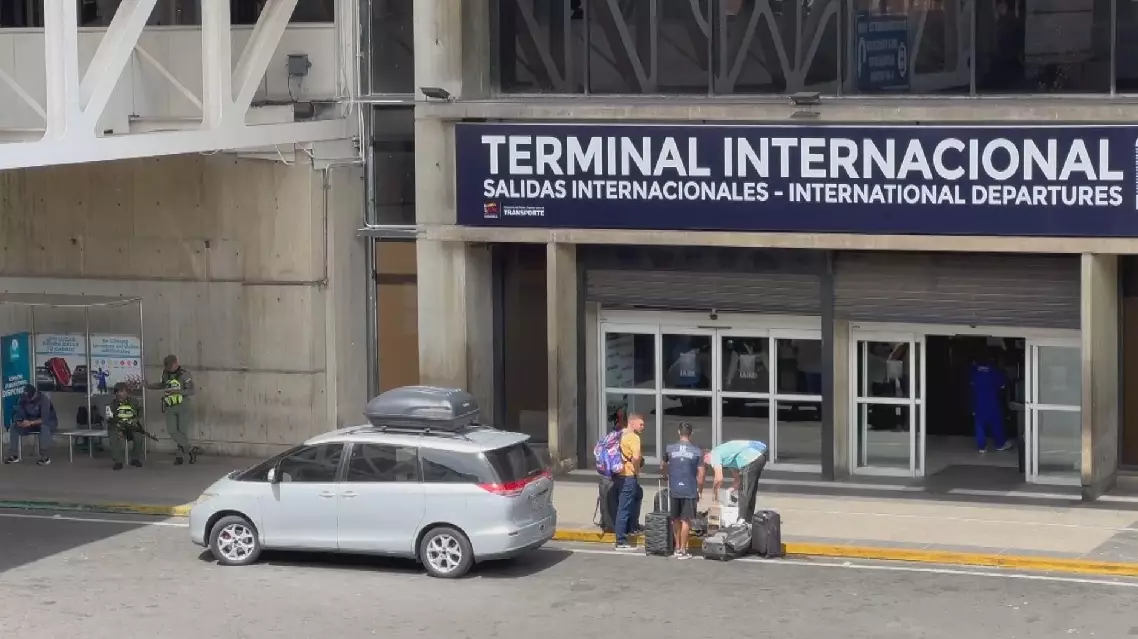
Expert describes U.S. airspace ban on Venezuela as 'well-planned psychological warfare'
Expert describes U.S. airspace ban on Venezuela as 'well-planned psychological warfare'