China has made great breakthroughs in safeguarding its seed security with cutting-edge technologies and innovations during the 14th Five-Year Plan period (2021-2025).
During the period, science and technology contributed 63.2 percent to agricultural production.
Today, over 95 percent of China's crop varieties are independently bred.
From experimental fields to cutting-edge labs, Chinese researchers are using seed innovation to safeguard the nation's food supply.
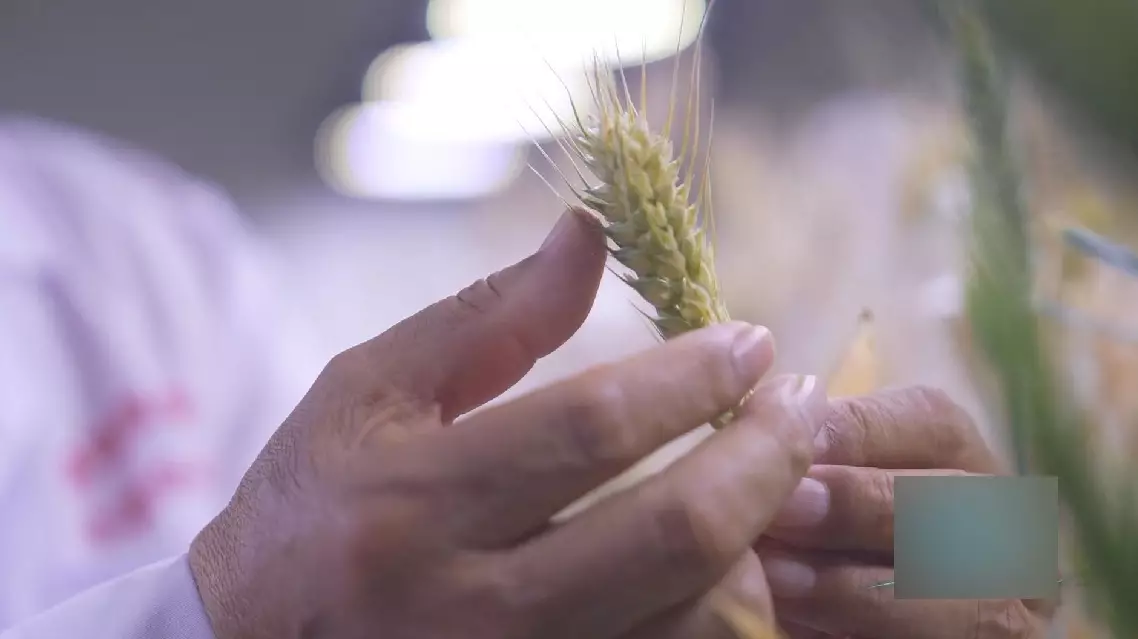
In an experimental field in central China's Henan Province, Ru Zhengang, a professor of the Henan Institute of Science and Technology, and his students plant wheat seeds by hand, row by row, and ridge by ridge.
But this field is far from ordinary.
For more than four decades, Ru has treated plots like this as living laboratories where new wheat varieties are tested, selected, and refined. Each seed has the potential to shape future harvests.
Ru is part of a nationwide push to strengthen China's "seed industry chips," which are strategically vital seeds or high-tech innovations crucial for food security.
In the last five years, his team introduced varieties such as Bainong 4199 and Cheng'an 211, known for their high yields, rich flavor, and resistance to both disease and lodging.
"Our country places great importance on the development of the seed industry, with strong support for the seed work, variety innovation and promotion of new varieties. This has played a crucial role in driving progress," said Ru.
At the National Bio-Breeding Industry Innovation Center in northwest China's Xinjiang Uygur Autonomous Region, young researchers move with purpose among state-of-the-art workstations.
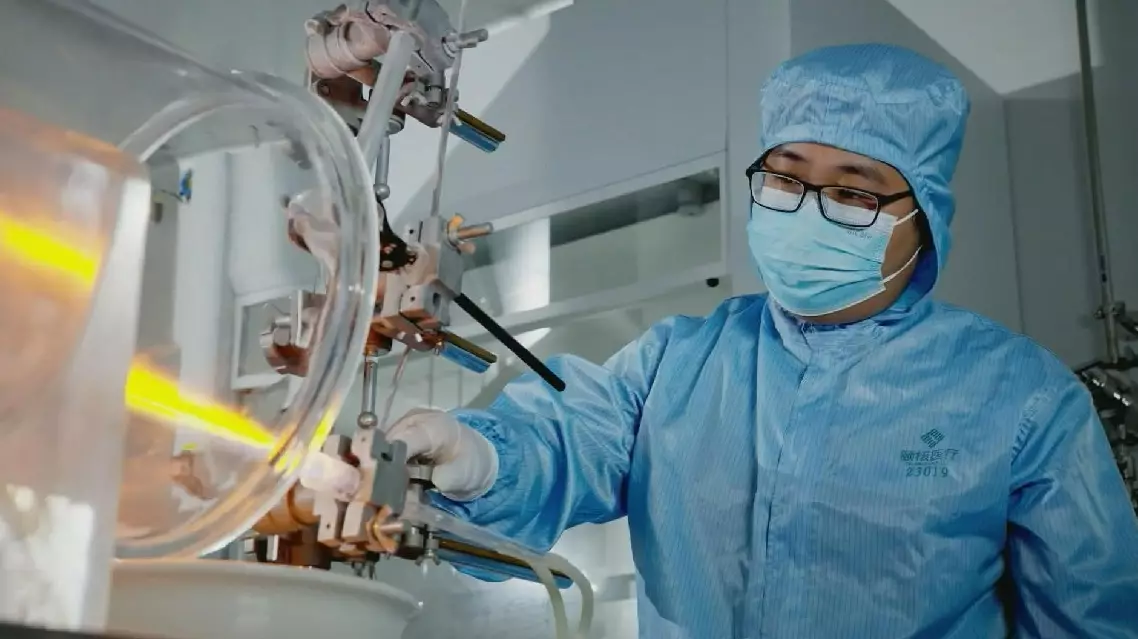
High-tech plant CT scanners capture every detail of a seed in seconds, from wheat furrows and embryo shapes to peanut shell textures. The data is instantly fed to an AI system that analyzes and classifies thousands of samples every day.
"We have 33 solar greenhouses dedicated to year-round breeding of high-end vegetable varieties, and a 2,400-square-meter intelligent greenhouse that enables experiments to run throughout the year," said Quan Xin, deputy director of the Molecular Breeding Center of the Henan Academy of Agricultural Sciences.
The country has completed a nationwide survey of its agricultural germplasm, preserving 580,000 crop samples, 1.4 million livestock and poultry samples, and 140,000 aquatic species -- the largest collection of its kind in the world.
"This year, during my field research in Henan, I found that domestically produced strong-gluten wheat can now meet around 70 percent -- more than two thirds of domestic demand, nearly double the level seen in previous years," said Zhong Yu, director of the Crop Production Division of Institute of Agricultural Economics and Development under the Chinese Academy of Agricultural Sciences (CAAS).
China makes great strides in safeguarding seed security in past five years