A group of prehistoric grain storage pits discovered in northwest China's Shaanxi Province have provided important physical evidence for the study of early civilization and the origin of states in that area, according to archaeologists.
The pits were found at the Luojiahe cultural relic site in Chunhua County, Xianyang City, where archaeologists from the Xianyang Cultural Heritage Institute conducted excavations between March 2022 and September 2025.
By analyzing the distribution and features of the unearthed relics and artifacts and applying scientific methods, the team concluded that the site likely dates back approximately 4,800 to 4,200 years and is a specialized settlement centered on grain storage.
Archaeologists said that no tombs of the same period were found in the site and its surrounding areas, which might indicate that people at that time didn't reside there but mainly to guard food.
"This proves that class differentiation and distinct administrative tiers had already emerged in society at that time, along with specialized grain reserve bases. For a certain large settlement, a grain depot was established here, and the primary purpose of the people living here was to take care of the grain depot," said Xie Gaowen, a research librarian from the Xianyang Cultural Heritage Institute.
Based on the size of the 17 identified granary remains, archaeologists calculated that the total volume was approximately 390 cubic meters, with an estimated capacity to store up to 300 tons of millet.
Experts analyzed that the reason for choosing this location as a grain reserve base might be related to the geographical environment.
"The reason why the ancient ancestors stored grain in this place is likely because they had realized the importance of geographical location. This site is surrounded by water on three sides, with a plateau on the remaining side, making it easy to defend and hard to attack. Furthermore, they used the water channel to transport grain, then manage it centrally before redistributing the grain," Xie said.
In addition, a large number of bones, horns and shell objects have been unearthed from the Luojiahe Site, including bones of 18 kinds of animals.
Results of zooarchaeological research show that these remains come from over 80 archaeological spots and stratigraphic layers. The identifiable animals cover 18 species in four classes, including aquatic animals, deer animals and domesticated animals.
Through analysis of the animal population, the environment around the site at that time is expected be reconstructed, according to experts.
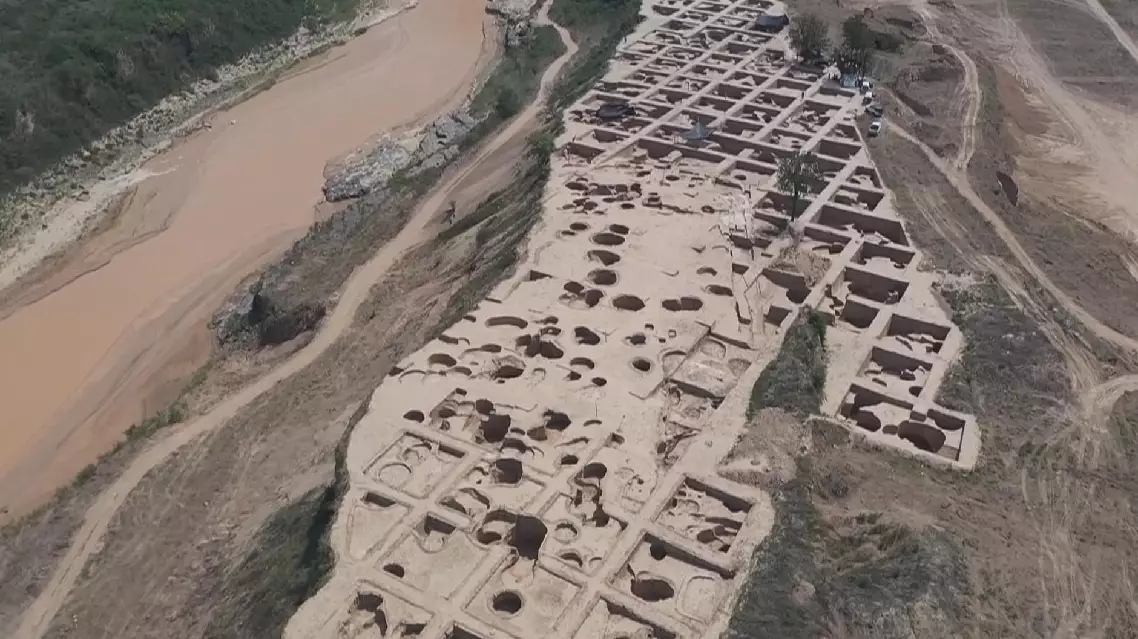
Prehistoric grain storage pits provide new evidence for study of early civilization in northwest China
The recently signed memorandum of understanding (MoU) between the United States and Iran has sparked major concern among Israeli officials, who fear that Israel's interests are being abandoned by its most crucial ally, according to analysts.
The development comes as Israel braces for a pivotal election later this year, with Prime Minister Benjamin Netanyahu potentially facing severe political fallout from the agreement.
"Israel views the MoU signed with Iran as a complete capitulation where the Americans were desperate to reach a deal because they clearly failed abysmally to plan for the blocking of the Strait of Hormuz. So they feel that all of Israel's interests have been abandoned," said Dan Perry, an American world affairs and political analyst.
Following the signing of the MoU, Iran and the United States held the first round of high-stakes indirect talks, mediated by Pakistan and Qatar, at the Swiss mountain resort of Buergenstock on Sunday.
On Monday, mediators announced encouraging outcomes from the talks, including a 60-day roadmap toward a final deal, and mechanisms to ensure the security of commercial shipping through the Strait of Hormuz and to end the fighting between Israel and Hezbollah, a close ally of Iran in Lebanon.
However, there have been concerns that Israel may jeopardize the negotiations.
"No doubt that the Americans, some of the Americans, definitely some of the Americans that are negotiating, like the Vice President JD Vance, think that Israel can put some obstacles and jeopardize the negotiations," said Yaki Dayan, former Israeli consul in Los Angeles.
With Israeli elections looming later this year, Netanyahu's core strategy to get re-elected was to portray the very good relations he holds with U.S. President Donald Trump. However, the MoU and the ensuing negotiations between the U.S. and Iran may dramatically affect the election results.
"Unless something dramatically changes, this is devastating for Netanyahu, not only because he pursued a strategy that has failed - the Iranian regime still stands, the nuclear program still exists, Hamas and Hezbollah are still fighting against Israel, but also because he was long perceived as Mr. America, with his incredible eloquence in American English. He could run circles around any American president to get America to do Israel's bidding," said Perry.
Perry added that instead of maintaining that influence, Netanyahu has brought Israel to an unbelievably low point in its relationship with the United States.
Although Netanyahu did practically everything to persuade the U.S. to withdraw from the previous Iran nuclear deal signed more than a decade ago under President Barack Obama, analysts doubt that he can repeat it again this time because Israel and its prime minister rely entirely on just one side of the American political spectrum.
"When you look at alternatives now, you don't have because Israel has lost the Democratic side as well. So you don't have an alternative in the American politics," said Dayan.
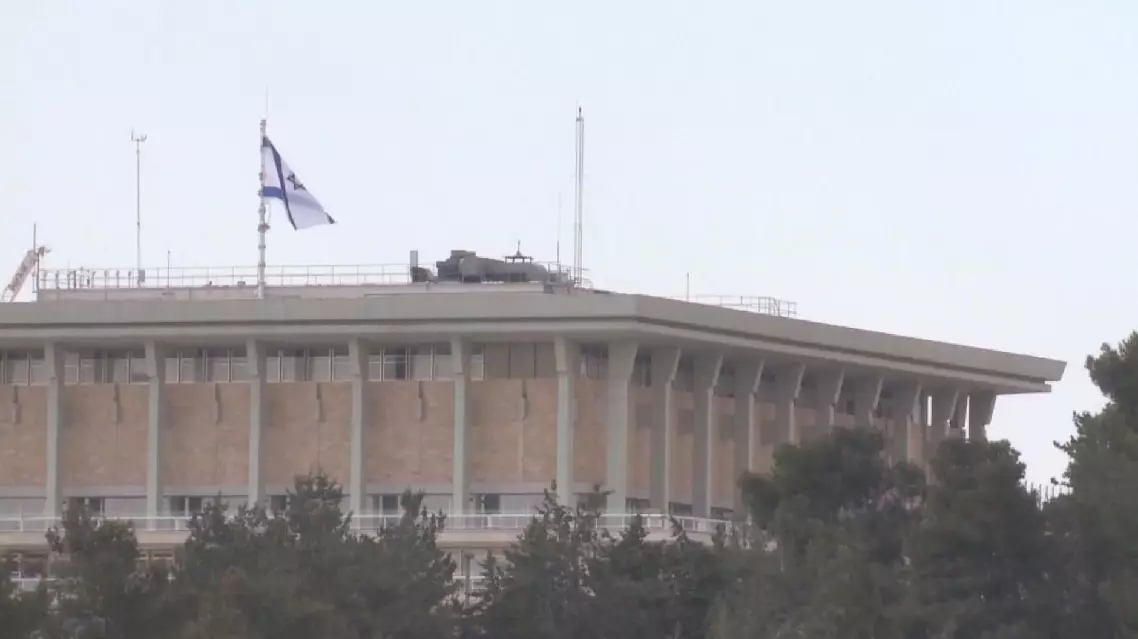
Israel feels its interests "abandoned" in US-Iran deal: analysts