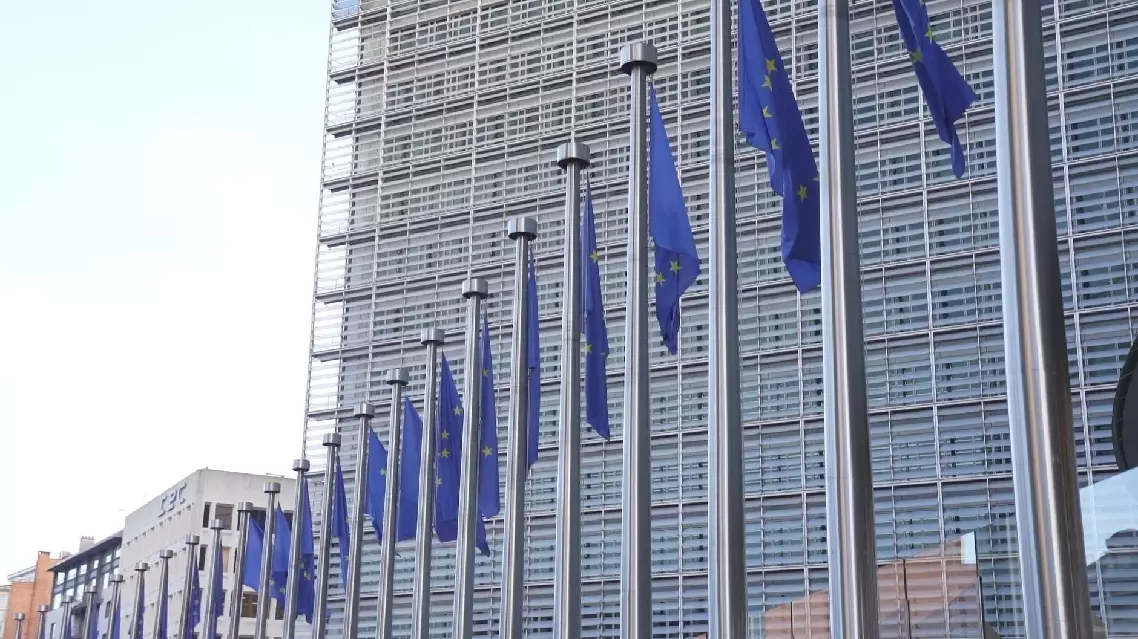
European Union foreign ministers on Monday ended their final Foreign Affairs Council of the year without agreeing on whether to tap frozen Russian assets to provide loans to Ukraine, leaving the issue unresolved ahead of the upcoming discussion at the December European Council later this week.
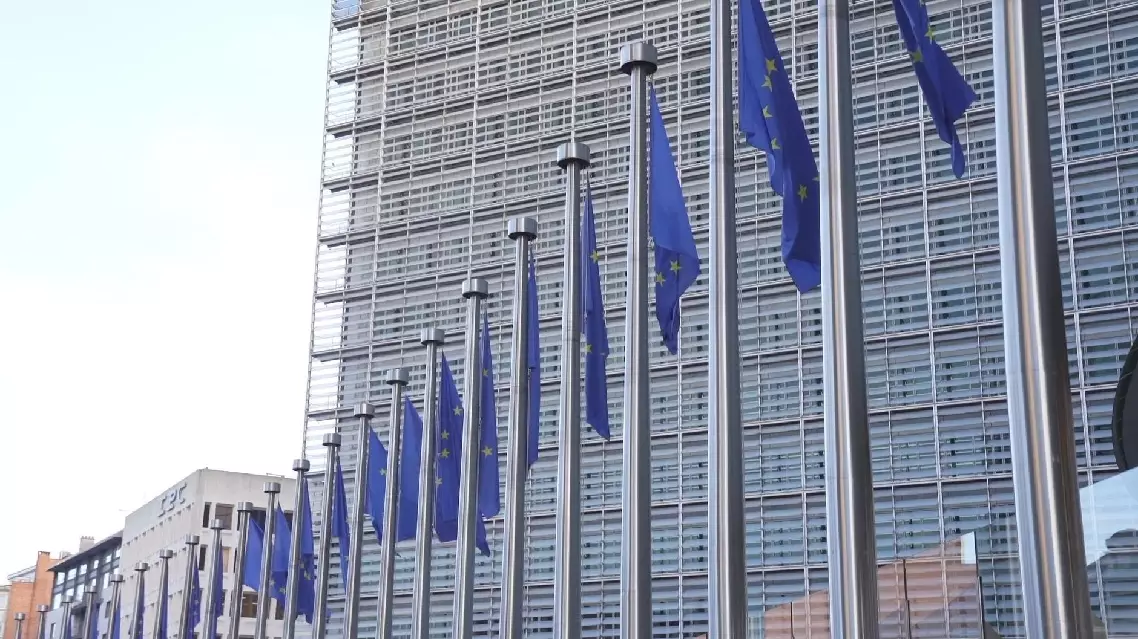
Meeting at EU headquarters in Brussels, Belgium, EU foreign ministers focused on the Russia-Ukraine conflict and the situation in the Middle East.
Public opinion widely holds that the European Union is at a critical geopolitical crossroads at the moment, as leaders this week prepare to take key decisions on the Ukraine peace process and financing for Ukraine.
Central to the discussion is whether to use frozen Russian assets held in Belgium to provide financial support, a proposal that has exposed sharp divisions within the bloc.
Italy, Malta and Bulgaria voiced explicit opposition, while Hungary and Slovakia rejected the plan outright. Hungarian Foreign Minister Peter Szijjarto said the EU's plan to use frozen Russian assets would amount to an act of war provocation, warning it would prolong the conflict in Ukraine, risk further escalation and run counter to Hungary's national interests.
New Czech Prime Minister Andrej Babis said that his country is unwilling to shoulder financial risks linked to Belgium, where most of the assets are concentrated.
As ministers met in Brussels, European leaders gathered in Berlin for talks with Ukrainian President Volodymyr Zelenskyy, German Chancellor Friedrich Merz, French President Emmanuel Macron, British Prime Minister Keir Starmer and others. NATO Secretary General Mark Rutte also attended the talks.
EU officials hope to assert greater influence over peace efforts, after a U.S.-proposed plan drew criticism within the bloc.
Analysts say doubts about the reliability of the United States as a security partner are pushing Europe to consider more strategic autonomy, even as rising defense costs strain national budgets.
According to Russian media reports, Russia's central bank filed a lawsuit in Moscow, seeking more than 18 trillion rubles in damages from Europe's largest securities depository Euroclear, which holds a large amount of Russia’s frozen assets.
EU leaders are expected to revisit the issue at their meeting on Thursday, where proposals to use Russian frozen assets as collateral for "compensation loans" aimed at covering Ukraine's fiscal and military needs over the next two years.
Russian Foreign Ministry spokeswoman Maria Zakharova said any disposal of sovereign assets without Russia's consent would be absolutely illegal and a grave violation of international law.
EU foreign ministers fail to agree on using frozen Russian assets

EU foreign ministers fail to agree on using frozen Russian assets
EU foreign ministers fail to agree on using frozen Russian assets