China's Ministry of Public Security announced on Thursday that it will significantly increase the proportion of the homegrown Kunming dog breed in its canine force.
This measure marks an important step in gaining independent control over police dog genetic resources and building a national brand, the ministry said.
Developed in Kunming City of southwest China's Yunnan Province in the 1950s from Alsatians hybridized with local dogs, the Kunming dog is China's first and currently only police dog breed with full independent intellectual property rights recognized internationally.
With well-rounded capabilities, Kunming dogs have been widely used for decades in public security, emergency management, customs anti-smuggling and other fields.
Currently, the versatile canines predominantly come from the Kunming police dog base, where they grow through daily interactions with their trainers.
Long Ling, a trainer at the base, gives the breed profuse praise, especially his demonstration dog for training: Kun Kun.
"This dog has strong capabilities, perhaps the best among all I have trained. It can detect drugs and explosives, and bite and attack. You have seen its ability to bite and attack just now. It has strong ferocity and excellent pursuit capability. And it's very obedient," Long said.
In addition to their outstanding athleticism, endurance and sharp sense of smell, Kunming dogs are very loyal to their handlers, according to Long.
"Given enough trust, the dog can be very brave and fierce. That's why I've always been fond of the Kunming dog. I need its bravery, and even more its nature of loyalty," Long said.
Beyond loyalty is the close bond between Long and Kun Kun after years of training and companionship.
"I come here almost every weekend if I'm not occupied. It's not that the dog can't leave me, it's I can't leave the dog. This is not only my job. It's my way of life," Long said.
Lately, the base has assigned Long a new task, giving him the opportunity to engage in police operations with the dog.
"I will take it to the scenes to solve criminal cases and participate in competitions among several bases. I certainly want it to show off its capabilities in these competitions and actual operations. That's what I want to do the most, because as a trainer, I really want to prove myself and the dog in actual operations," Long said.
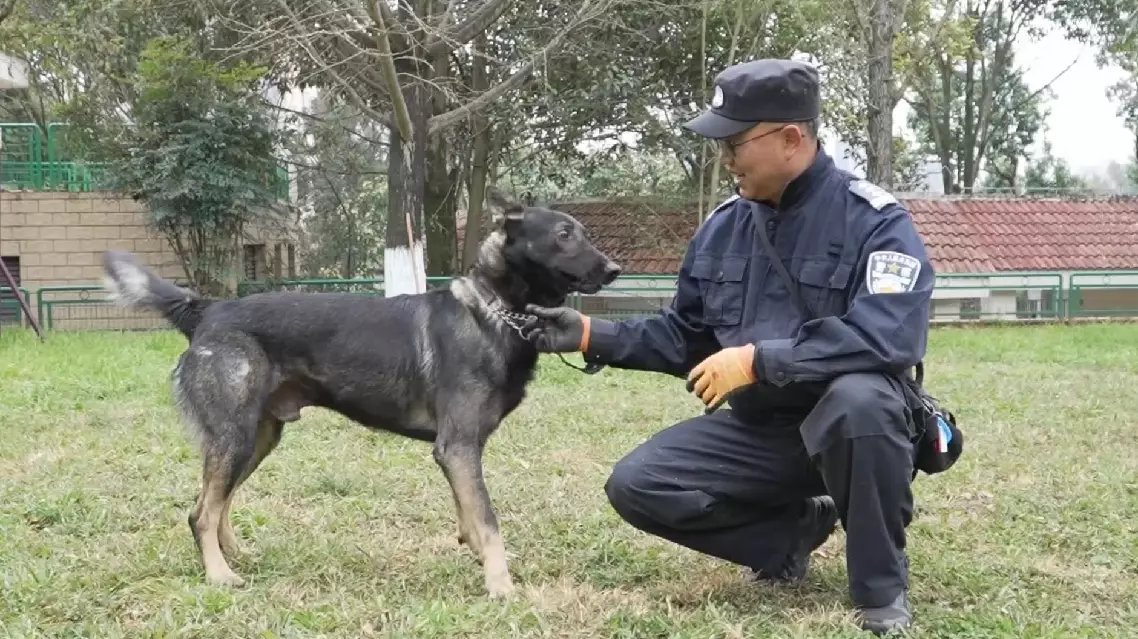
China promotes use of homegrown police dog breed