NEW YORK (AP) — The U.S. Department of Justice on Friday published thousands of files related to Jeffrey Epstein, a release long anticipated for its potential to reveal new details about the late sex offender and his connections to powerful people.
But it was clear soon after the release that it would fall far short of those expectations. The partial release angered Democrats who accused the Trump administration of trying to hide information. The Justice Department said it would continue releasing documents in the weeks ahead.
The file dump — dominated by photographs, but also including call logs, court records and other documents, many with redactions — comes after politicians and the public waged a massive campaign for transparency about the government's investigations into the wealthy financier.
President Donald Trump, who was friends with Epstein for years before the two had a falling-out, tried for months to keep the records sealed. Though he hasn’t been accused of wrongdoing in connection with Epstein, he has argued there is nothing to see in the files and the public should focus on other issues.
On Nov. 19, relenting to political pressure from his fellow Republicans, he signed a bill mandating the release of most of the Justice Department’s files on Epstein within 30 days. The White House said Friday’s release of the files shows how the administration is the “most transparent in history.”
Here are some takeaways about the Justice Department's initial Epstein file release:
The law signed by Trump last month set Friday as the deadline for the Justice Department to release most of its files about Epstein.
Ahead of the release, Deputy Attorney General Todd Blanche told Fox News he expected several hundred thousand files to be released Friday, along with several hundred thousand more to come later.
But the number of files that actually landed on the Justice Department's website seemed to be a thin slice of the total number expected. Blanche acknowledged in a letter to Congress that the production of files was incomplete. The department said it expected to complete its production of Epstein documents by the end of the year.
Among the documents made public are around 4,000 files — mostly photographs — under a subset the Justice Department described as “DOJ Disclosures." The vast majority of the photographs were taken by the FBI during searches of Epstein’s homes in New York City and the U.S. Virgin Islands.
Also included were images of envelopes, folders and boxes containing investigative materials from various probes related to Epstein. Many records are redacted and anything containing a victim’s personally identifiable information, including materials depicting sexual and physical abuse, isn’t authorized for release.
Various other files released by the Justice Department on Friday include court records, public records and disclosures to House committees. At least some of that material has already circulated in the public domain after years of court action and investigations.
Many of the most discussed photos from the files show the former Democratic president. Clinton has acknowledged that he traveled on Epstein's private jet but said through a spokesperson that he had no knowledge of the late financier's crimes.
Some of the photos show Clinton on a private plane, including one with a woman seated next to him with her arm around him. Her face is redacted from the photo.
Another photo shows him in a pool with British socialite Ghislaine Maxwell, who has been convicted of luring young girls to Epstein so he could molest them, and with another person whose face is redacted. One shows him with the late pop star Michael Jackson, singer Diana Ross and a woman whose face is redacted.
And another shows Clinton in a hot tub with a woman whose face is redacted. The Justice Department did not explain how those photos were related to the criminal investigation.
Nevertheless, senior White House aides quickly called attention to them on X.
Karoline Leavitt, the White House press secretary, wrote “Oh my!” and added a shocked face emoji in response to the photo of Clinton in the hot tub.
Angel Ureña, Clinton’s deputy chief of staff, said in an X post that “this isn’t about Bill Clinton” and accused the White House of trying to protect others.
“There are two types of people here,” he wrote. “The first group knew nothing and cut Epstein off before his crimes came to light. The second group continued relationships with him after. We’re in the first.”
Clinton has never been accused of wrongdoing in connection with Epstein, and the mere inclusion of someone’s name or images in files from the investigation does not imply otherwise.
To some exploring the records released Friday, the most interesting parts were which high-profile figures appeared scarcely — or not at all.
For example, Trump is minimally referenced in the files, and the small number of photos that do show him appear to have been in the public domain for decades. The president made no reference to the initial records release during a rally Friday night in North Carolina.
The release does include at least one photo of the former Prince Andrew, who appears in a tuxedo lying on the laps of what appear to be several women who are seated, dressed in formalwear. One of Epstein’s accusers, Virginia Giuffre, accused Epstein of arranging for her to have sexual encounters with men, including the prince.
Marina Lacerda, one of the women who says she survived sexual assault by Epstein, beginning when she was 14 years old, said Friday she wanted to see greater transparency from the Justice Department and expressed frustration over redactions and the incomplete release.
“Just put out the files,” she said. “And stop redacting names that don’t need to be redacted.”
Several lawmakers blasted the Trump administration for failing to produce all the documents required under the law.
Reps. Ro Khanna, D-Calif., and Thomas Massie, R-Ky., had introduced what is known as a discharge petition, which eventually led to the congressional vote that forced the release of the Epstein files. On Friday, both took to social media to criticize the partial release.
Massie wrote that it “grossly fails to comply with both the spirit and the letter of the law.” Khanna called the release so far “disappointing.”
“We're going to push for the actual documents,” he said.
Sen. Jeff Merkley, D-Ore., said that by disregarding the deadline, the administration was denying justice to Epstein's victims. He added he was “exploring all avenues and legal tools to get justice for the victims and transparency for the American people.”
If Democratic lawmakers so choose, they could go to court to force the Justice Department to comply with the law, but that would almost certainly be a lengthy process that plays out while the department releases more files.
Separately, the House Oversight Committee has issued a subpoena for the Epstein files. That could give Congress another avenue to force the release of more information to the committee, but it would require Republicans to join them in contempt-of-Congress proceedings against a Republican administration.
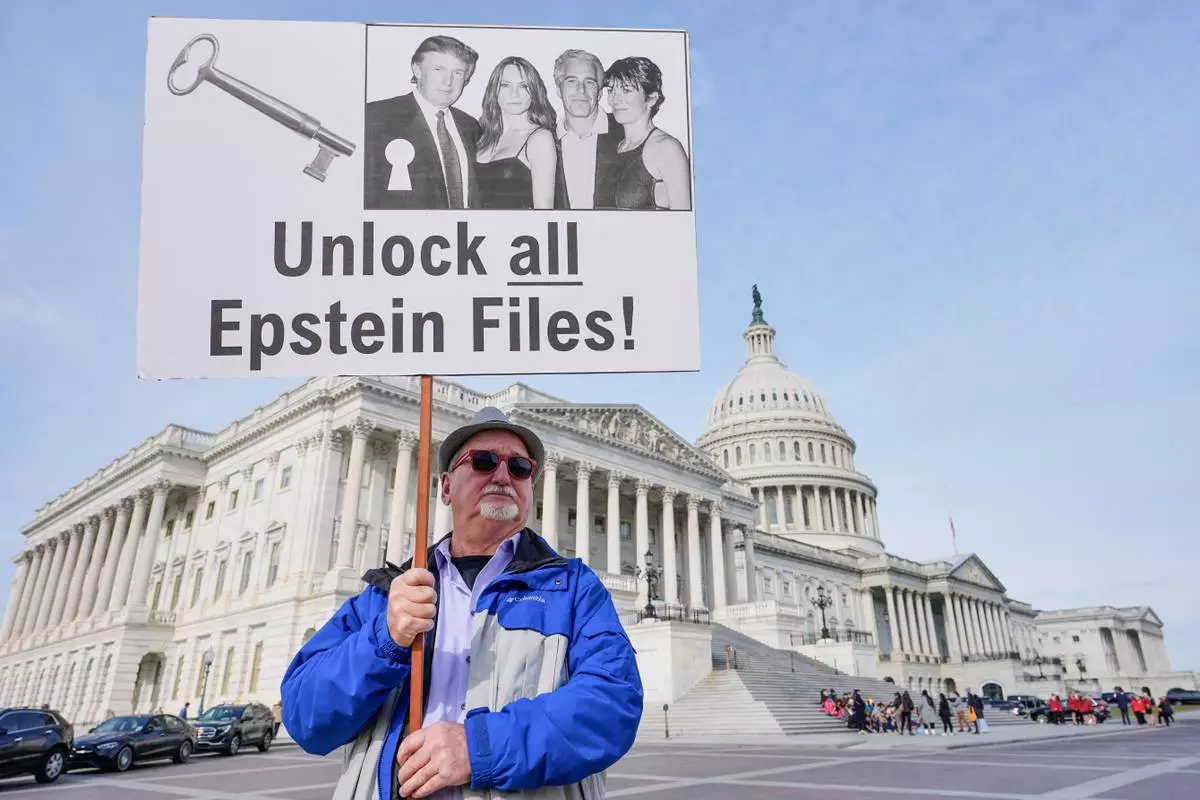
FILE - Gary Rush, College Park, MD, holds a sign before a news conference on the Epstein files in front of the Capitol, Tuesday, Nov. 18, 2025, in Washington. (AP Photo/Mariam Zuhaib, File)
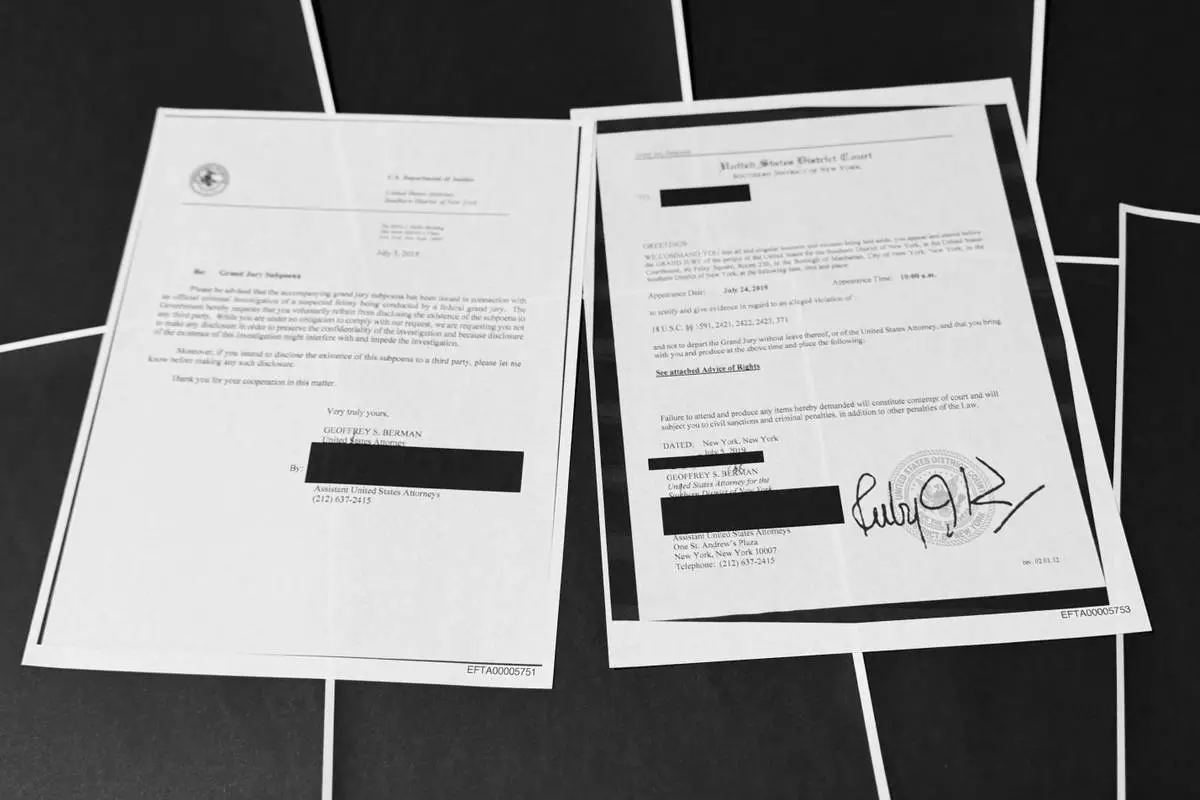
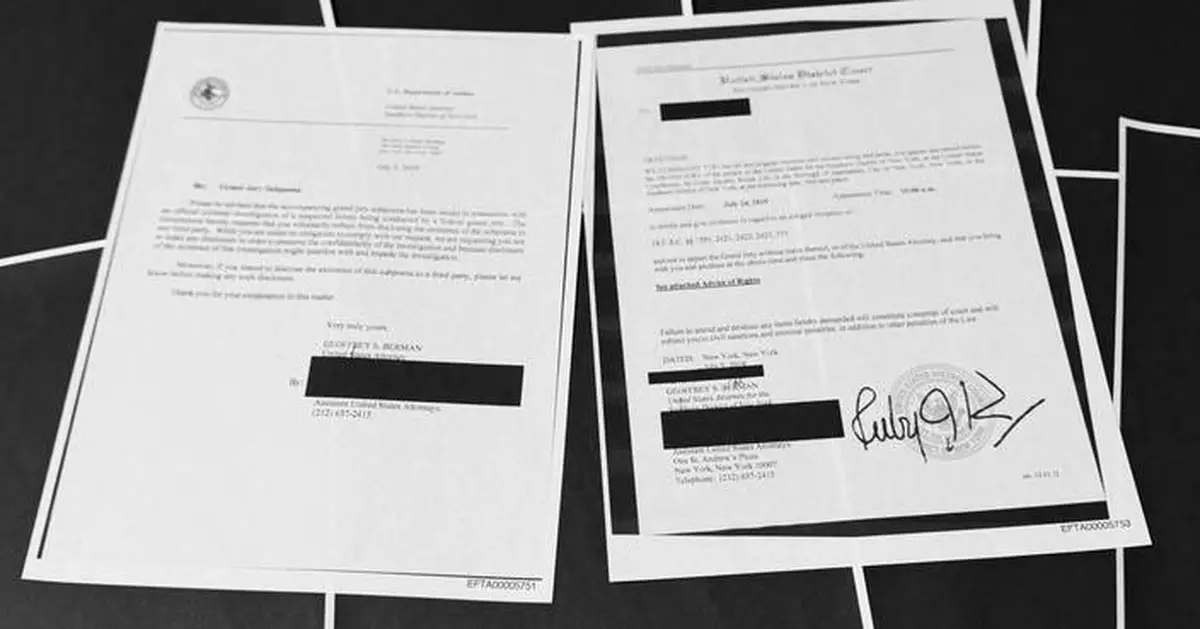
Pages that show New York grand jury subpoenas being issued into the Jeffrey Epstein and Ghislaine Maxwell investigation, then pages of redactions that follow, in this document released by the U.S. Justice Department, are photographed, Friday, Dec. 19, 2025, in Washington. (AP Photo/Jon Elswick)