A sea-air-land multimodal logistics model is gaining traction in China, effectively combining speed, cost control and last-mile flexibility to move high-value goods and open new international freight channels.
Air cargo is typically used for time-sensitive, high-value products such as fresh seafood and electronics; however, high prices and limited flexibility can constrain single-mode transport. An integrated solution that synchronizes air, sea and road transport is now addressing a broader range of market needs.
The operations at Ningbo Lishe International Airport in east China's Zhejiang Province exemplify this efficient model.
At around 19:00, a chartered freighter carrying 13 tonnes of live swimming crabs, a specialty from Zhejiang, landed at the cargo terminal.
Some of the crabs were picked up directly at the airport and sent to local markets, while others were transported via "truck flights" to cities such as Shanghai and Hangzhou.
The road part of the air-land transfer is handled by vehicles known as "truck flights," or "virtual flights," which are valued for their flexibility and speed.
"These are usually high-value-added goods such as electronic components, fresh products and spare parts. Compared with traditional cargo, they require higher timeliness and stronger safety guarantees," said Lu Jiawei, a truck-flight driver.
Cargo flights in China have continued to expand this year, averaging 1,767 flights per week, up 15.7 percent from a year earlier, according to civil aviation data released recently.
By the end of November, China had 13 dedicated cargo airlines operating 288 freighters, 20 more than at the end of last year, signaling enhanced air transport capacity.
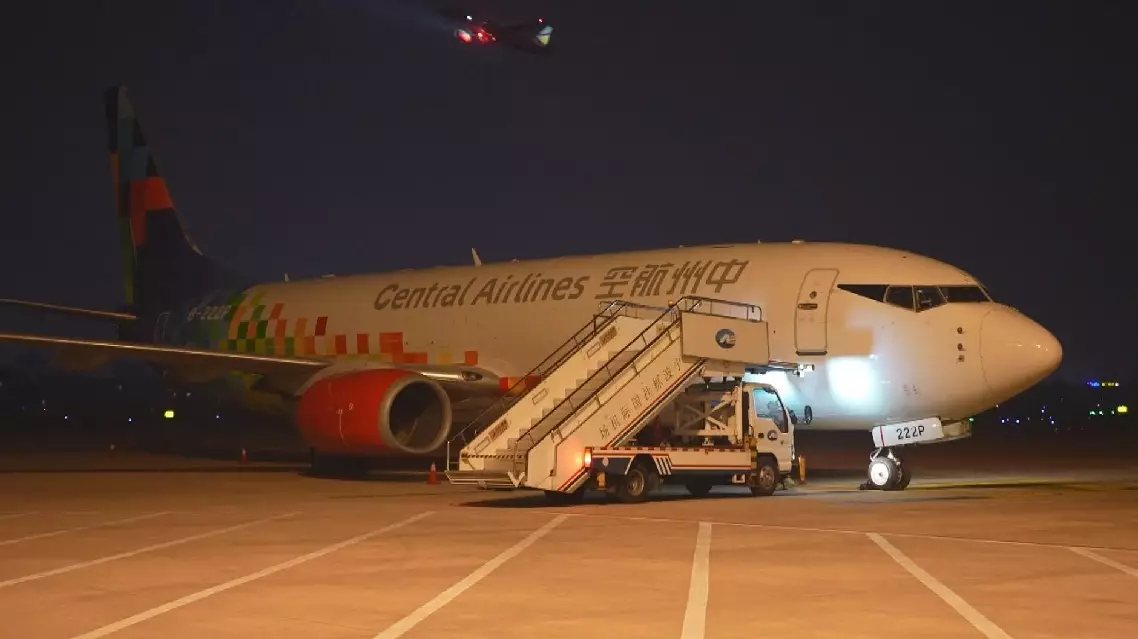
Multimodal transport in China opens new int'l logistics channels
Space cooperation between Azerbaijan and China is poised for further expansion into areas such as commercial satellites and deep space research, said Dunay Badirkhanov, acting chair of the board of Azerbaijan's national space agency, Azercosmos.
The 77th International Astronautical Congress kicked off Monday in Antalya, Türkiye's Mediterranean resort city, gathering space leaders, researchers and industry representatives from across the globe.
Speaking on the sidelines of the five-day meeting, which runs under the theme "The World Needs More Space," Badirkhanov emphasized that heavy investments required for space and digital exploration make collaboration vital, particularly for emerging space nations like Azerbaijan.
"Today it's hard for a single country to have big achievements. Space exploration, digital exploration needs a lot of investment and this is the place where really the new possibilities open for developing for emerging space countries as Azerbaijan. We hope that this cooperation in future will even further grow, and we'll have more scientific projects there, and we already have some scientists and scientific projects ongoing, and we hope that this will even grow in the future," said Badirkhanov.
Azerbaijan joined China's International Lunar Research Station (ILRS) program in Oct. 2023 as space agencies of China and Azerbaijan signed a joint statement on cooperation on the program during the 74th International Astronautical Congress held in Baku, Azerbaijan.
According to the joint statement, the two sides would carry out extensive cooperation in the demonstration, implementation, operation and application of the program, including mounting scientific instruments, providing training to personnel and conducting scientific and technological experiments.
The ILRS program, jointly initiated by China and Russia in 2021, aims to build a lunar base and carry out lunar research and exploration.
Badirkhanov noted that Azercosmos is closely monitoring preparations for the ILRS program.
"We actively participate in the workshops and seminars regarding this laboratory. We closely monitor the ongoing preparations, and we closely collaborate with our partners to see how we can contribute as Azerbaijan is a scientific part of this project," he said.
Noting that China and Azerbaijan have good relations in space research, Badirkhanov expected cooperation with China in the field to grow further.
"Of course, space is huge and new opportunities open every day, every year. And we are happy that we are part of the international community and large space agencies, and China and others are open for emerging space countries to also be involved in their activities," said Badirkhanov.
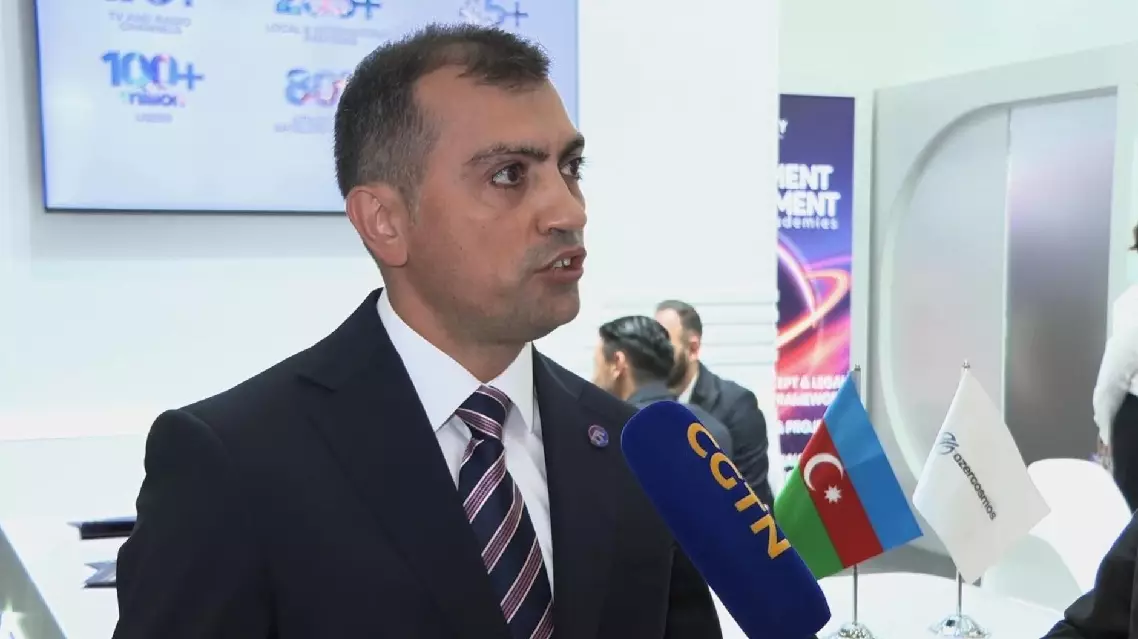
Azerbaijan Space Agency eyes deeper cooperation with China: acting chief