Skip to Content Facebook Feature Image

Japanese protesters rally against arms exports in Tokyo

HotTV

HotTV

HotTV

Japanese protesters rally against arms exports in Tokyo

2025-12-26 01:18 Last Updated At:12-27 14:22

Japanese citizens held rallies on Thursday outside the headquarters of the Liberal Democratic Party (LDP) and the National Diet building in Tokyo, protesting Japan's weapons export policies.

The ruling Liberal Democratic Party and its coalition partner, the Japan Innovation Party, agreed at a meeting on Monday to revise the implementation guidelines of the Three Principles on Transfer of Defense Equipment and Technology and lift restrictions that limit defense equipment transfers to five noncombat purposes. And they planned to submit the proposal to the cabinet in February next year.

Demonstrators chanted slogans, calling for a complete ban on arms exports, denouncing the ruling parties, and demanding Prime Minister Sanae Takaichi and the cabinet to step down.

"I believe that Japan must never become a 'weapons merchant.' At present, there are already some companies in Japan engaged in weapons-related industries. Not only does the government fail to stop this, it is actually promoting it, attempting to revive the economy in this way. I find this extremely dangerous, and it makes me deeply dissatisfied. I want to make my opposition clear," a protester said.

Another voiced concern over Takaichi's erroneous and provocative remarks on China's Taiwan region.

"Japan has never recognized Taiwan as a country. Under the premise of respecting the Treaty of Peace and Friendship between China and Japan, the Sino-Japanese Joint Statement, and the Potsdam Proclamation, Japan should abide by these documents. But now the Japanese government is ignoring them. Is this a deliberate move, or that Prime Minister Takaichi simply does not understand the contents? This is deeply unsettling. It is totally disrupting the current situation and undermining Japan's position in international relations," said a demonstrator.

A third rally participant said a dangerous shift has been taking place in Japan.

"Recently, some people have started talking about 'possessing nuclear weapons.' In fact, over the past 20 to 30 years, the threshold for such discussions has been gradually lowered. The moral restraints that once hold back these debates, the [right] path Japan should follow, and its commitment to pacifism have been continuously weakened and dismantled. While the situation has worsened sharply due to Prime Minister Takaichi's remarks, this is actually the result of a trend lasting for decades. Both the lawmakers and the public lack sufficient awareness of and reflection on this ongoing trend. I am very concerned about this," another protester said.
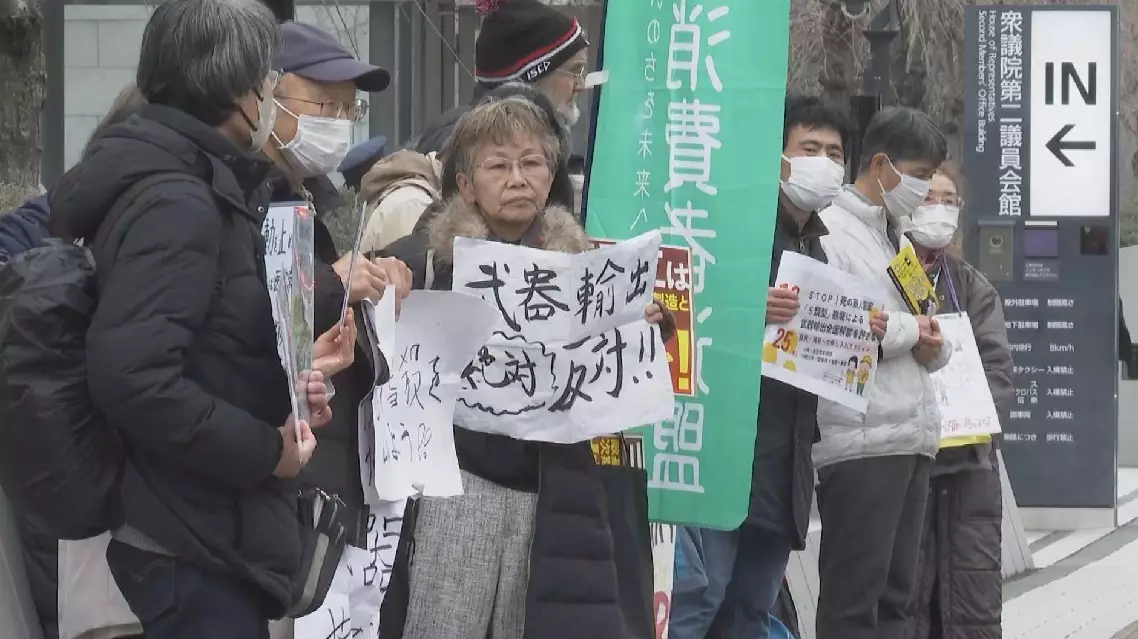
Japanese protesters rally against arms exports in Tokyo
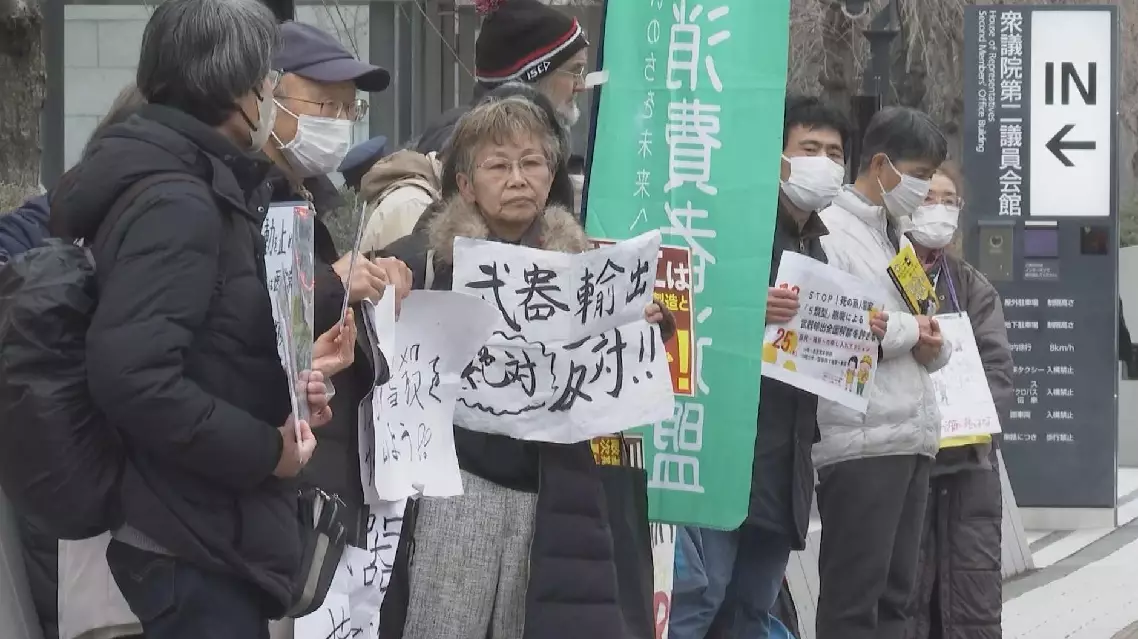
Japanese protesters rally against arms exports in Tokyo

Japanese protesters rally against arms exports in Tokyo
Japanese protesters rally against arms exports in Tokyo

The 24th Mawei-Matsu Lantern Festival, a national-level intangible cultural heritage event, opened on Wednesday in Fuzhou, capital city of east China's Fujian Province, to greet the Year of the Horse, which begins on Feb 17.

The festival is underway at a shipbuilding cultural park, where brilliant lantern installations are artfully integrated into the century-old remains of the former shipbuilding industry, creating a striking contrast that blends maritime heritage with festive light art.

Lanterns shaped like horses and the first steamship built by the shipyard, stand alongside a variety of intricate designs, blending holiday spirit with maritime history.

"This is my first visit here. I have seen lanterns shaped like fish and horses, and I like them very much," said a kid.

The festival originated from the Lantern Festival customs shared between Mawei and Mazu. It is the earliest and now most regularized two-way exchange activity between the two places, with the mutual presentation of lanterns serving as one of its most distinctive traditional features.

The celebration is recognized as China's first cross-Strait national intangible cultural heritage project. In 2024, it, along with the Chinese New Year, was added to the UNESCO Representative List of the Intangible Cultural Heritage of Humanity.

Running till March 8, the 33-day celebration serves as a luminous bridge connecting Fuzhou's Mawei district and Matsu.

"I've been to the festival four or five times, and it has left a deep impression on me. The festival gets better every year, with very distinctive features. We hope to spend more time together with our compatriots from Matsu," said Zhao Ping, a visitor.

"We've incorporated elements of shipbuilding culture, the local culture, and maritime culture into the lantern design. We welcome everyone to Fuzhou and celebrate the Chinese New Year here," said Lin Hebin, deputy director of the Bureau of Culture, Sports and Tourism in Mawei District.

Mawei-Matsu Lantern Festival opens in east China, honoring cross-Strait cultural heritage

Mawei-Matsu Lantern Festival opens in east China, honoring cross-Strait cultural heritage

Mawei-Matsu Lantern Festival opens in east China, honoring cross-Strait cultural heritage

Mawei-Matsu Lantern Festival opens in east China, honoring cross-Strait cultural heritage

Recommended Articles