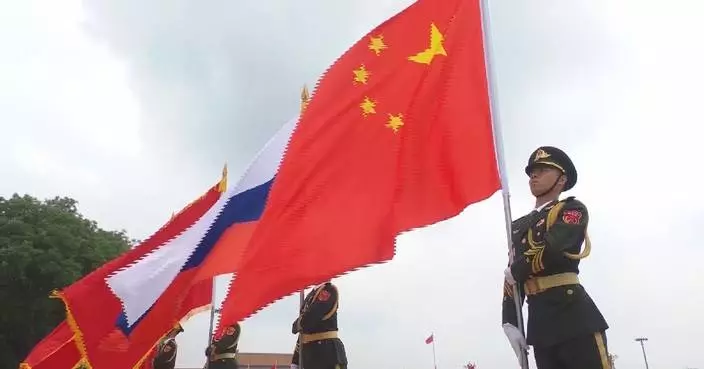
China's Hong Kong and Macao special administrative regions (SARs) ushered in the year 2026 on Thursday with solemn flag-raising ceremonies, drawing attendees from all walks of life.
In Hong Kong, the ceremony took place at the iconic Golden Bauhinia Square.
As the national anthem echoed through the air, the Chinese national flag and the Hong Kong SAR flag were hoisted in the morning dew, symbolizing unity, pride, and the dawn of a new year.
"Every New Year's Day, I join some Hong Kong youths to watch the flag-raising ceremony, offering our best wishes to our motherland and to Hong Kong. Each time I come, I feel incredibly excited. The number of people attending the ceremony keeps growing," said Kao Sung-chieh, a Hong Kong resident.
"I'm very happy today to attend the flag-raising ceremony at the Golden Bauhinia Square. This year is my seventh consecutive year attending the event. I wish our motherland continued prosperity and greater strength, and its people peace and happiness. I hope Hong Kong, led by the motherland, gets increasingly better," said Li K'ai-hu, another resident from Hong Kong.
In Macao, an honor guard from the Macao SAR Public Security Police Force escorted the national flag and the Macao SAR flag into the Golden Lotus Square.
As the national anthem was played, both flags were raised slowly and solemnly, fluttering proudly in the morning breeze.
"As a Macao youth, we should summon the courage to forge ahead with determination in the new year. We should also align our personal aspirations with the development of the Guangdong-Hong Kong-Macao Greater Bay Area and the nation, and contribute to the steady and sustained success of the 'One Country, Two Systems' policy and to the great rejuvenation of the Chinese nation," said Ho Hoi Kei, a member of the National Committee of the Chinese People's Political Consultative Conference (CPPCC) from Macao.
"In the new year, I sincerely wish our motherland greater prosperity and strength, and its people peace and happiness. I also wish the Macao Special Administrative Region, with the steadfast support of the nation, to seize new opportunities and achieve new accomplishments," said Lam Fat Iam, a member of the Legislative Assembly of the Macao SAR.
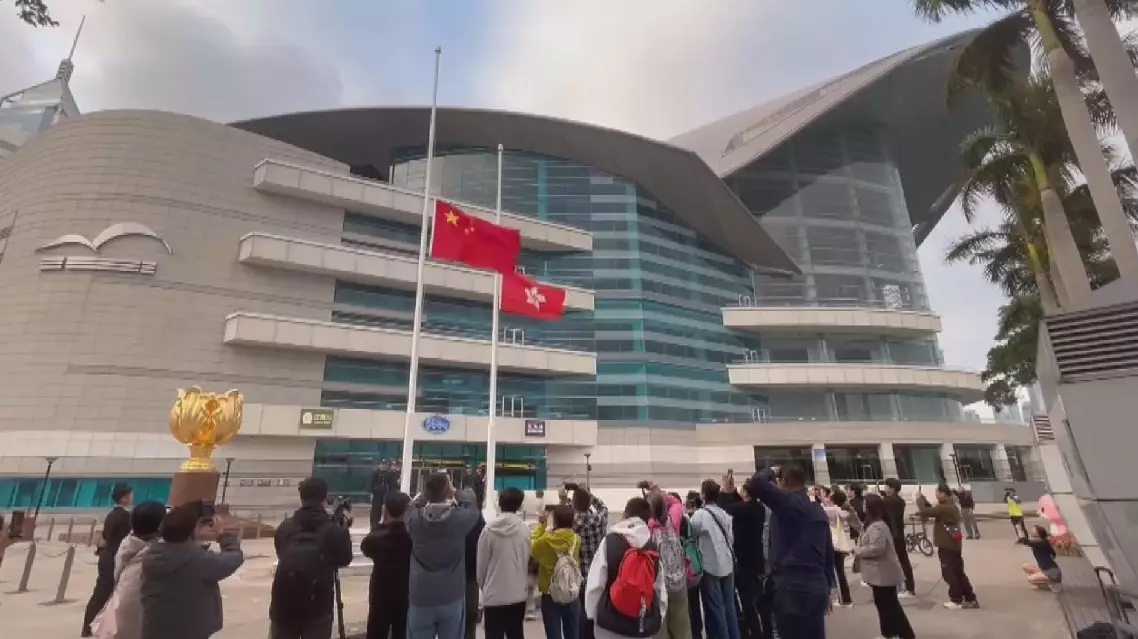
Hong Kong, Macao usher in 2026 with solemn flag-raising ceremonies